Case Packer
“What you pack decides the machine. Cartons can be pushed into a case. Bottles cannot — push them and they fall over. That single difference splits our range in two.”
A case packer loads finished product into the corrugated shipping case, then closes and tapes it. It is the last automated station before the pallet, and usually the last place on a line where people are still working by hand.
Which machine you need is decided by what you pack, not by how fast you run. Cartons are rigid and stable, so a pusher can stack them and load a whole layer in one stroke. Bottles are not — a pusher tips them, so they have to be lifted and set down instead. Those are two different machines, and no setting converts one into the other.
AIPAK supplies five models covering 5 to 24 cases per minute, plus case erecting and sealing as separate stations if you already own the packer.
Why AIPAK Case Packers
Matched to What You Pack
We build separate machines for bottles and for cartons rather than one machine with adapters. A pusher asked to handle bottles produces tipped product and crushed cases, and both show up as damaged goods at your customer.
Detection at Every Station
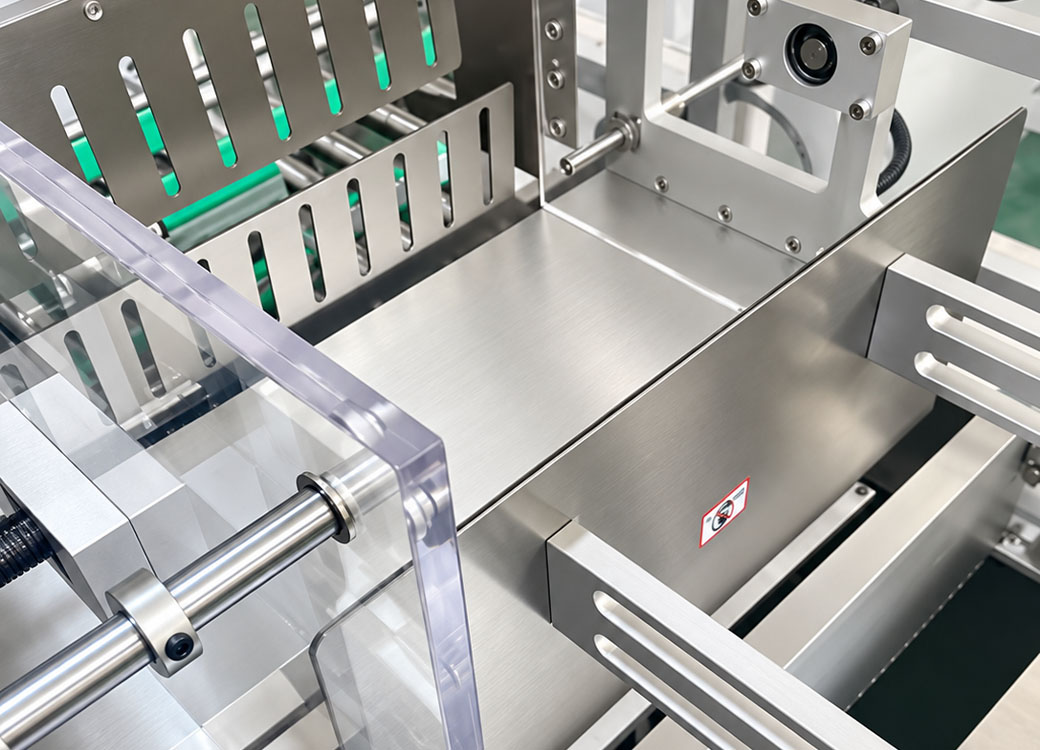
No case, no product, stack overload, case out of position — any of these stops the machine before it jams. You get a message on screen instead of a pile of crushed cartons.
Handwheel Changeover
Case size changes on handwheels and self-locking levers. About a minute on the erector. Nothing to buy per case size, and nothing to store.
Buy One Station or All Three
Erecting, packing and sealing are separate machines. If you already run one of them, buy the others on their own and we’ll time them to what you have.
Start With What You Pack
This decides the machine before anything else does.
Cartons are rigid and stack cleanly. A pusher stacks them and loads the whole stack into the case in one stroke. That is the ZCP-550, and it is the cheaper of the two.
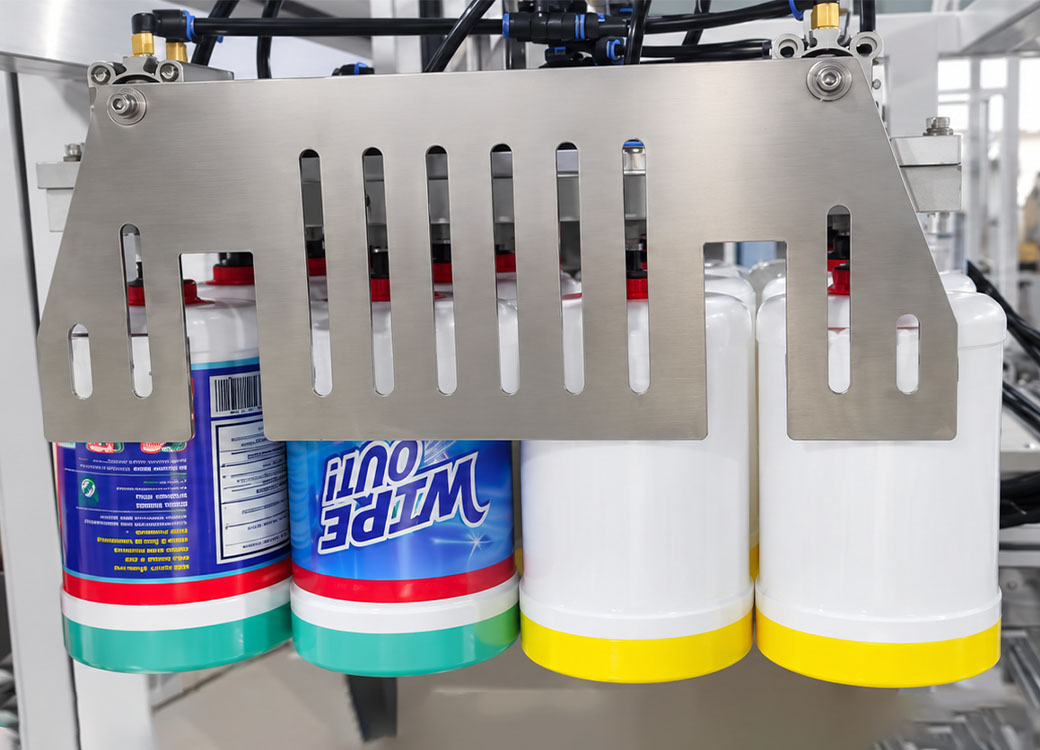
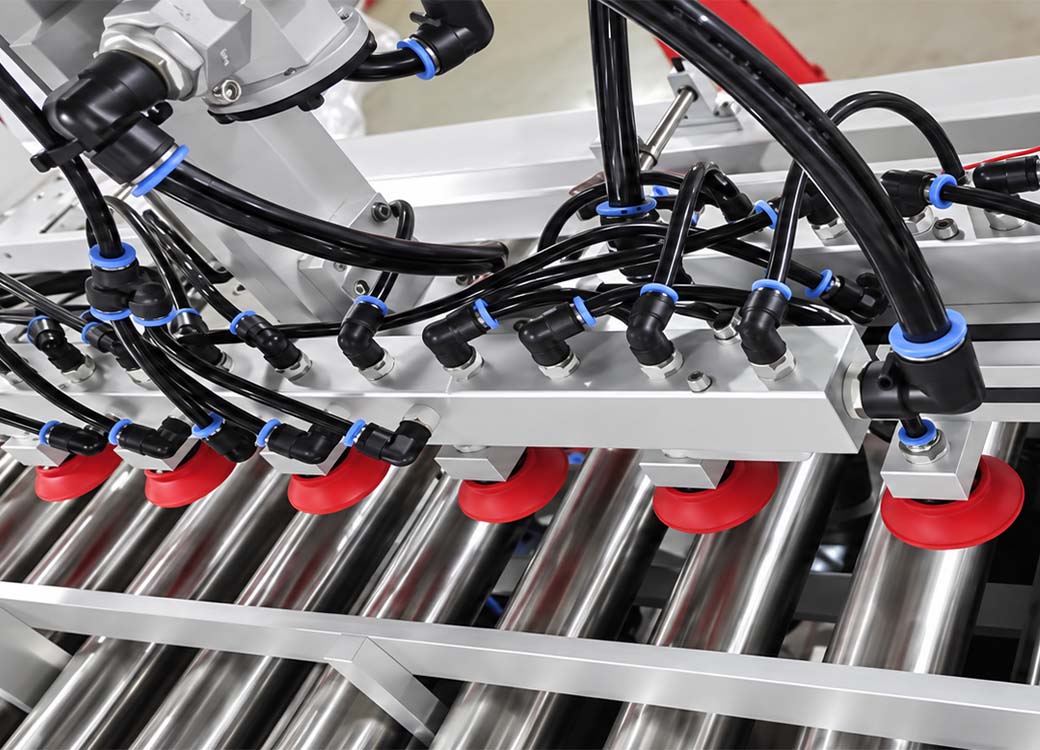
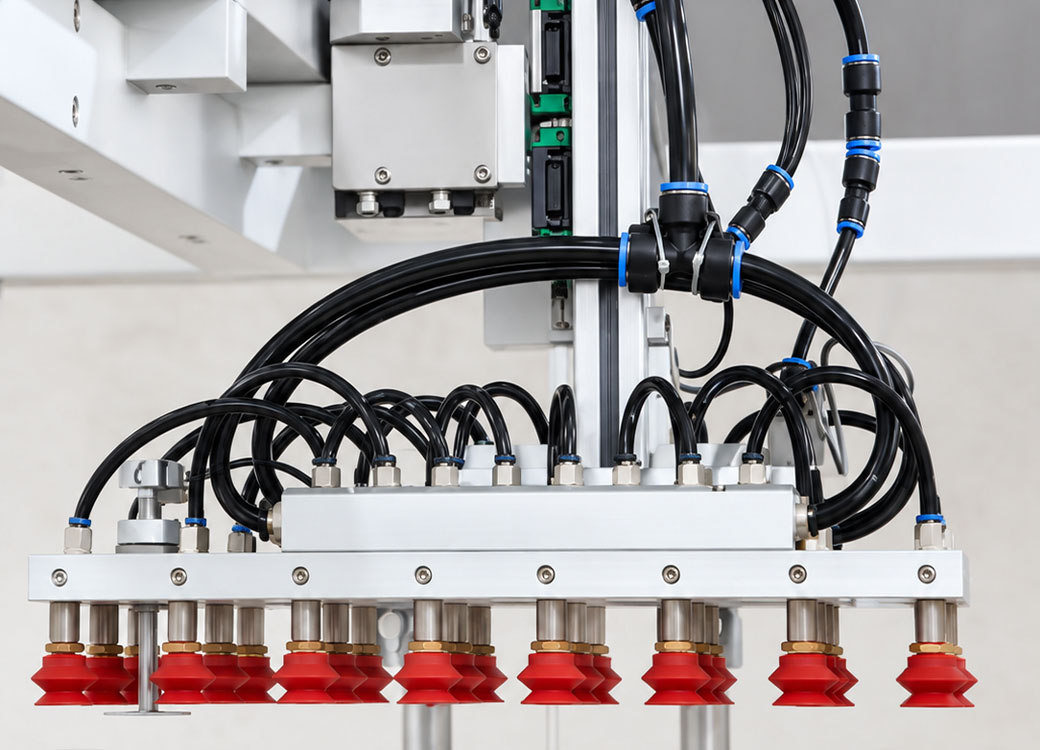
Bottles cannot be pushed. They tip, and a tipped bottle jams the case. They have to be lifted by vacuum cups and set into the case. That is the ZYCP-550.
If you run both across different products, you need the ZYCP-550 — it handles cartons as well.
The side-load machine reaches 5 cases a minute. The pick-and-place machine reaches 24, depending on how many picks each case takes. More items per case means fewer cases per minute, so tell us your pack count rather than just your target rate.
Three ways to configure this:
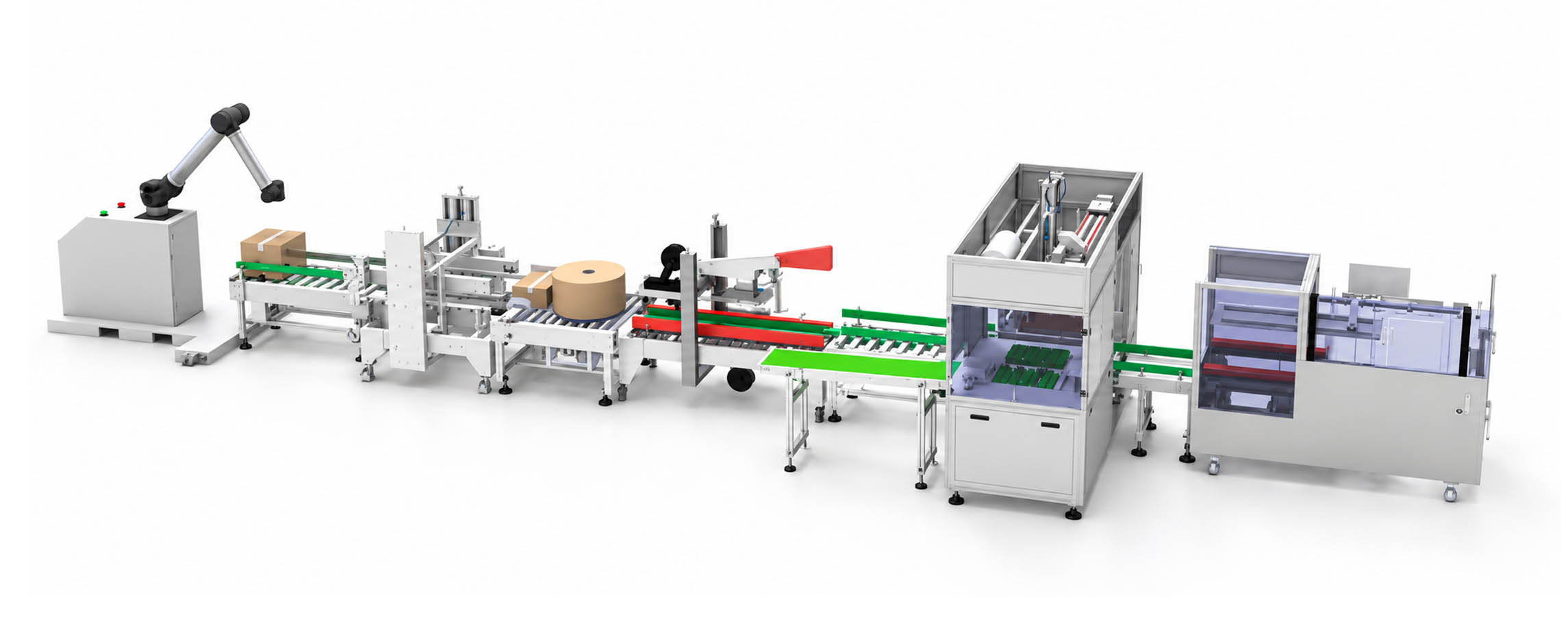
Three separate machines — erector, packer, sealer. Highest throughput, most floor space, and you can buy them one at a time.
One all-in-one — the LJ-900 does all three in a single frame, in less floor than three machines. It also inserts dividers and the packing slip, which the others do not. It runs at 5 cases a minute.
Add to what you own — if you already have an erector or a sealer, buy the packer on its own. We time it to your existing stations.
Model comparison
Model | What it packs | Output | Case size (mm) | Best for… |
|
APK-550 | Bottles and cartons | Up to 24 cases/min | 250×200×200 – 600×400×400 | Brands packing bottles straight off a bottling line | |
APK-550 | Cartons only | Up to 5 cases/min | 220×150×120 – 600×400×400 | Brands packing cartoned product on a 220V supply | |
APK-900 | Cartons, with dividers and packing slip | Up to 5 cases/min | 300×180×130 – 650×450×400 | Brands short on floor space, or needing dividers inside the case |
The Two Stations Either Side of the Packer
A case packer loads product into a case that is already open, and hands it on to be closed. Those two jobs are separate machines. Buy them with the packer, or buy them on their own if you already run the rest.
| APC–CE6 Case Erector | 1–6 cases/min 220V single phase About 1 min changeover | Takes flat blanks, opens them, folds the bottom flaps and tapes them. | View the machine → |
| APC–CS10 Case Sealer | 5–10 cases/min Widest case range On castors | Folds the top flaps and tapes the case shut. Moves between lines. | View the machine → |
Four Machines, Four Container Shapes
Where These Machines Are Running
Where Case Packing Sits on Your Line
AFTER THE BOTTLE IS FINISHED
A bottling line ends at the labeller. Case packing starts where that leaves off:
Bottling line → case erector → case packer → case sealer → labelling and palletising
Most brands automate the bottling line first and keep packing cases by hand. That works until case packing becomes the station holding up the shift — which usually happens when the bottling line gets faster, not when volume grows.
Corner labelling and palletising are fitted with equipment your plant will already recognise. We specify a Markem-Imaje print-and-apply labeller for corner labels, and a KUKA palletiser where cases need stacking. Both are quoted as line options.
Buying From Us
What determines the price Machine price is driven by what you pack, your case size range, and whether you buy one station or three. A pick-and-place machine costs more than a side-load one because of the servo head. An all-in-one costs less than three separate machines but runs slower. We quote against your actual case and product rather than publishing a list price.
Lead time About 1-3 months from order confirmation. Custom pack patterns and non-standard case sizes take longer. We confirm the date in writing with the order.
What comes with the machine Operating and maintenance manuals in English, electrical schematics, a spare parts list with part numbers and prices, and a commissioning spare kit priced in your quote before you sign.
After delivery Installation, commissioning and operator training. Most electrical spares can be sourced in North America rather than shipped from China .
Talk to our experts to discover the right solution for your needs.
Documentation & Selection Support
Verify our specifications and simplify your procurement process with our official documentation.
Product Portfolio
Quality Assurance
Line Layout Template
FAQ
The pick-and-place model can. The side-load model cannot. A pusher tips bottles over, and a tipped bottle jams the case. If you bottle, you need vacuum pick-up.
Only if you don’t already have them. The three stations are separate machines and can be bought one at a time. If your packing room is short on space, the all-in-one does all three in one frame at lower throughput.
It depends on what you pack, your case size range and whether you buy one station or three. Send us your case dimensions and your product and we’ll price it. The same model varies substantially with configuration, which is why we don’t publish a list price.
Fast enough to keep up with the line feeding it. Work back from your bottling line rate and your bottles per case. A line running 100 bottles a minute with 12 bottles a case needs about 8 cases a minute — which rules out the side-load model.
About a minute per station, on handwheels. There are no change parts to buy per case size and none to store. On a three-station line, all three adjust.
Yes, it can be customizable.
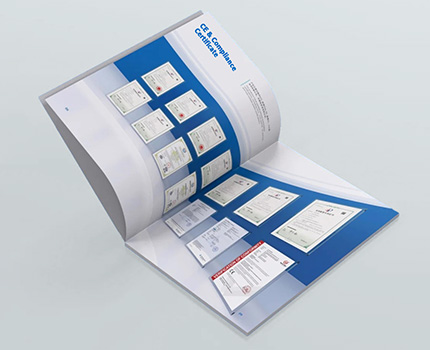
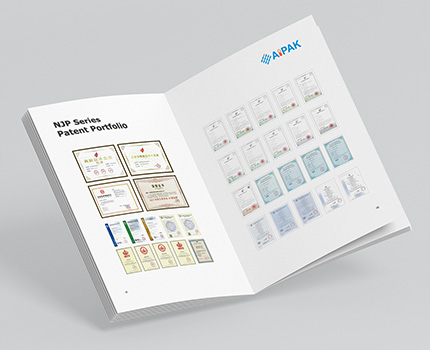
Yes. Our machines are certified and use certified electrical components. Because the exact scope depends on the model and electrical configuration you select, our factory confirms it in writing before production.
From 2,200 × 1,600 mm for the side-load packer to 4,050 × 2,450 mm for the all-in-one. Three separate machines need more length but less depth. Send us your floor plan and we’ll return a layout drawing.
Send Us Your Case and Your Product
What you pack decides the machine, and case dimensions decide the rest. Send us both and we’ll come back with a configuration, a layout drawing and a price.
If you already run an erector or a sealer, tell us — you probably need one machine rather than three, and that changes the quote substantially.
Send your floor dimensions and we’ll do the layout and space calculation free.