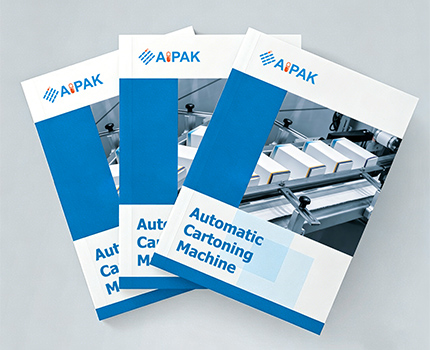
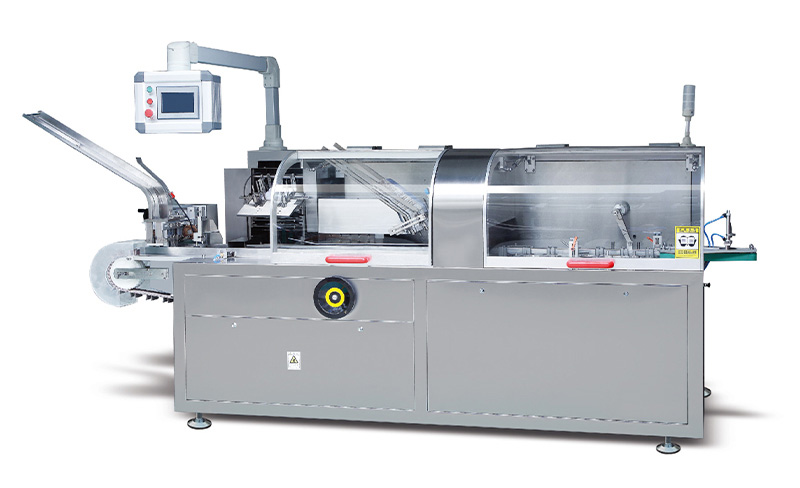
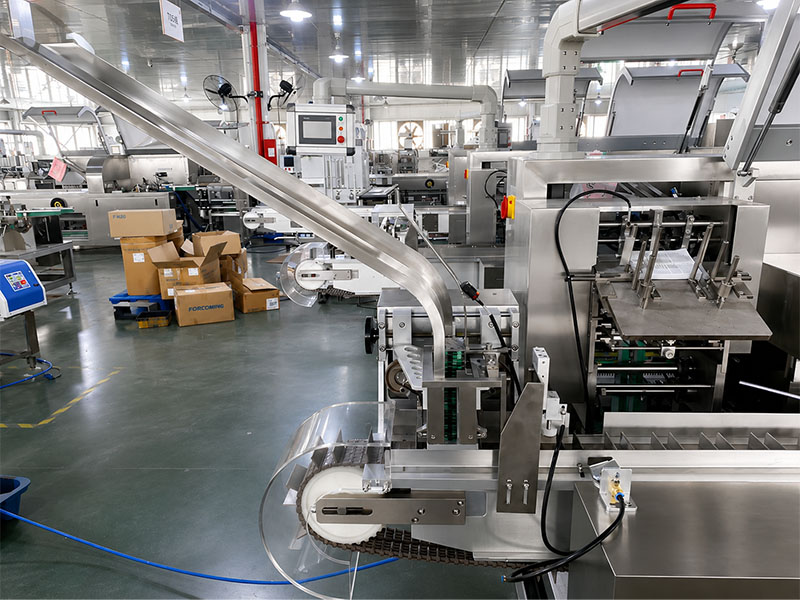
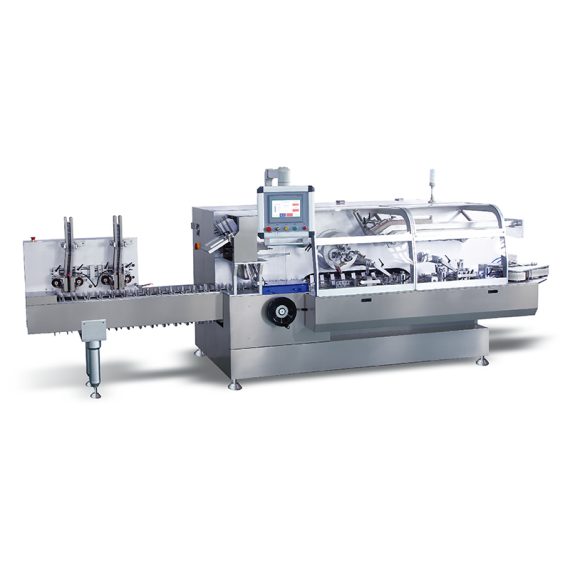
Automatic Cartoning Machine
Intermittent and Continuous Cartoners, 30 to 600 Cartons per Minute
Why Choose Our Automatic Cartoning Machine?
Nine cartoners, from 30 to 600 cartons a minute. Here’s what they have in common.
Carton opening at speed
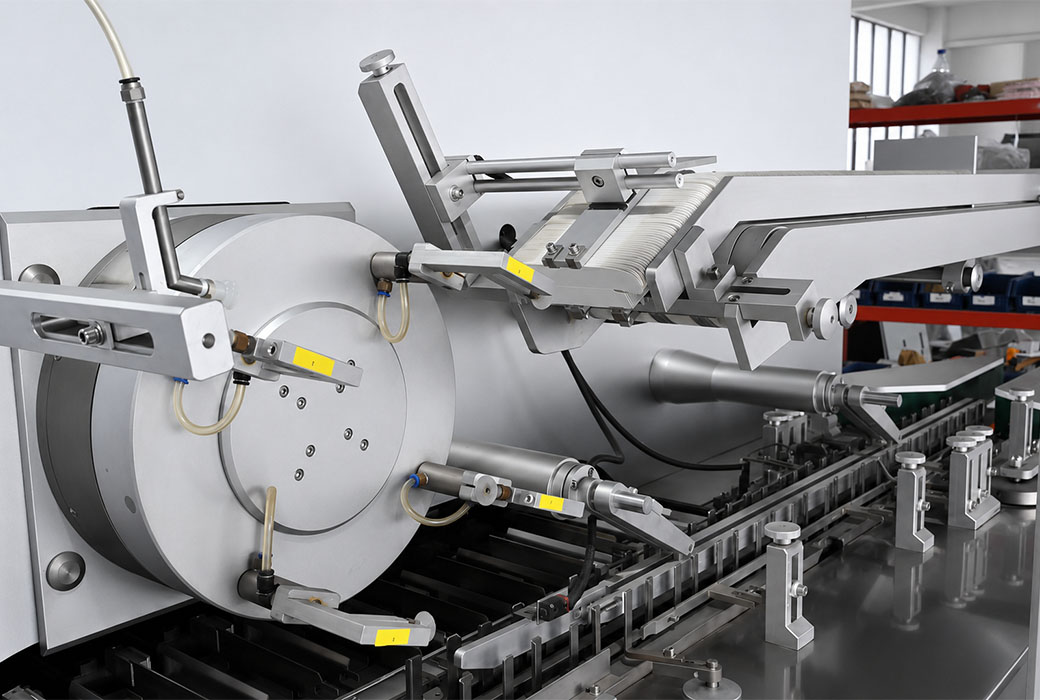
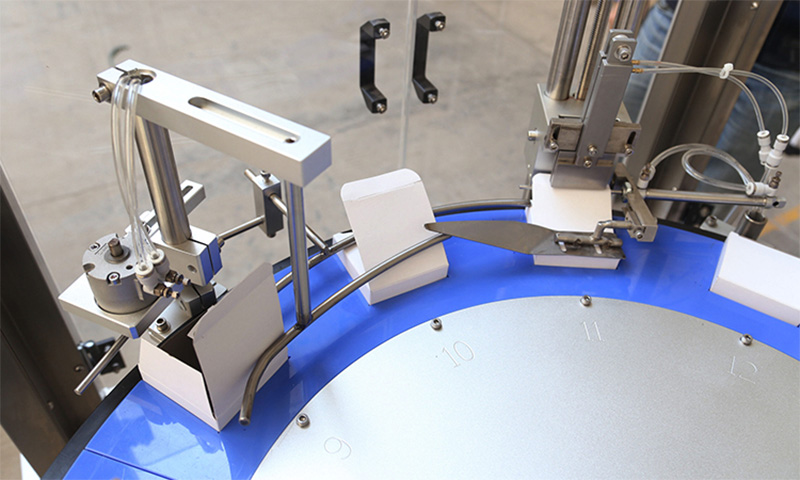
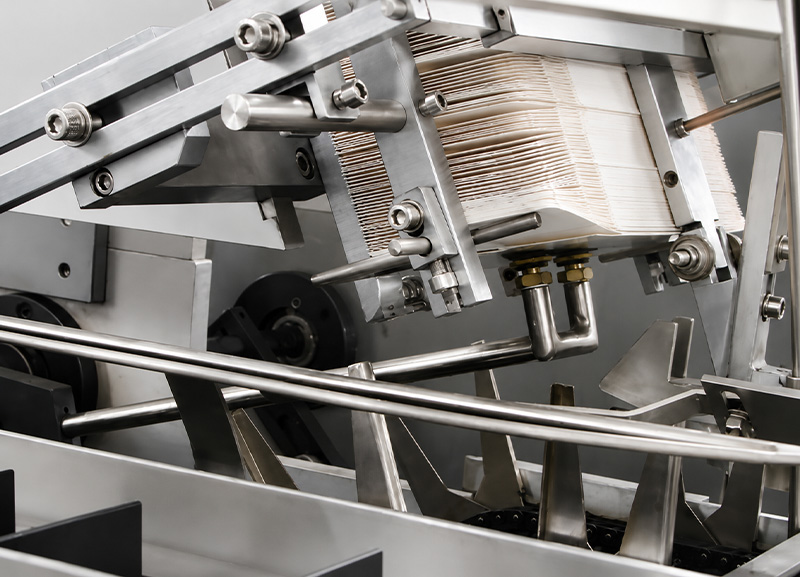
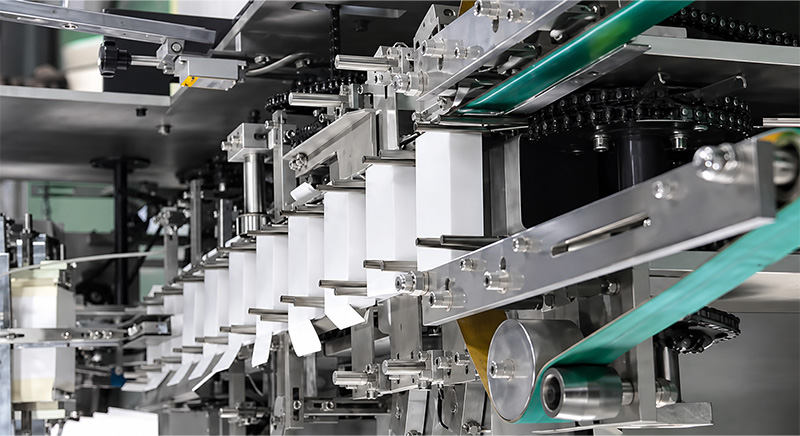
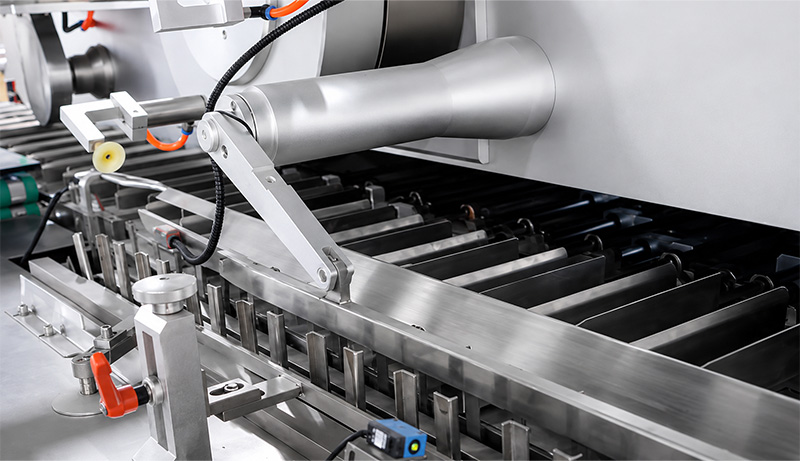
Stiff or recycled board is what jams a cartoner at high speed. The suction arm pulls the blank from the magazine and the cam pre-breaks the score lines before the carton reaches the chain. That is what opens a carton square instead of half-open.
It knows what to do when something is missing
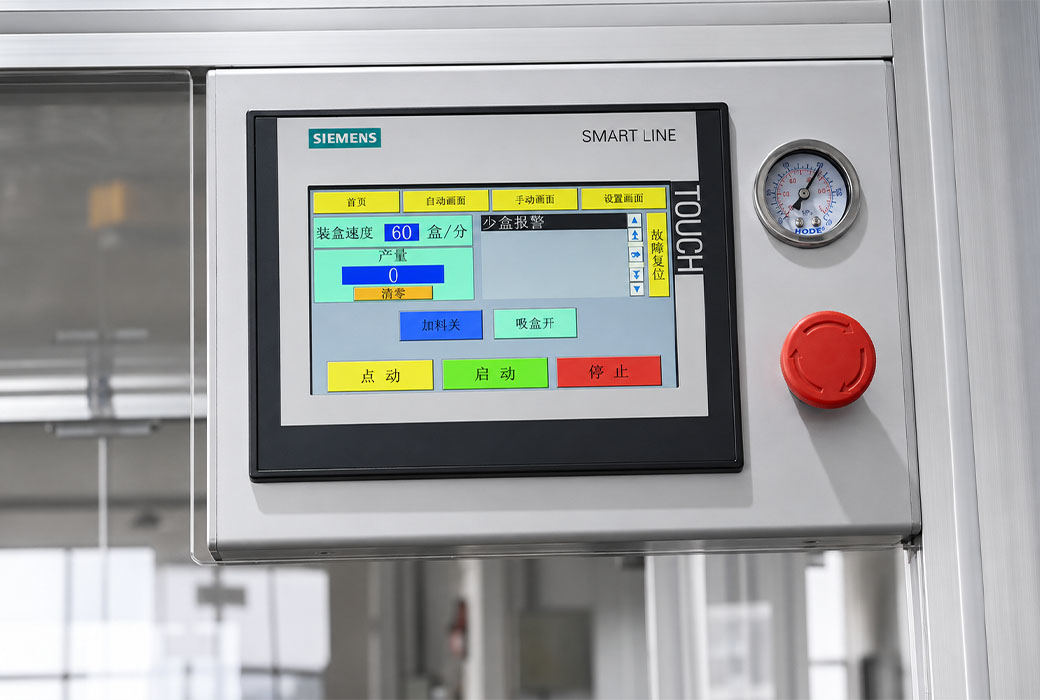
Four rules, and they are not the same rule. Cartons running low: alarm first, keep running, then stop if nobody reloads. No product: no carton is drawn — you don’t waste board. One leaflet missing: that carton is rejected at the last station. Leaflets missing continuously: the machine stops, because that’s a paper feed fault.
Tuck-in and snap-bottom on one chassis
Both closings share the same frame. Switching needs a few changeover parts, not a new machine. Glue is a different structure — we’ll tell you why before you order.
One machine, several product formats
From the WZH-180 up, most models take more than one product format. Blisters today, tubes next quarter: swap the feeder at the infeed and the rest of the machine stays as it is. The 120 series and the 260P are each built for one format.
Where These Machines Are Running
What goes in the carton decides the feeder. Here’s what these machines carton most often.
Five things we need to know before we can recommend a model
One blister plate or three. A bottle, a tube, a stack of sachets. The material decides which feeder goes on the infeed, and that is a different part for every format.
This one catches people out. If you pack by hand today, your carton probably fits the product exactly. A machine needs clearance to push the product in. Send us both the product and the carton dimensions and we will tell you whether your existing carton runs, or whether it needs to grow a few millimeters.
Pre-folded leaflets need a different feeding mechanism from unfolded ones. Unfolded leaflets have a maximum size the folder can handle. And there are two ways they go in: lying flat next to the product, or wrapped around it as a vertical strip.
A blister machine running online, a bottling line conveyor, or an operator loading by hand. Each needs a different infeed.
Under 120 cartons a minute, intermittent motion is the right answer. Above that you are into continuous motion. But speed is decided by three things, not one: your carton closing style, your product format, and the feeder. A machine rated at 120 does not run at 120 with every product.
Model comparison
| Model | Motion | Speed | What it packs | Carton L×W×H (mm) | Leaflet unfolded | Power | Weight | Best for… |
|---|---|---|---|---|---|---|---|---|
| WZH-120D | Intermittent | 30–120 | Sachets and pouches, 1–12 per carton | 70-180 × 35-85 × 14-50 | 80-250 × 90-180 | Three-phase, 4 kW | 1,600 kg | Sachets, stick packs and pouches counted into a carton |
| WZH-120-III | Intermittent | 30–120 | Blister packs | 70-180 × 35-85 × 14-50 | 80-250 × 90-180 | Single-phase, 1.5 kW | 1,400 kg | Blister plates, with the plate count set on the screen. The most compact in the range |
| WZH-120P | Intermittent | 30–120 | Bottles, with infeed unscrambling | 70-180 × 35-85 × 14-50 | 80-250 × 90-180 | Single-phase, 1.5 kW | 1,600 kg | Bottles straight from your labeler, unscrambled at the infeed |
| WZH-180 | Continuous, servo tracking | 180 | Blisters, tubes, trays, bottles, sachets | 70-165 × 35-85 × 14-50 | 80-300 × 90-180 | Three-phase, 4.5 kW | 1,750 kg | Several product formats on one machine. The only model that stops at 165 mm carton length |
| WZH-260 | Continuous | 260 | Blisters, tubes, trays, sachets | 70-180 × 35-80 × 14-50 | 80-300 × 90-180 | Three-phase, 5 kW | 3,000 kg | Blister, tube and sachet lines at 260 |
| WZH-260P | Continuous | 260 | Bottles, with infeed unscrambling | 70-180 × 35-80 × 14-50 | 80-300 × 90-180 | Three-phase, 5 kW | 3,400 kg | Bottle lines at 260. The longest machine in the range |
| WZH-320 | Continuous | 320 | Blisters, bottles, tubes, sachets | 70-180 × 35-80 × 14-50 | 80-300 × 90-180 | Three-phase, 5.8 kW | 3,100 kg | Mixed-format lines at 320 |
| WZH-450 | Continuous | 450 | Blisters, tubes, trays, sachets | 70-180 × 35-80 × 14-50 | 80-300 × 90-180 | Three-phase, 5 kW | 5,500 kg | High-volume blister and sachet lines. No bottle infeed |
| WZH-600 | Continuous, full servo | 600 | Blisters, bottles, sachets | 70-180 × 35-80 × 14-50 | 80-300 × 90-180 | Three-phase, 15 kW | 5,500 kg | Frequent format changes, set on the touchscreen. Our only full-servo model |
Built to your U.S. supply; we confirm the voltage with your quote.
Discover Our Cartoning Machine Series
Send us your carton dimensions, your target speed and your room size. We’ll send back a layout drawing with the cartoner and what feeds it, drawn to your actual floor.
Documentation & Selection Support
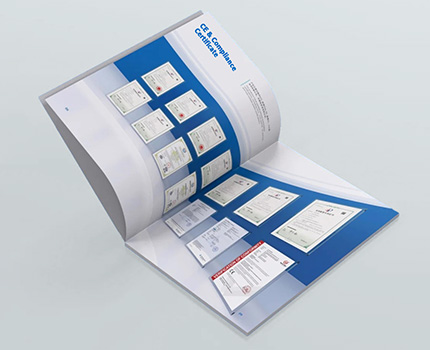
Download the catalog and the CE certificate, or send us your carton for a recommendation.
Product Portfolio
Quality Assurance
Technical Standards
Frequently Asked Questions On Automatic Cartoning Machine
An intermittent cartoner stops the carton chain while the product is pushed in. It’s simpler, costs less, and suits lines under about 120 cartons a minute or with frequent product changes. A continuous cartoner keeps cartons and pushers moving together, which runs smoother and quieter and is the only way to go much above 120. A continuous machine can also make sense below 120 if you run long shifts or stiff board.
Yes. Stiff and recycled board is what jams a cartoner at speed, so the faster machines open cartons mechanically rather than relying on suction cups alone. A planetary opening mechanism with pre-forming breaks the score lines and opens the carton square while it keeps moving. Send us your carton board and we’ll check it before you order.
Four rules, and they’re not the same rule. Cartons running low: the machine alarms first and keeps running, then stops if nobody reloads. No product: no carton is drawn and no leaflet is fed, so you don’t waste board. One leaflet missing: that carton is rejected at the last station. Leaflets missing continuously: the machine stops, because that’s a paper feed fault.
Product formats: on most models from the WZH-180 up, yes. With changeover parts at the infeed, one machine handles ALU-PVC blisters, soft ALU strips, pill trays, ointment tubes and sachets, and some models take bottles too. Swapping the feeder is a routine changeover. The 120 series and the 260P are each built for one format.
Carton closing is different, and it is worth understanding before you order. Tuck-in and snap-bottom share the same mechanical chassis, so one machine can run both with only a few changeover parts. Hot-melt glue does not: the glue station is a structurally different sealing section, not a bolt-on module. Converting a delivered tuck-in machine to glue means rebuilding the core sealing area, which is slow and expensive. We therefore confirm your closing method before the machine is built — tell us your carton design, dust environment and whether you need tamper evidence, and we will recommend which one fits.
Length, width and height are set with quick-release levers and hand-wheels against position scales, so no tools are needed. A trained operator changes carton size in about 20 to 30 minutes. We’ll time it on your cartons during the test run.
A kit of wear parts ships with your machine. Every part in the kit, and the lead time for anything outside it, is listed in your quote in writing.
Yes. Our machines are certified and use certified electrical components. Because the exact scope depends on the model and electrical configuration you select, our factory confirms it in writing before production.
Send us your carton and your product
Carton dimensions and product dimensions together decide the machine. Send both and we will come back with a configuration, a layout drawing and a price. If a cartoner is not what you need yet, we will tell you that instead.
- Direct from our factory
- Lead time confirmed in your quote
- Installation and training available
- Spare parts listed in your quote
Cartoning Machine Guide: Carton Opening, Leaflet Feeding and What to Check Before You Buy
If cartons open crooked or the leaflet arrives out of time, the blank twists and the machine jams. This guide covers how cartoners open cartons, fold leaflets and feed products, and what to check before you buy.
To eliminate these costly cartoning defects, pharmaceutical and nutraceutical manufacturers must upgrade to continuous horizontal cartoning machines equipped with rotary vacuum suction arrays and synchronized push-feeder linkages to secure perfect product insertion.
This guide covers how cartoners open cartons, fold leaflets and feed products, and what to check before you buy.
Table of Contents
1.What Are the Primary Classifications of Industrial Secondary Packaging Equipment?
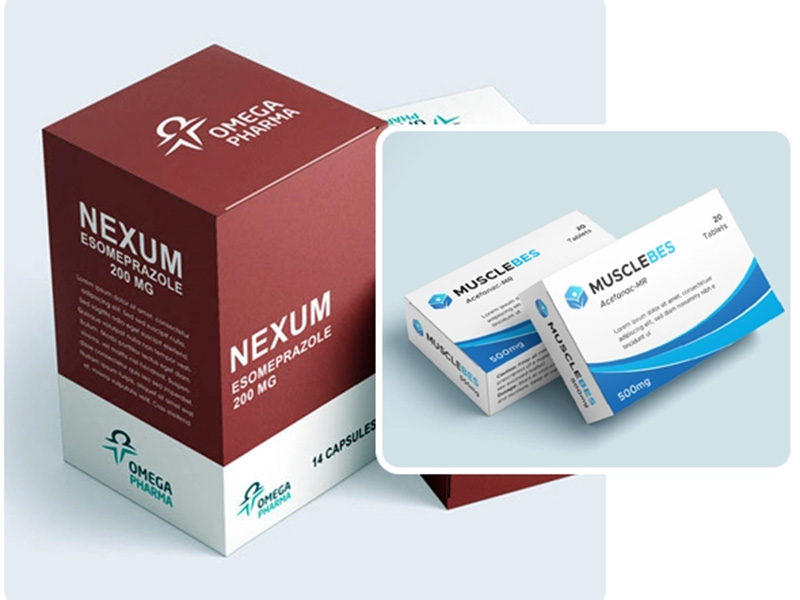
A cartoning machine takes your finished product — a blister, a bottle, a stack of sachets — and puts it into a printed carton with a leaflet. It’s usually the last machine before the shipping case.
Primary Machinery Classifications
The primary classifications of cartoning machines are described in the section below.
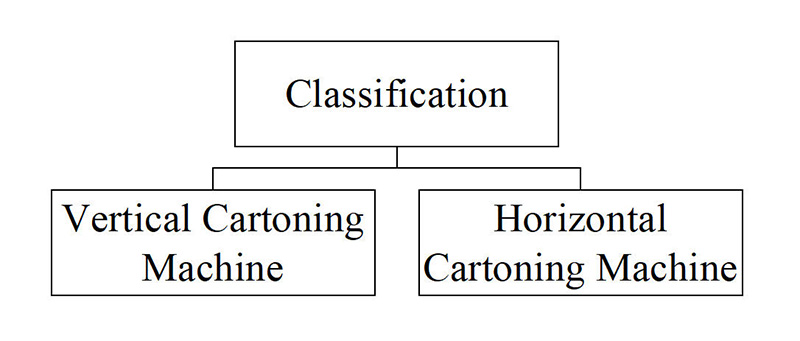
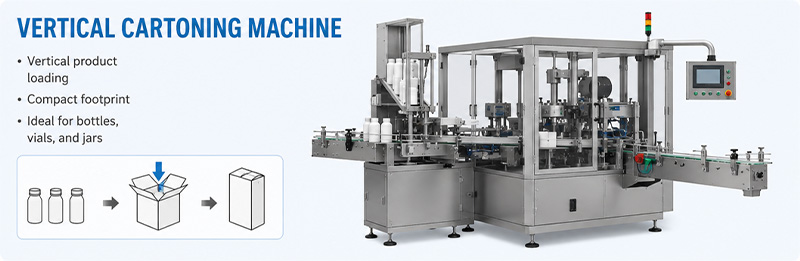
The vertical cartoning system, where the product is inserted into the carton from the top or the vertical position of the carton opening. Therefore, the system drops the product from the upward to the downward position and allows the items to be placed directly using the gravitational force. This layout is actually best suited when your product is rigid or stable in nature, such as bottles, jars, etc.
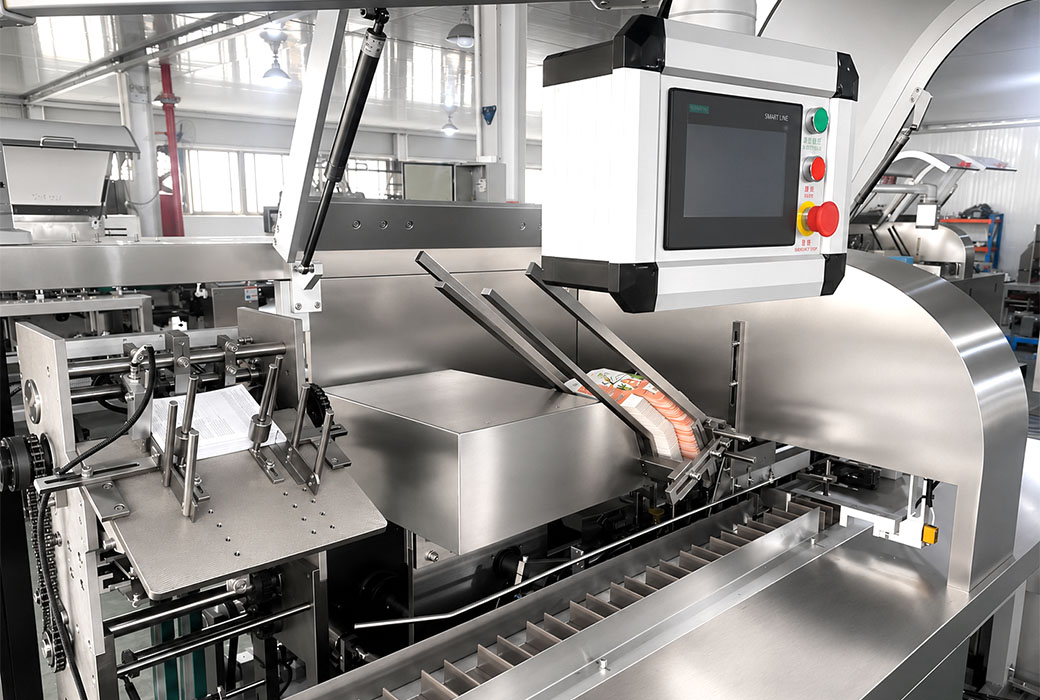
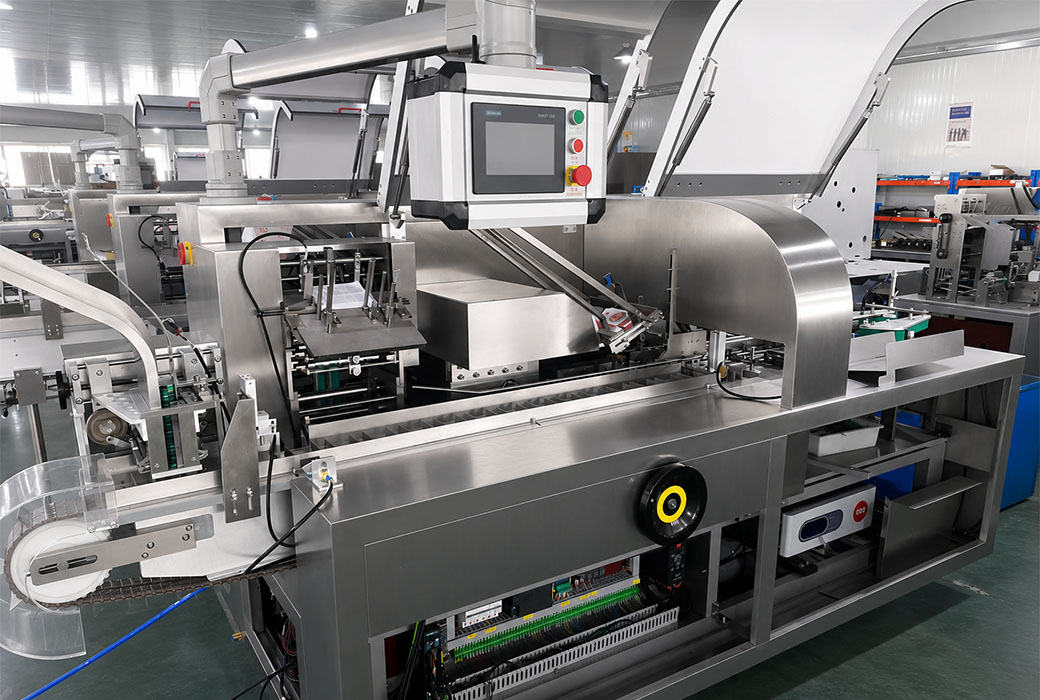
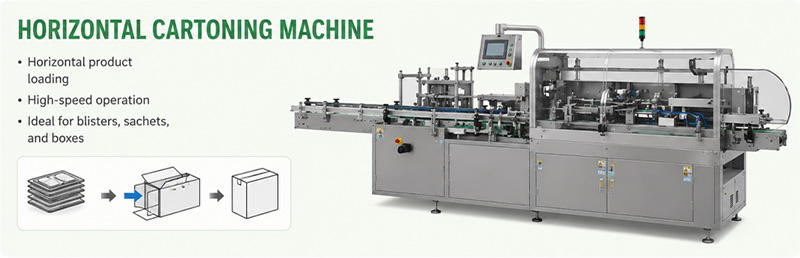
A horizontal cartoner pushes the product into the carton from the side. It’s the usual layout for blisters, tubes and sachets, and it handles multi-packs well. All nine of our cartoners are horizontal.
2.How Do Mechanical Cam Linkages Coordinate Carton Pre-Breaking and Smooth Product Insertion?
When looking for insight into how a cartoning machine works, its precise answer is its high synchronization. The cam linkage’s strong coordination with carton pre-break and smooth product insertion collectively helps in the prevention of carton tearing and product jamming.
The principle of how do cartoning machine work is described in:
Mechanical Synchronization of Cam Linkage
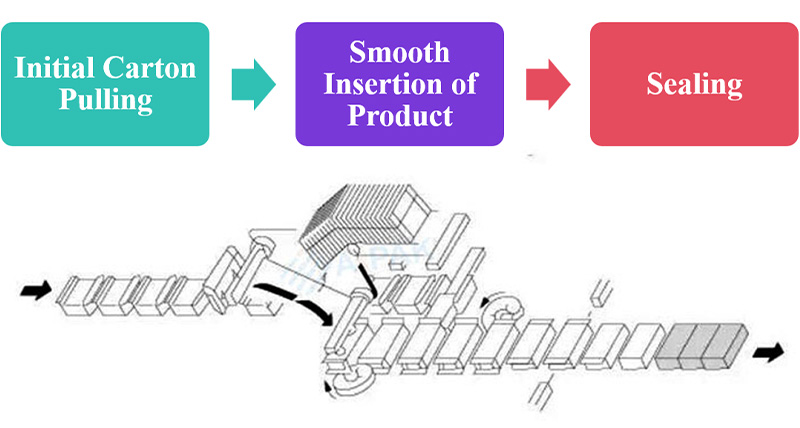
The mechanical cam linkage is used to maintain consistent operational flow without delay. From carton picking till final sealing, all steps go in a sequence. AIPAK’s cartoning machine follows with three basic steps for synchronization of cam linkage.
First, the central rotational drive operates all controlling keys such as pre-breaking, product feeding and transportation of the cartons. Secondly, the cam is utilized to dictate the defined ‘speed and acceleration of the machine’. Thirdly, the associated parts, such as rollers and the central surface, keep the machine and levers aligned.
Carton Pre- Breaking & Product Insertion
The carton pre-breaking and smooth product insertion by cartoning machines are initiated with the following steps:
Initial Carton Pulling
The vacuum arm pulls the flat carton blank from the magazine. The cam pushes the carton at a 90-degree angle to pre-break the creases.
Smooth Insertion of Product
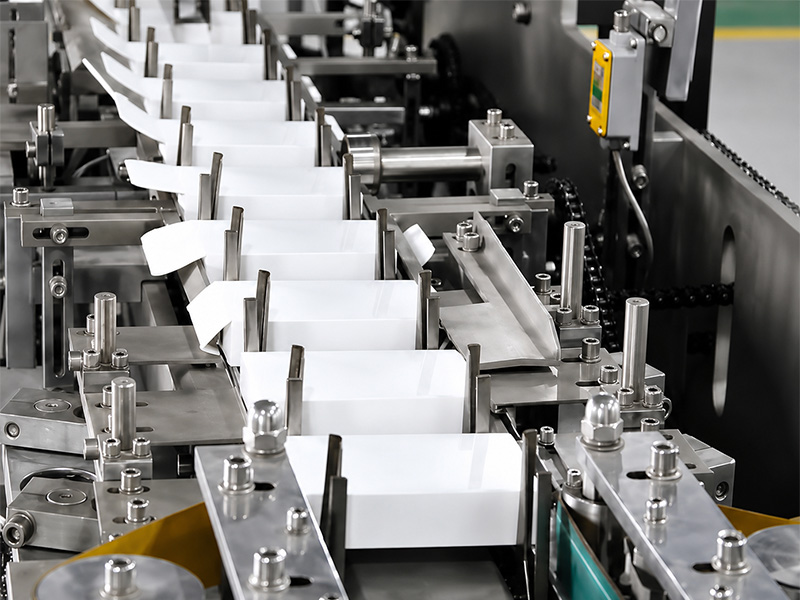
Conveyors allow products to travel towards the carton. The carton and pusher move together. The guides help with the upkeep of the product and carton at the center. Thus, the product is positioned inside the carton effectively.
Sealing
The cam linkage helps in the prevention of the product slipping back. This is a continuous process without tearing chances. An immediate tucking-in process occurs to seal the carton. The completion of these steps is observed at 120 cartons per minute.
3.What Engineering Fixes Solve Leaflet Folding Inaccuracies and Insertion Bottlenecks?
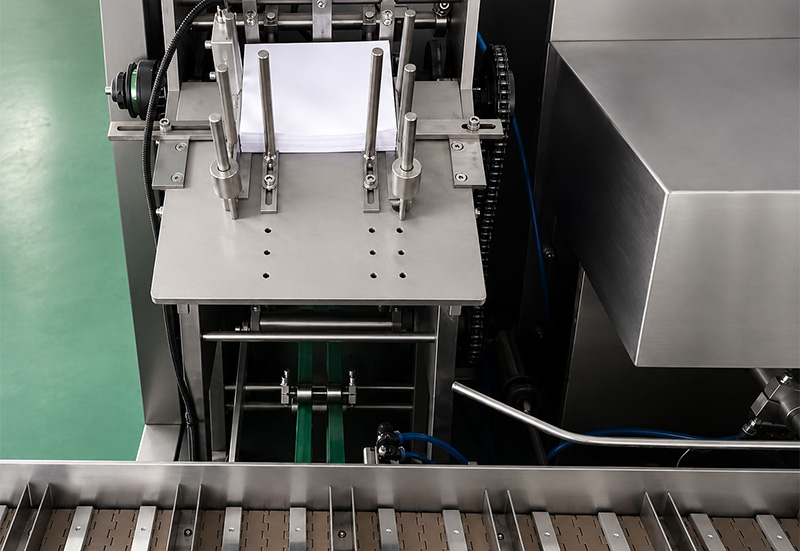
A buckle-plate leaflet folder is used to fold the leaflet before it goes into the carton with the product. For instance, a buckle-plate leaflet folder is used to fold the leaflet before it goes into the carton with the product.
Therefore, multiple systems, such as roller and buckle plates, are meant to keep thin paper sheets accurate and folded. However, in some cases, it bunches up and jams the main pushrod. On our machines, a suction arm picks each leaflet and holds it in position, which keeps thin paper from bunching.
The folded leaflet is then pushed into the carton together with the product, usually underneath a blister, so it doesn’t catch on the carton flaps.
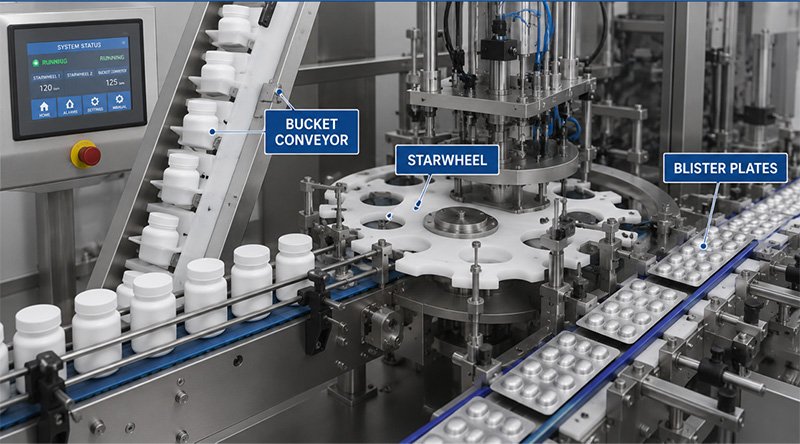
4.How Do Smart Interfaced Starwheels and Bucket Conveyors Smoothly Feed Blister Plates and Pill Bottles?
In a cartoning machine, a starwheel, which is a rotary indexing, helps in positioning the carton and bucket conveyors together upstream of the cartoning process. Both of these advanced components operate with electronic gearing and mechanical handoffs to manage the packaging of products like blister packs or bottle counting lines.
Mechanical Interaction of Dynamic Friction Belts & Items
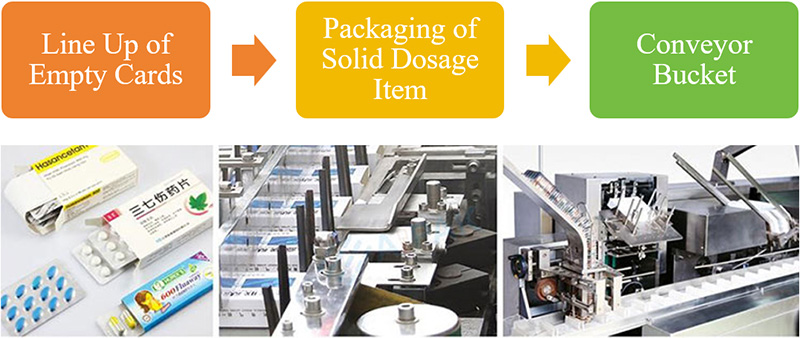
To understand the mechanical interaction of a servo-driven starwheel and bucket conveyor, please look at the steps:
Lining Up Empty Cartons
The conveyor path and starwheel work in parallel in the lining up of items and empty cartons.
Placing the Product
The movement of pill bottles or blister plates is positioned in the laying-down direction so they can slide into the boxes without damage or manual touch.
Conveyor Bucket
From product orientation to packaging, the movement of the bucket, which is a slot made on the cartoner conveyor, helps in the stable movement of the item inside the box.
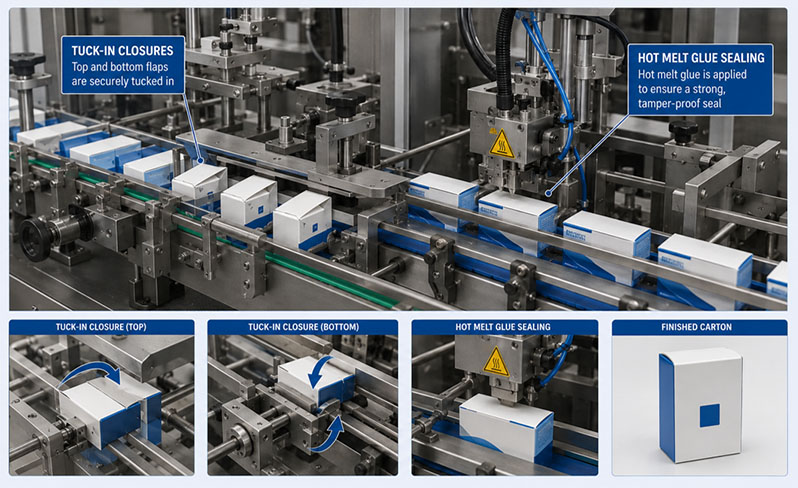
5.What Are the Practical Cost-Benefit Trade-Offs Between Tuck-In Closures and Hot Melt Glue Sealing?
Both tuck-in closures and hot-melt glue sealing offer balanced product sealing security to their customers. However, to understand the real-time or practical cost-benefit trade-off between them, we have compared these two sealing methods.
Method Properties | Tuck-In Closures | Hot Melt Glue |
Consumable Material Cost | The consumable material cost is very low. You don’t need to use liquid adhesive or tape. | It has a moderate cost. You will require continuous adhesive, nozzles, & electricity expenditure. |
Changeover Part Complexity | This is simple and fast. The changeover parts mostly rely on guide rails and plows. | It has a high changeover complexity where you require glue gun adjustment, pattern programming and heating. |
Dust Resistance | It has poor dust resistance. | As compared to tuck-in closures, hot melt glue has excellent dust resistance. |
Anti-Counterfeiting Security | It offers low anti-counterfeiting security as it can be easily opened and re-closed without any evidence. | It has high anti-tampering security. The fiber-tear bond prevents covert opening of the seal. |
6.How Do Inkjet Printing and Embossing Systems Apply Readable Batch Dates on Carton Flaps?
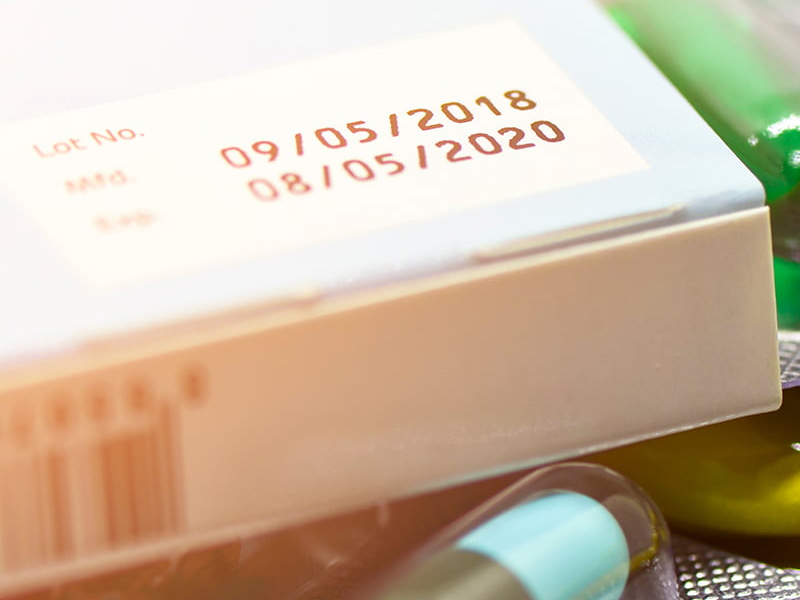
Inkjet printing and embossing systems are used to print readable batch dates on the packaging carton flaps. This is a digital system which, upon receiving the command codes, prints in fractions of a second without delay. Thermal inkjet printing works by dropping micro-fine ink droplets, allowing printing of content. It dries quickly and prints characters on the paper.
The mechanical embossing system uses steel dies to mark by pressing the description character over the paper board. Consequently, in the case of an inkjet printer, in humid or hot conditions, the chances of print erasing or smudging are high.
The mechanical embossing does not have smudging or erasing problems. Embossing gives a permanent mark that won’t smudge or fade, which is why many brands prefer it for batch and date codes. Inkjet is more flexible if your code changes often.
7.How Do Position Scales Speed Up Format Changeovers for Different Box Sizes?
Each adjustment point has a position scale that shows where the guide rails and shafts sit for each carton size. With quick-release handles, there’s no need for calipers, wrenches or tape measures. That cuts adjustment time from hours to minutes and makes setting errors much less likely.
8.How Do Leaflet-Present Interlocks and Conveyor Air Rejections Stop Mispackaged Batches?
Sensors at the end of the machine check each carton before it leaves. Photoelectric sensors confirm the leaflet is in and the flaps are closed, and a batch-code check can be added.
If a leaflet is missing, that carton is rejected at the last station. A batch-code check can be added, so a carton with a missing or unreadable code is rejected too.
Conclusion

A cartoner that opens cartons cleanly, folds leaflets reliably and changes size quickly is one that keeps your line running. Send us your carton dimensions and leaflet specification, and we’ll recommend a machine and draw a layout for your room, free.