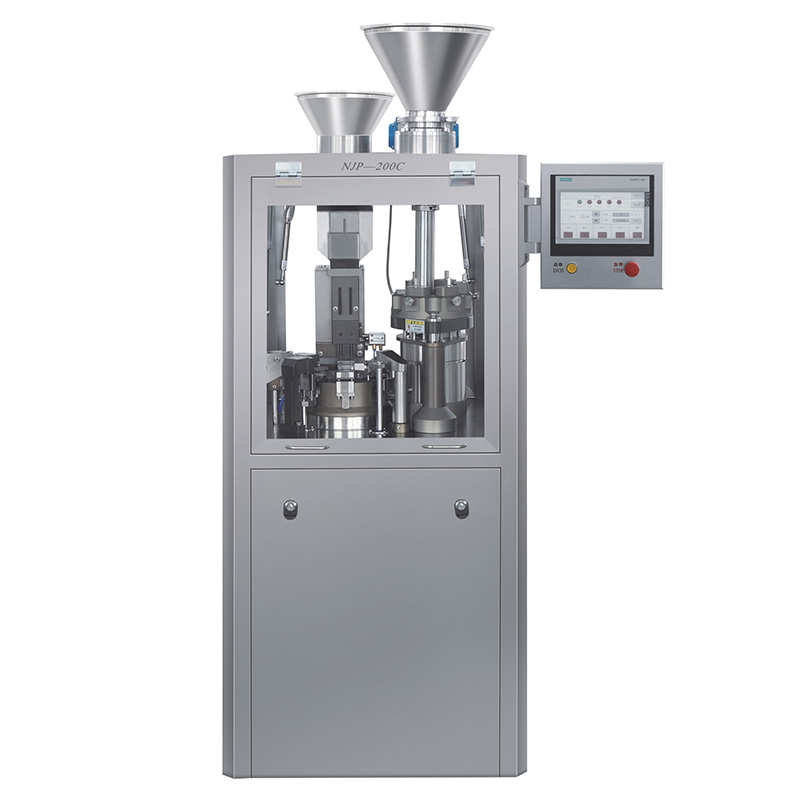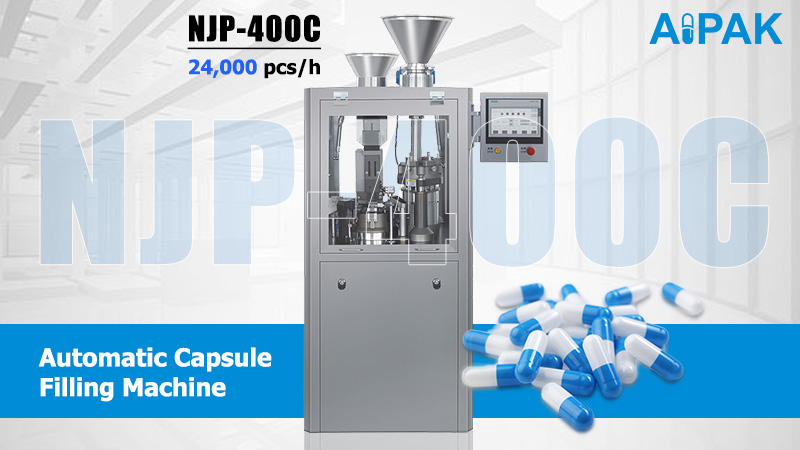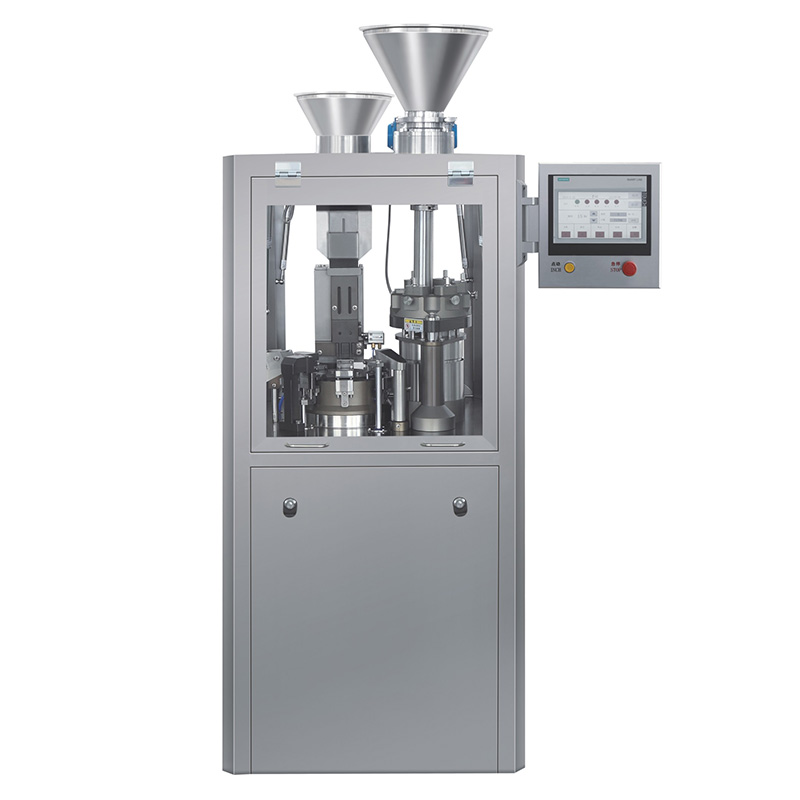
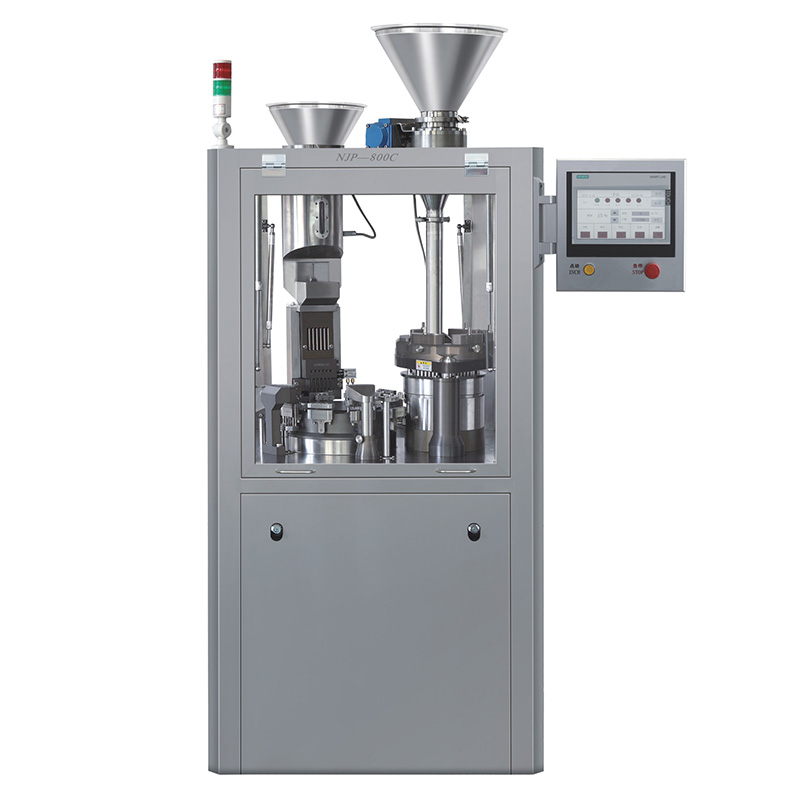
NJP-400C Automatic Capsule Filling Machine — 24,000 Capsules/Hour
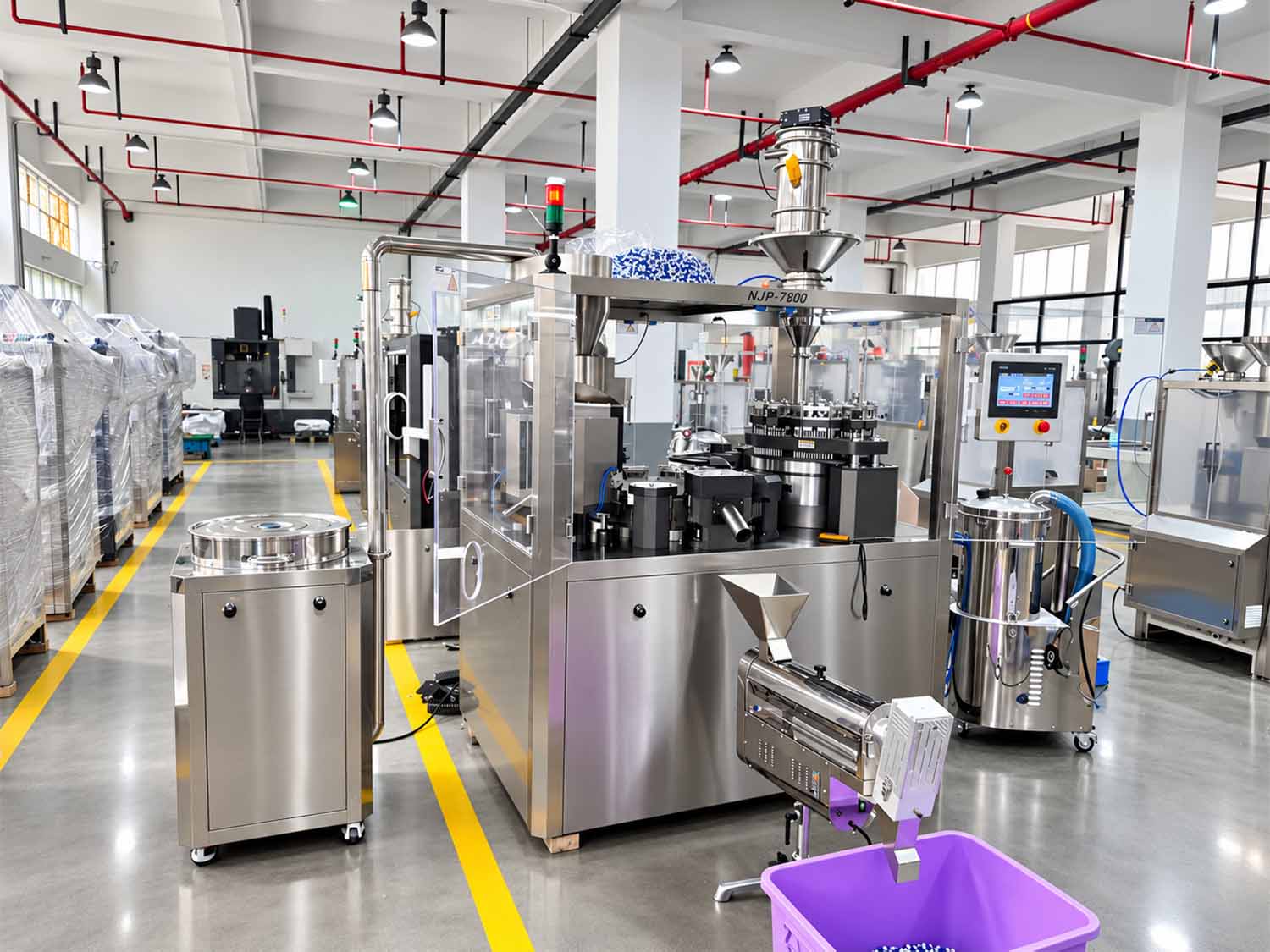
The NJP-400C fills 24,000 capsules an hour. It’s the step up from the 200C when product development turns into steady commercial runs.
1. Output: 24,000 capsules an hour as a sustained rate
2. Fill weight accuracy: ±3% on pharmaceutical powder, ±4% on herbal powder
3. Versatility: Supports capsule sizes #000 to #5 with modular tooling for rapid changeovers.
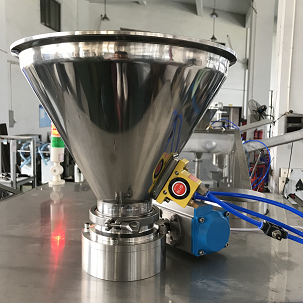
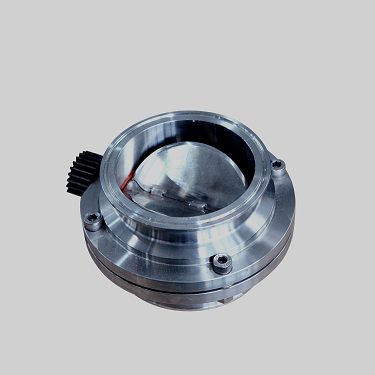
4. Powder handling: Vibration-assisted butterfly valve hopper — force-feeds sticky herbal powders that jam a screw feeder
Is the NJP-400C the right filler for you?
✓ This is a fit if…
- You need around 24,000 capsules an hour as a sustained rate
- Product development is turning into steady commercial runs
- You're filling powder, granule or pellets
- You run #000 to #5 capsules
- Your room holds 21 °C ± 3 °C and 40–60% humidity
✕ Look elsewhere if…
- You need more than 24,000 an hour → the NJP-800C runs 48,000 for a modest step up
- This is your only machine and you plan to scale within a year → buying the 800C now costs less than buying the 400C twice
- You're doing bench-scale R&D only → a semi-automatic filler costs a fraction of this
- Your powder is very fine and highly potent → an enclosed rotary machine with dust extraction is not the same as a contained or isolator system. Tell us your OEB band first
- You need under 12,000 an hour → the NJP-200C costs less and does the same job at that rate
Technical specification
Model | NJP-400C |
Max Output | 24,000 capsules/hour (400 pcs/min) |
Capsule Sizes | #000, #00, #0, #1, #2, #3, #4, #5 |
Number of Dosing Bores | 3 bores |
Filling Accuracy | ±3% (pharmaceutical powder) / ±4% (herbal powder) |
Suitable Materials | Powder, Granule, Pellet |
Power Supply | 3.0 kW, 60 Hz. Built to your U.S. supply; we confirm the voltage with your quote |
Vacuum Requirement | 40 m³/h, −0.04 to −0.08 MPa |
Dust Extraction | 210 m³/h, 24.5 kPa |
Compressed Air | 5 m³/h, 5–7 bar |
Noise Level | < 75 dB(A) |
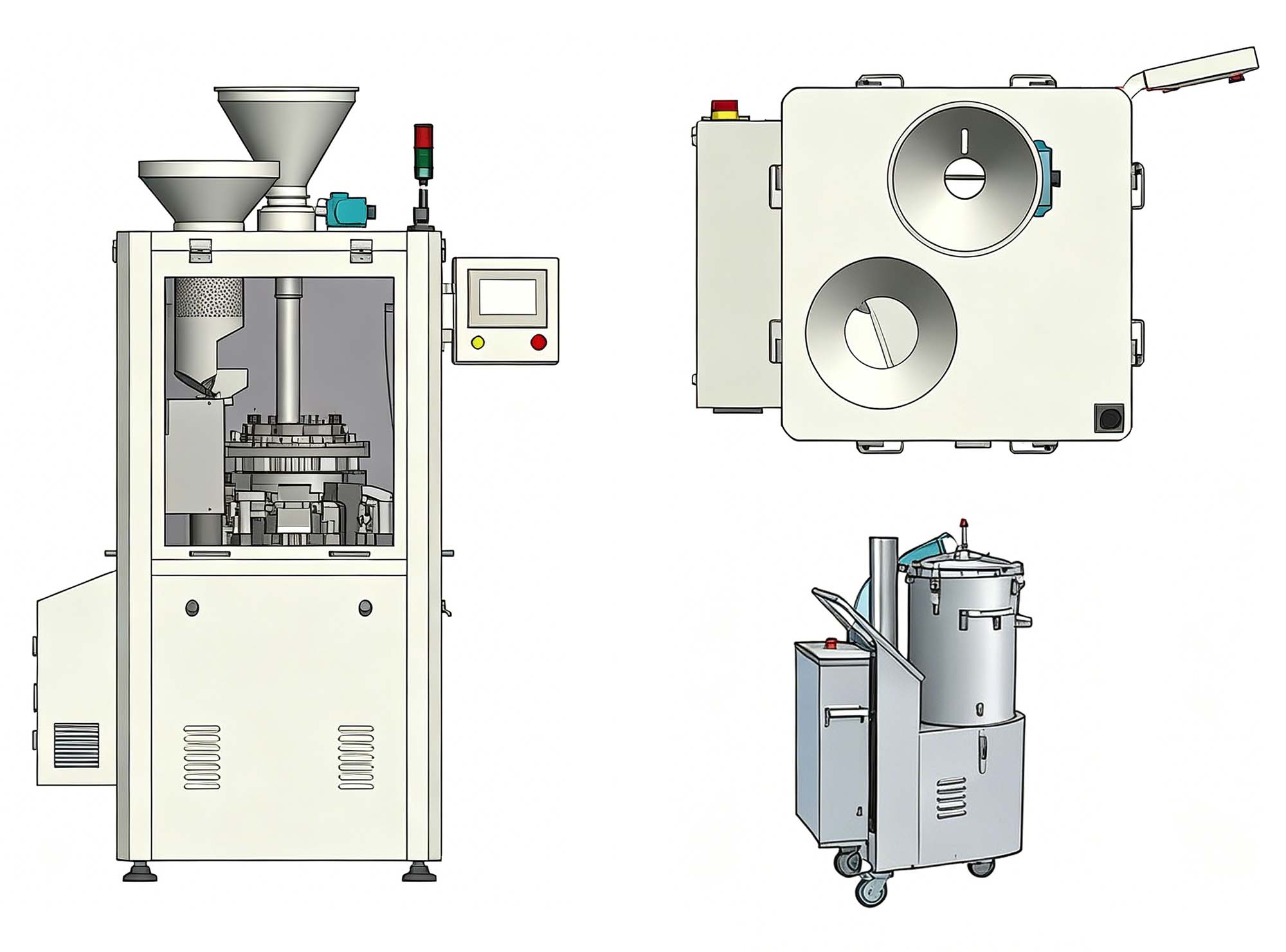
Overall Dimensions | 800 × 900 × 1,900 mm (L×W×H) |
Net Weight | 600 kg |
Facility requirement | 21 °C ± 3 °C, RH 40–60% |
Model comparison
Model | Output pcs/h | Type | Best for… |
|
NJP-200C | 12,000 | C | Small batches and product development | |
NJP-400C | 24,000 | C | Growing production | You are here |
NJP-800C | 48,000 | C | Standard commercial output | |
NJP-1200D | 72,000 | D | Sticky and herbal powders at scale — dry vacuum pump, auto lubrication | |
NJP-2500C | 150,000 | C | High-volume continuous production | |
NJP-3800C | 228,000 | C | Large-scale manufacturing | |
NJP-5500C | 330,000 | C | Very high volume | |
NJP-7500C | 450,000 | C | Highest output in the range |
The D suffix is a configuration, not just a speed step. C-type machines use a water-ring vacuum pump and external-groove cam lubrication. The D adds a dry vacuum pump — no water to refill, no scale build-up — plus enclosed internal-groove cams with automatic timed oiling, and a nano anti-corrosion coating over the same stainless steel. If your formulation is corrosive or your maintenance team is thin, that’s what you’re paying for.
Integrated control cabinet
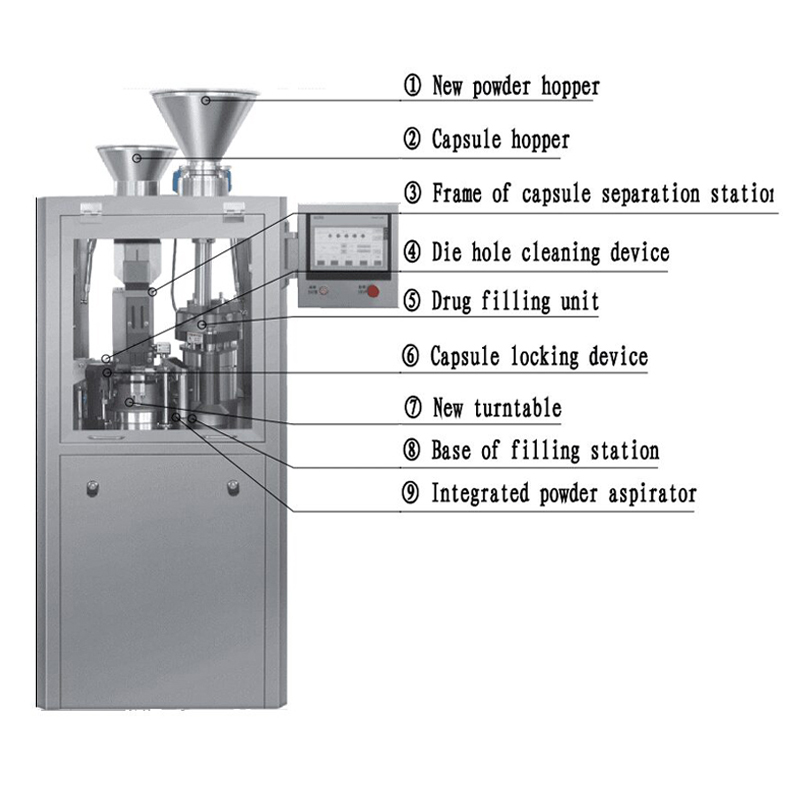
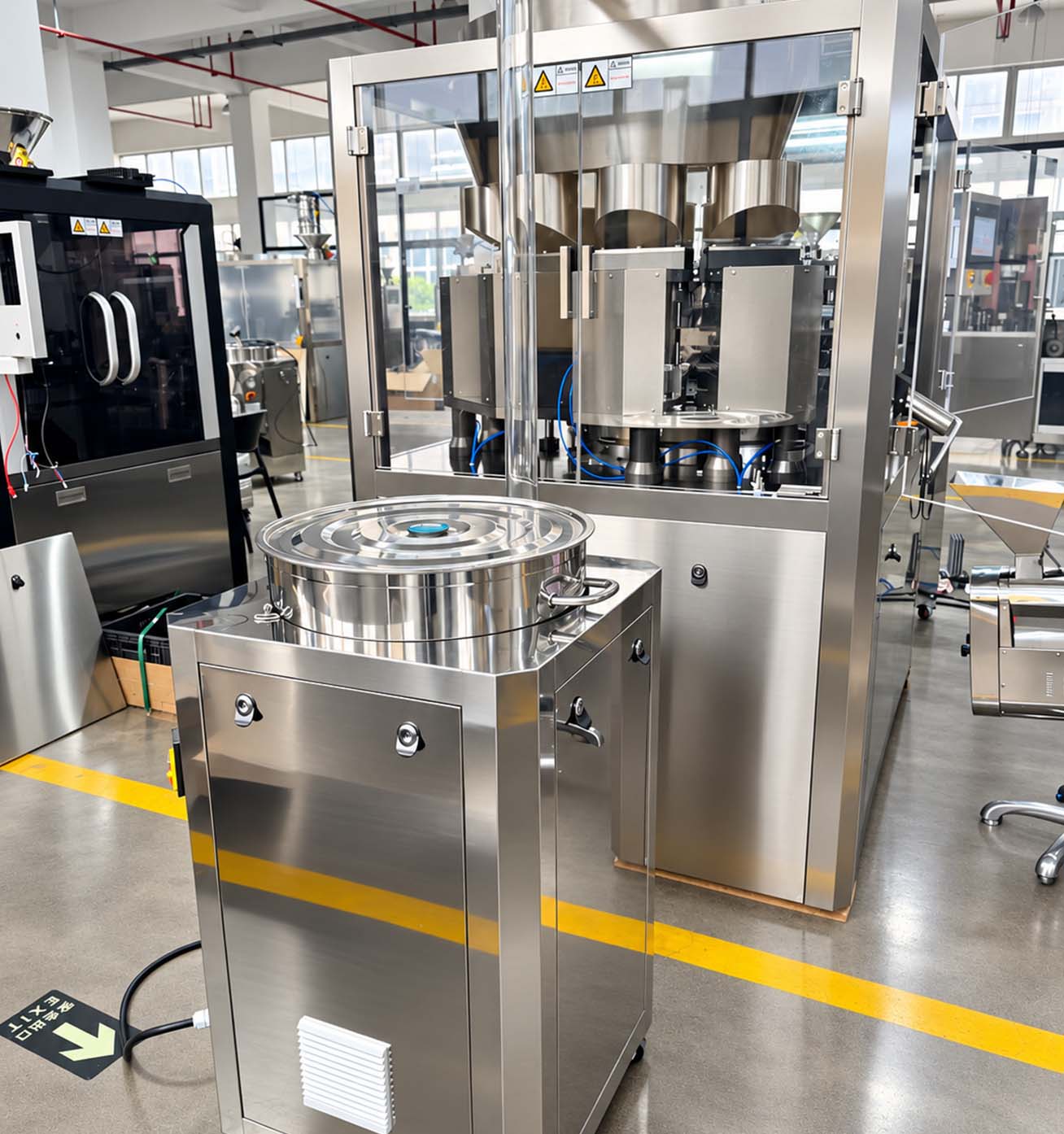
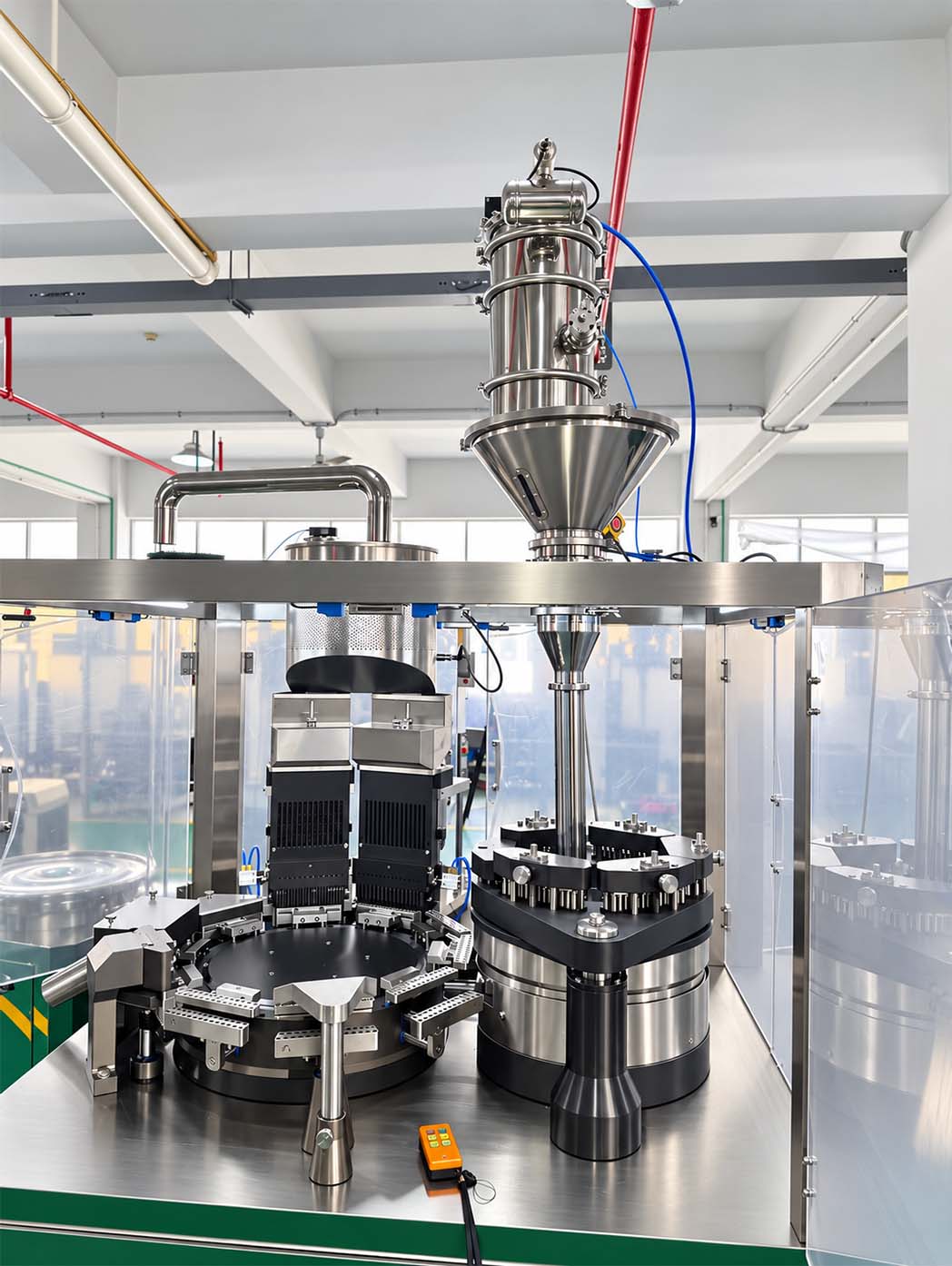
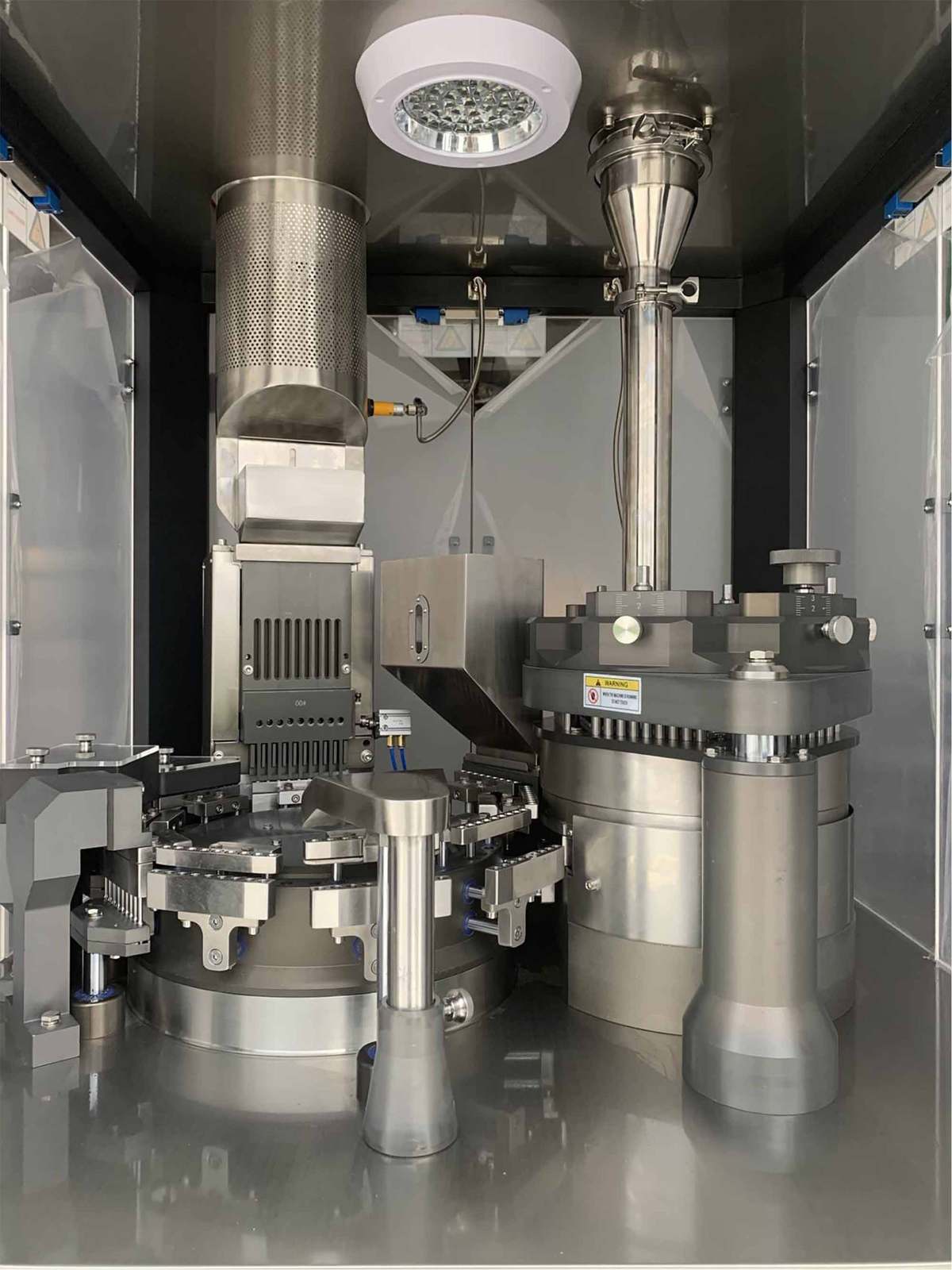
The Siemens PLC and touchscreen are built into the machine body, so there’s no separate control cabinet to find floor space for.
Precision-Engineered Multi-Station Rotary Workflow
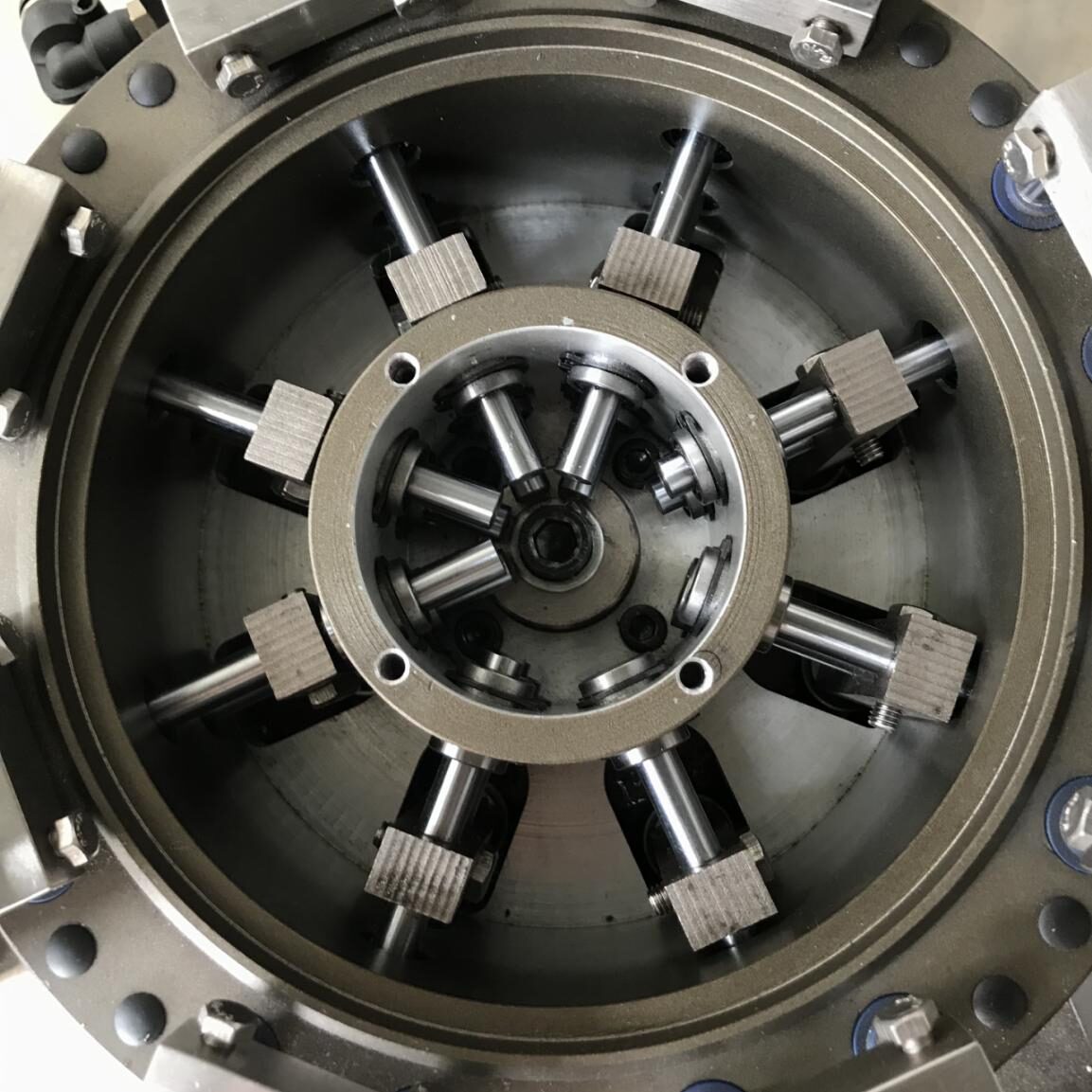
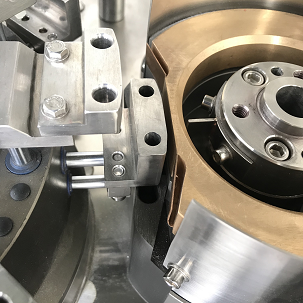
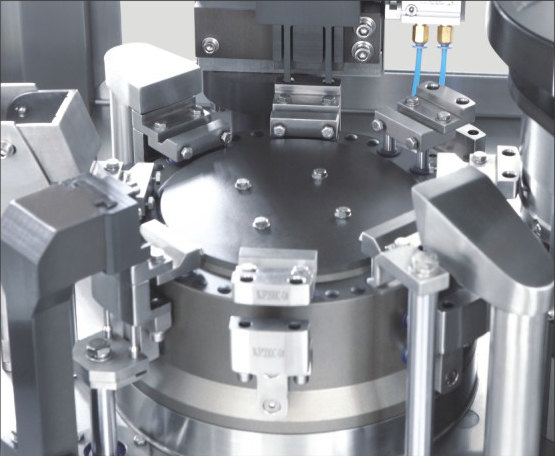
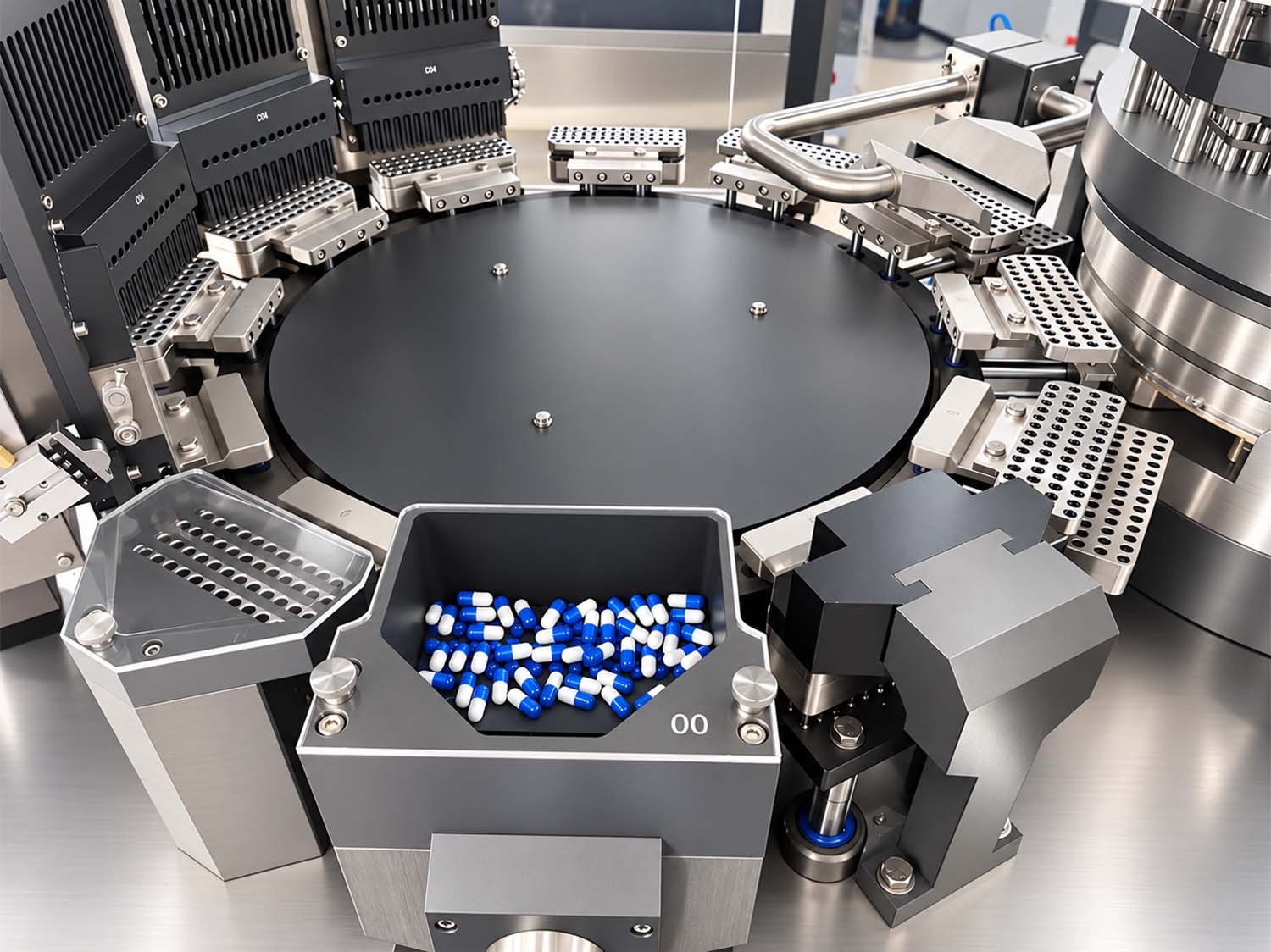
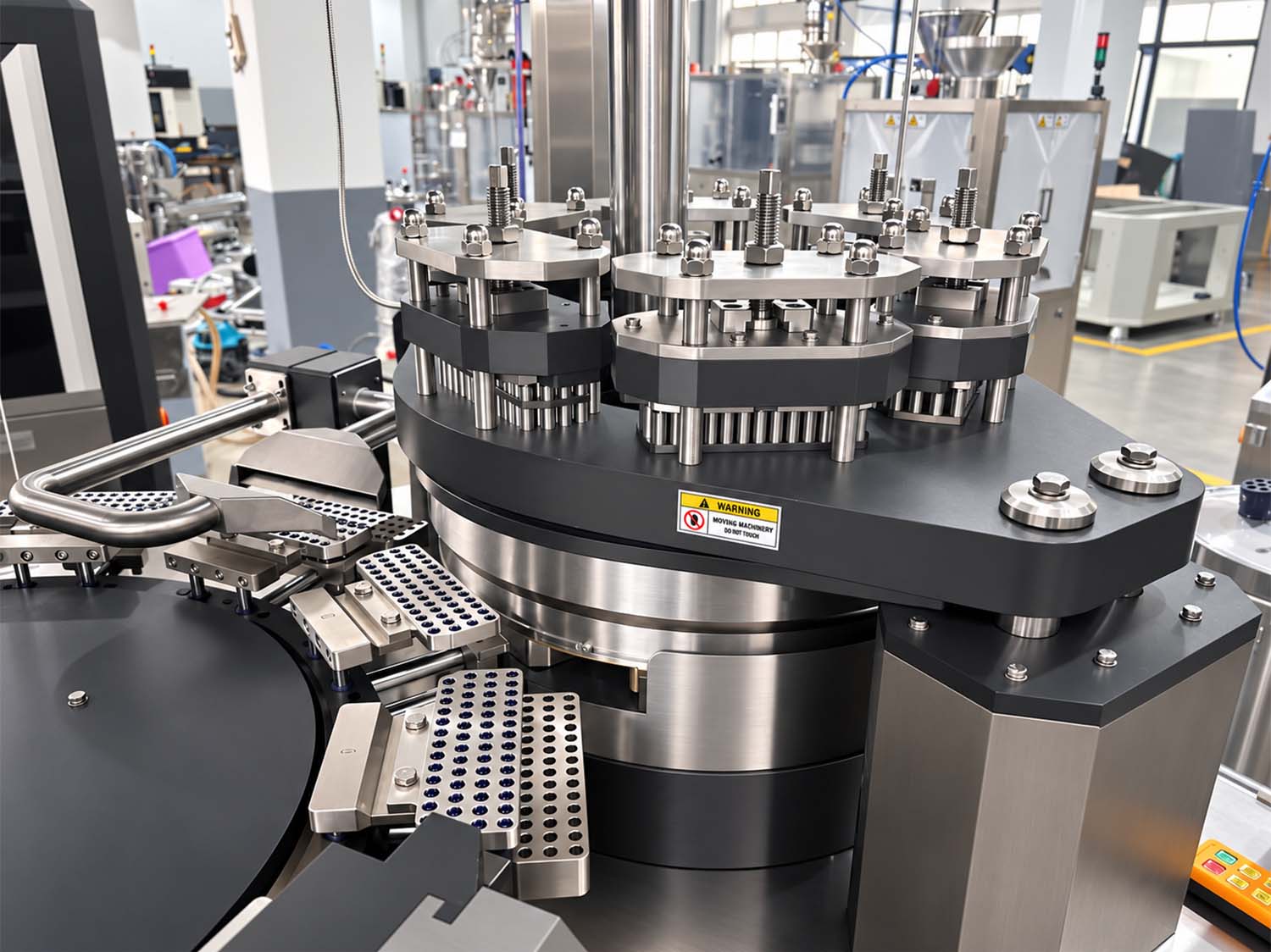
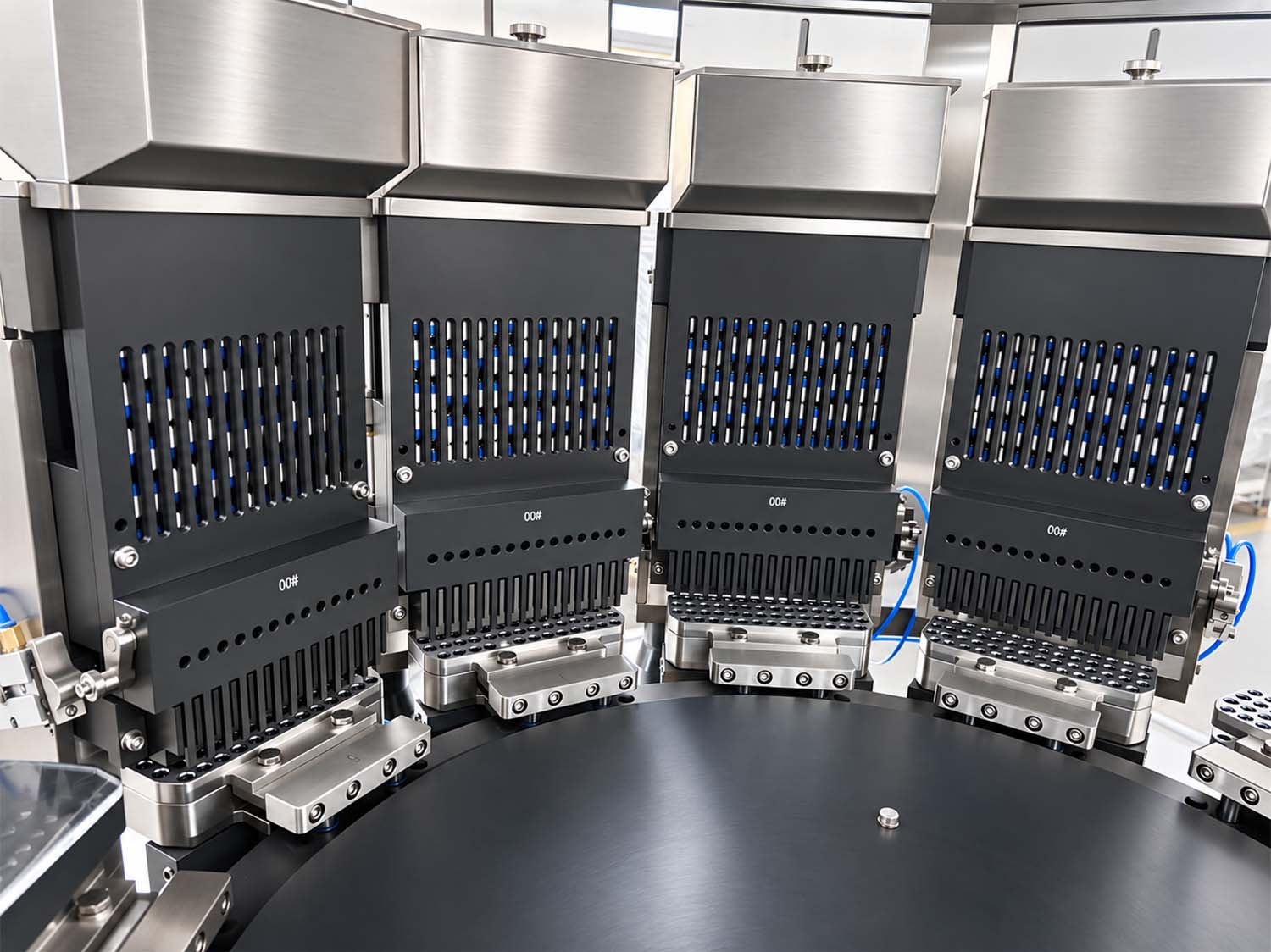
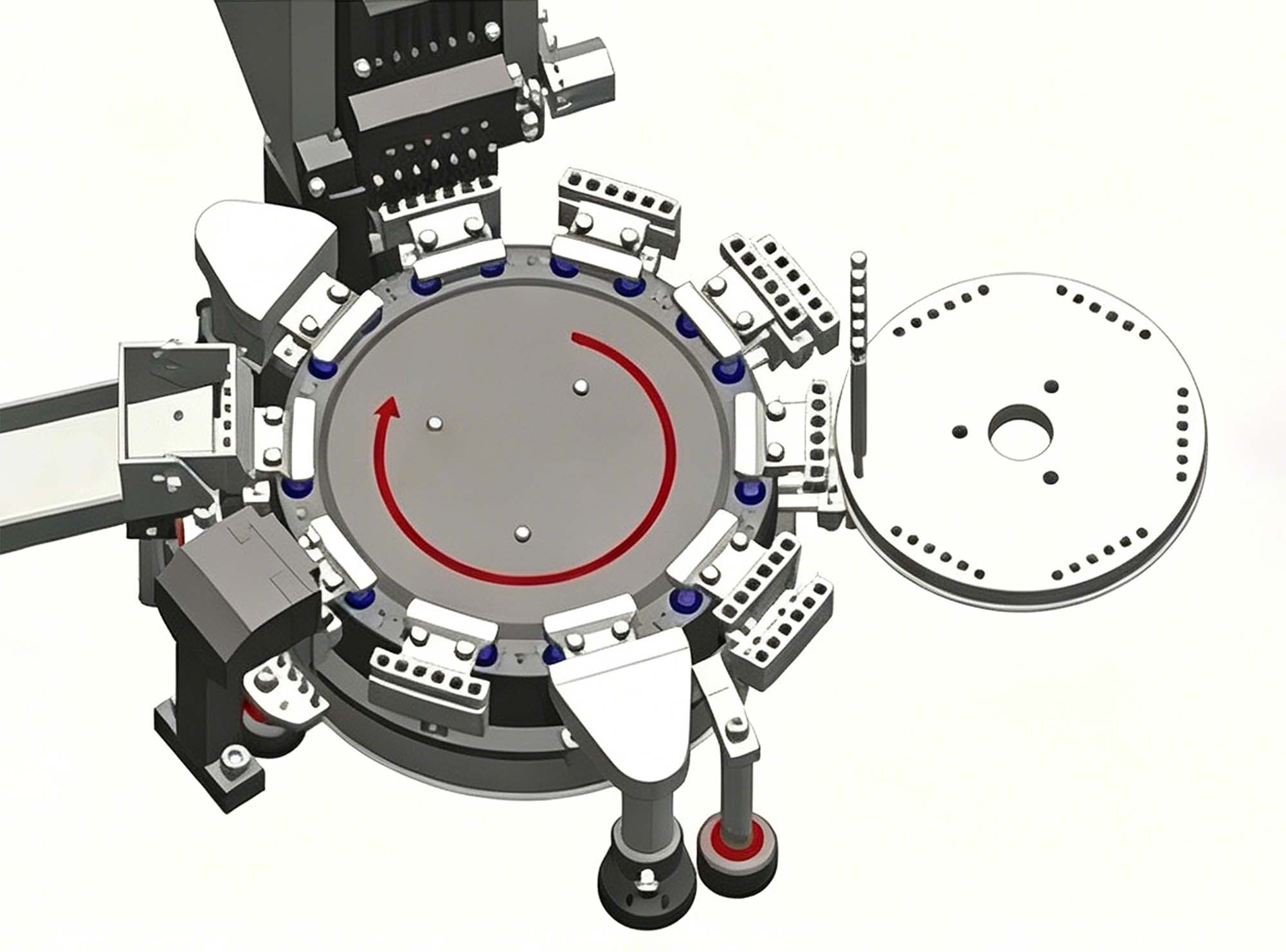
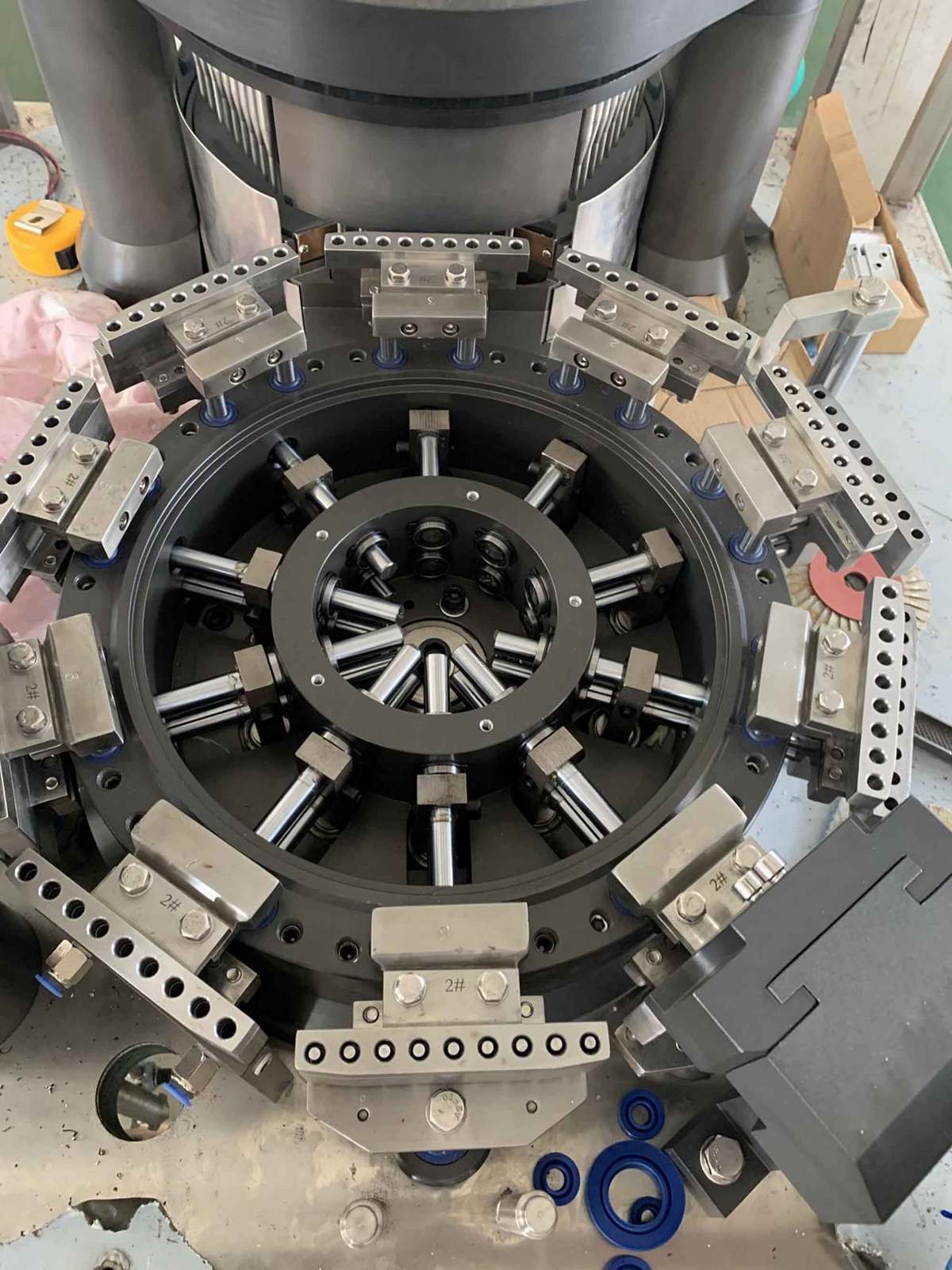
Featuring a sophisticated 10 stations indexing system, our workbench synchronizes every stage of the process—from precise capsule separation and multi-stage filling to intelligent waste removal and secure locking. This streamlined, modular workflow maximizes production consistency while offering reserved extension stations for future functional upgrades.
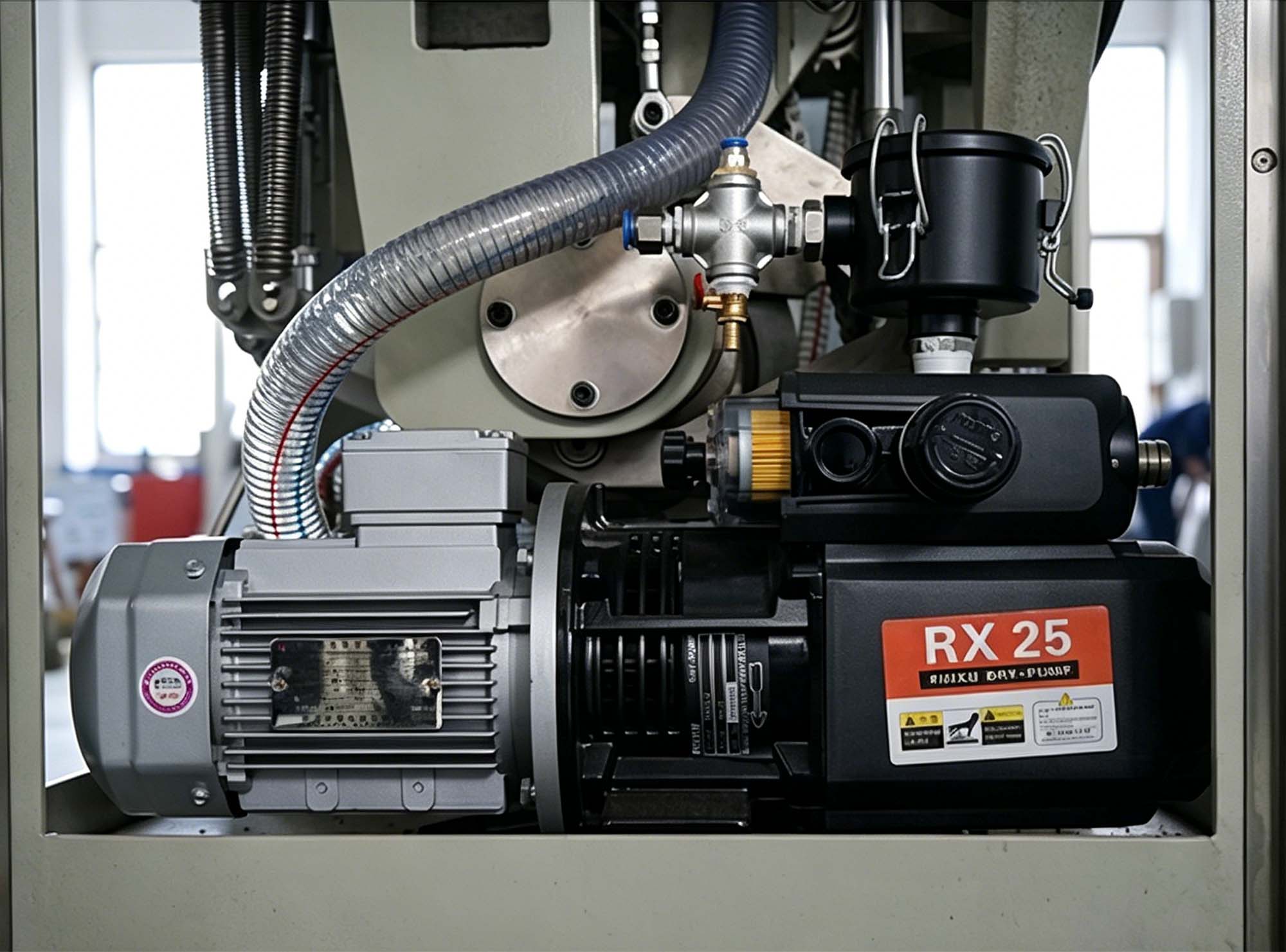
Oil-Free Dry Vacuum System for Superior Cleanliness
Equipped with a high-performance imported dry vacuum pump, our system ensures an ultra-quiet, oil-free operation that aligns with rigorous international cleanroom standards. Designed for maximum uptime, the system simplifies maintenance—requiring only a quick one-minute filter cleaning per shift to keep your production running at peak efficiency.
Keeping Powder Out of the Drive System
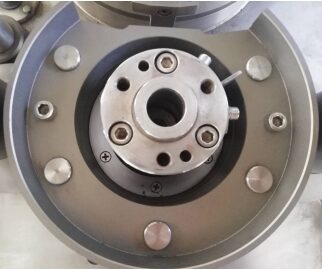
The enclosed turntable runs three years without internal maintenance or manual oiling with a dual-lip skeleton dust ring to prevent powder ingress.
How Much Powder Are You Losing per Batch?
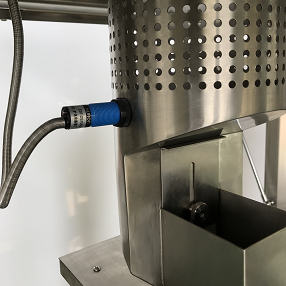
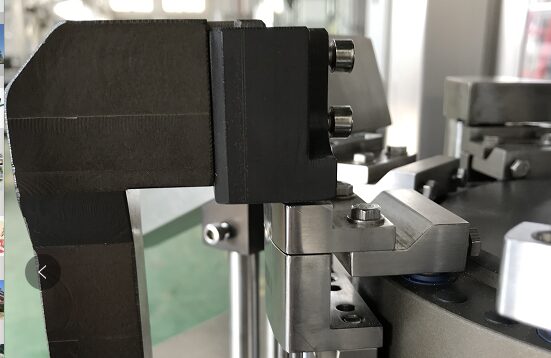
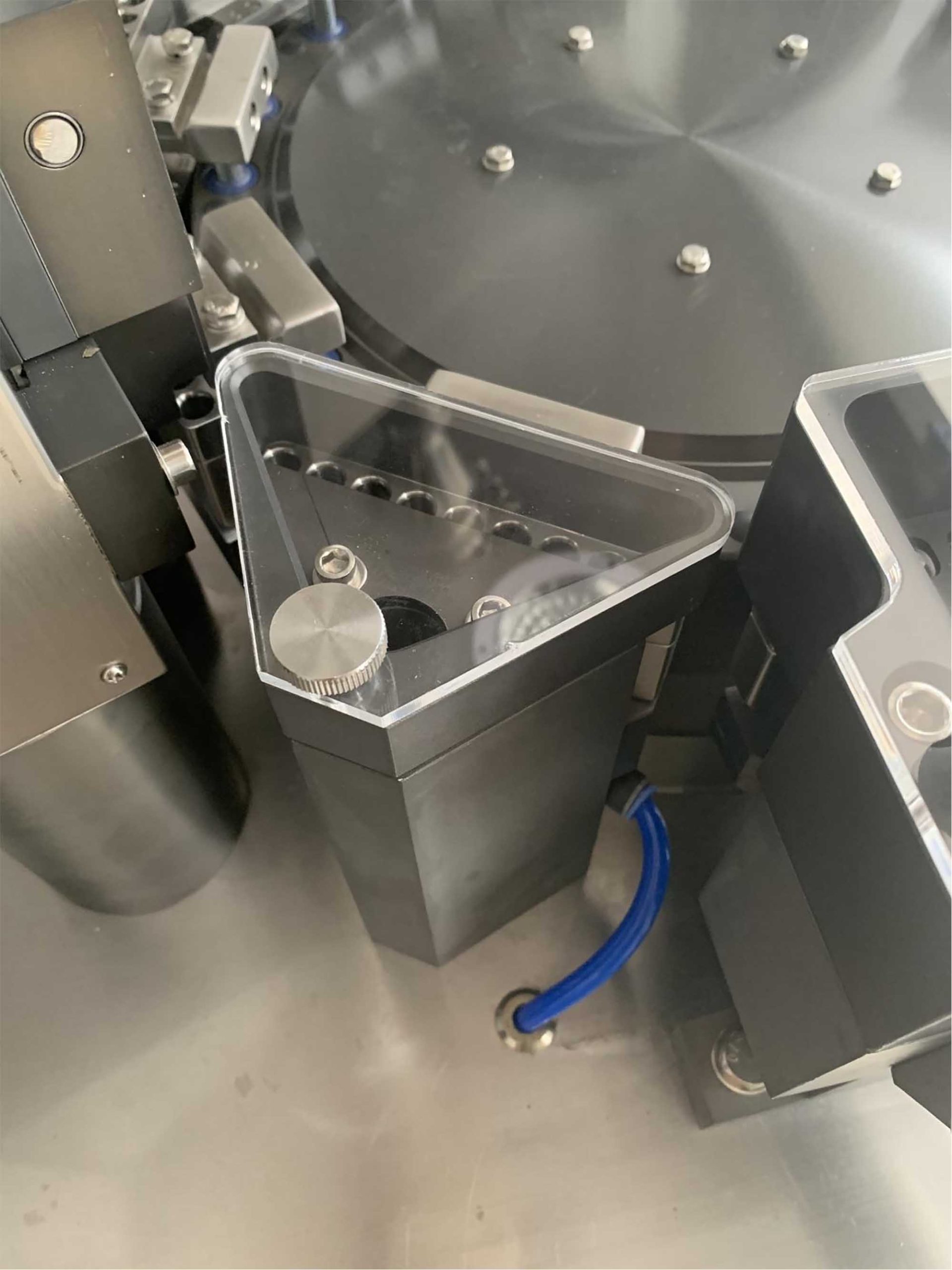
Powder from capsules that fail to separate is drawn into a collector by negative pressure instead of falling onto the platform, so you recover it rather than sweep it up.
Running at 24,000/h Without Losing Fill Accuracy
Ten stations split separation, filling and locking into separate steps, so the NJP-400C holds its fill weight at 24,000 capsules an hour.
Industrial Applications
Herbal and botanical extracts
Poor flowability is the classic reason a capsule line stalls. Herbal powders arch above a screw feeder outlet instead of falling through it. The butterfly valve hopper vibrates the material past that point — this is the case it was built for.
Hygroscopic powders
Moisture-absorbing powders stick to the mold holes and stop capsules separating. An air jet clears both mold holes on every rotation, which is what keeps the capsule-feeding success rate from dropping through a shift.
Pellets and powder-plus-pellet
Station five is left open for an optional pellet dosing unit. A machine bought for powder today can run powder-plus-pellet later without going back to the factory — tell us if that’s on your roadmap and we’ll leave the interface in place.
High-value actives and concentrated extracts
When the powder costs more than the capsule, recovery matters more than speed. Two separate lines — one for waste capsules, one for clean powder — mean what you reclaim goes straight back into the batch.
Changeover: what you change and how long it takes
What you changed | What gets adjusted | Roughly how long |
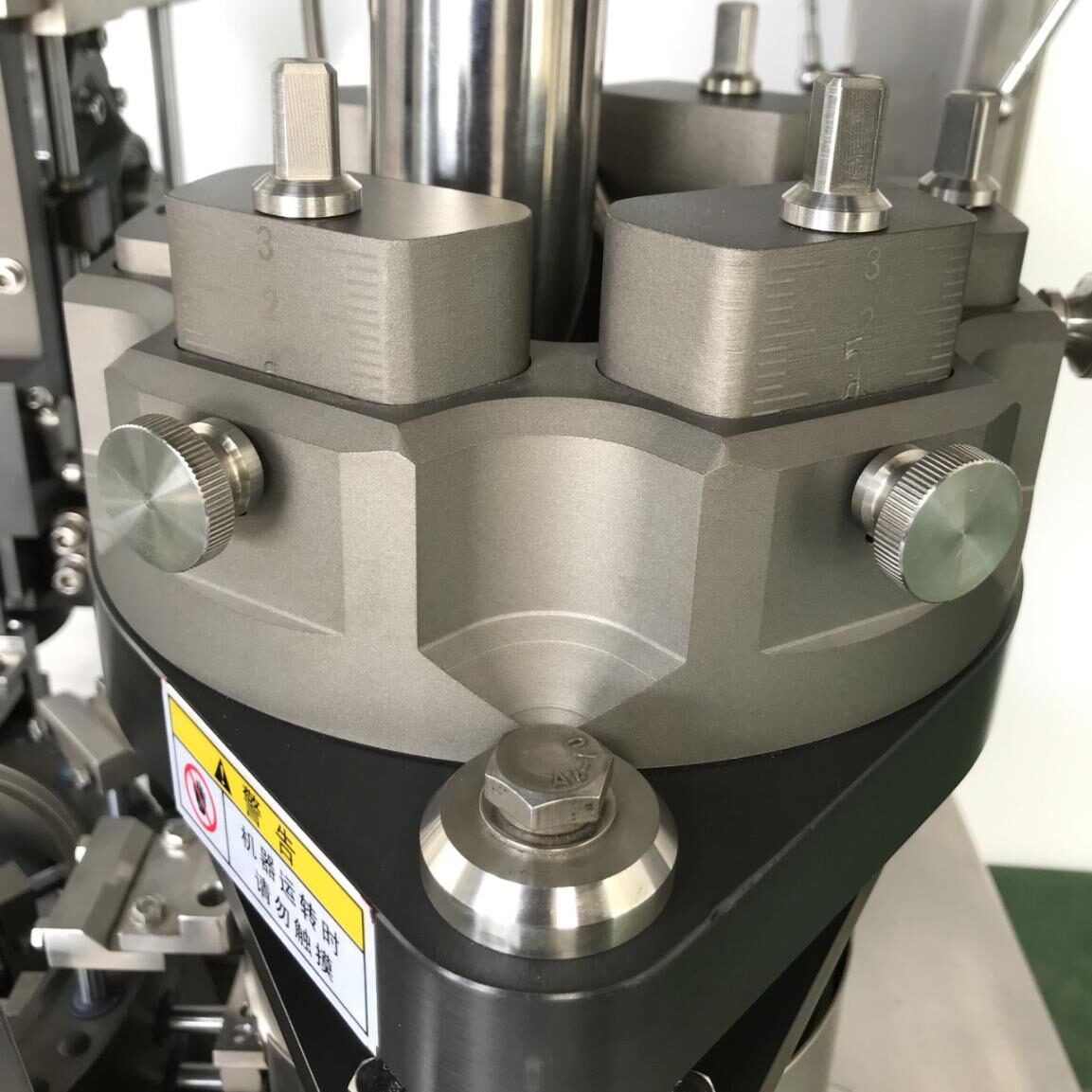
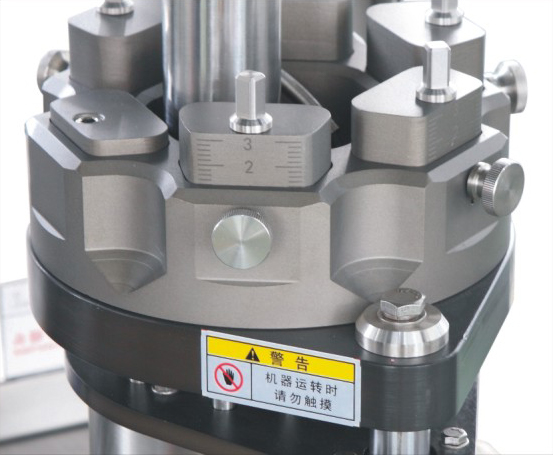
Same capsule, different fill weight | Tamping pin depth on the dosing station | 15–30 minutes |
Fill weight beyond the adjustment range | Swap the dosing disc for a different thickness | 15–30 minutes |
Different capsule size | Full tooling set: upper and lower modules, tamping pins, capsule tubes, alignment combs, feeding combs, dosing disc, alignment bars | 15–30 minutes |
Dosing disc thickness is the second lever. When tamping depth reaches its mechanical limit and you still can’t hit your target fill weight, you change the disc rather than fighting the machine. It’s a physical volume change, not a calibration.
The gaps matter more than they sound. Dosing disc to copper ring: 0.08–0.12 mm. Isolation block to disc: 0.05–0.1 mm. Every disc change means resetting the second one. Too tight and the disc binds; too loose and powder leaks and your fill weight scatters.
Cleaning is the long part. Between products, the powder hopper, dosing ring, upper and lower modules, tamping pins and dosing disc all come out. Parts above the machine table are cleaned with alcohol on lint-free cloth — never gasoline, kerosene, hydrogen peroxide or acetone.
What to check before you order — from any supplier
Ask to see the machine running your powder, not a demo powder
Lactose and starch run beautifully on everything. Ask for a video of your own material, or send a 2 kg sample for a trial run. Any factory that won't do this is telling you something.
Ask what the sustained rate is, not the maximum rate
Catalogue output figures are peak numbers. Ask what the machine holds over an eight-hour shift with your fill weight and your capsule size, and what the reject rate looks like at that speed.
Ask for the operating manual before you pay
If the adjustment procedures aren't in it — tamping pin height, dosing disc clearances, vacuum settings — your operators will be calling the factory every time something drifts.
Ask which parts are wear parts and what they cost
On a capsule filler that means seals, tamping pins and the dosing disc. Get the list and the prices in writing with the quotation.
Ask what the electrical supply actually is
Most machines from Asia ship at 380V / 50Hz as standard. Confirm in writing that yours will arrive configured for your plant, and whether the output figure still holds after the change.
Ask who installs it and who trains your operators
"We provide installation support" can mean an engineer on your floor or a PDF. Ask which, ask for how many days, and ask what happens if commissioning takes longer.
Why Choose AIPAK?
One Point of Contact
One project engineer handles your machine from proposal to commissioning, so you’re not chasing five suppliers for one answer.
We Run Your Powder Before You Order
Send us a 2 kg sample of your powder. We run it on a test machine and send you the fill weight figures before you order.
A U.S. Number, Answered by Us
+1 (213) 526-8644, answered by our engineers 9 AM–7 PM China time, Monday to Friday. That’s evening and overnight in the U.S., so leave a message or send a WhatsApp anytime and we’ll pick it up first thing.
Spare Parts and Lead Time, in Writing
A kit of wear parts ships with your machine. Every part in the kit, and the lead time for anything outside it, is listed in your quote in writing.
NJP-400C Performance & Technical FAQ
Yes. 24,000 capsules an hour is the sustained rate, not a peak. Ask us for the reject rate at that speed on your capsule size, or send us a sample and we’ll run it.
A size change means swapping the full tooling set: upper and lower modules, tamping pins, capsule tubes, combs, dosing disc and alignment bars. The changeover table above shows what each kind of change involves. Fill settings for each product are stored on the touchscreen and recalled when you switch back.
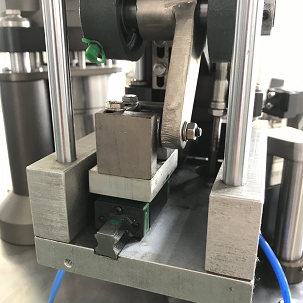
At 400 capsules per minute, traditional unified movements create excessive friction. Our NJP-400C separates vertical lifting and horizontal stretching planes. This reduces mechanical stress and heat buildup, ensuring that filling precision (±3%/±4%) remains consistent even after hours of high-speed running.
The enclosed rotary table and its double-lip dust ring keep powder away from the internal bearings, so the turntable runs three years without internal maintenance or manual oiling. Day to day, the wear parts are the seals, tamping pins and dosing disc.
Recovered powder is collected through its own negative-pressure line, separate from the waste capsule discharge, so reclaimed powder and broken capsules don’t mix.
Lead time depends on the configuration and is confirmed in writing in your quote, along with the shipping time to your port. Before the machine ships, we run factory acceptance testing and you can watch it by live video. Our engineers can install it on site, dial it in on your powder and train your operators.
Yes. We build to your U.S. supply at 60 Hz and confirm the voltage with your quote.
A kit of wear parts ships with your machine. Every part in the kit, and the lead time for anything outside it, is listed in your quote in writing.
Customers Also Interested In...
Send us your powder details and your target output
We’ll come back with a machine recommendation, tooling list and a price. If this model isn’t the right size for you, we’ll tell you which one is.
Direct from our factory
Lead time confirmed in your quote
Installation and training available
Spare parts listed in your quote