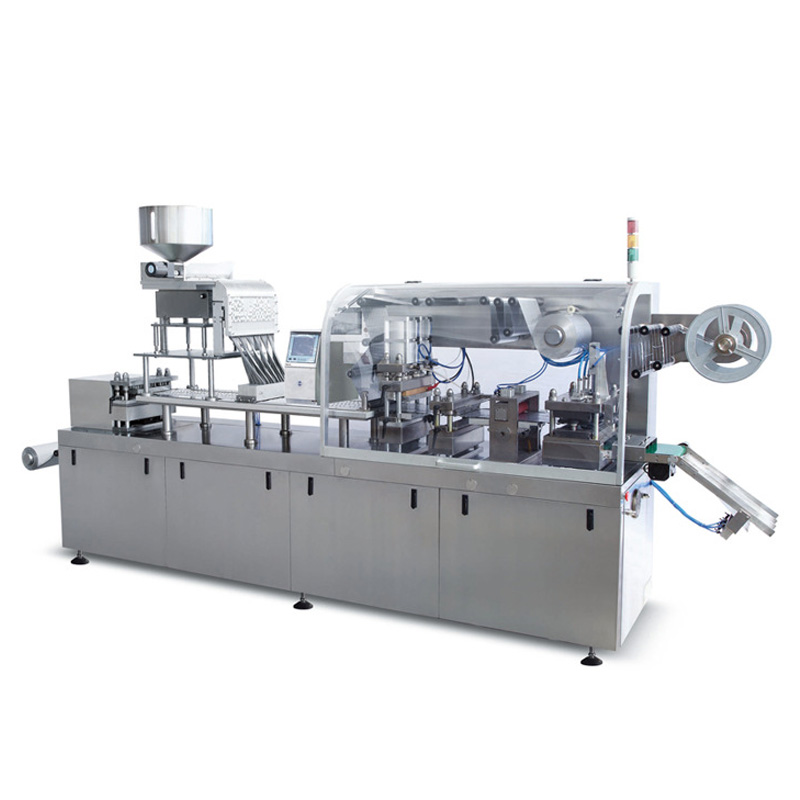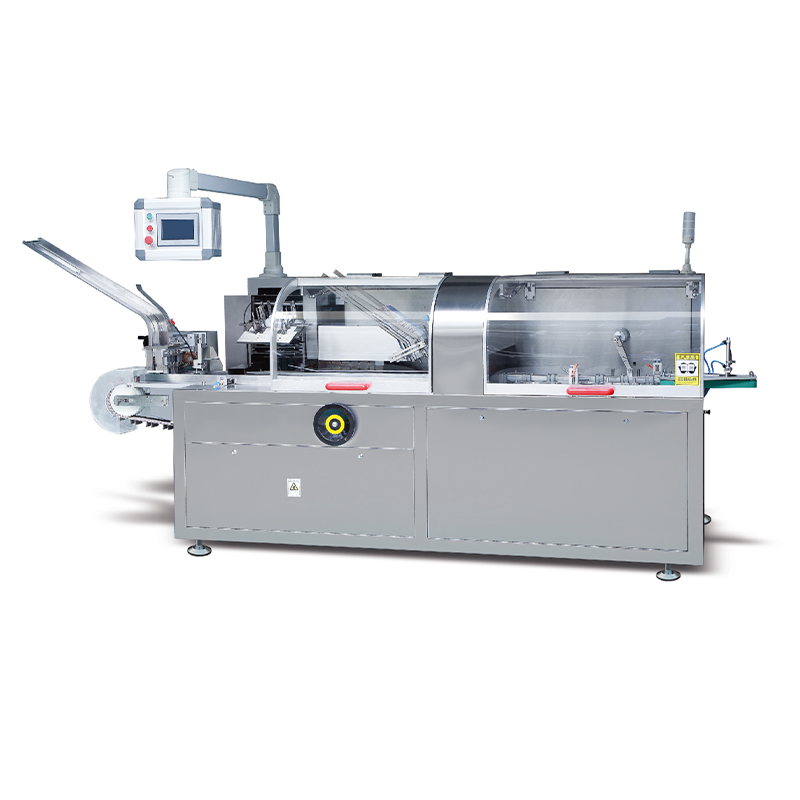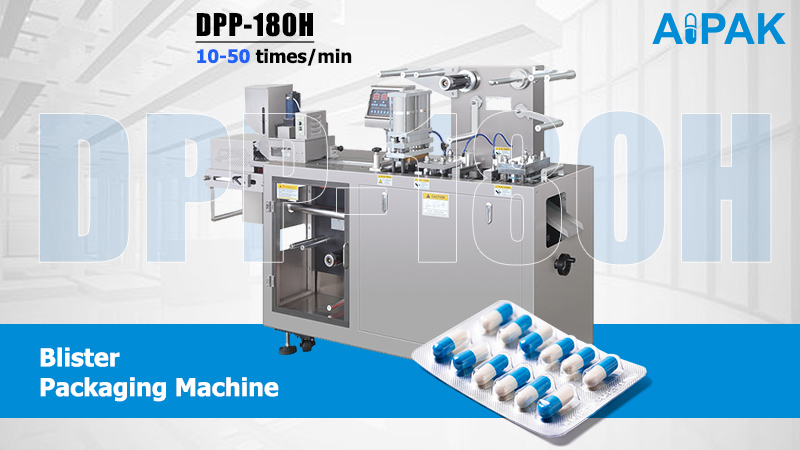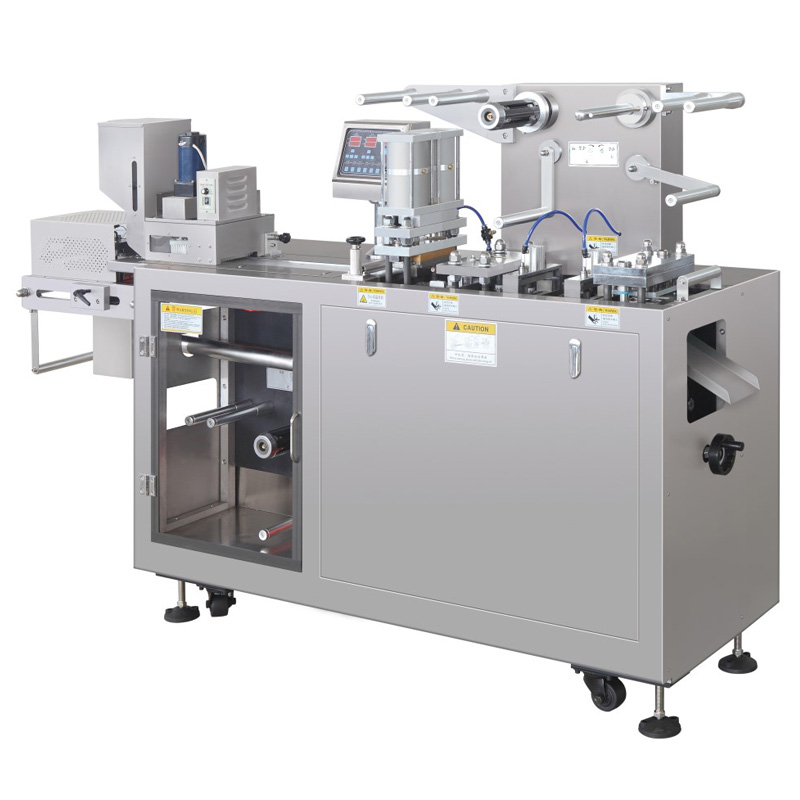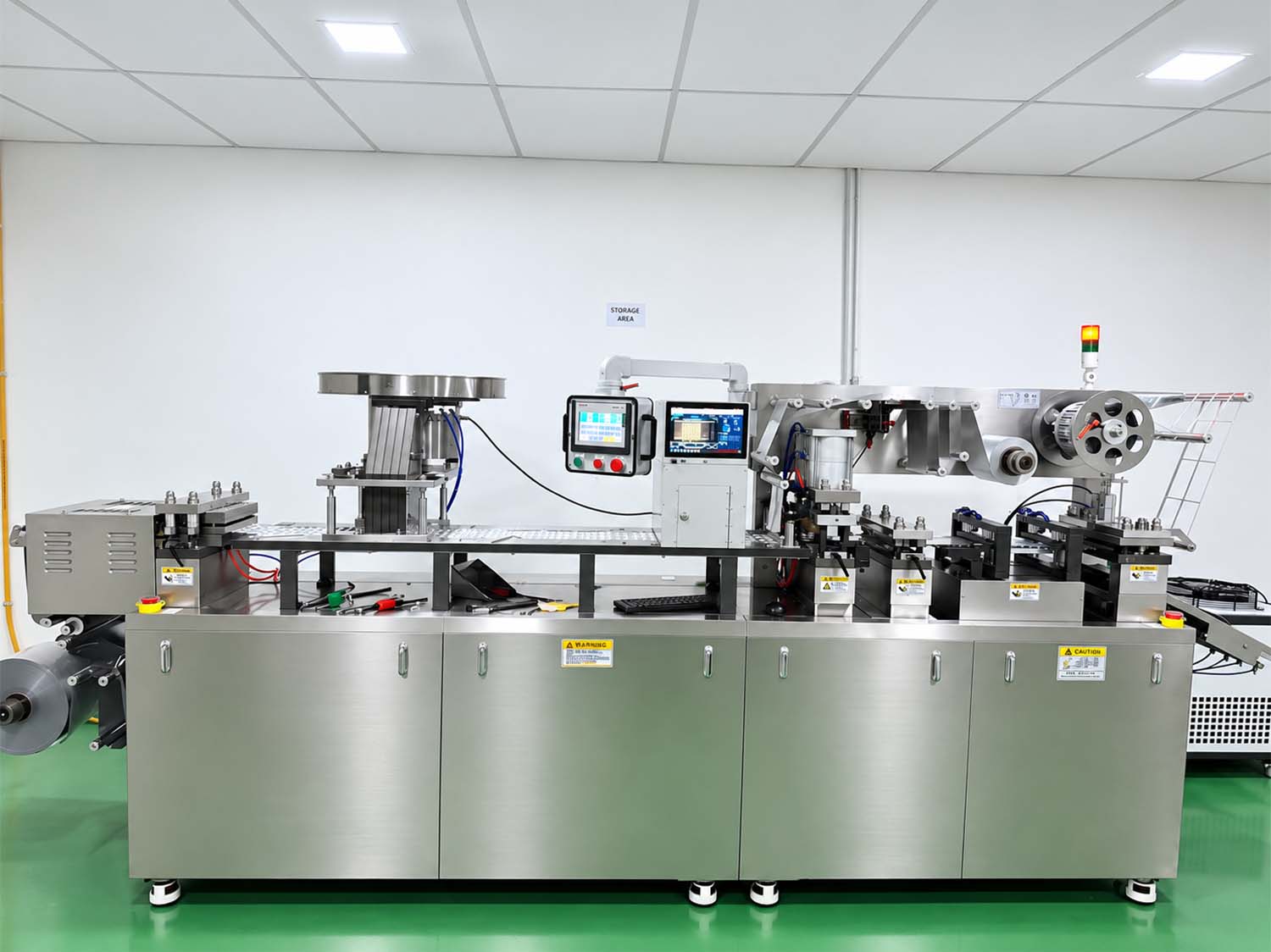
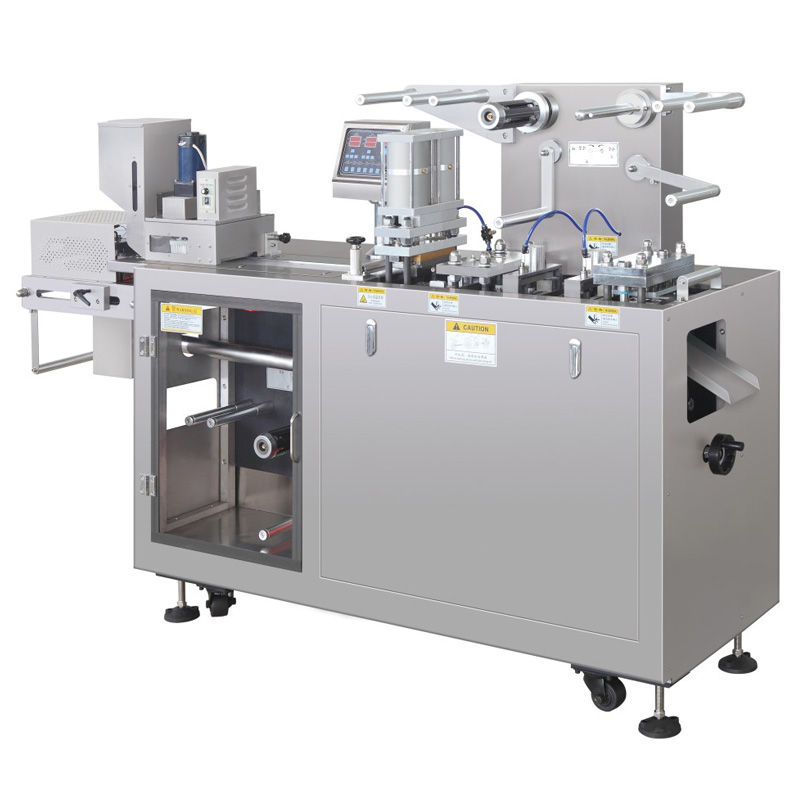
DPP-180H High-Speed Flat-Plate Blister Packaging Machine
180 × 150 mm forming area, servo traction, 4,800 to 9,600 plates an hour
Your 150 mm machine is at the top of its range and foil waste is where the money goes. The DPP-180H uses a servo motor for film traction rather than mechanical linkage — advance accuracy within 0.01 mm, which lets the gap between plates come down to the technical minimum. 180 mm width, three or four plates a punch, up to 9,600 plates an hour.
1. Punch frequency: 10 to 50 times a minute
2. Servo traction: advance accuracy within 0.01 mm
3. Output: 4,800 to 9,600 plates an hour
4. Forming area:180 × 150 mm, three to four plates a punch
5. Stroke range:40 to 160 mm
Is this the right machine for you?
✓ Yes, if…
- You need 4,800 to 9,600 plates an hour
- Foil cost is a real line item — servo traction is what reduces the gap between plates
- Your plate layout uses multiple rows across a 180 mm width
- You have 3.2 m of line length and three-phase supply at 8.5 kW
✕ Buy something else if…
- You need under 7,000 plates an hour → the DPP-150E costs less, draws 6.5 kW instead of 8.5, and takes 600 mm less floor
- You only run one or two plates per punch → you'd be paying for width you can't fill. Width only pays back when the layout uses it
- You need forming depth beyond 15 mm → 25 mm is a custom build. Send us the item dimensions first
- You need more than 9,600 plates an hour → the DPP-260 series and the rotary DPH range step up from here
Technical specification
| Feature | DPP-180H | What does it mean to you? |
|---|---|---|
| Punch frequency | 10–50 times/min | Same top speed as the DPP-260H1 |
| Output | 4,800–9,600 plates/hour | Up to a third more than the DPP-150E |
| Forming area & depth | 180 × 150 mm, ≤15 mm (custom to 25 mm) | Tell us the item dimensions before assuming 25 |
| Stroke range | 40–160 mm | — |
| Traction | Servo motor, 0.01 mm accuracy | What reduces the gap between plates and your foil waste |
| Air pressure | 0.4–0.6 MPa | — |
| Air consumption | ≥0.5 m³/min | Higher than the 150E — check your compressor |
| Main motor | 3.0 kW | — |
| Total power | 8.5 kW, three-phase, 60 Hz. Built to your U.S. supply; we confirm the voltage with your quote | — |
| Material width (PVC/PTP) | Up to 190 mm | — |
| Dimensions | 3,200 × 750 × 1,700 mm (L×W×H) | 600 mm longer than the 150E |
| Weight | 1,200 kg | — |
Model comparison
Model | Type | Punch freq. | Output | Forming area | Power |
DPP-80 | Flat plate | 10–33 times/min | 1,980 plates/hour | 80 mm | 2.4 kW |
DPP-120H | Flat plate | 10–35 times/min | 2,400–4,200 plates/hour | 120 mm | 4.5 kW |
DPP-150E | Flat plate | 10–40 times/min | 3,600–7,200 plates/hour | 150 mm | 6.5 kW |
DPP-180H | Flat plate | 10–50 times/min | 4,800–9,600 plates/hour | 180 mm | 8.5 kW |
DPP-260H1 | Flat plate | 10–50 times/min | 6,000–12,000 plates/hour | 260 mm | 9.5 kW |
DPP-260H2 | Rotary seal | 60–130 times/min | Up to 28,800 plates/hour | 260 mm | 15 kW |
DPH-260H | Rotary | 80–150 times/min, 200 max | 6,000–18,000 plates/hour | 260 mm | 24 kW |
DPH-380H | Rotary | 40–180 times/min, 200 max | Up to 45,000 plates/hour | 380 mm | 28 kW |
Flat plate and rotary are two different machines, not two speeds of one. Flat plate stretches the film against a mold with positive air pressure and a mechanical punch. Rotary forms and seals on a drum with line contact. The difference shows up in material waste, changeover time and what the machine costs you per plate — the table above shows where each one fits.
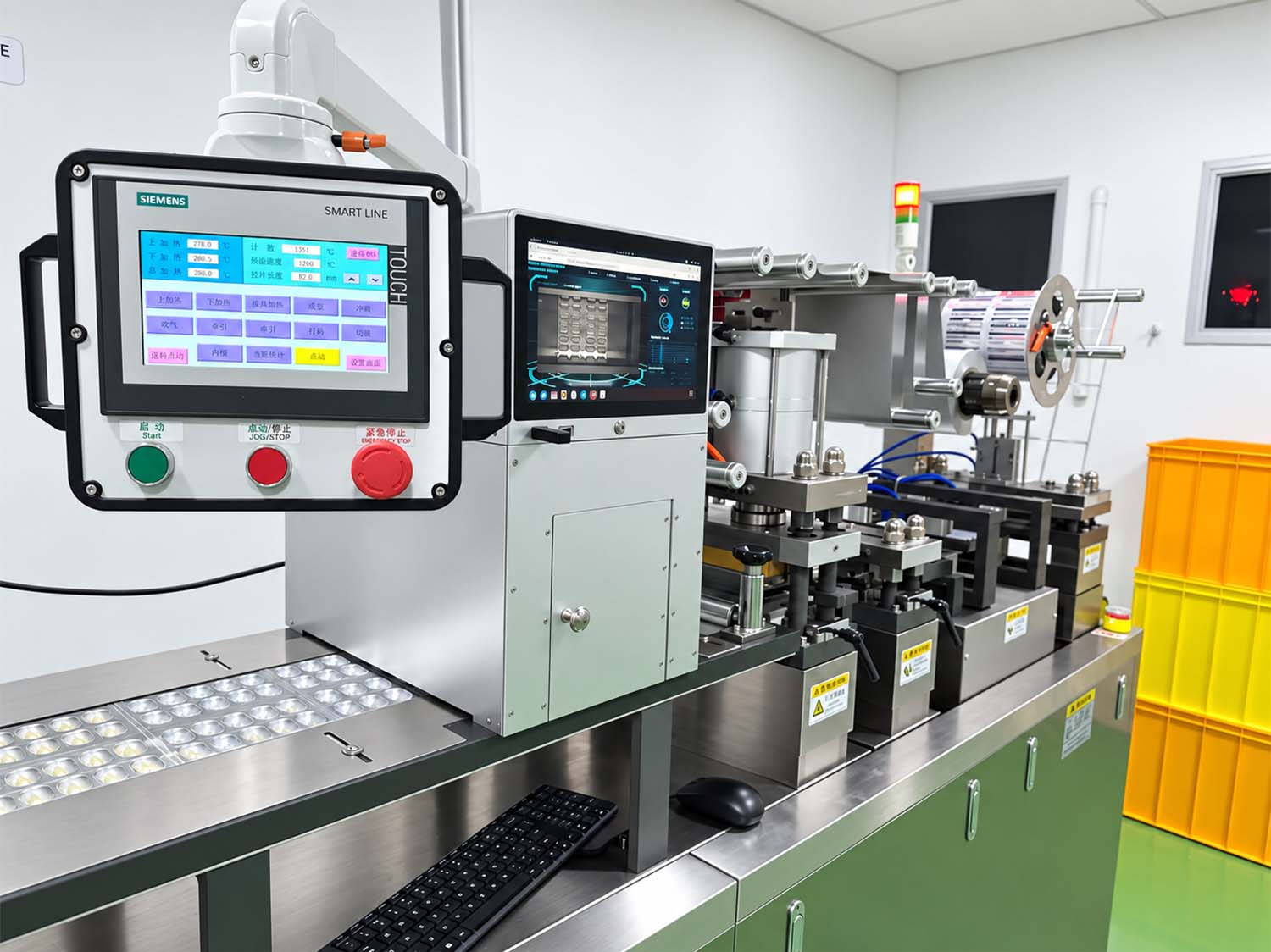
Precision Packaging Heating
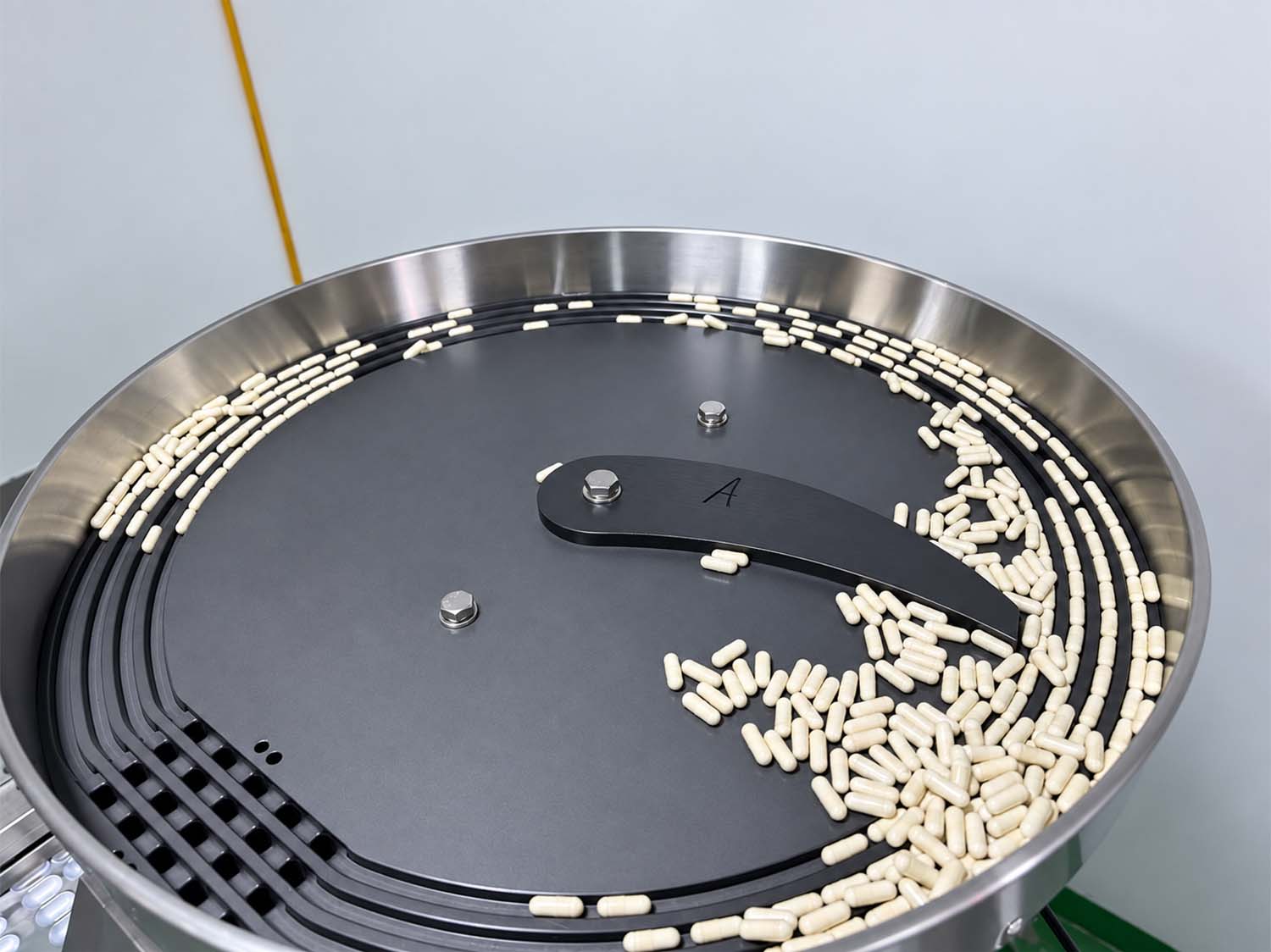
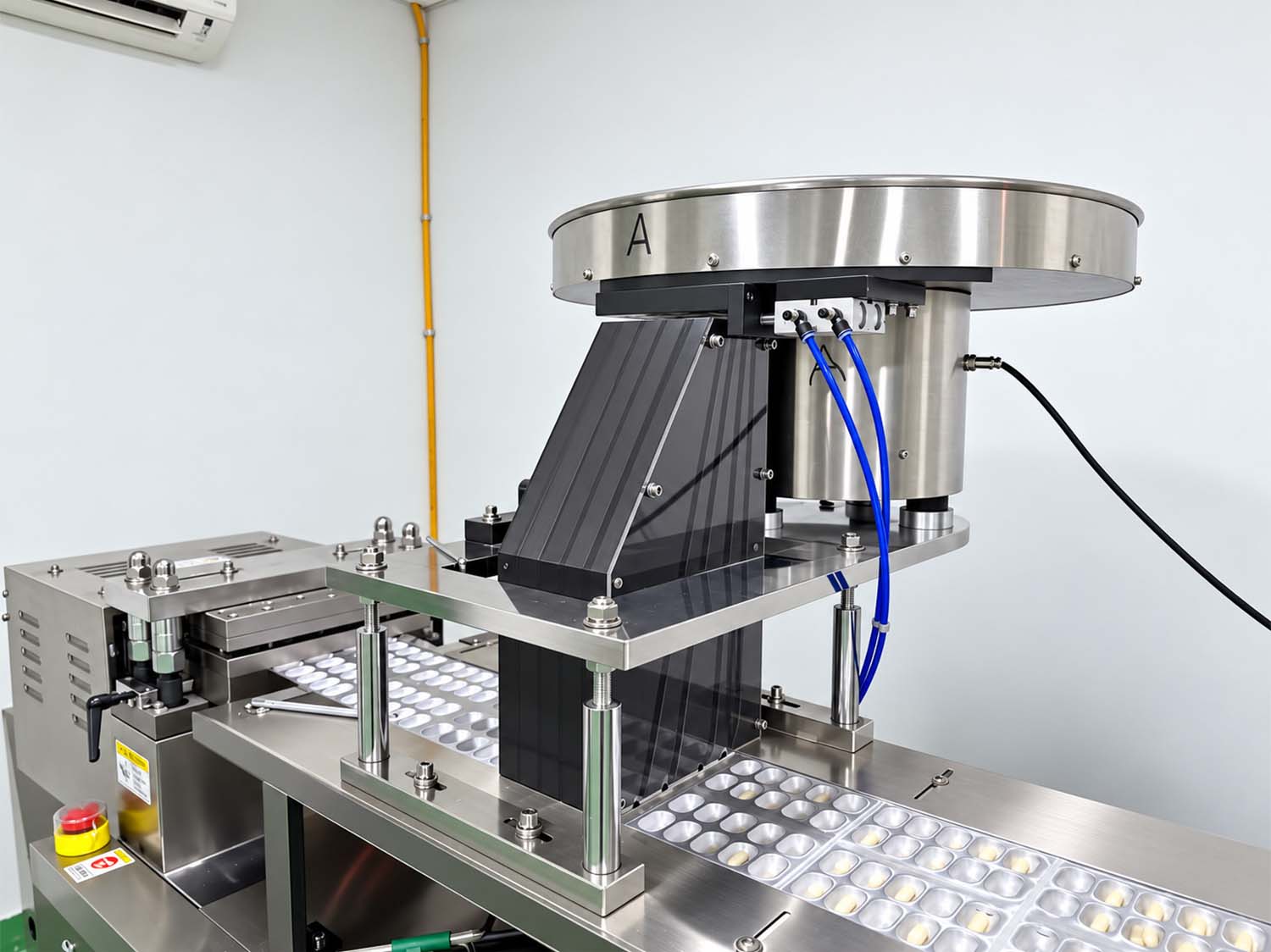
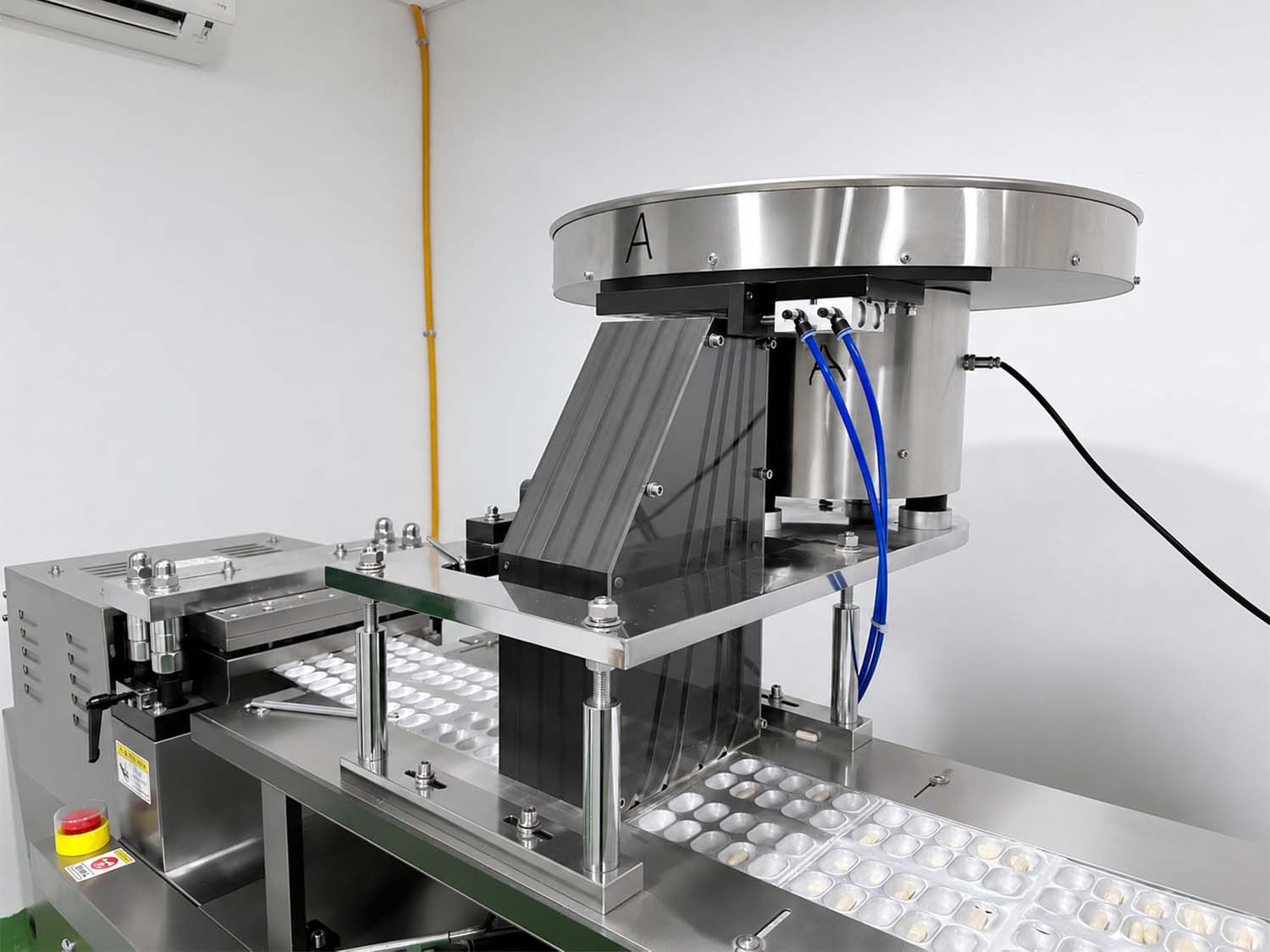
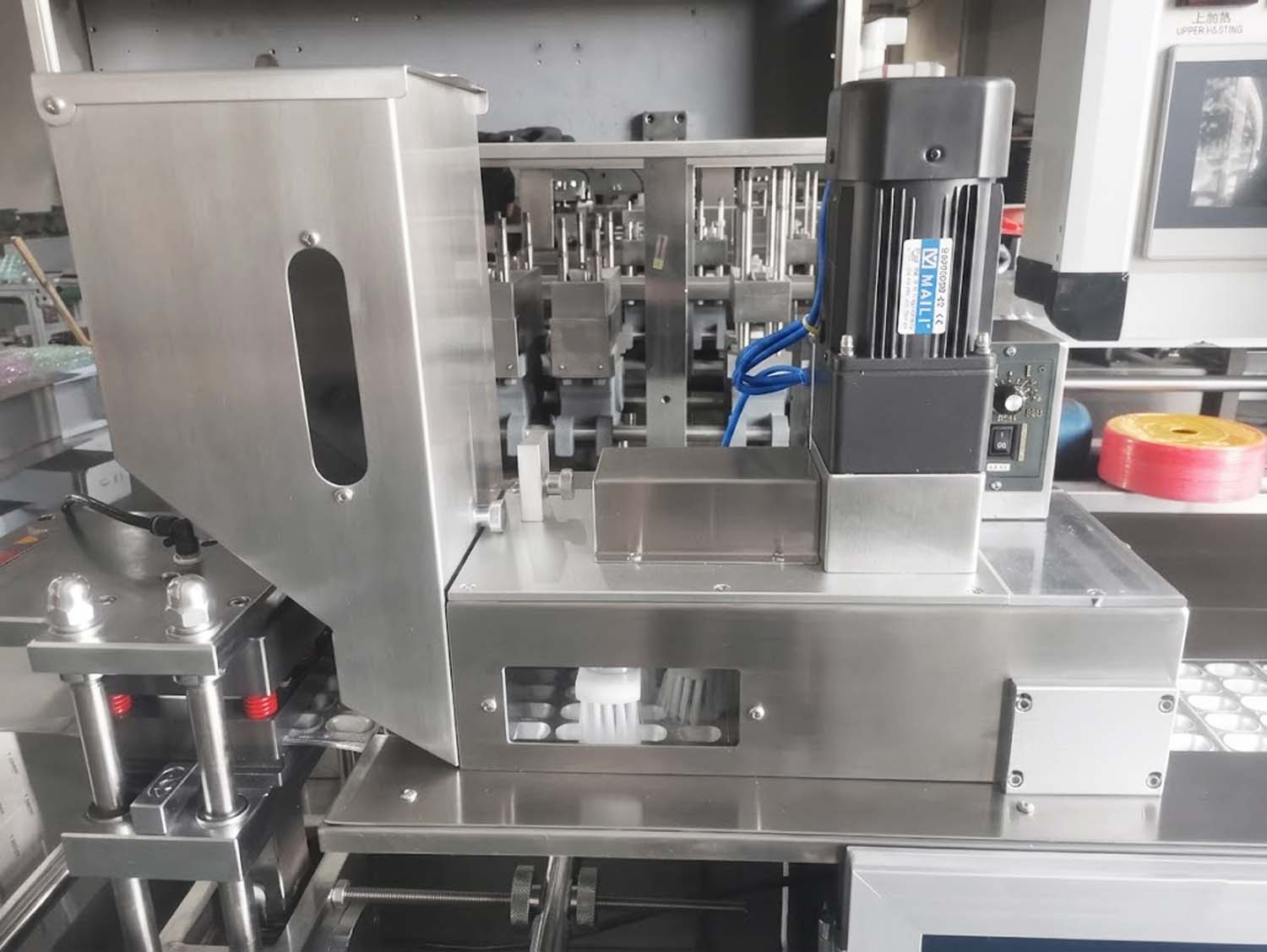
Intelligent Automatic Feeder
A high-speed universal feeding system that can be integrated with brush-style or planetary feeders to handle tablets, capsules, and softgels at maximum velocity.
Film-to-Plate Registration
The formed PVC and the foil are aligned before the sealing station rather than at it. On a high-density plate, misregistration shows up as a partly sealed pocket, which passes visual inspection and fails a leak test.
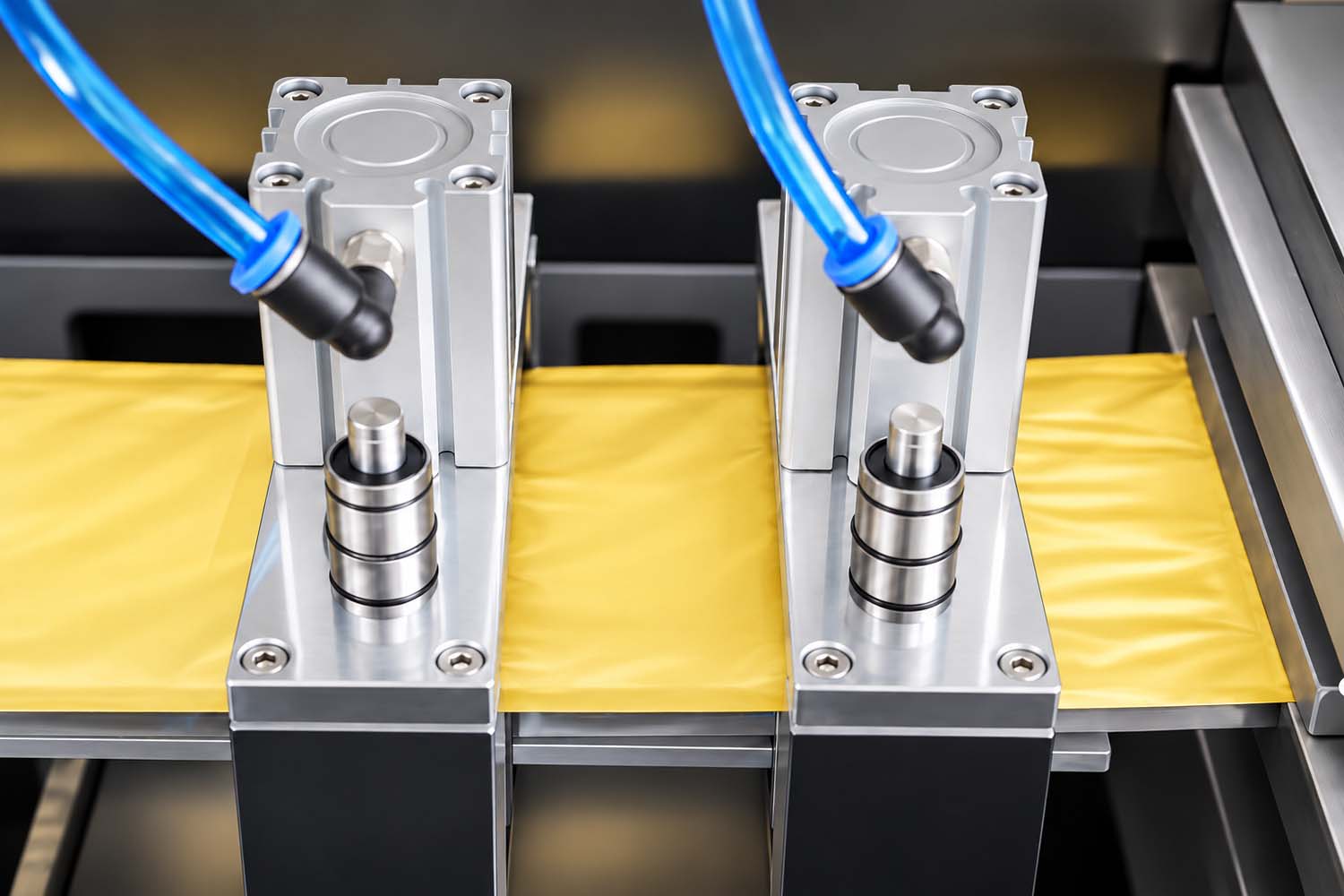
High-Integrity Heat Seal
The heavy-duty sealing station uses controlled pneumatic pressure and precision temperature zones to create a consistent bond across the full 180 mm width.
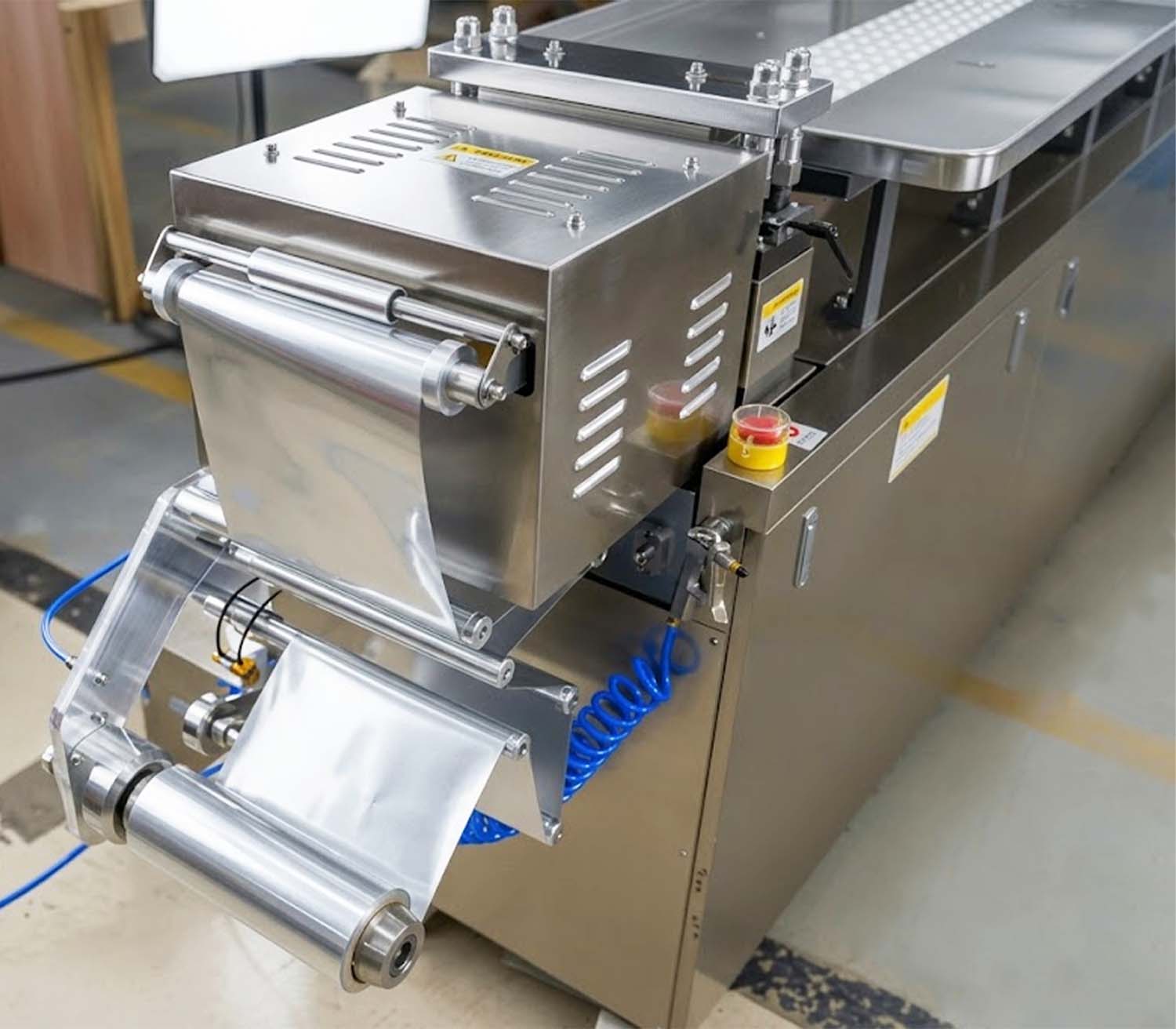
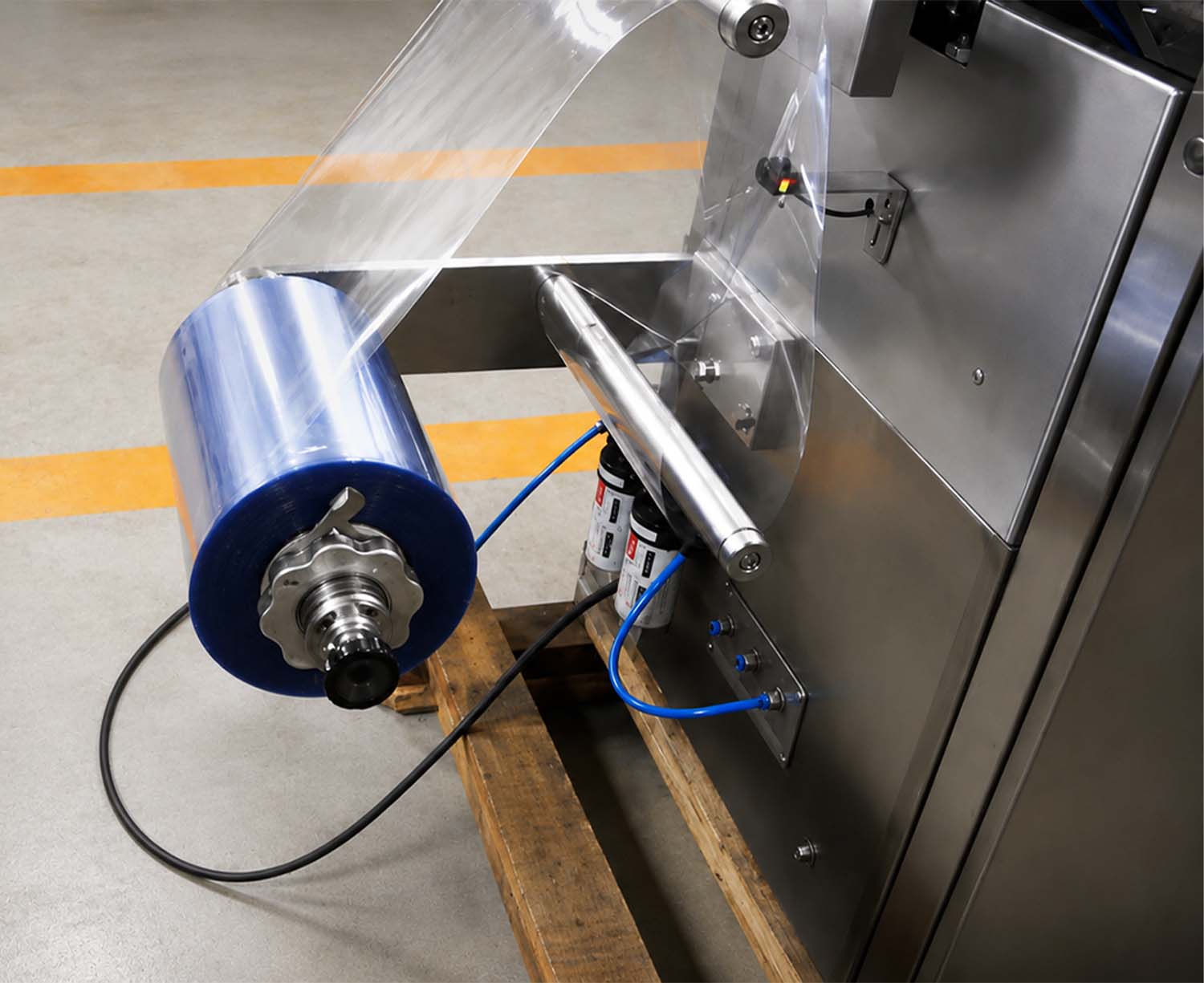
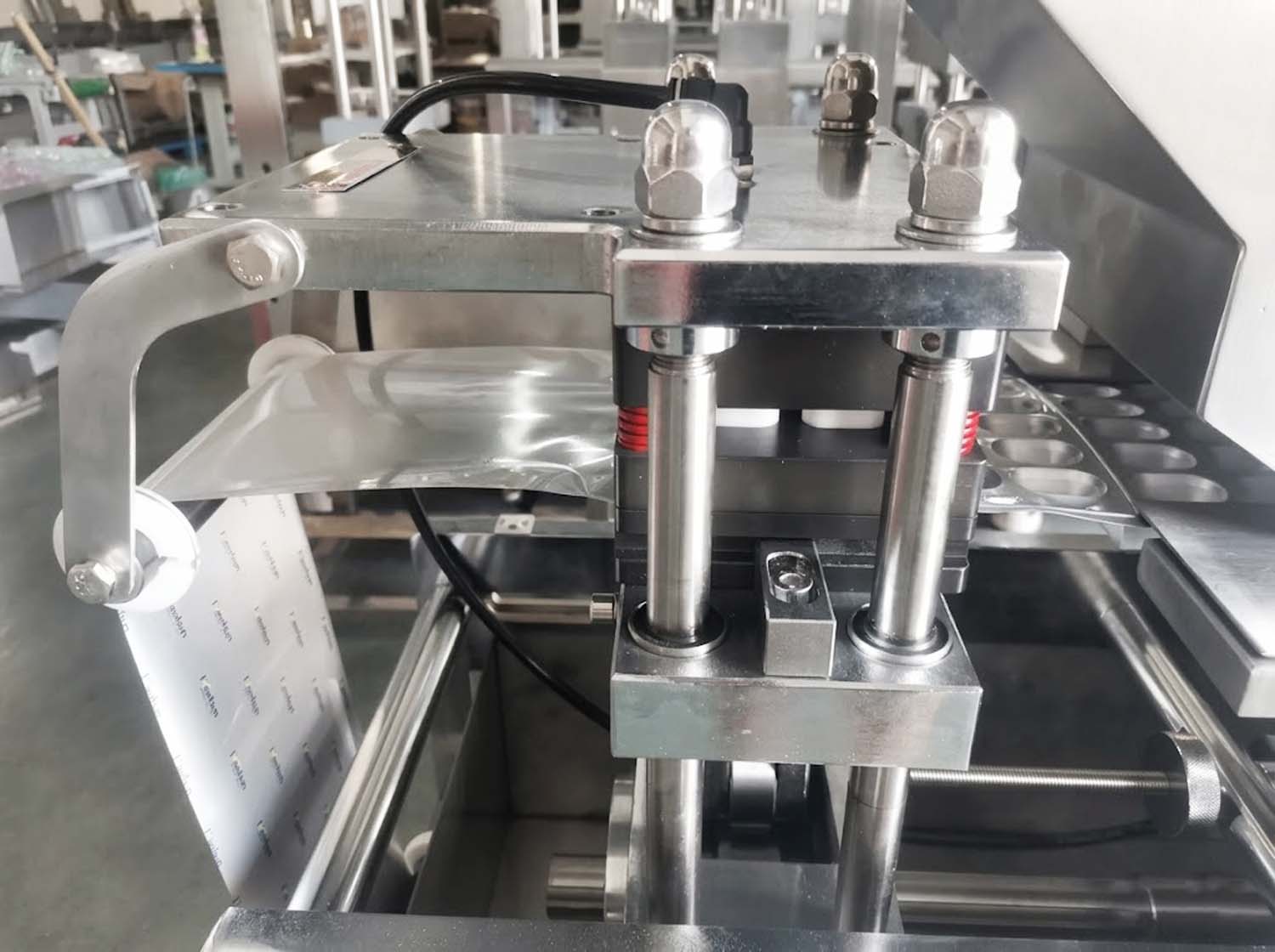
Film Delivery Device
Features a high-torque linkage delivery structure with multi-stage tensile control, keeping the foil taut and wrinkle-free throughout the entire process.
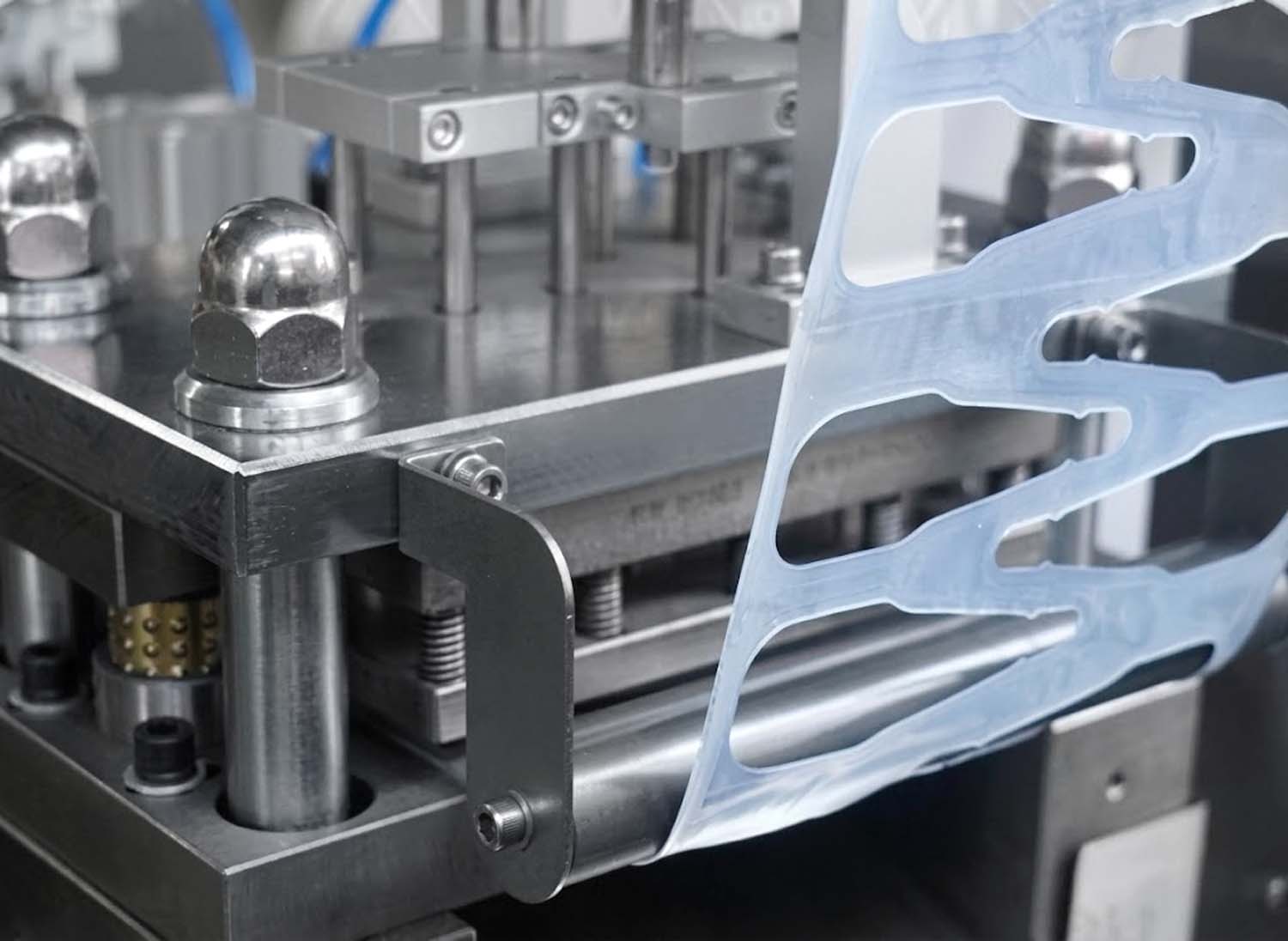
Precision Punching Cutter
Industrial-grade cutters perform ultra-clean slicing of the large-format sealed boards into customized sizes, with clean edges and no burrs.
Servo Traction
Film advance is driven by a servo motor rather than a mechanical linkage. Mechanical traction accumulates positional error over a long shift, and that error turns into wasted foil at the plate gap. Servo holds advance to within 0.01 mm, which is what lets the gap come down to the technical minimum rather than to whatever the linkage drifts to by hour six.
Industry Applications
Multi-row retail blisters
Three or four plates a punch across a 180 mm width. A 10-count plate that fits four across costs less per unit than the same plate fitted two across on a narrower machine.
High-volume single SKU
One product running continuously, where the machine is the line. At 9,600 plates an hour, one machine is often the whole blister line.
Foil-cost-sensitive production
Cold-formed Alu-Alu costs several times what Alu-PVC does. Servo traction is what makes the plate gap small enough for that difference to matter.
Large softgels and caplets
Big fish oil softgels and long caplets need a deep pocket and room on the plate. At 180 mm you still fit three or four plates a punch.
What changing over involves
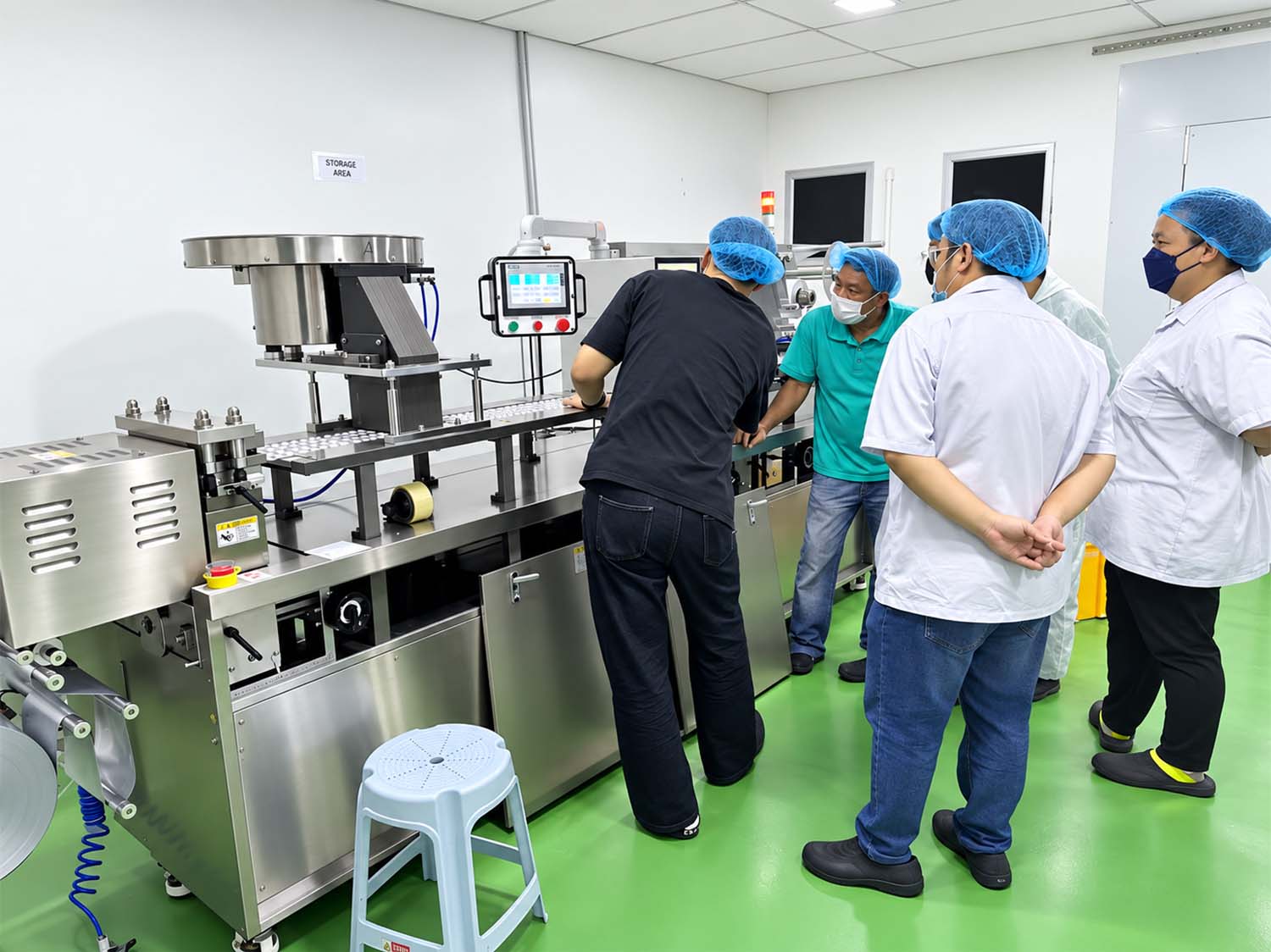
A format set is four stations, not one part.
What changed | What you adjust | Roughly |
Same format, new batch | Nothing | — |
Plate layout or pocket size changes | All four molds — forming, sealing, embossing, cutting | 15–30 minutes |
Alu-PVC → Alu-Alu | Molds, and the feeder — if you specified the Alu-PVC universal feeder, it cannot be converted | Not a changeover |
Tablets → paste or liquid | Molds and a different feeder entirely | Not a changeover |
All four stations sit on a rack mandrel with a ruler. You turn the handle and read the scale rather than aligning by eye — which is what keeps a format change to minutes rather than a morning.
What to check before you buy
The tooling, not the machine
A format set covers four synchronised stations. Ask any supplier who designs the pocket layout, how long a new format takes to make, and what it costs. That's where a blister project succeeds or fails.
The feeder, before you order
An Alu-PVC universal feeder cannot run cold-formed Alu-Alu, and it cannot be converted afterwards. Ask which feeder you're being quoted and what it locks you out of.
Installation and training
Ask what's included and what costs extra. The answer varies more between suppliers than the machine price does.
Why Choose AIPAK?
One Point of Contact
One project engineer handles your machine from proposal to commissioning, so you’re not chasing five suppliers for one answer.
We Design the Pocket Around Your Product
Send us your tablet or capsule samples and tell us your foil. We design the pocket layout and specify the feeder before we quote, because an Alu-PVC universal feeder can’t be converted to Alu-Alu later.
A U.S. Number, Answered by Us
+1 (213) 526-8644, answered by our engineers 9 AM–7 PM China time, Monday to Friday. That’s evening and overnight in the U.S., so leave a message or send a WhatsApp anytime and we’ll pick it up first thing.
Spare Parts and Lead Time, in Writing
A kit of wear parts ships with your machine. Every part in the kit, and the lead time for anything outside it, is listed in your quote in writing.
DPP-180H Blister Packaging Machine FAQ
The sealing station runs controlled pneumatic pressure with independent PID temperature control, so each plate gets the same dwell time, pressure and heat at 50 cuts a minute as it does at 20.
Mechanical traction accumulates positional error over a long shift, and that error turns into wasted foil. The 180H uses a high-precision servo motor for material traction, holding advance accuracy to within 0.01 mm. This allows us to reduce the “gap” between plates to the technical minimum, ensuring you get the maximum number of blister packs out of every roll of foil.
Yes. Cold-formed Alu-Alu is stretched mechanically rather than softened with heat, and the operator sets forming speed and pressure for it on the control panel. It needs its own forming tooling and a feeder that runs Alu-Alu — the Alu-PVC universal feeder can’t — so tell us at the quotation stage.
The molds are water-cooled, with cooling plates around the sealing and embossing stations to keep heat away from the product in the pockets. If your product is heat-sensitive, such as probiotics, tell us and we’ll set the sealing temperature and dwell time around it.
Yes. We build to your U.S. supply at 60 Hz and confirm the voltage with your quote.
A kit of wear parts ships with your machine. Every part in the kit, and the lead time for anything outside it, is listed in your quote in writing.
Customers Also Interested In...
Tell us what your foil costs you
At this output, the gap between plates is where the money is. A 1 mm difference across 9,600 plates an hour adds up faster than most buyers expect — and it’s the reason servo traction exists on this model and not on the 150E.
Send us your plate layout and your current material spec. We’ll tell you what the gap comes down to, and whether the difference pays for the machine.
- Direct from our factory
- Lead time confirmed in your quote
- Installation and training available
- Spare parts listed in your quote