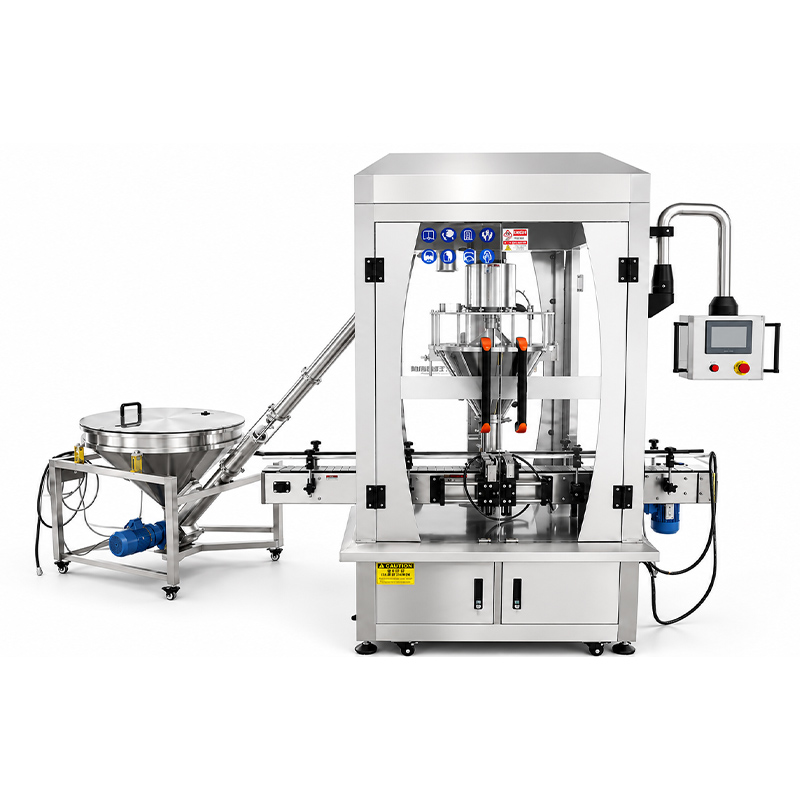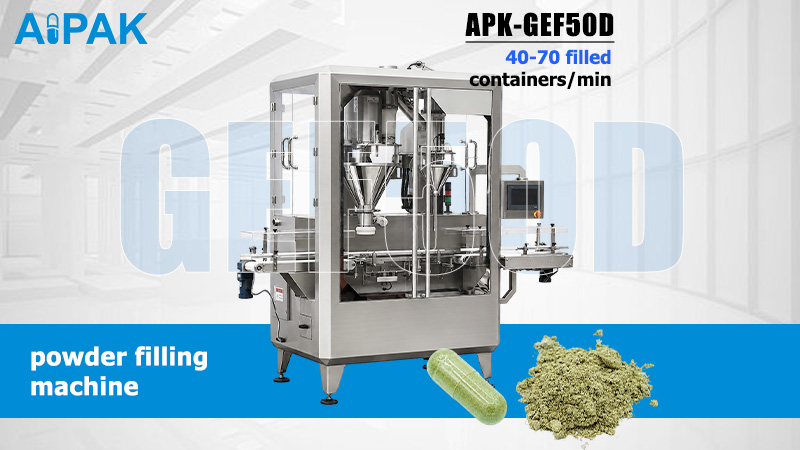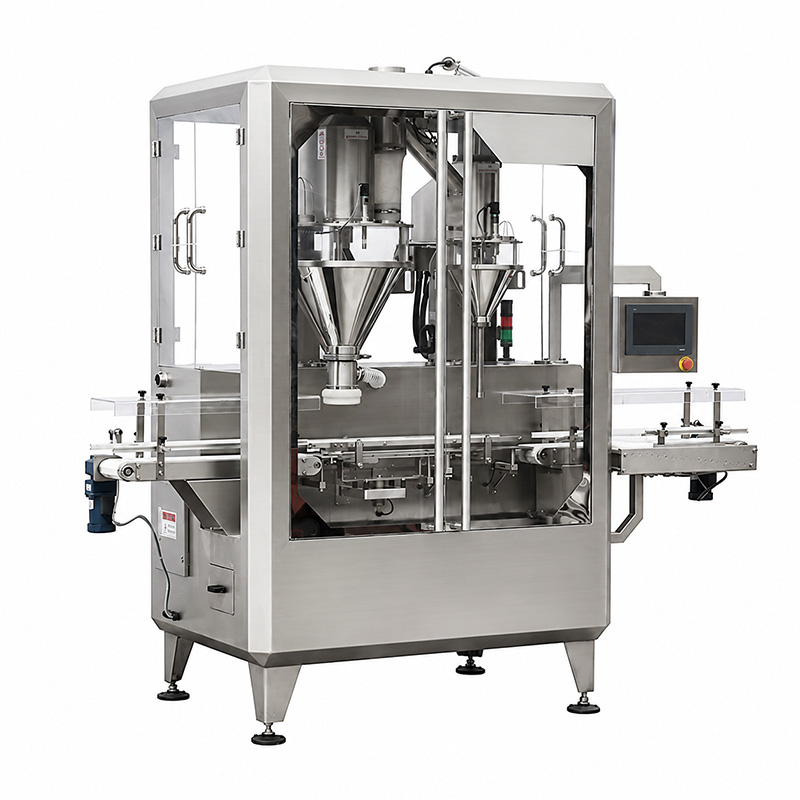
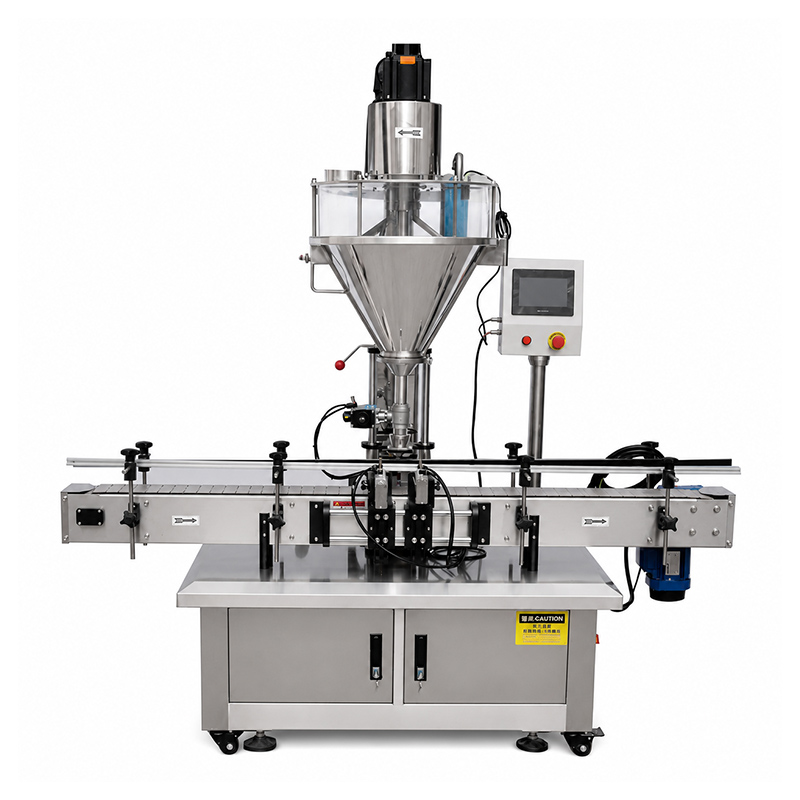
APK-GEF50D Twin-Head Automatic Auger Powder Filling Machine

Two auger heads filling cans side by side, 25 to 60 cans a minute

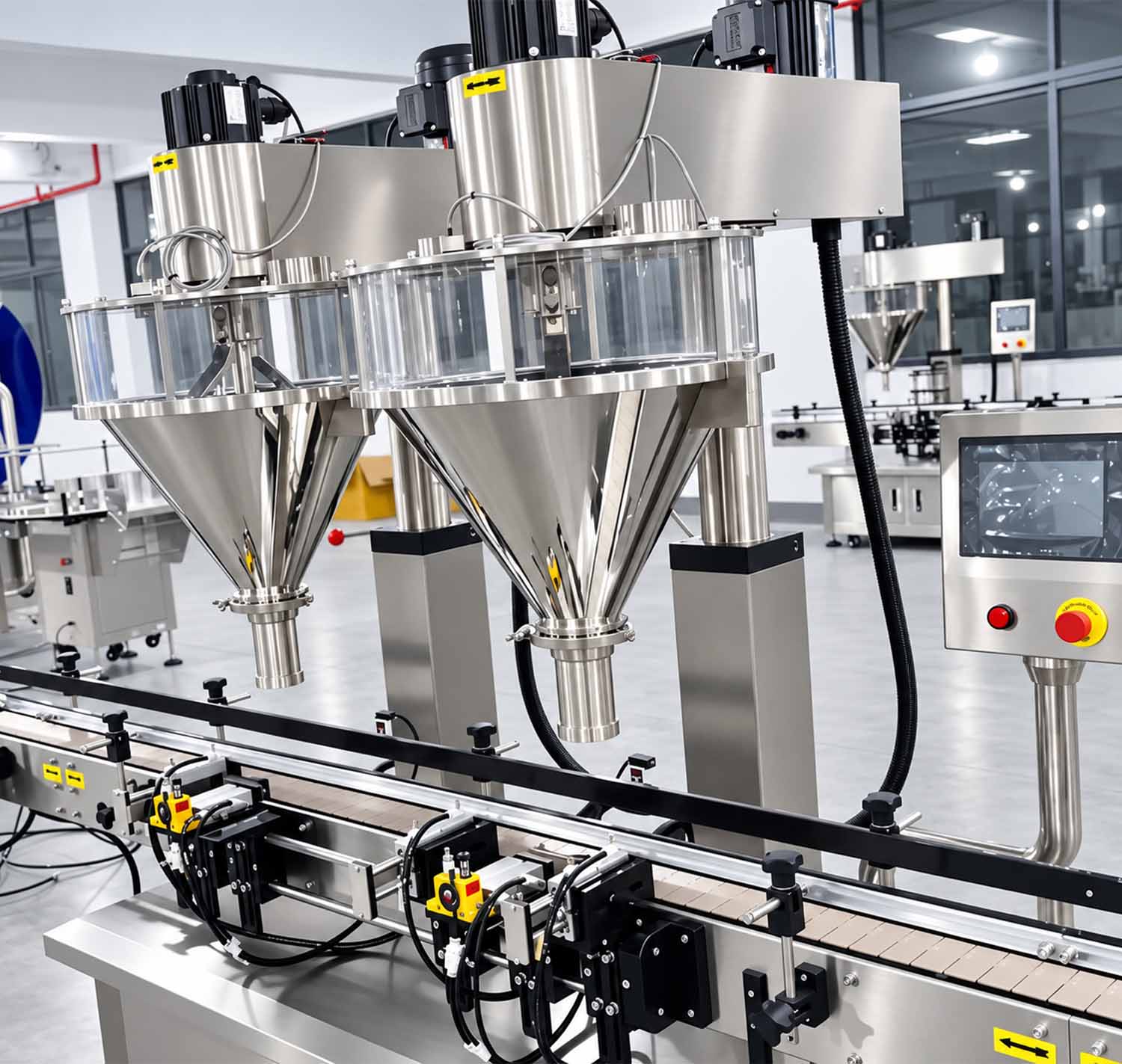
One filling head is what limits your line. This machine runs two, filling two cans at once as they index under the heads. 10 g to 5 kg by changing the augers, 25 to 60 cans a minute, and the hoppers open from the side so cleaning between powders doesn’t mean taking the machine apart.

1. Speed: 25 to 60 cans a minute

2. Fill weight: 10 g to 5,000 g, by changing the augers

3. Cans: Φ50 to 200 mm, 50 to 350 mm tall

4. Power: three-phase, or single-phase to order, 3.5 kW

Is this the right machine for you?

✓ Yes, if…

✕ Buy something else if…

Two Heads, Two Hoppers

Two auger heads, each with its own 50-litre hopper, fill two cans at once. Servo-driven augers, set on a touchscreen, with each head adjustable on its own.

Side-Opening Hoppers

The hoppers open from the side rather than lifting off. Cleaning between powders is a matter of swinging the door open, not dismantling the filling head.  

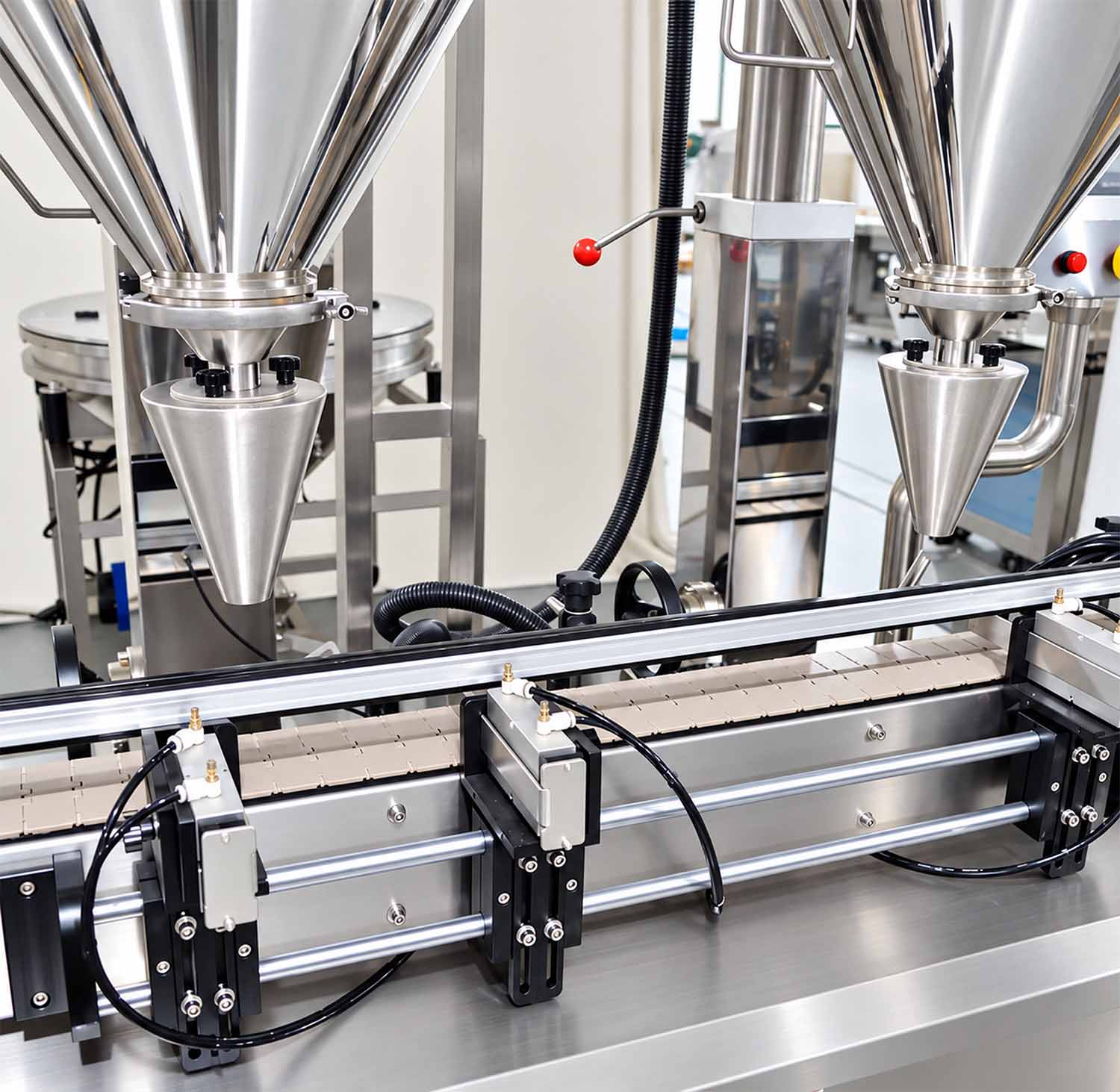
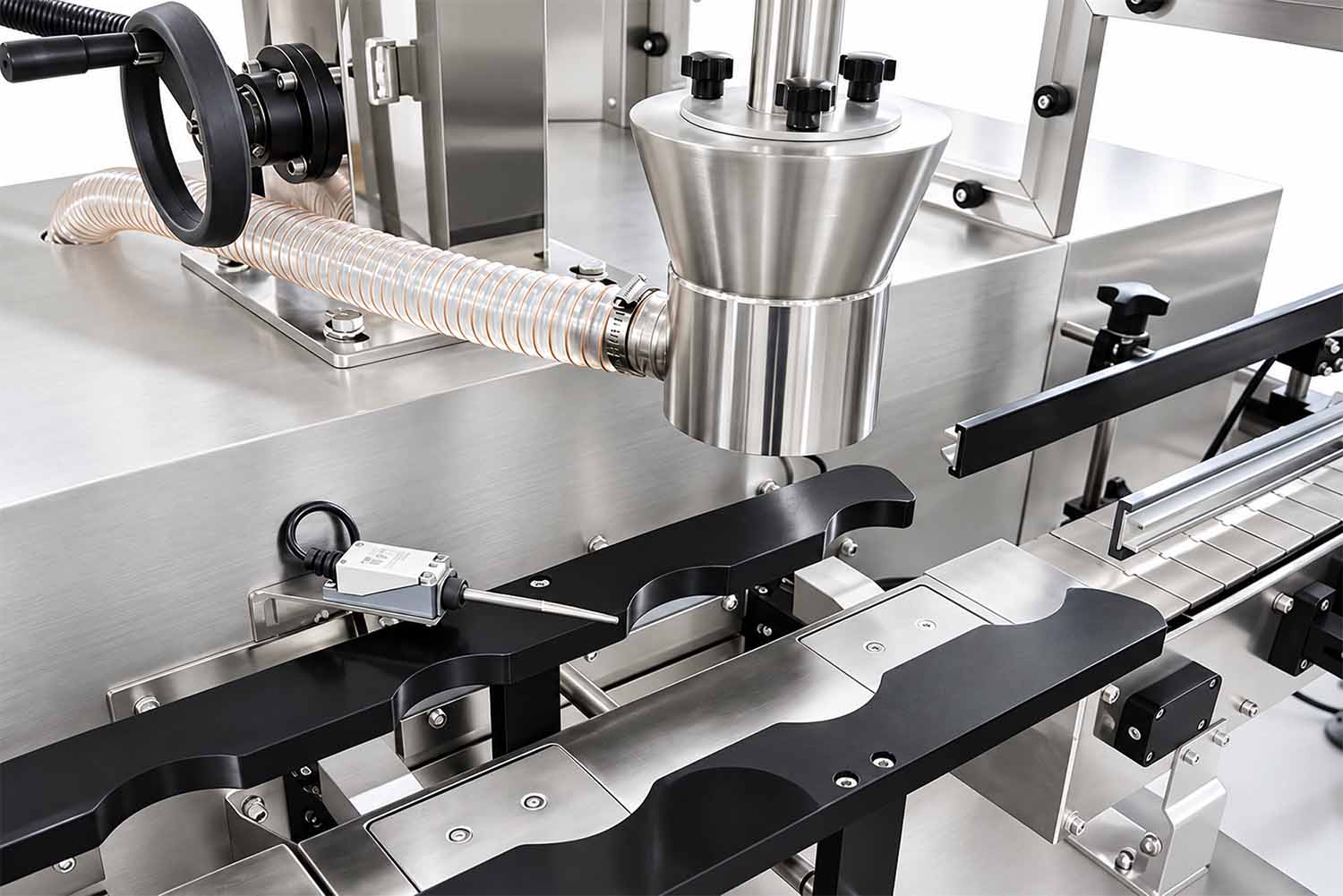
Cylinder Positioning Under Each Head

Air cylinders stop each can under its head. A sensor checks that a can is in place before its head fills, so a gap in the line means no powder on the conveyor.

Part of a Full Can Line

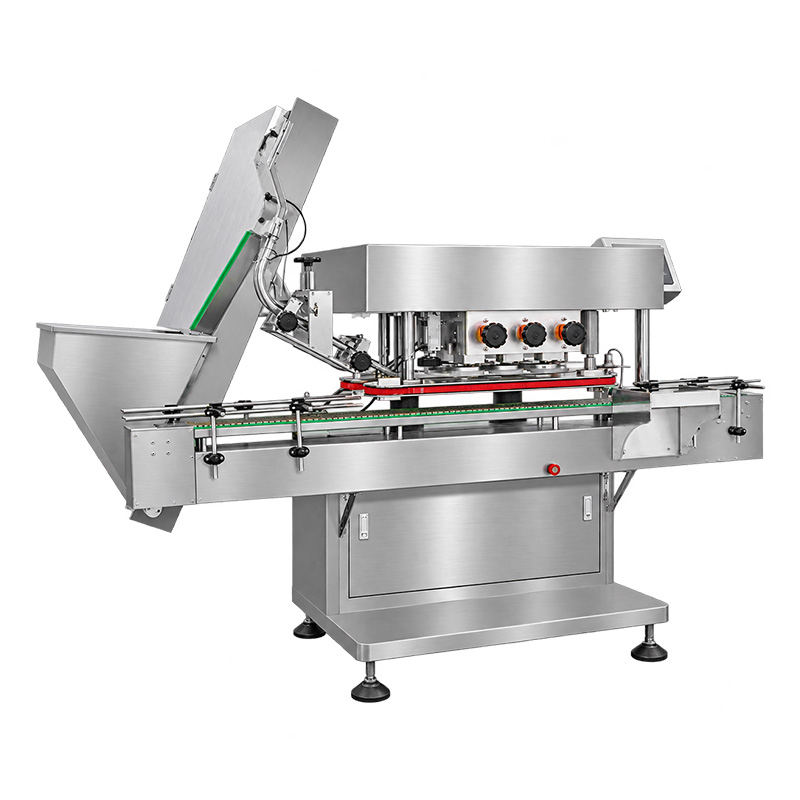
The filler sits in the middle of a protein-powder can line and hands cans on to the capper and sealer. See below.

Technical specification

Feature

APK-GEF50D

What it means for you

Filling heads

2

—

Dosing

Servo auger, one per head

—

Fill weight

10–5,000 g

Change the augers for different ranges

Accuracy

±0.3–1%

Ask for it at your fill weight, in grams

Speed

25–60 cans/min

The filler usually sets the pace of the whole line

Container

Round cans, Φ50–200 mm, 50–350 mm tall

—

Hoppers

50 L × 2, side-opening

—

Power

Three-phase, or single-phase to order; 60 Hz

Built to your local supply; we confirm the voltage and frequency with your quote

Installed power

3.5 kW

—

Compressed air

0.6–0.8 MPa, 0.2 m³/min

—

Dimensions

2,500 × 1,300 × 2,300 mm

—

Weight

700 kg

—

Contact parts

SUS304

—

Controls

industrial PLC and touchscreen, servo drives

—

Model comparison

Model

Type

Weighing

Fill weight

Speed

Power

APK-GEF50A

Semi-automatic

None — volumetric

10-5000g

10–50/min

1.8 kW

APK-GEF50B

Semi-automatic

Built-in, corrects each fill

10–5,000 g

10–50/min

1.8 kW

APK-GEF50C

Single-head automatic

None — volumetric

1–500 g

25–45/min

2.2 kW

APK-GEF50D

Twin-head automatic

None — volumetric

10–5,000 g

25–60/min

3.5 kW

APK-GEF50E

Single-head automatic, screw-conveyor fed

Built-in, corrects each fill

10–2,000 g

20–40/min

3.0 kW

Two questions decide the model. Does every container have to hit its label weight? Then you want a built-in scale. Can one operator keep up placing containers? If not, you want an automatic model that feeds them for you.

Where It Sits on a Protein Powder Line

Station 1

Can unscrambler

Station 2

Desiccant inserter

Station 3

Scoop inserter

Station 4

Twin-head auger filler

Station 5

Neck blow-off with dust extraction

Station 9

Labeler

Station 8

Can exterior cleaner

Station 7

Induction sealer

Station 6

Capper

A screw conveyor keeps both hoppers topped up from floor level, so nobody climbs a ladder with a sack.

The filler is usually the slowest station at 25 to 60 cans a minute, so it sets the pace. The scoop inserter, capper and sealer upstream and downstream all run faster. Buy the filler for the output you need, and the rest of the line follows it.

Production Applications

Protein powder tubs

Whey, plant protein and mass gainer in 2 to 5 lb round tubs, with a scoop dropped in before filling.

Pre-workout and creatine

Smaller fills in smaller cans, at the top of the speed range.

Drink mixes and meal replacements

Free-flowing blends in round canisters at steady volume.

Collagen and greens

Fine powders in round canisters, where neck blow-off and can cleaning matter most before the cap goes on.

What changing over involves

What changedWhat you adjustRoughly
Same can, different fill weightSet the new dose on the touchscreenMinutes
Different powderOpen the side hoppers, clean the augers15-30 Minutes
Fill weight outside the augers’ rangeChange both augers15-30 Minutes
Different can diameterRotary table mold15-30 Minutes

One set of change parts ships with the machine. Extra augers and can-size parts are ordered to your range.

What to check before you buy

01

Fill weight against your label, not a percentage

Ask any supplier for accuracy at your fill weight, in grams.

02

Which station sets your line speed

On a can line the filler is usually the slowest station. Ask for its rate at your fill weight, not the fastest machine on the line.

03

What changes when your can changes

Ask whether a new can size is a handwheel adjustment or a new set of change parts — and what those parts cost.

Why Choose AIPAK?

One Point of Contact

One project engineer handles your machine from proposal to commissioning, so you’re not chasing five suppliers for one answer.

We Run Your Powder Before You Order

Send us a sample and we fill it on the machine before you order, so you see the weight spread on your own product. Tell us your smallest and largest fill and we supply the augers to cover both.

A U.S. Number, Answered by Us

+1 (213) 526-8644, answered by our engineers 9 AM–7 PM China time, Monday to Friday. That’s evening and overnight in the U.S., so leave a message or send a WhatsApp anytime and we’ll pick it up first thing.

Spare Parts and Lead Time, in Writing

A kit of wear parts ships with your machine. Every part in the kit, and the lead time for anything outside it, is listed in your quote in writing.

Fully Expanded Technical FAQ for APK-GEF50D

Why two heads instead of one?

Two cans fill at once, so the line runs faster without the auger having to turn faster. That matters because an auger pushed to high speed doses less consistently. If one head keeps up with your volume, the single-head GEF50C costs less.

How does the parallel filling logic work, and can each head be calibrated independently?

Yes. The  industrial PLC controller treats each vertical auger head as a separate electronic unit. Operators can micro-adjust the rotation metrics for Head 1 and Head 2 independently via the touch screen operation panel. This ensures that any slight material variation across the split hopper is corrected, maintaining tight tolerances across both lines.

How does no-can-no-fill work with two heads?

The indexing system uses a double-gating pneumatic array linked to paired tracking sensors. If the sensors detect that only one can has entered, the gating zone, the PLC locks out the empty nozzle from firing while allowing the populated nozzle to fill. If zero containers are detected, both heads pause, preventing powder spillage.

Can it be part of a full protein powder line?

Yes — that’s how it’s usually sold. Can unscrambler, scoop inserter, this filler, capper, induction sealer and labeler, with a screw conveyor feeding the hoppers. Send us your can and your target output and we’ll lay out the line.

Does it run on single-phase power?

Yes, to order. Standard is three-phase, and single-phase is available. We build to your local supply and confirm the voltage and frequency with your quote.

How do spare parts work?

A kit of wear parts ships with your machine. Every part in the kit, and the lead time for anything outside it, is listed in your quote in writing.

Customers Also Interested In...

Send us your can and your output.

Can diameter and height decide the handling. Fill weight decides the augers. Daily output decides whether you need two heads at all. Send us all three and we’ll tell you — and lay out the rest of the line if you need it.

  • Direct from our factory

  • Lead time confirmed in your quote

  • Installation and training available

  • Spare parts listed in your quote

Scroll to Top