Deblistering Machine
Recover Tablets, Capsules and Softgels from Rejected Blister Cards
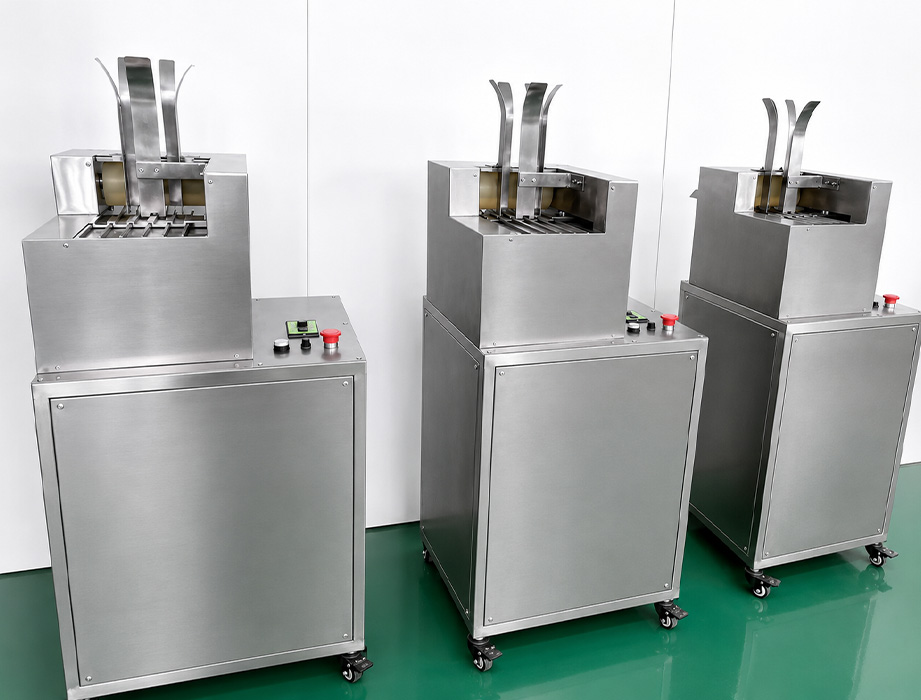
Five models, from a benchtop machine for irregular layouts to 280 cards a minute with an automatic count.
Why Choose Our Deblistering Machines?
Rollers That Mimic a Thumb
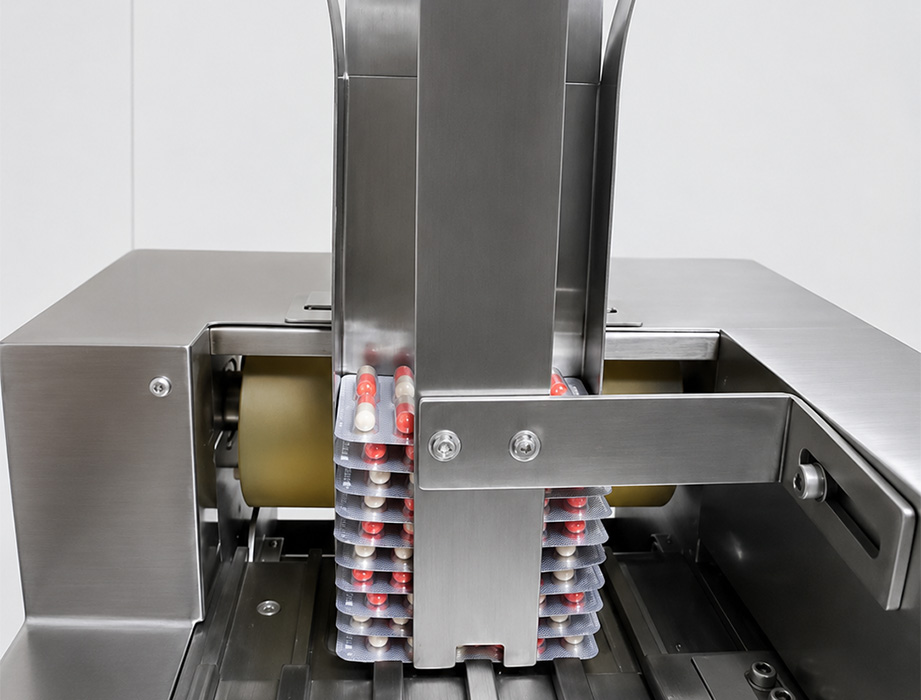
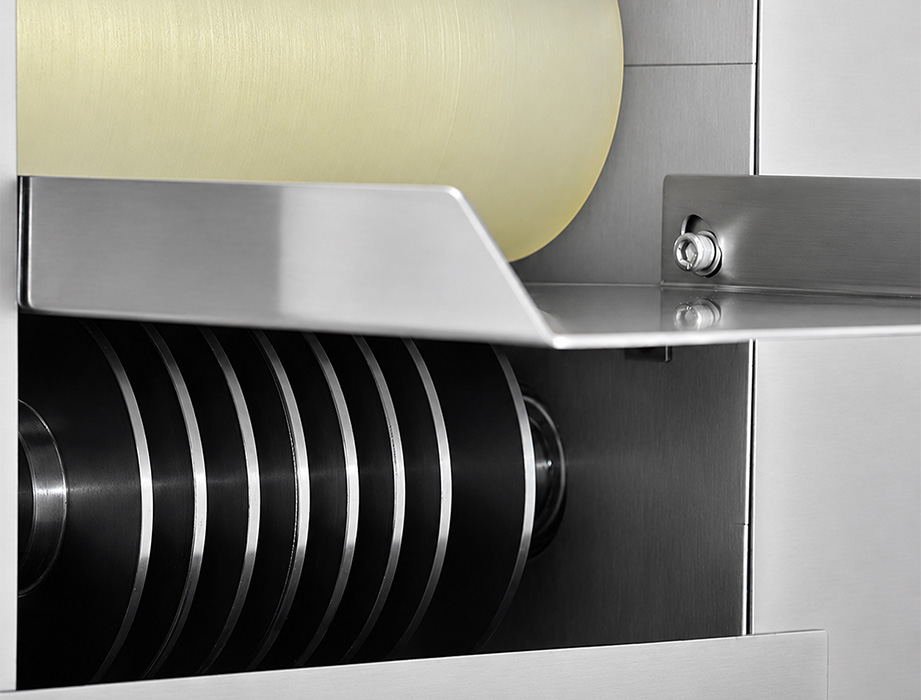
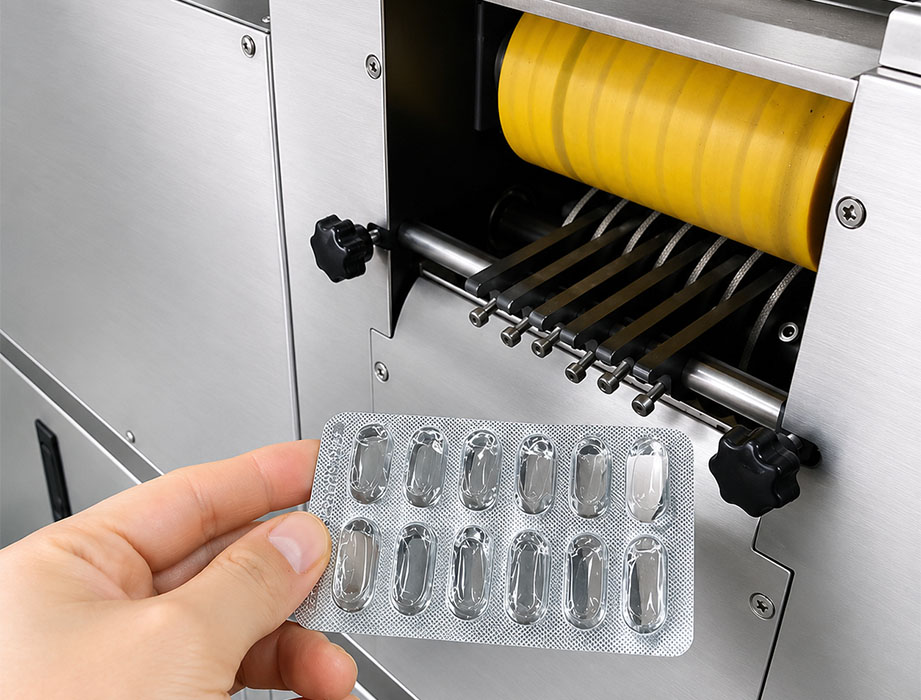
A motor and reduction gear turn a pair of soft rollers that press each pocket the way an operator’s thumb would — steady, low speed, even pressure. The foil splits and the tablet or capsule drops out without being crushed.
No Change Parts, Any Card Size
Card size is set by adjustment, not by swapping a mould. One machine runs every blister format your line produces.
Product in One Tray, Foil in Another
A guide plate and a rubber retaining flap send the recovered product one way and the empty card the other, so nobody sorts them by hand afterwards.
Soft Rollers, Not Hard Rubber
Silicone on the benchtop DM80, pure polyurethane on the automatic models — both wear slowly and don’t flake the way cheap rubber does.
Two Questions Pick Your Model
The four automatic models feed cards along linear guides, so the pockets have to sit in straight rows and columns. Calendar packs, offset layouts and irregular pocket patterns need the benchtop DM80, the only model built to take them.
Up to 65 a minute, the DM120. Up to 95, the DM120A. If your rework has to be recorded in a batch record, the DM130 and DM160 count every card with an Autonics counter.
| Manual count | Automatic count |
Irregular layouts | DM80, 25–35/min | — |
Regular rows | DM120, 50–65/min | DM130, 100–120/min |
Regular rows | DM120A, 80–95/min | DM160, 220–280/min |
Industry Applications
Our automated deblistering machine lineup serves as a critical cost-recovery and regulatory-compliance pillar across diverse sectors of the global solid-dosage manufacturing and packaging industries. By transitioning facilities from manual peeling to precision automated reclamation, our platforms protect product purity while driving substantial material savings.
Model comparison
Model | Operation | Speed | Layout | Blister material | Count | Weight |
APK-DM80 | Semi-auto | 25–35/min | Any | Alu-PVC | Manual | 16 kg |
APK-DM120 | Automatic | 50–65/min | Regular rows | All three | Manual | 25 kg |
APK-DM120A | Automatic | 80–95/min | Regular rows | All three | Manual | 35 kg |
APK-DM130 | Automatic | 100–120/min | Regular rows | All three | Automatic | 38 kg |
APK-DM160 | Automatic | 220–280/min | Regular rows | All three | Automatic | 65 kg |
All five run on 120 V/220 V single phase, need no compressed air, and use no change parts.
Five Models, from Benchtop to 280 Cards a Minute
Pocket layout and blister material decide the model. Send us some cards and we’ll run them and send back the recovered product.
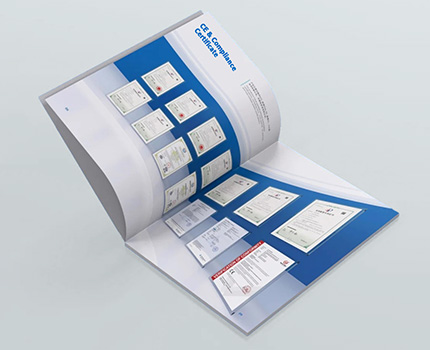
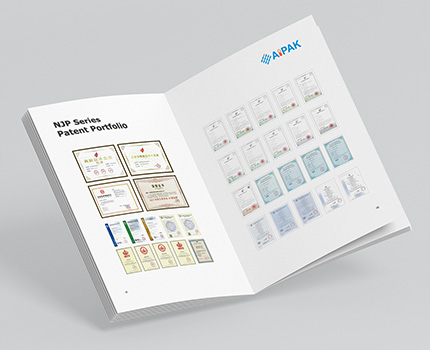
Documentation & Selection Support
Verify our quality standards and simplify your procurement process with our official documentation.
Product Portfolio
Quality Assurance
Technical Standards
Post us a few rejected blister cards. We’ll run them and send back the recovered product.
FAQ Pharmaceutical Deblister Machine Core Technical Procurement Guide
Two things. The product in a rejected card — softgels, capsules and tablets that are still good, only badly packed. And the hours an operator spends peeling cards by hand, where softgels get crushed and tablets get chipped.
Our deblister platforms combine high-efficiency variable speed drives with a specialized internal gear-reduction setup to execute a highly uniform, low-RPM, high-torque crushing movement. Working alongside our custom-formulated soft silicone or PU rollers, the machine provides just enough flexible pressure to crack the thin aluminum backing foil while keeping fragile capsule shells and delicate softgels safe.
Standard rubber rollers quickly degrade under intense cleanroom friction, peeling and shedding micro-fragments or black carbon dust directly onto your active, unshielded tablets. Our systems utilize pure polyurethane (PU) rollers—and silicone rollers for the DM80—that have successfully passed strict SGS toxicological screening tests to be entirely free of heavy metals. They do not chip, flake, or cause secondary batch contamination.
No, you will not. A major cost-saving advantage of our deblistering lineup is its universal, 100% tool-free changeover engineering. Our machines handle varied blister configurations directly. Operators can adjust the internal tracking rails and compression zones via external manual dials.
The four automatic models handle Alu-PVC, Alu-Alu and Alu-PVC-Alu. The benchtop DM80 is built for Alu-PVC.
For our high-speed continuous automatic stations (such as the APK-DM120, DM130, and DM160), the integrated intake tracks require blister cards where the medication pockets are organized in consistent, symmetrical horizontal and vertical grid rows. For cards featuring staggered, offset, or completely random array distributions, our compact desktop APK-DM80 benchtop platform is the recommended choice.
One year on the whole machine, excluding damage from misuse.
Our entire deblistering range is designed to minimize facility footprints and utilities. They operate as self-contained electrical workstations that require no compressed air connections and no external vacuum systems to pull or extract products. The machines run on standard single-phase electricity (220V AC, 50/60Hz) , drawing minimal power (60W to 360W max).
Send Us a Few Rejected Cards
Two things decide which deblistering machine you need, and speed isn’t the first one. Are your pockets laid out in regular rows, or irregular like a calendar pack? And is the card Alu-PVC, or a harder Alu-Alu or Alu-PVC-Alu? Tell us both and we’ll narrow five models down to one.
Better still, send us a few of your rejected cards. We’ll run them on the machine and send back the recovered product, so you can see whether your softgels come out whole — on your own cards, not ours.
- Reply within one business day
- Your cards run on the machine before you order
- Your product details stay with us
No sales calls — we reply by email or WhatsApp, whichever you gave us.