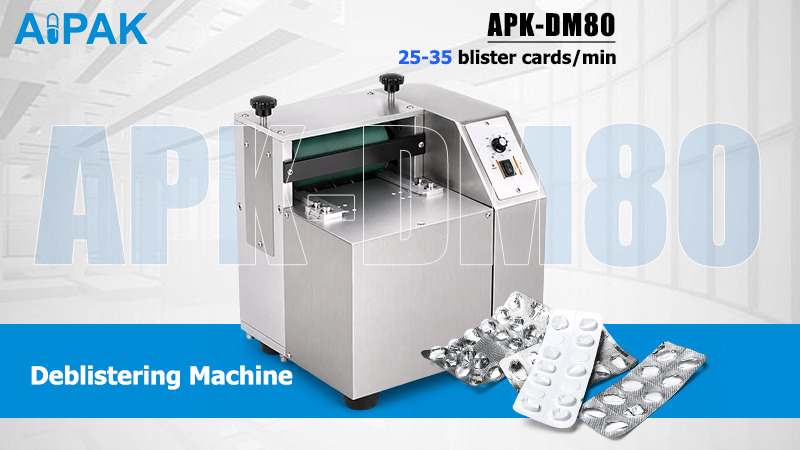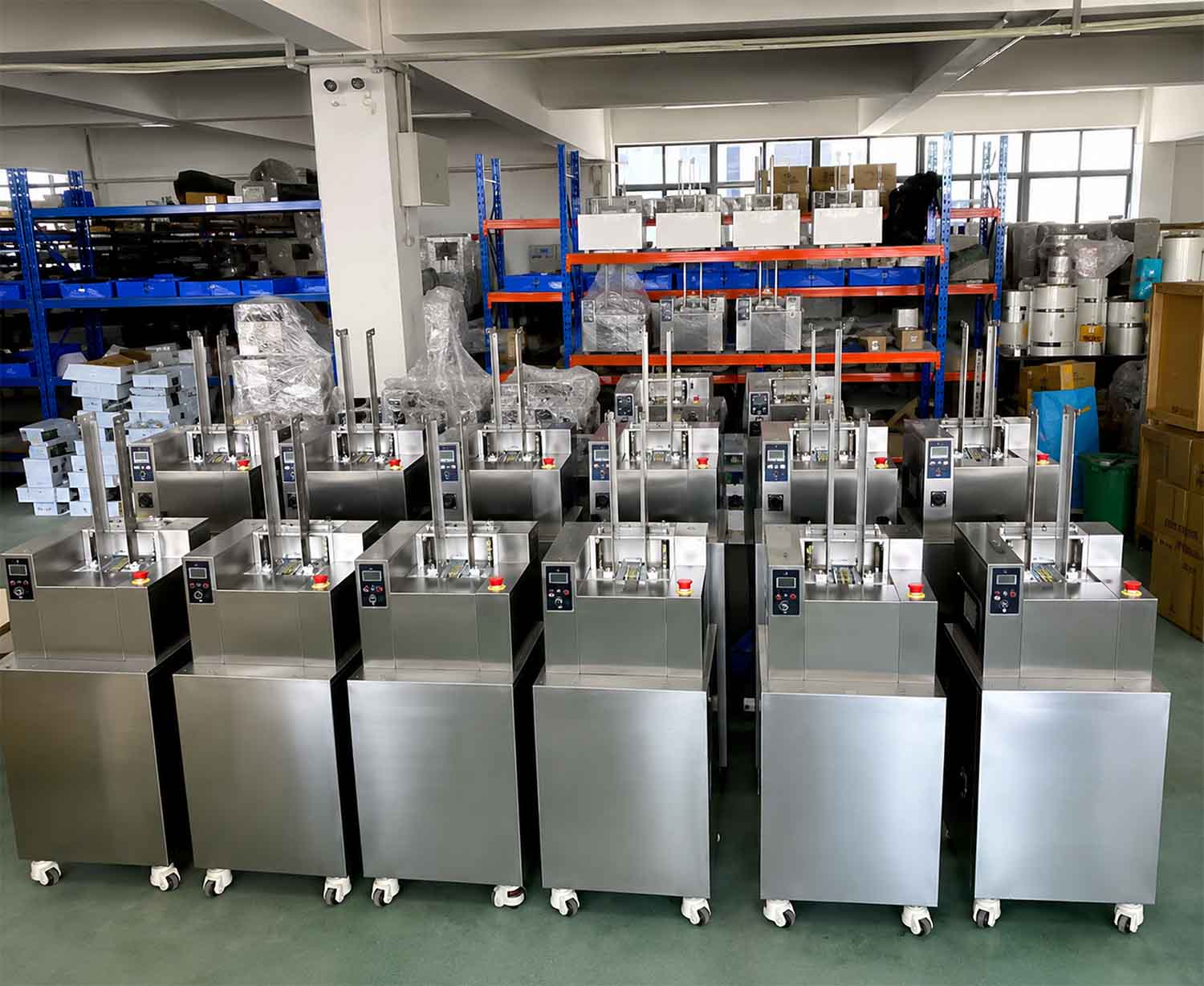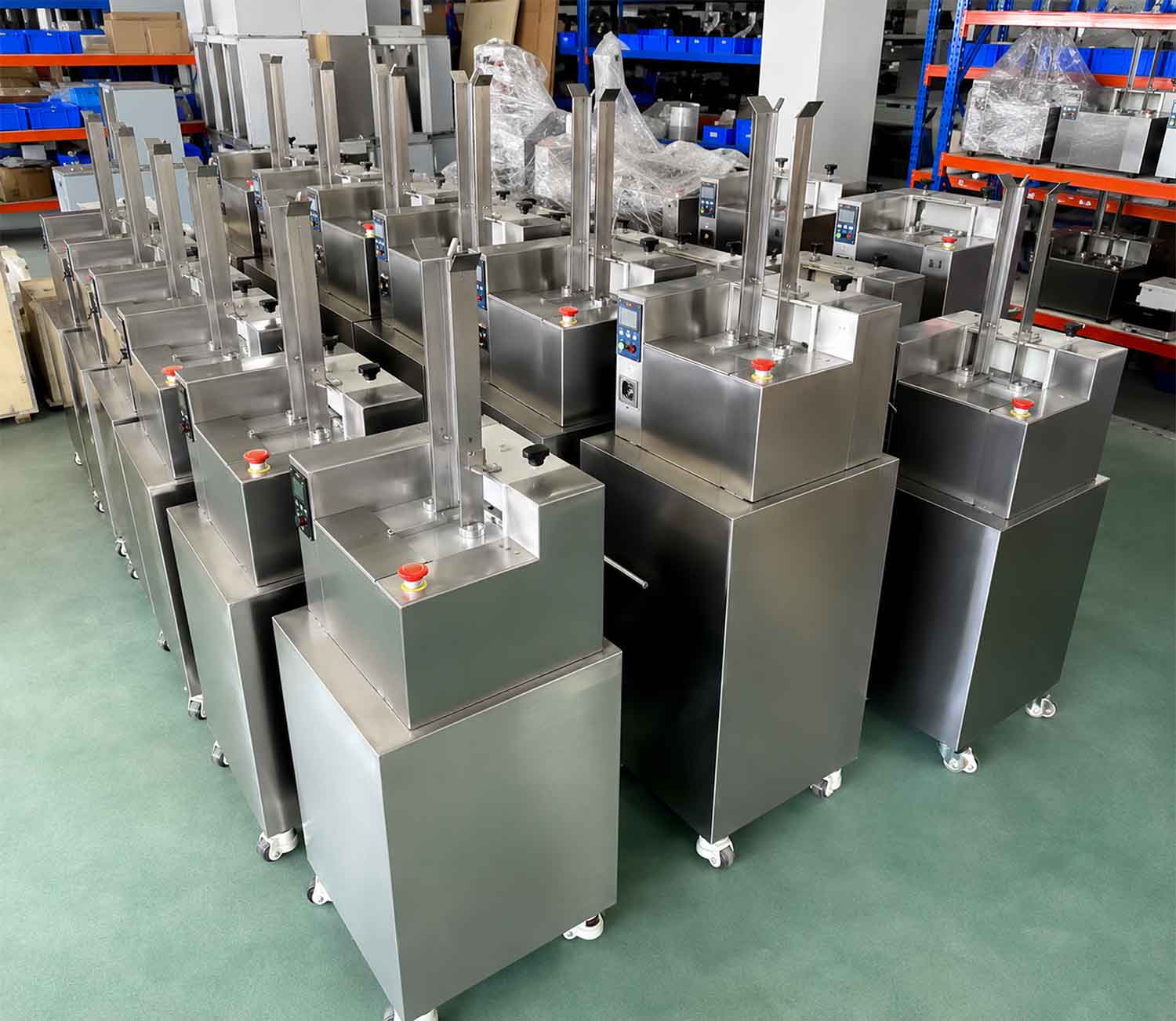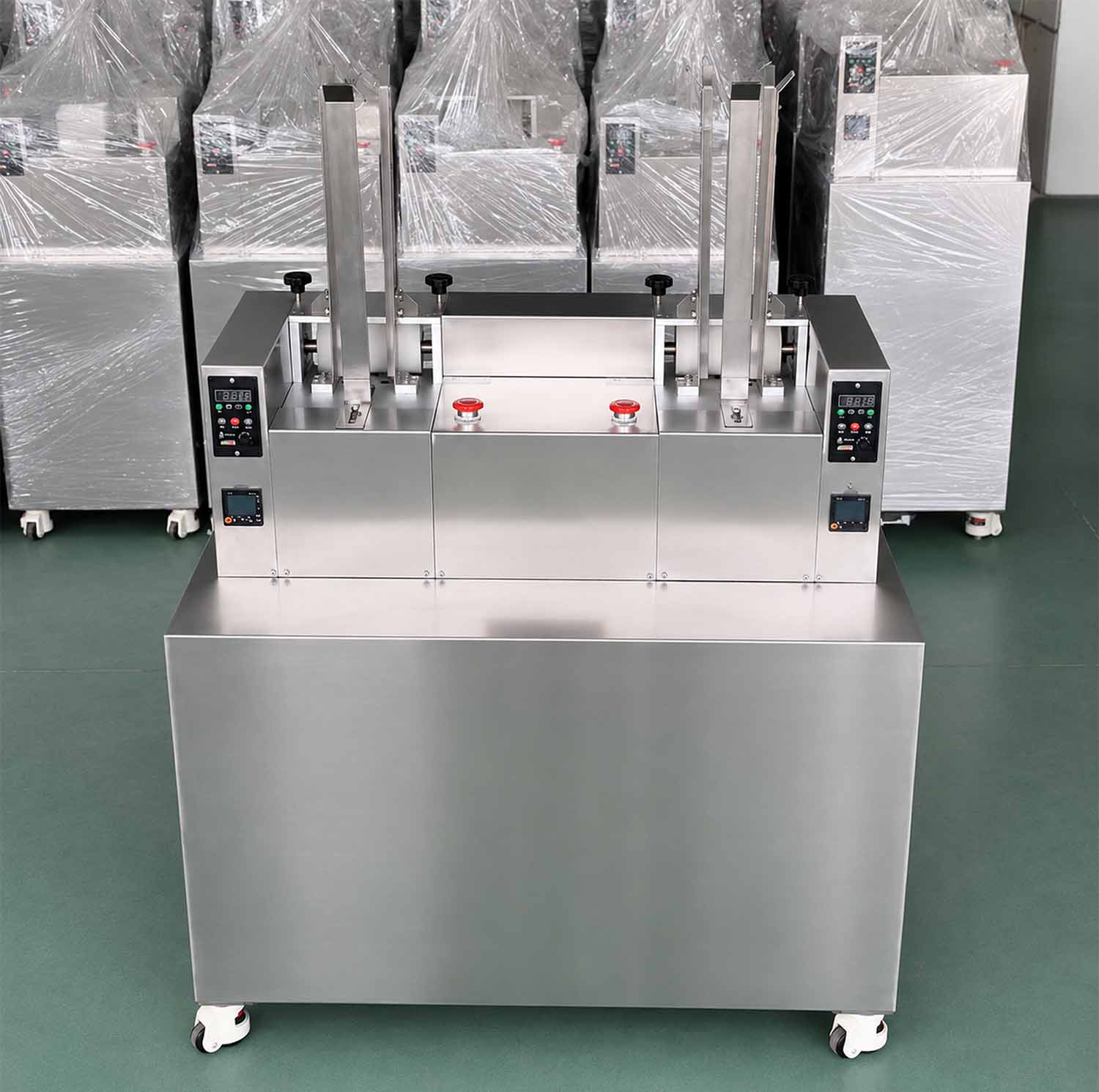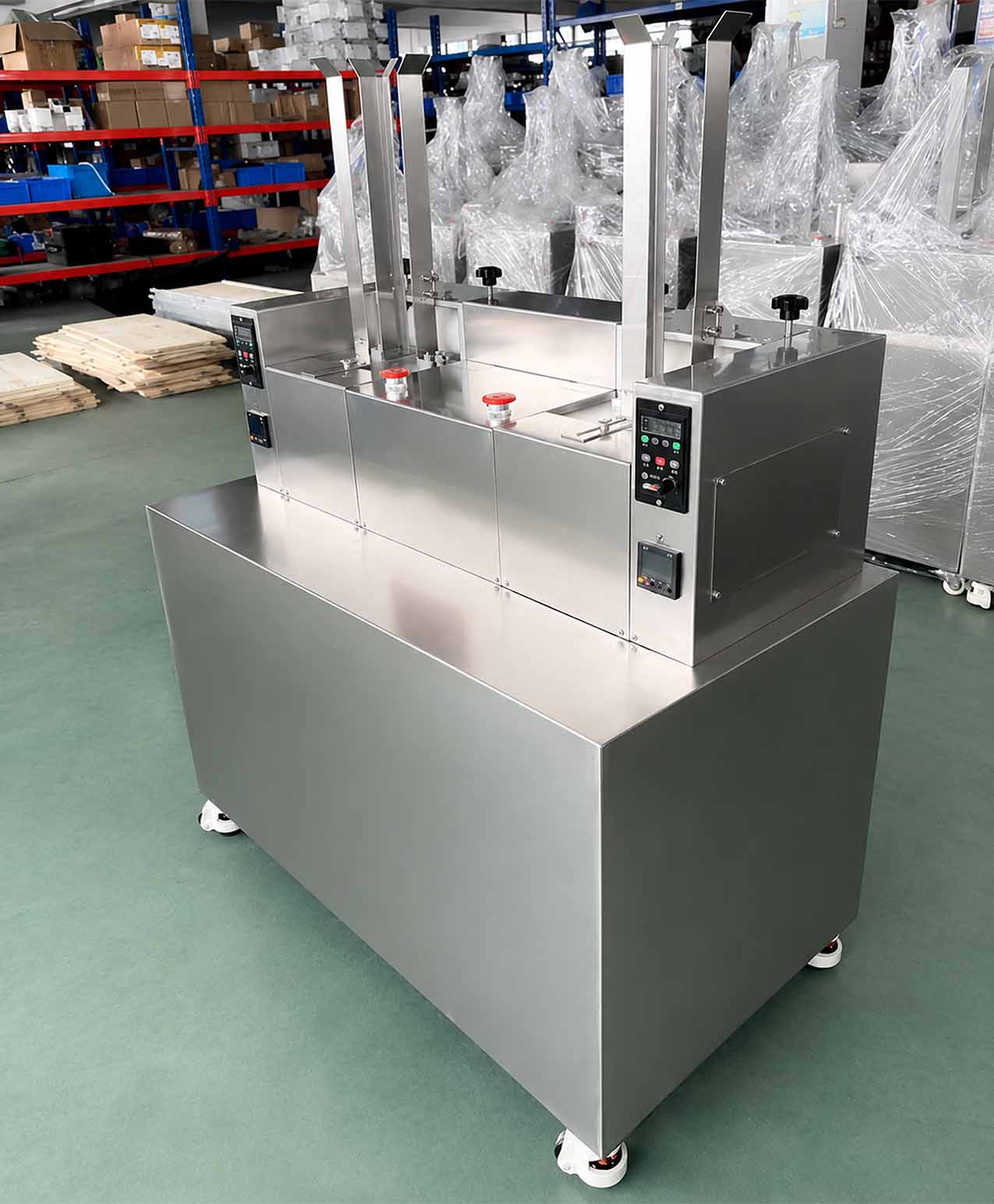
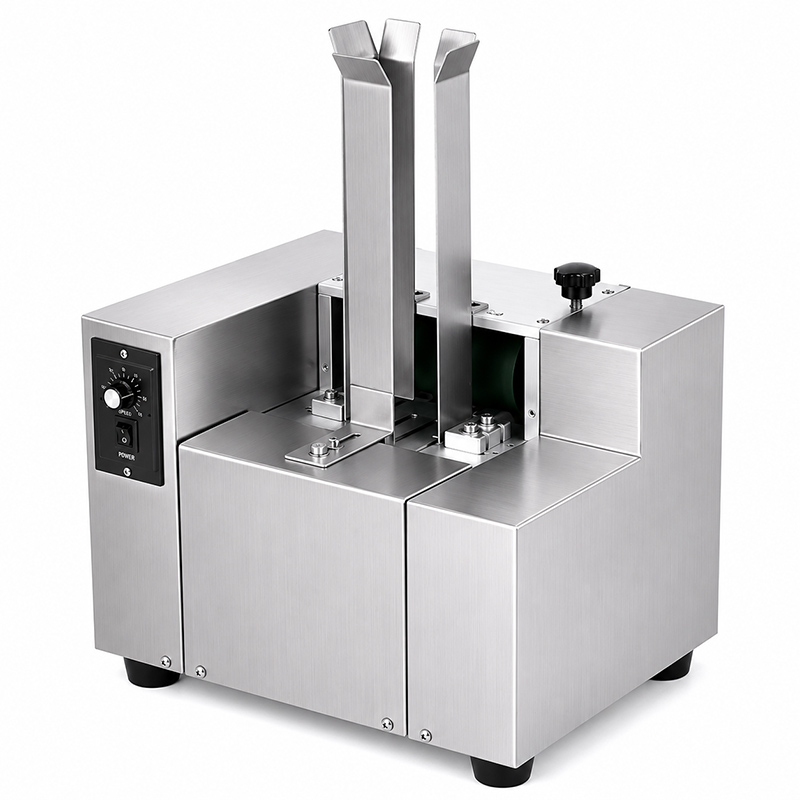
APK-DM80 Benchtop Deblistering Machine
Semi-automatic tablet and capsule recovery from rejected blisters — any pocket layout, no change parts
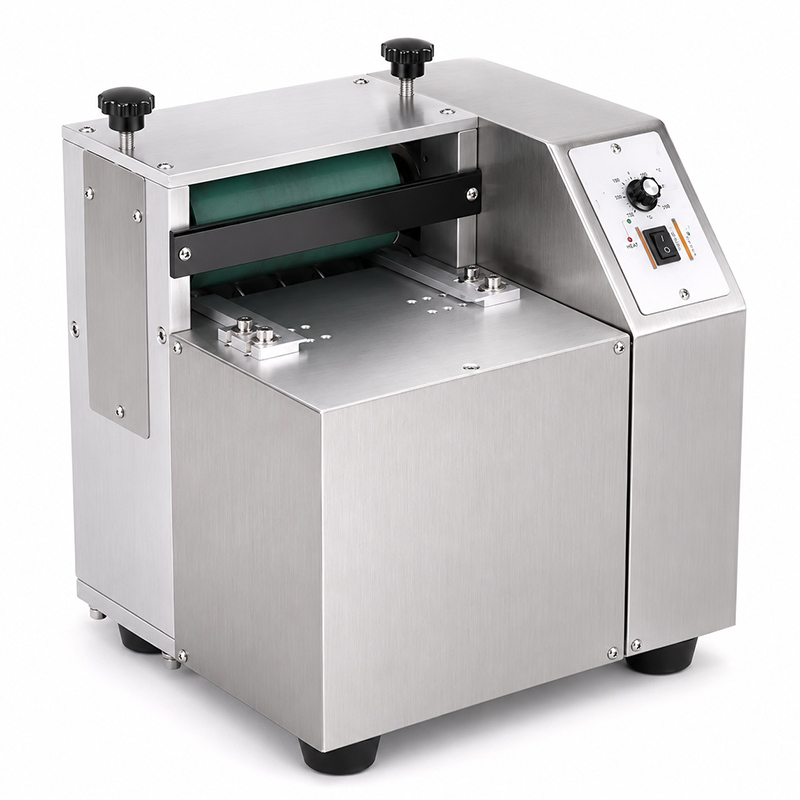
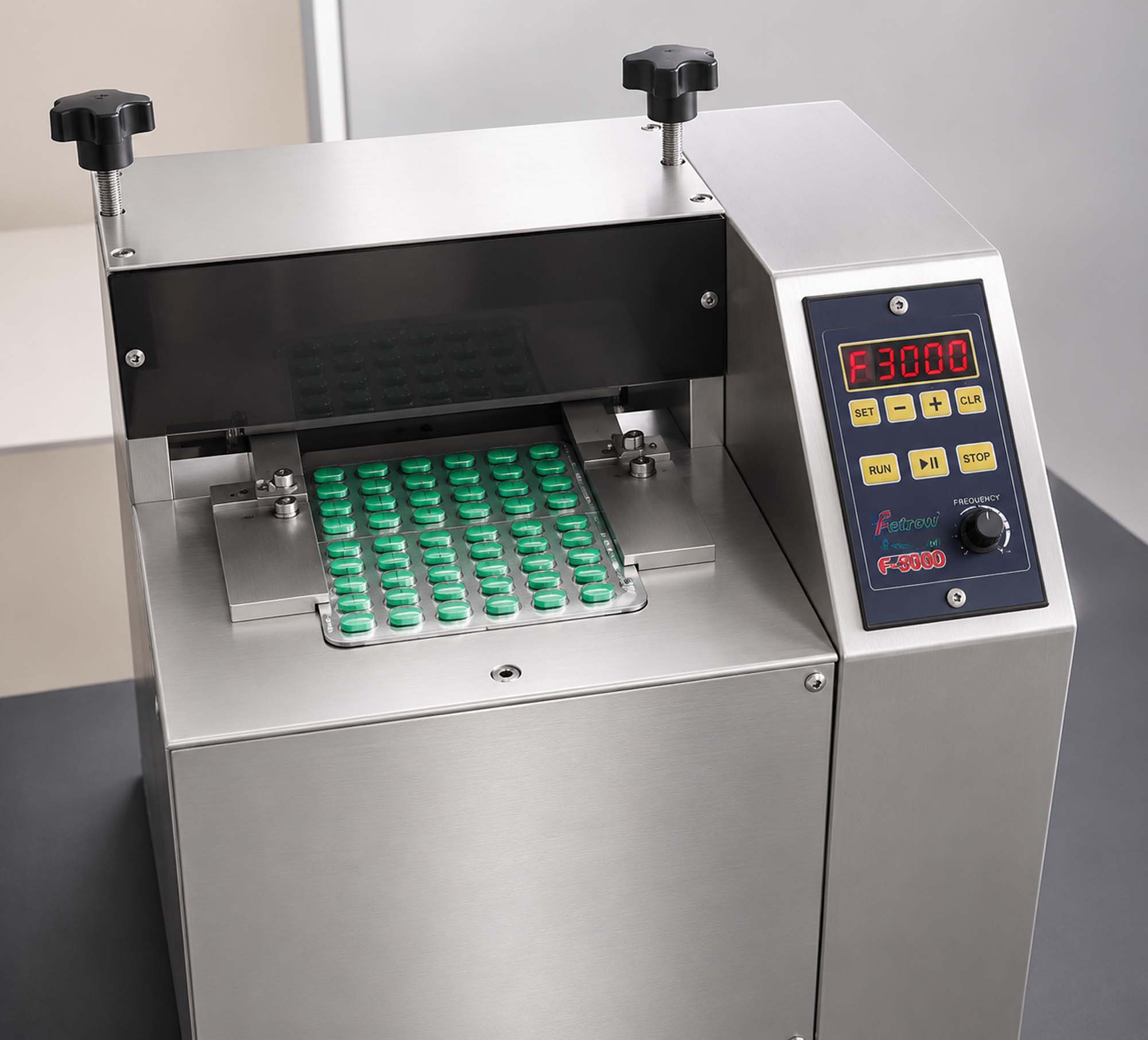
A misprinted or short-filled blister card still holds good product. Peeling it out by hand is slow, and it’s where softgels get crushed. This benchtop machine does the peeling with a pair of soft silicone rollers that press each pocket open, so tablets and capsules drop into one tray and the empty foil goes to another. It handles blister cards with any pocket layout, without changing parts.
1. Speed: 25 to 35 blister cards a minute, adjustable
2. Any pocket layout: regular grids or irregular layouts, no change parts
3. Soft silicone rollers: press the pocket open without crushing softgels
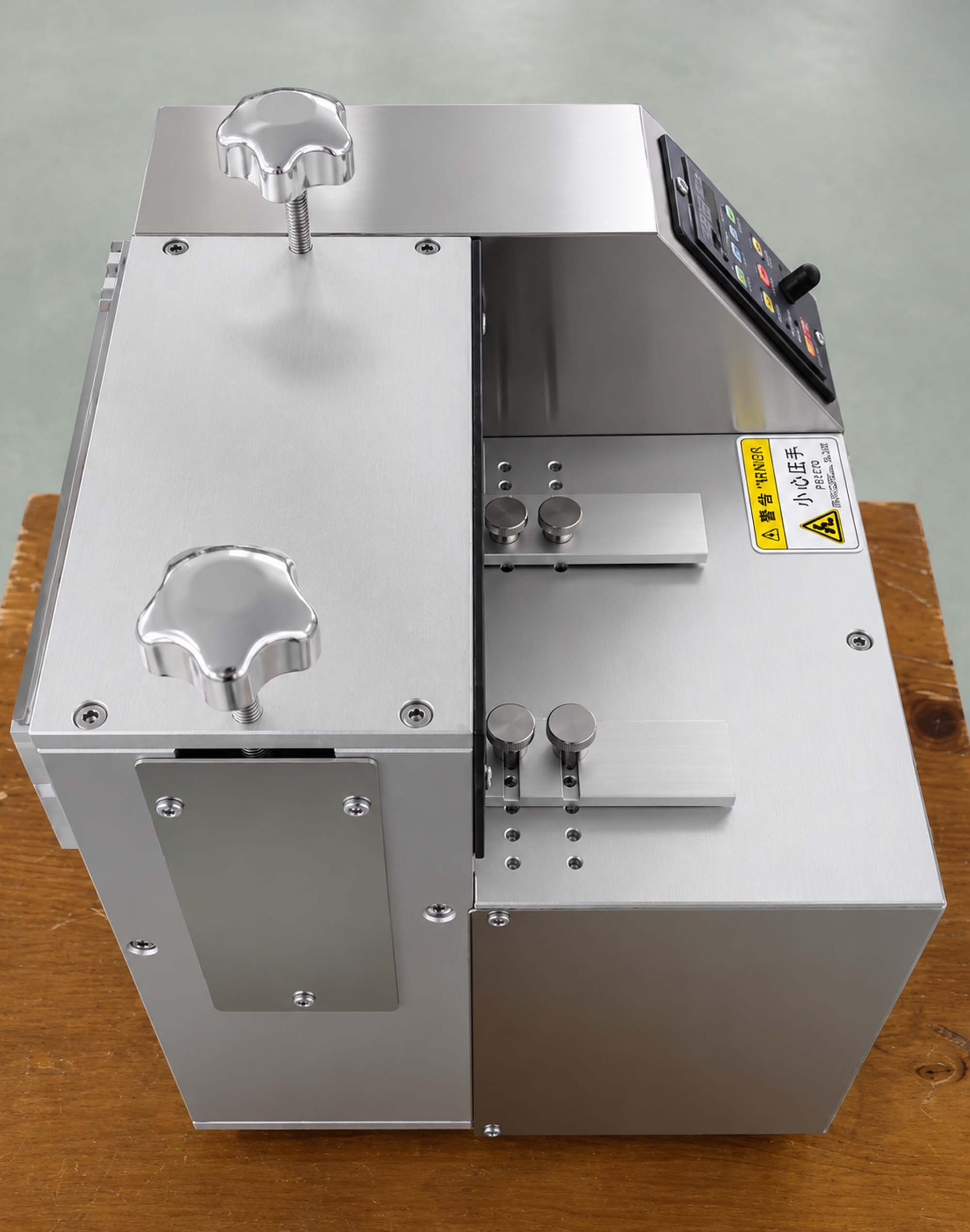
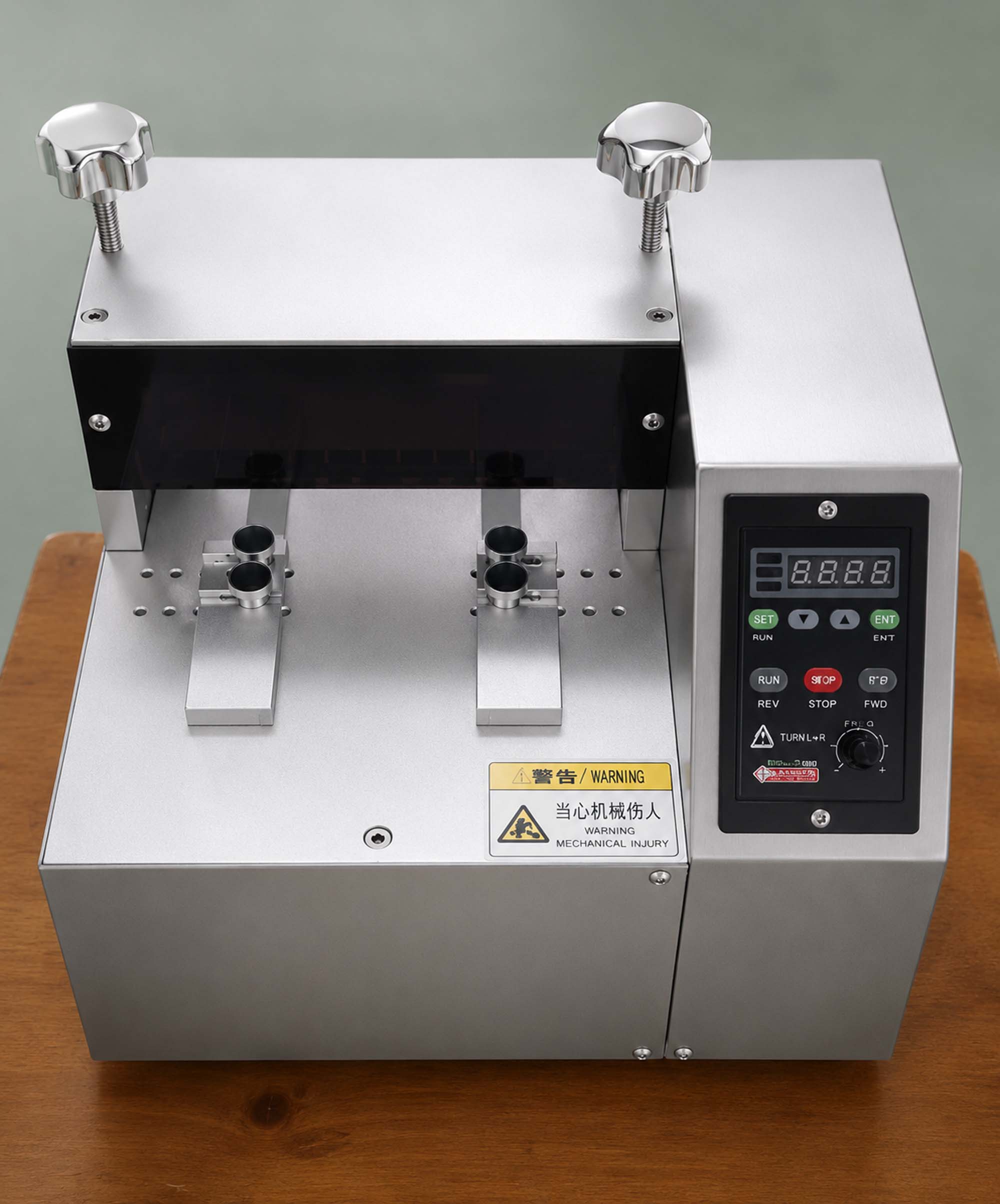
4. Benchtop: 250 × 280 × 320 mm, 16 kg, 60 W
Is the APK-DM80 the right size for you?
✓ Yes, if…
- You rework rejected Alu-PVC blister cards and peel them by hand today
- Your blister cards have irregular or offset pocket layouts
- You recover under about 2,000 cards an hour
- You want a machine that sits on a bench and moves between rooms
✕ Buy something else if…
- Your cards are Alu-Alu or Alu-PVC-Alu → the APK-DM120 and above handle all three
- You rework more than 35 cards a minute → the APK-DM120 runs 50–65 fully automatically
- You need an automatic card count for your rework records → the APK-DM130 and DM160 count automatically
Rollers That Mimic a Thumb
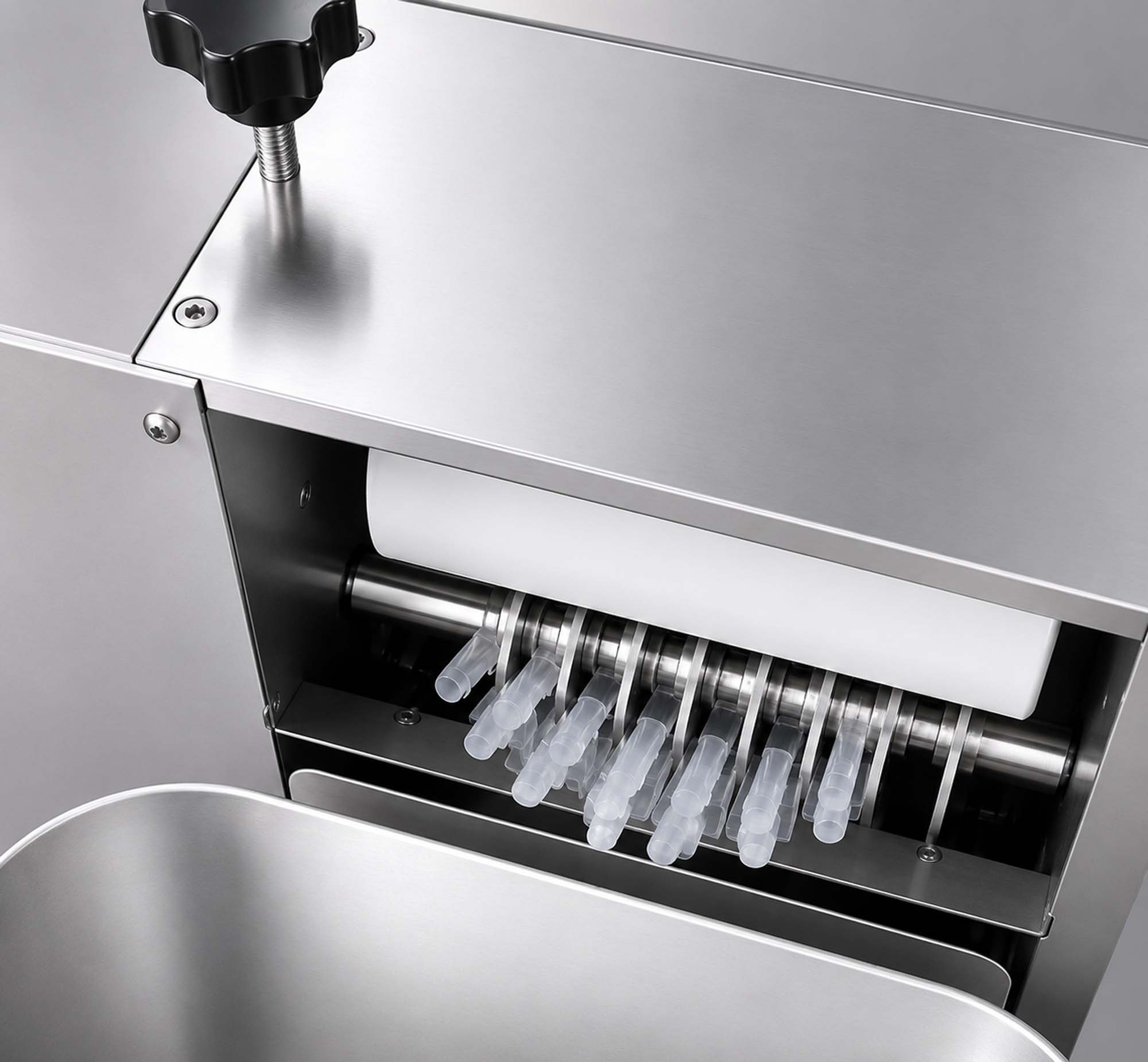
A micro-motor and reduction gear turn a pair of rollers that press each pocket the way an operator’s thumb would — steady, low speed, even pressure. The foil splits and the tablet or capsule drops out, without the crush that comes from pushing too hard.
Soft Silicone, Not Hard Rubber
The rollers are imported silicone. Soft enough to yield around a softgel, firm enough to split the foil backing.
Product in One Tray, Foil in Another
A guide plate and a rubber retaining flap send the recovered tablets and capsules one way and the empty blister card the other, so nobody sorts them by hand afterwards.
Any Pocket Layout, No Change Parts
Irregular, offset or grid layouts all run through the same machine. Card size is set by adjustment, not by swapping a mould.
Technical specification
Parameter | APK-DM80 | What it means for you |
Operation | Semi-automatic | An operator feeds the cards |
Card count | Manual | For automatic counting, see the DM130 |
Speed | 25–35 cards/min, adjustable | Slower for stiff foil |
Pocket layout | Any — regular or irregular | The only model in the range that takes irregular layouts |
Blister material | Alu-PVC | For Alu-Alu and Alu-PVC-Alu, see the DM120 |
Change parts | None | — |
Rollers | Imported silicone | — |
Motor | 60 W with speed controller | — |
Power supply | 110–120 V or 220 V, 50/60 Hz, single phase, 60 W | Tell us which outlet you have |
Construction | SUS304 | — |
Dimensions | 250 × 280 × 320 mm | Fits on a bench |
Weight | 16 kg | One person can carry it |
Model comparison
Model | Operation | Speed | Layout | Blister material | Count | Weight |
APK-DM80 | Semi-auto | 25–35/min | Any | Alu-PVC | Manual | 16 kg |
APK-DM120 | Automatic | 50–65/min | Regular rows | Alu-PVC, Alu-Alu, Alu-PVC-Alu | Manual | 25 kg |
APK-DM120A | Automatic | 80–95/min | Regular rows | Same | Manual | 35 kg |
APK-DM130 | Automatic | 100–120/min | Regular rows | Same | Automatic | 38 kg |
APK-DM160 | Automatic | 220–280/min | Regular rows | Same | Automatic | 65 kg |
Two questions decide the model. Are your pockets laid out in regular rows? If not, only the DM80 takes them. And how many cards do you rework an hour?
Industry Applications
Softgels from Short-Filled or Misprinted Cards
The oil fill is the expensive part of a softgel, and one that’s crushed during peeling is lost. Recovering them intact is where this machine pays for itself.
Capsules and Tablets from Start-Up Rejects
The first cards off a new blister run, before the format is dialled in. The product inside is still good — only the pack isn’t.
Irregular-Layout Blister Cards
Calendar packs and offset pocket layouts that automatic deblisterers won’t feed. This is the one model in the range built to take them.
Small Rework Batches
A few hundred cards at a time, run on a bench rather than a line. No change parts to set up, so a short job stays short.
What changing over involves
What changed | What you adjust | Roughly |
Different card size | Guide and roller clearance by adjustment | A few minutes |
Different product | Wipe down the rollers and chute | A few minutes |
No moulds and no change parts, for any card size or layout.
What to check before you buy
Your blister material
Alu-PVC splits more easily than Alu-Alu. Ask which materials each model handles, and send a card to be sure.
Your pocket layout
Most automatic deblisterers need regular rows. Irregular layouts need a machine built for them.
Your outlet
Check the voltage before the machine ships.
Why Choose AIPAK?
One Point of Contact
One project engineer handles your machine from proposal to commissioning, so you’re not chasing five suppliers for one answer.
We Run Your Cards Before You Order
Send us a few of your rejected blister cards. We run them on the machine and send back the recovered product, so you can see whether your softgels come out whole — on your own cards, not ours.
A U.S. Number, Answered by Us
+1 (213) 526-8644, answered by our engineers 9 AM–7 PM China time, Monday to Friday. That’s evening and overnight in the U.S., so leave a message or send a WhatsApp anytime and we’ll pick it up first thing.
Spare Parts and Lead Time, in Writing
A kit of wear parts ships with your machine. Every part in the kit, and the lead time for anything outside it, is listed in your quote in writing.
Questions About the APK-DM80
A micro-motor and reduction gear turn the rollers slowly and steadily, the way a thumb presses a pocket. The rollers are soft silicone, so they give around a softgel while still splitting the foil.
No. The guide and roller clearance are set by hand on dials. You can go from a small tablet card to a capsule card with no change parts to buy or store.
The APK-DM80 is built for Alu-PVC. For Alu-Alu and Alu-PVC-Alu, see the DM120 and above.
Yes, it does. While larger continuous automatic deblistering lines often require perfectly structured rows and columns, the compact APK-DM80 is uniquely configured for flexibility. Its feeding mechanics and custom rubber retention flaps allow it to accept blister cards with completely random, offset, or asymmetrical pocket layouts seamlessly, which is what you need for calendar packs and small rework batches.
Yes. It runs on single-phase power with no compressed air or vacuum. We build it for your U.S. outlet — 110–120 V or 220 V, 50/60 Hz — and confirm the voltage with your quote. It draws 60 W.
The entire system is covered by a comprehensive 1-year factory warranty. One year on the whole machine, excluding damage from misuse. Wear parts are listed and priced in your quote.
Customers Also Interested In...
Send Us a Few Rejected Cards
Two things decide which deblistering machine you need, and speed isn’t the first one. Are your pockets laid out in regular rows, or irregular like a calendar pack? And is the card Alu-PVC, or a harder Alu-Alu or Alu-PVC-Alu? Tell us both and we’ll narrow five models down to one.
Better still, send us a few of your rejected cards. We’ll run them on the machine and send back the recovered product, so you can see whether your softgels come out whole — on your own cards, not ours.
- Reply within one business day
- Your cards run on the machine before you order
- Your product details stay with us
No sales calls — we reply by email or WhatsApp, whichever you gave us.