Semi-Automatic Capsule Filling Machine Guide: How It Works, What It Can Fill and When to Move Up
Filling capsules by hand on a board is slow, and the fill weight depends on who’s doing it. A semi-automatic machine takes over the separating, filling and locking, while one operator moves the mold between stations. This guide covers how it works, what it can fill, how to keep it running and when it’s time for a fully automatic machine.
1.What Is the Standard Working Principle of a Semi-Automatic Capsule Filling Machine?
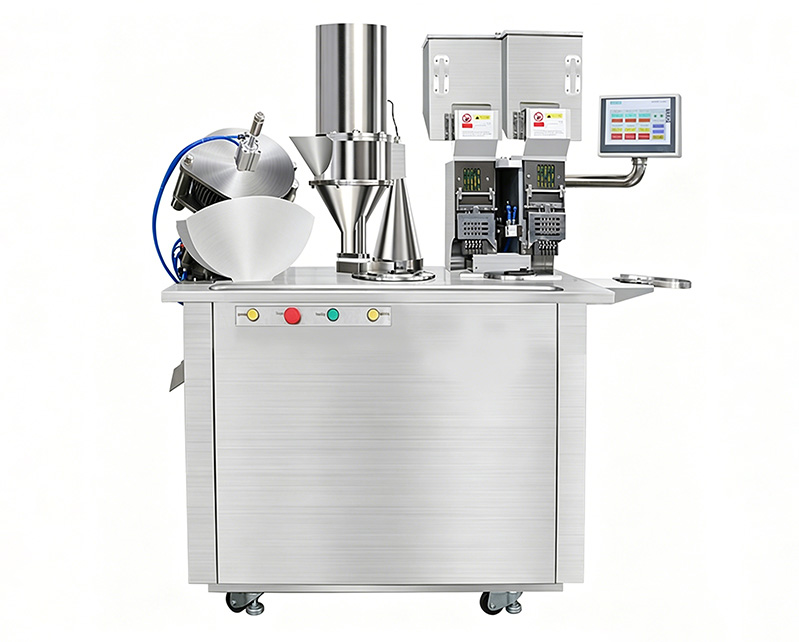
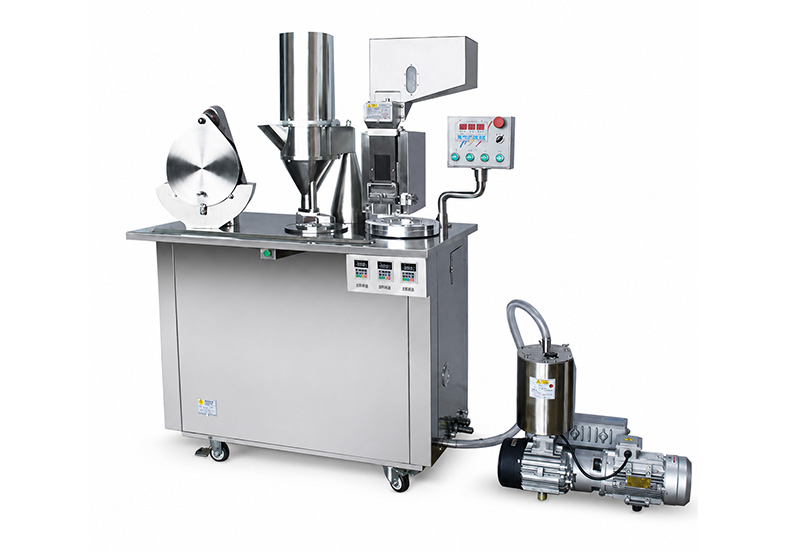
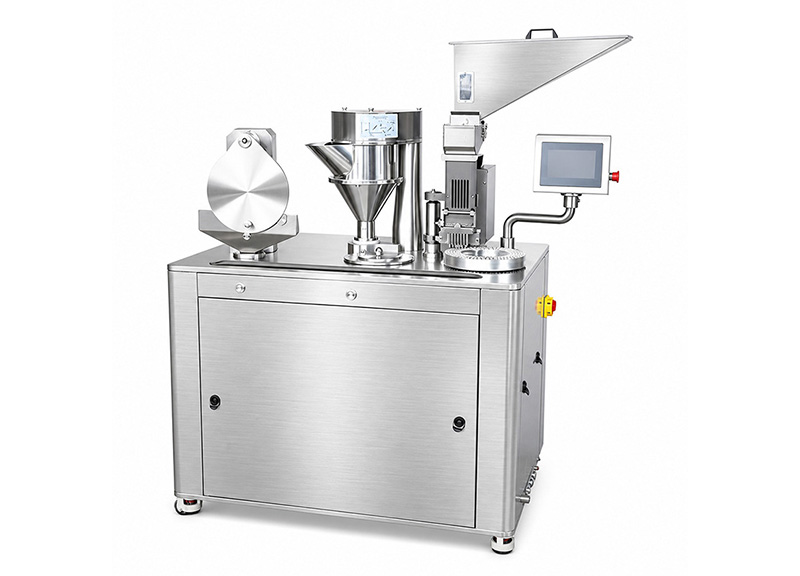
A semi-automatic capsule filling machine sits between a manual filling board and a fully automatic machine. The machine orients and separates the empty capsules, fills the bodies and locks them, but an operator carries the mold from one station to the next. That makes it a good fit for pilot batches and small to medium production runs.
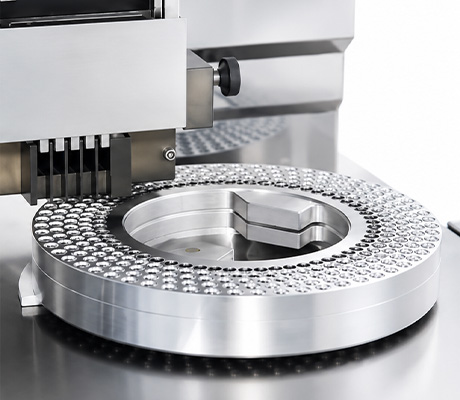
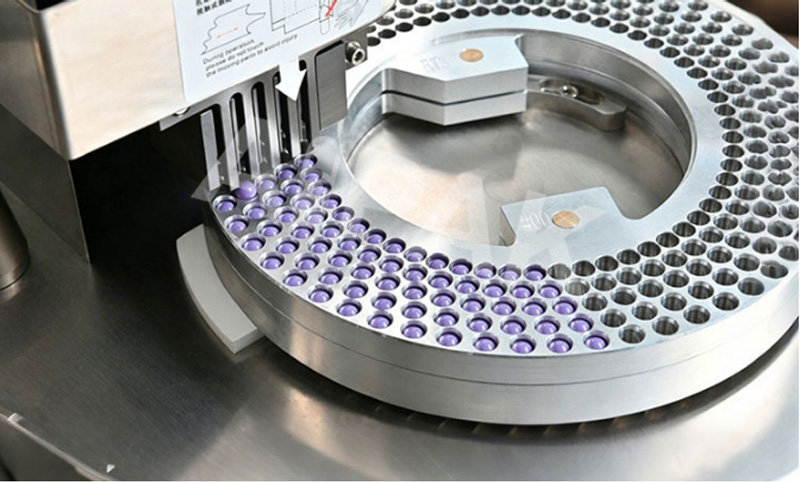
In case of manual encapsulation, every step is performed by operators. A semi-automatic solution automates critical steps such as separation, dosing, and closing automatically. Once empty capsule alignment is done, the machine starts working via synchronized steps. After manual loading, the vacuum pin removes caps from the bodies of empty capsules. The exposed shells are filled with pre-determined doses. The system finally locks the caps firmly and ensures capsules are filled and secured effectively.
In automatic machines, entire functional steps are based on a mechanical approach. In the case of semi-automatic machines, loading and removal of the capsule disc is operator-assisted. The hybrid working steps in a semi-automatic capsule filling machine greatly lower the chances of human error, as in the case of a manual capsule filling machine.
Quick Comparison Table of Manual VS Semi-Automatic Capsule Filling Machine
| Feature | Manual | Semi-Automatic Capsule Filling Machine | Impact |
| Production Capacity | Provides limited or short production capacity. | Moderate to high production capacity. | Fast production cycles |
| Dosing Accuracy | Skilled operators’ dependent accuracy. | Machine-set dosing, repeatable from batch to batch. | High dose accuracy and precision |
| Labor Requirement | Fixed and continuous manual handling is required. | It requires less labor effort with improved process efficiency. | Reduced labor expenditure and energy |
| Production Consistency | It has greater filling variation between batches. | It gives stable production consistency. | More approved batches; lesser rejection |
| Application Range | Mainly suitable for small trials and low-volume production. | Applicable for pilot plants, research lab capsule filling, and small-scale commercial capsule filling production. | Scalable production |
Engineer’s Pro-Tip
When you evaluate a machine, ask for a fill-weight test on your own powder. That tells you more than the figures in a brochure.
2.What Are the Critical Mechanical Components of a Professional Semi-Automatic Filler?
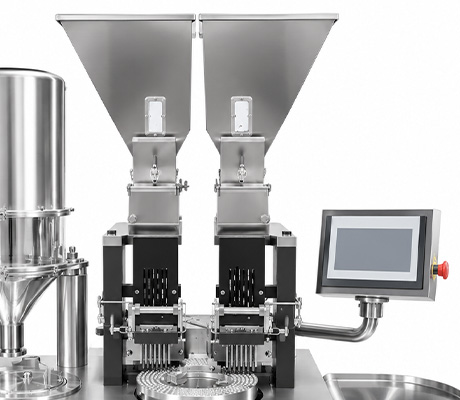
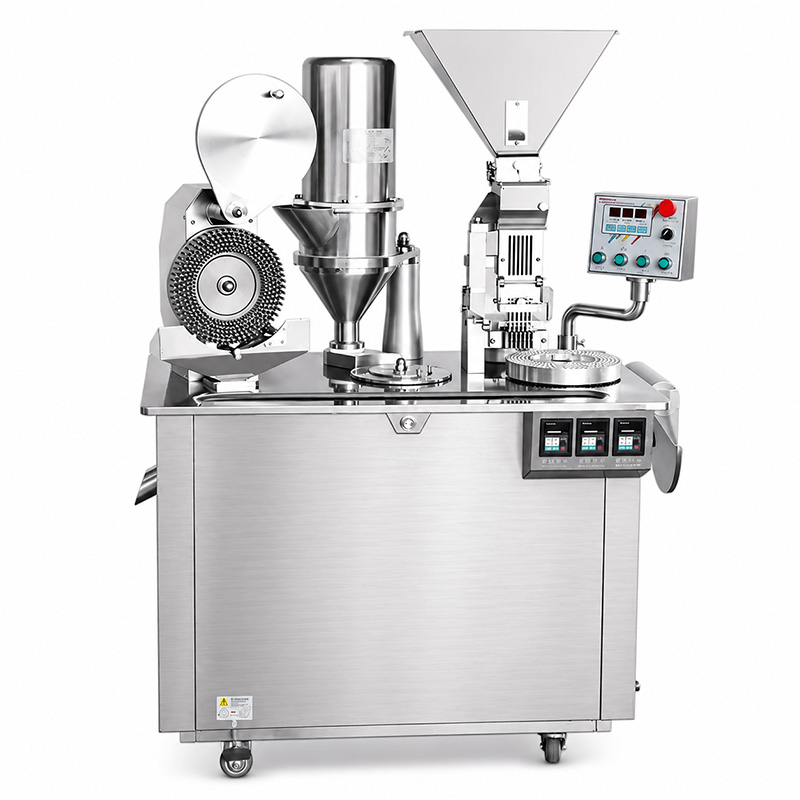
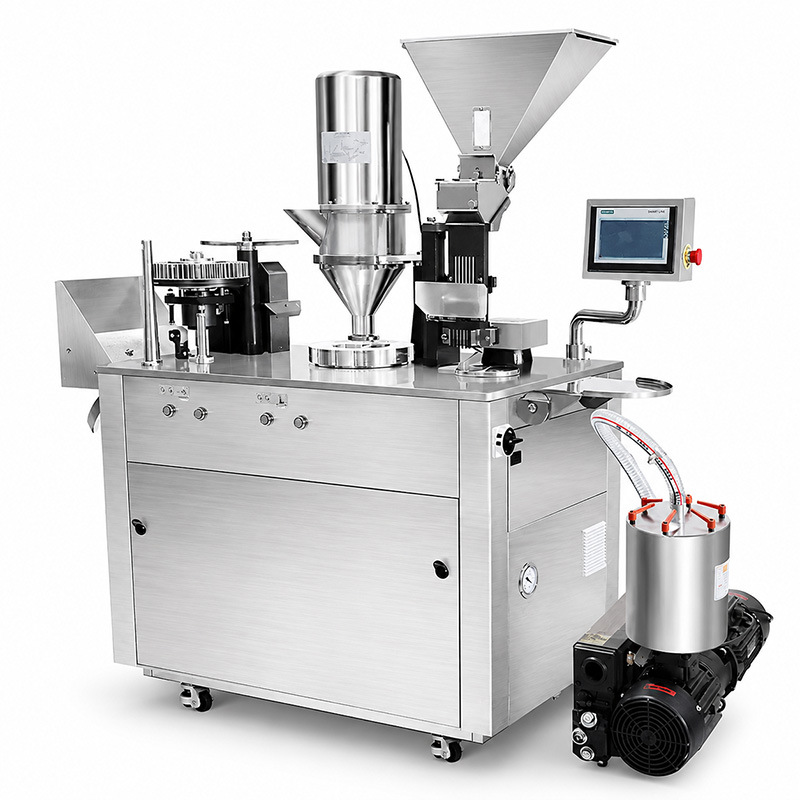
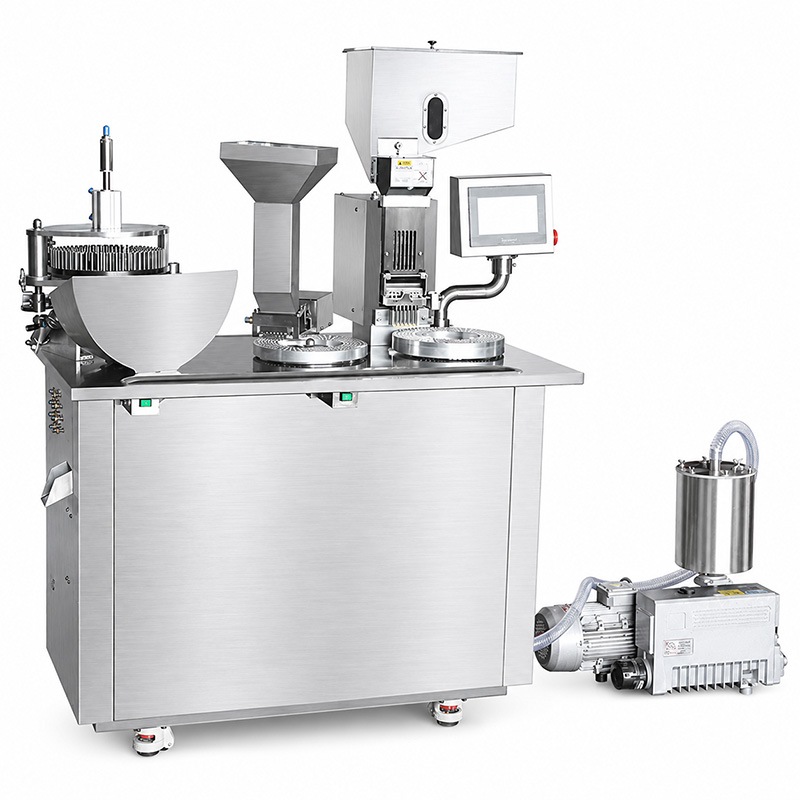
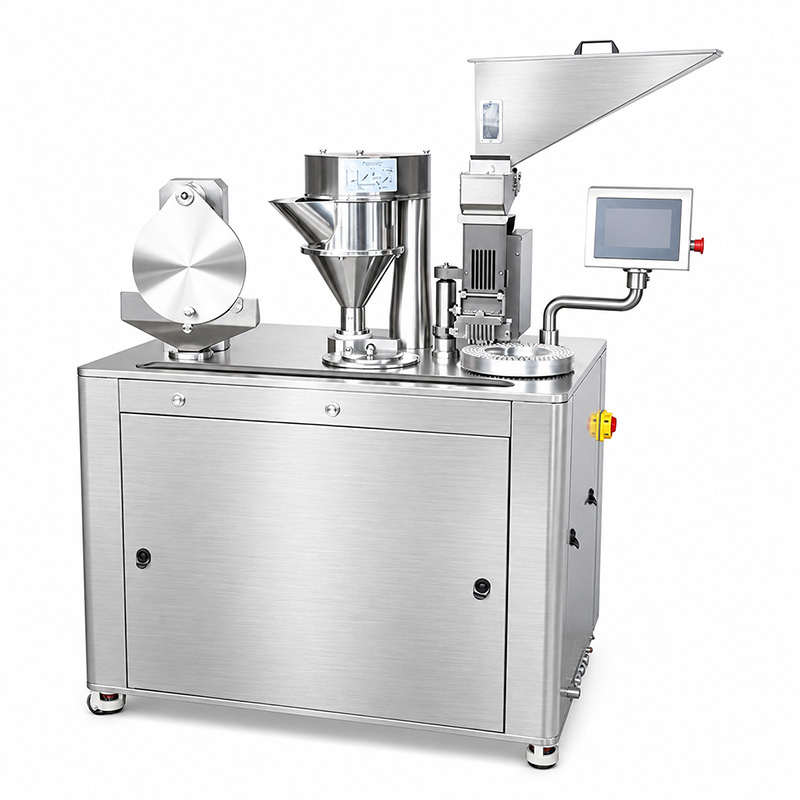
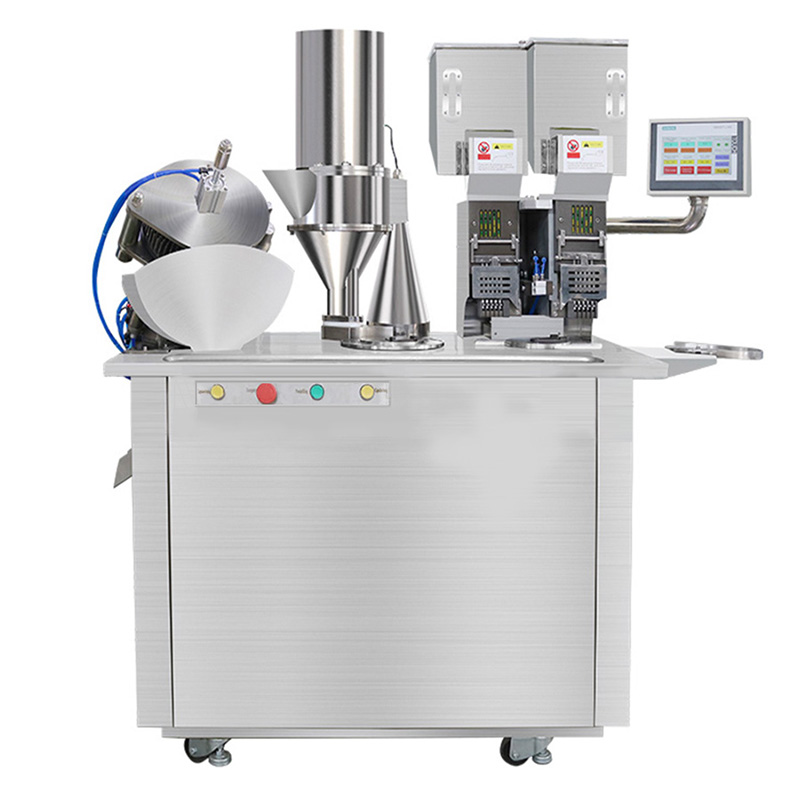
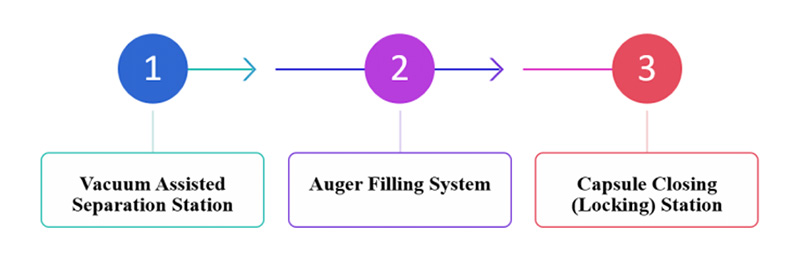
Three stations do the work on a semi-automatic filler: separating the empty capsules, filling the bodies and locking the capsules. How each one is built decides how many capsules separate cleanly, how steady the fill weight is and how much powder ends up on the bench.
The parts that touch the powder are stainless steel, so they clean quickly between products. The main stations are below.
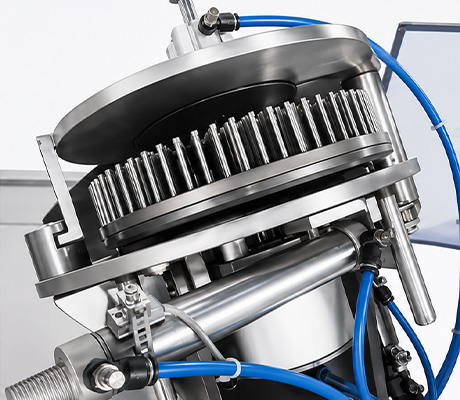
Vacuum Assisted Separation Station
A negative pressure-controlled unit that is specifically engineered to separate caps and bodies of empty capsules. The operation occurs in a way where an optimized vacuum pressure performs the job without capsule deformation or cracks.
Forced-Flow Auger Feeding
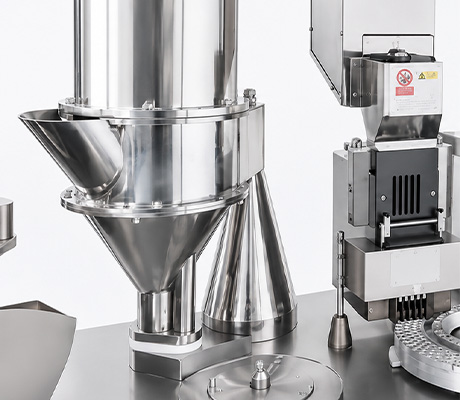
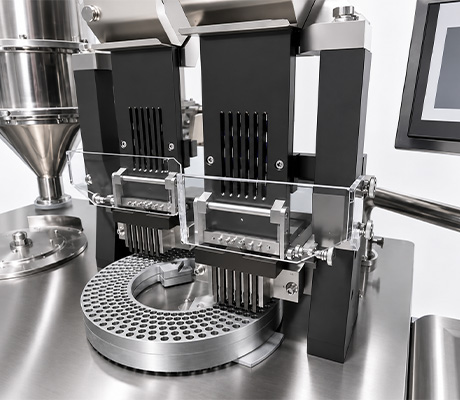
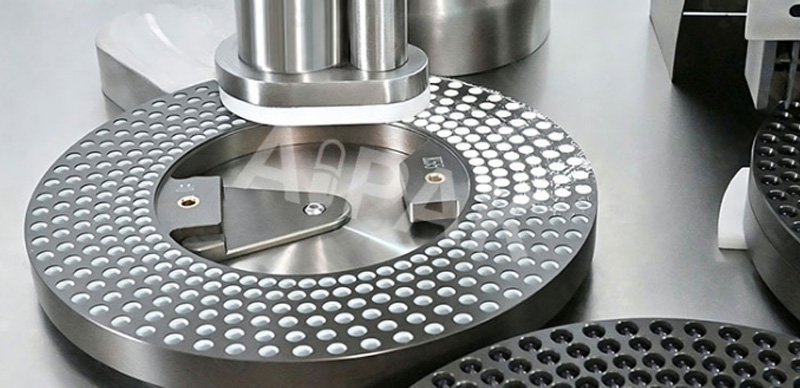
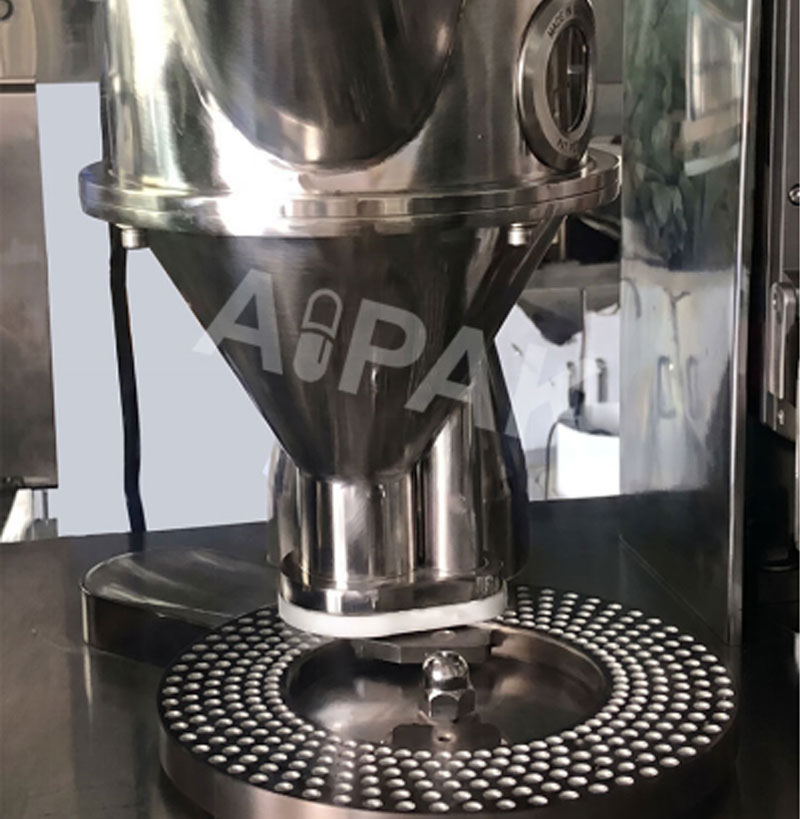
Semi-automatic machines dose by forced flow rather than by tamping. A propeller inside the powder hopper pushes material down into the capsule bodies as the mold segment rotates beneath the feed port. Because the powder is pushed rather than compressed into a plug, the machine handles poor-flowing and low-density materials that would bridge in a gravity-fed design — but the dose is set by feed rate and dwell time, not by a fixed volumetric chamber. This is the fundamental difference from the tamping-pin dosing used on fully automatic machines, where powder is compressed into a dosing bore in several stages.
Capsule Closing (Locking) Station
Capsule Locking Station: The operator moves the filled mold to the locking station. On the CGN-208D, the mold stands upright and a foot pedal locks the capsules. On the D1, D2, S and X, the mold lies flat and pneumatic cylinders lock the capsules and push them out, which keeps fine powder in the body.
3.How Does a Semi-Automatic Filler Balance Throughput with Dosing Accuracy?
On a semi-automatic machine, output depends as much on the operator as on the machine.
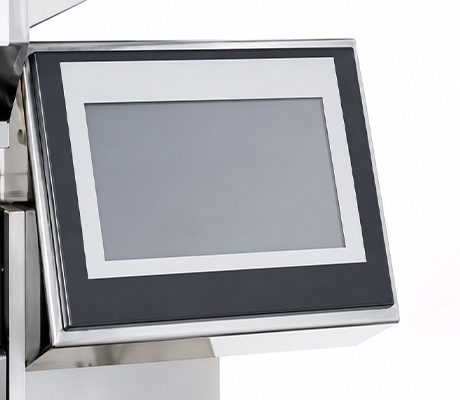
A single-head CGN-208 fills 10,000 to 25,000 capsules an hour, depending on model, capsule size and how fast the operator moves the mold. The double-head CGN-208D2 fills 38,000 to 43,000. Fill weight comes from the balance between hopper speed and turntable speed; on the touchscreen models both are entered as numbers, so the next batch runs the same way.
Check fill weights at the start of each batch and after any speed change, and the dose stays steady. If your volumes have outgrown semi-automatic filling, the entry point to our fully automatic range is the NJP-200C at 12,000 capsules per hour, which removes the operator handling step entirely.
4.What Makes a Semi-Automatic Filler Easy to Clean?
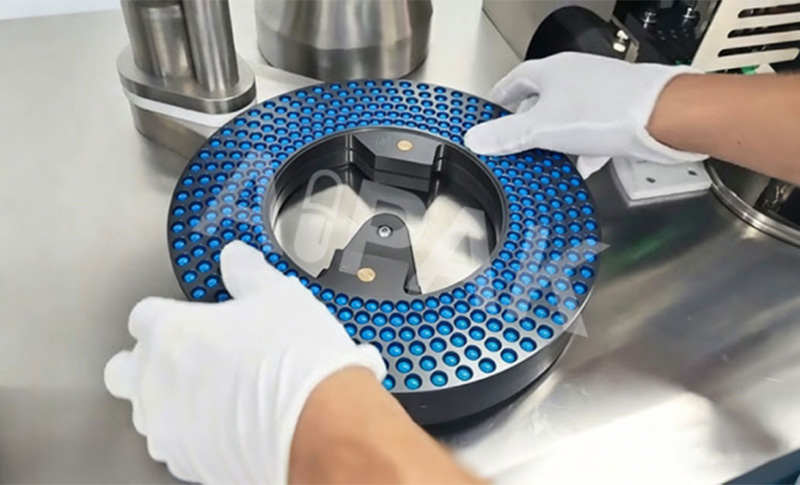
Changing products means cleaning the hopper, the mold and the sowing parts. The hopper and mold come off by hand, and each capsule size has its own mold set, so changing size is a parts swap rather than an adjustment. Grease the sowing unit and clean the vacuum pump’s filter bag every two to four weeks.
Unseparated capsules are caught at the operator’s own inspection step rather than by an automatic rejection station — this is one of the practical trade-offs of a semi-automatic machine. What the machine does provide is a separation disk that can be programmed to run additional cycles under vacuum after sowing, so capsules that did not open on the first pass are given a second and third opportunity before the segment moves on. If a whole batch is separating poorly, the usual cause is a clogged vacuum filter bag rather than the capsules themselves.
5.How to Assess the Price-Performance Trade-off for Commercial Procurement?
The cheapest semi-automatic filler is rarely the cheapest to own. What decides the real cost is how steady the fill weight stays, how often the machine stops, and how quickly you can get a part. Our expertise suggests not looking for low-price semi-automatic capsule filling machines; rather, look purely for reliability and long-term return on investment.
The procurement team looks beyond just cost, though it is involved with multiple core factors and delivery of the equipment.
Ask any supplier for fill-weight results on your own powder, a list of the wear parts that ship with the machine, and the lead time for anything outside that list. The table below sums up the trade-off.
Feature | Low-Cost Semi-Automatic Capsule Filling Machine | High-Performance Semi-Automatic Capsule Filling Machine | Impact |
Initial Investment | Affordable / Low price | High investment | High quality low work life cost |
Filling Accuracy | Often with variation | Precise | Uniform batch with less product’s waste |
Machine Construction | Basic components | Stainless-steel | Extended operational lifespan |
Downtime Risk | Higher | More stable processing | Enhanced production cycles |
Maintenance Requirement | Frequent | Stable and durable components, thus easy maintenance | Lowers maintenance cost |
Conclusion:
A semi-automatic filler earns its place when it separates cleanly, fills steadily and is quick to clean between products. Tell us what you’re filling, your capsule size and how many capsules you need a day, and we’ll tell you which CGN-208 fits, or whether you’d be better off with an automatic machine.