
Everything Had to Fit in Forty Feet.
Including the Things They Hadn't Thought of Yet.
A spice company moving from hand filling to their first automated line had one 40-foot room, no written specifications, and no experience importing equipment. The machines were the straightforward part. This is what the rest of it took.
Spice packer scaling up
from hand filling
Powder and blends,
into jars
One 40-foot room,
nothing could overhang
First automated line,
first import
A powder line built for a room that could not get any bigger.
They could not tell us the size of their own jars. That is where the project actually started.
They had never bought a line before
The customer packed spices by hand and had decided to automate. That is a normal enough place to start. What made this project different was everything they did not have yet.
They could not tell us the size of their jars — not precisely, not in the way a machine needs them. They could not tell us the cap specification. They did not know how their own blends behaved when poured, which matters more than anything else when you are filling a powder. They had never imported capital equipment, and as it turned out, they had never sent an international wire transfer either.
A supplier can treat that as a disqualification. The inquiry is vague, the specifications keep moving, so you send a standard quote and wait for them to come back when they have made up their minds.
We think that is the wrong read. A customer who cannot specify the line yet is not a customer who is wasting your time. They are a customer who has not been asked the right questions yet, and asking those questions is most of the work.
On buying your first automated line
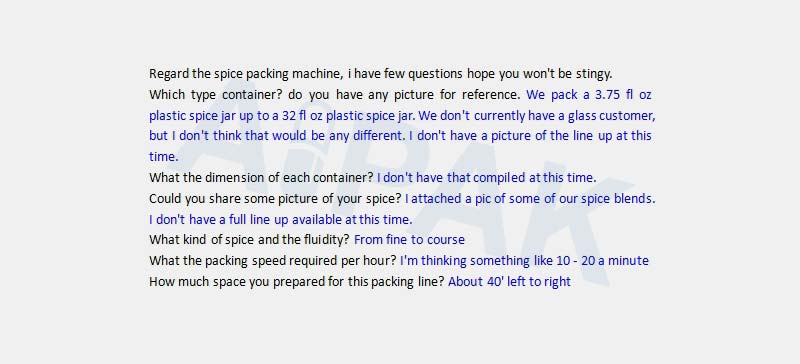
Where it started: an inquiry with more questions in it than answers.
Forty feet, end to end
The hard constraint was the room: a 40-foot span, with no possibility of expanding into the space next door.
The constraint that shaped every decision that followed.
A powder bottling line is not one machine. Jars have to be fed in and set upright. Powder has to be filled by weight. Caps have to go on and be tightened to a consistent torque. Then, if you are selling into retail, the filled jar usually has to pass a metal detector and a checkweigher before it gets a label. Each of those is a machine, and between each of them is conveyor, and conveyor takes length too.
jars in
auger
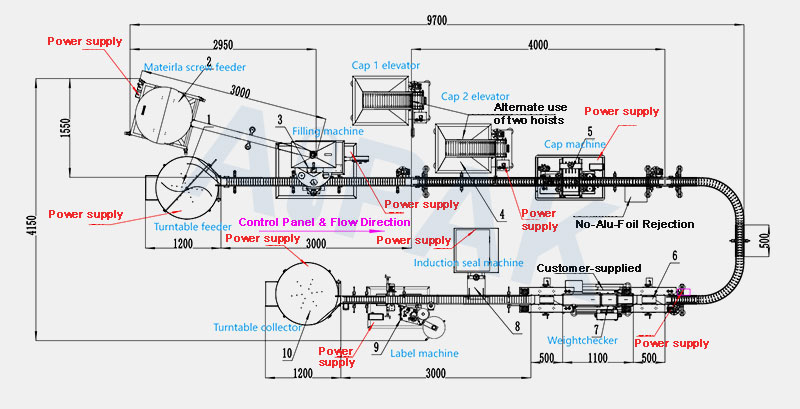
Schematic only — not the final layout. Each revision reallocates space along the line: adding one machine means making room elsewhere.
That makes the layout a zero-sum problem. Every revision had to give back the length it took. When we added clearance for an operator at one station, something downstream had to move. When the budget tightened, we took a machine out of the line entirely and redistributed what was left — which is a different drawing, not a shorter one.
We went through multiple rounds of this, auditing each version against the real dimensions of the room rather than against a nominal footprint. Conveyor direction, equipment heights, where a person actually stands — all of it got checked against the space, because a layout that fits on paper and not in the building is worse than no layout at all.
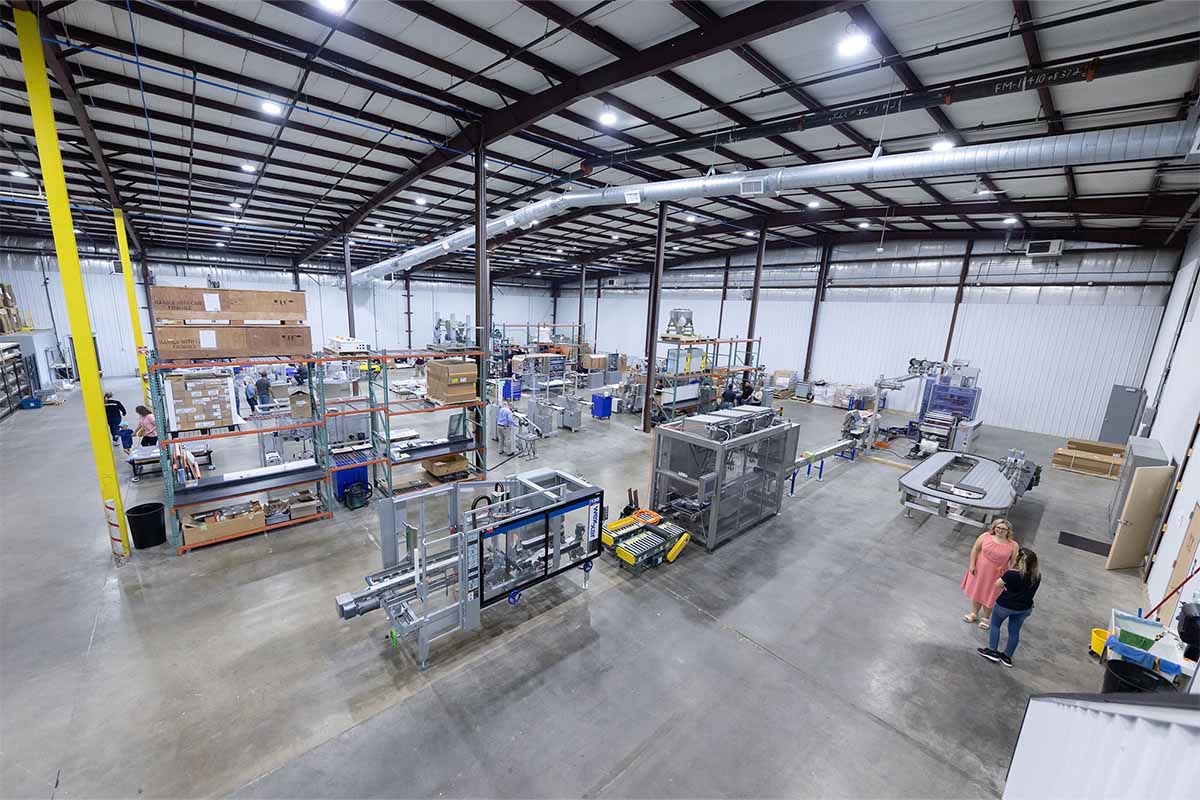
The room we were designing into: one span, two doors, and no option to spill into the next bay.
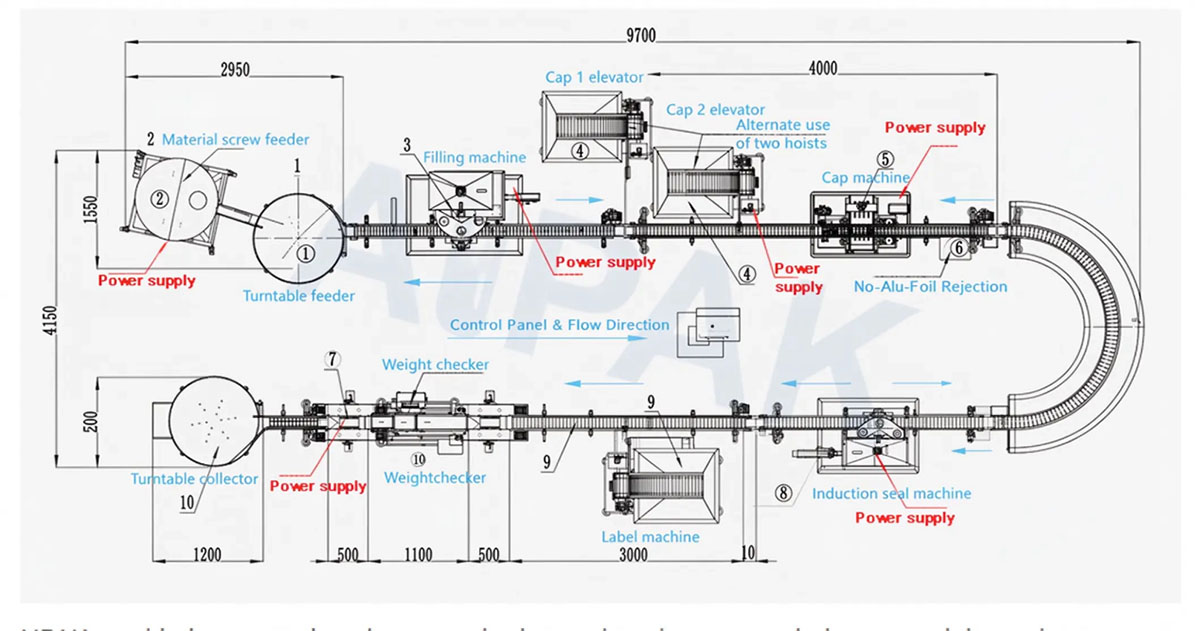
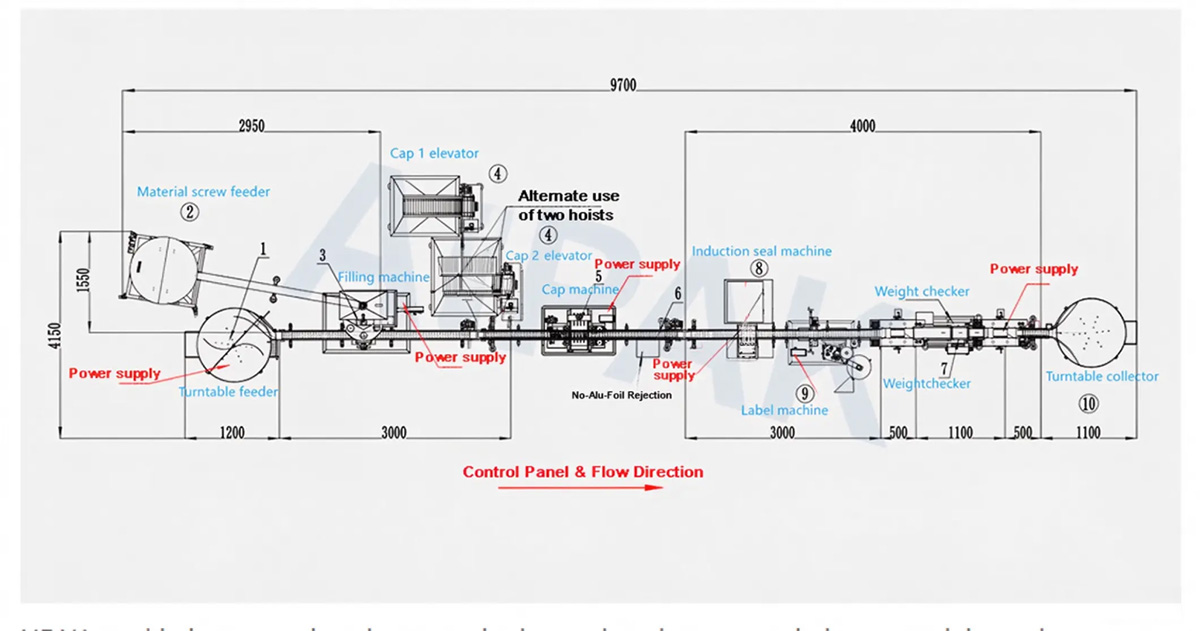
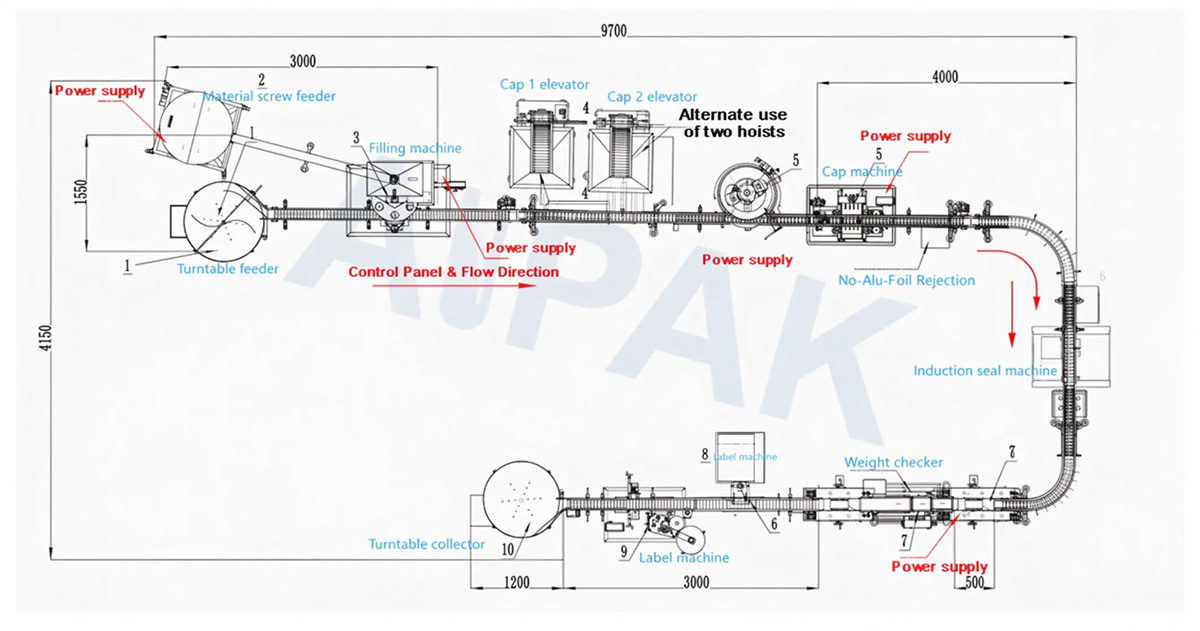
Not the first layout. Each round moved something, and once we took a machine out entirely.
Send us the jar
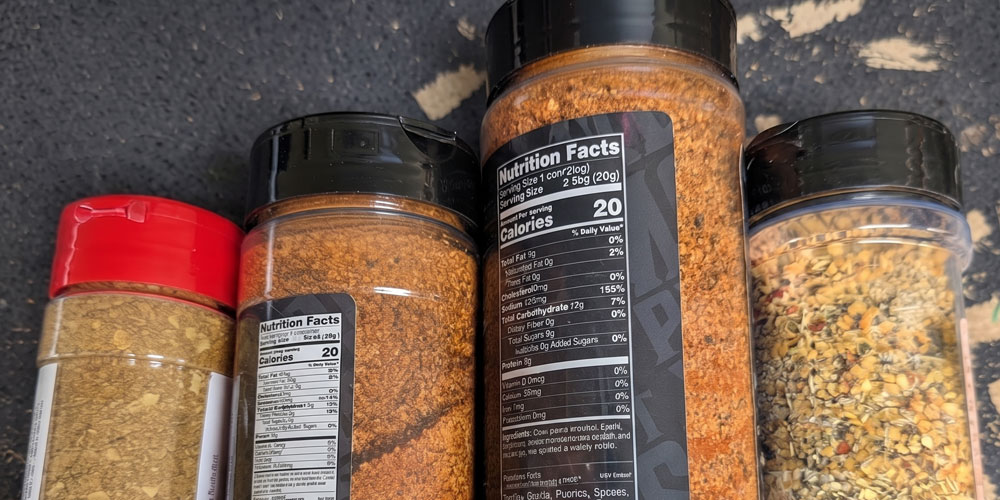
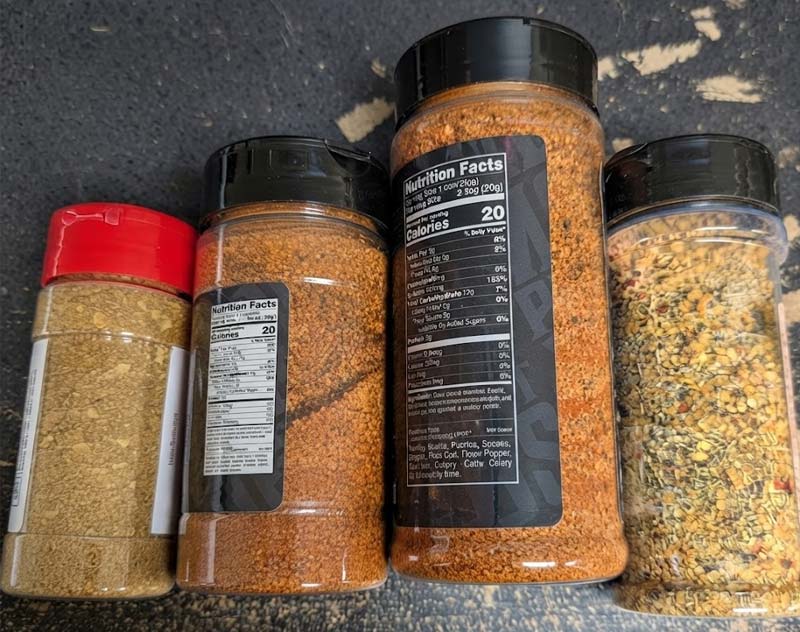
The single most useful thing we did on this project took weeks of asking: we got them to post us their actual jars and caps.
Not dimensions. The real containers, in every specification they intended to run.
Here is why that mattered. Capping is a torque problem, and torque depends on the thread, the liner, the cap material and how the jar sits in the chuck. You can be told a cap is 63 mm and still have no idea how it will behave on a machine. Filling a powder has the same character: flow, bulk density and how much the product aerates all decide what the auger has to do, and none of those are in a drawing.
So we ran their jars and their caps on our floor before anything shipped. Fill tests and torque tests, on the real containers, in our factory, where a problem costs a conversation instead of a line shutdown.
The weeks of chasing were worth it. Nearly every bad surprise on a packaging line is a mismatch between what the specification said and what the physical thing does. The only way to remove that risk is to get the physical thing into the machine before the machine leaves the building.
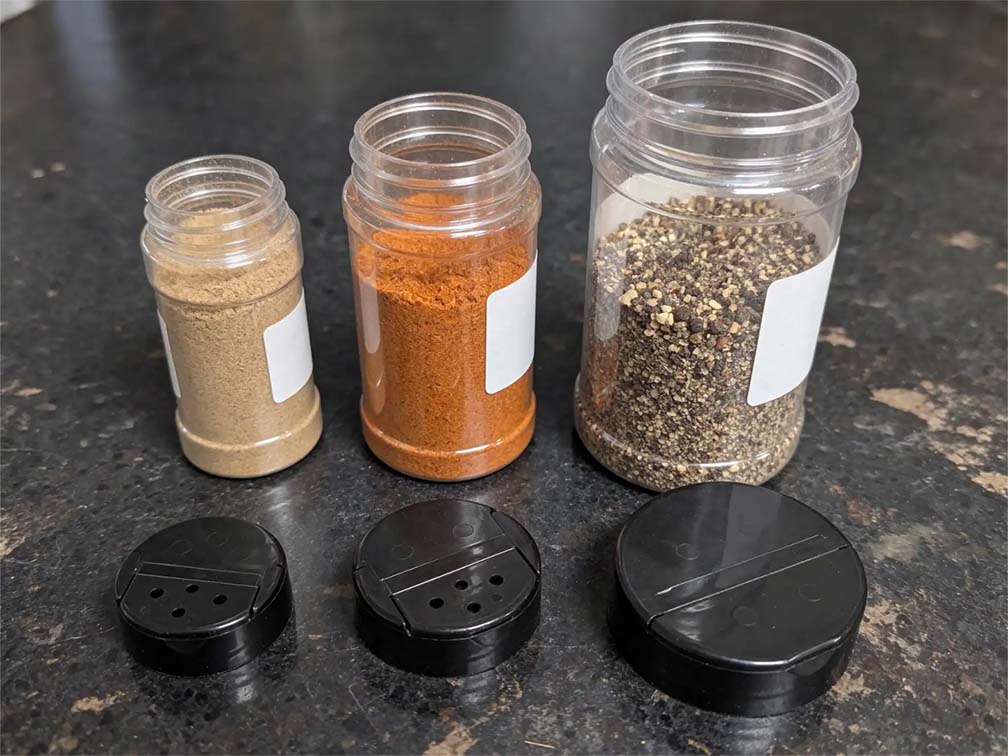
The samples we spent weeks asking for. Everything downstream was set from these.
Testing on the customer’s own containers, before anything shipped.
Ten rounds with their electrician
A production line built in one country and installed in another has to arrive electrically ready for the building it is going into. That is not a detail you resolve on site with an adapter.
So we worked through it in advance, directly with the electrician at their plant — more than ten rounds of back and forth covering how the line should be fed, how the load would be distributed across the machines, and how the circuits should be configured for their supply.
We build to your local supply and we confirm the voltage with your quote, rather than assuming it. That sounds like a small thing. It is the difference between a line that runs the week it lands and a line that sits in a crate waiting for an electrician to be free.
The part that had nothing to do with machines
When the specification was settled and the quote was agreed, the project stopped — because they could not make the payment.
Not because of money. Because nobody on their team had sent an international bank transfer before, and the process is genuinely opaque the first time: intermediary banks, the information the receiving bank needs, what the reference has to say, and the entirely reasonable worry that you are about to wire a large sum to a company on the other side of the world that you have never met.
So we walked them through it. We explained the transfer process more than once, in detail, without pretending it was simpler than it is. And we did something more useful than reassurance: we put them in touch with customers of ours already operating overseas, so they could ask someone who was not us.
The payment went through, and the project restarted.
We include this because it is the least glamorous part of the case and probably the most honest. Most of what goes wrong on a first import is not engineering. It is a procedure nobody has explained, at a moment when the buyer has every reason to be cautious.
What arrived
Before
Hand filling, no line, no drawings, no specifications written down, and a room that nobody had measured against a machine.
After
A line built for that room, tested on their own jars before it shipped, and wired for the supply it was going into.
Because the samples had been tested and the electrical work had been settled in advance, the line went into production without a long commissioning struggle. That was the whole point of the front-loaded work: move the problems to a stage where solving them costs an email rather than a week of downtime.
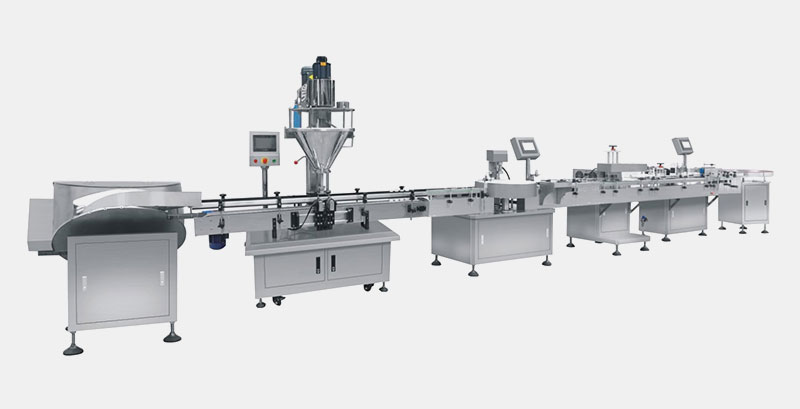
Installed in the room it was designed for.
If you are filling by hand and looking at your first line, you do not need to have your specifications ready before you talk to us. Send us the dimensions of your room and a photo of what you are filling. Working out the rest is the job, not the prerequisite.
What this project involved
What the line does
Jars in, powder filled, capped, checked for metal, weight-verified, labeled. Six stations, end to end.
The constraint
One 40-foot room. Every revision had to give back the length it took.
Power
Built to their U.S. supply — we confirm the voltage with your quote.
Before shipment
Fill and torque tests run on the customer’s own jars and caps, at our factory.
Layout
Multiple CAD rounds, including one revision that removed a machine to meet the budget.
Related
You don't need your specifications ready. That's the job.
Send us the dimensions of the space and a photo of what you’re filling. We’ll come back with a layout drawing and the list of things we need to pin down — in the order they actually matter.
01 · Your first line
Filling by hand now? Tell us your output and your room. We’ll work backward from there.
02 · A room that's too small
Send the dimensions anyway. Knowing what won’t fit is worth a drawing on its own.
03 · Send us the container
Jars and caps in hand beat dimensions on paper. We’ll run fill and torque tests before anything ships.
Every quote comes with a free layout drawing, in PDF or CAD. You don’t need to know your specifications before you talk to us — working them out is part of the job.
Rather talk it through?
You can open with: “We fill by hand and we’re looking at our first line.”
