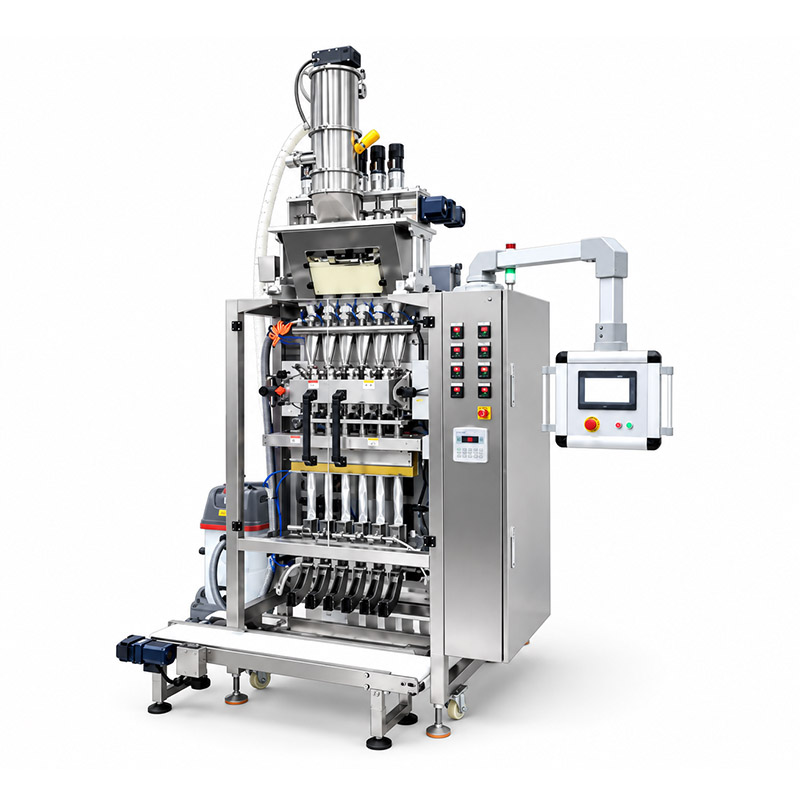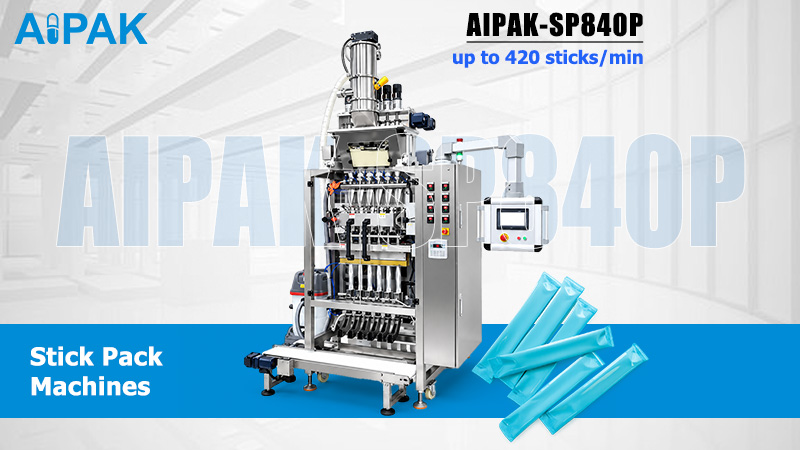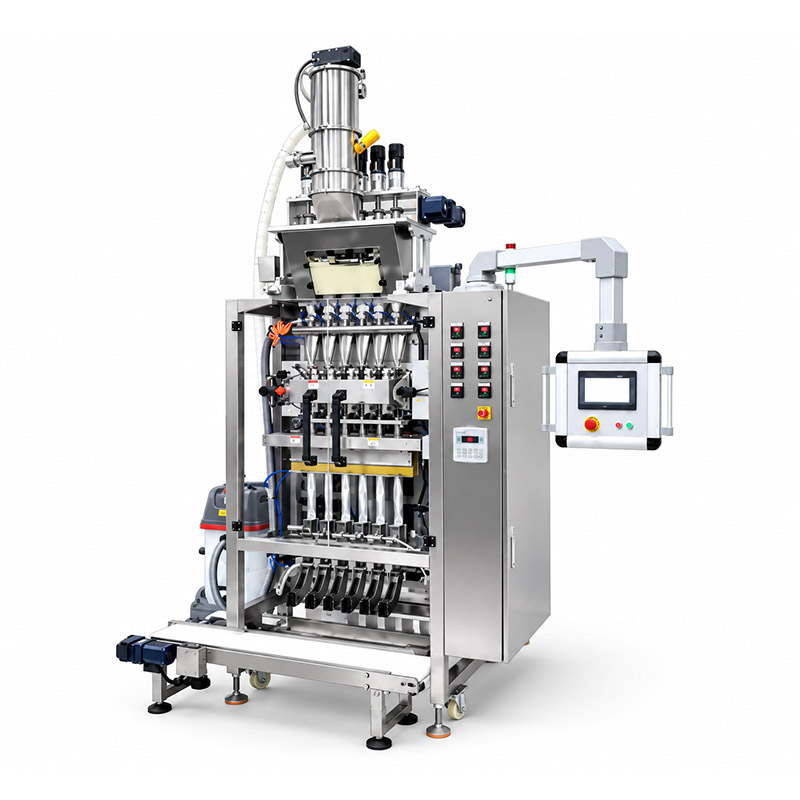
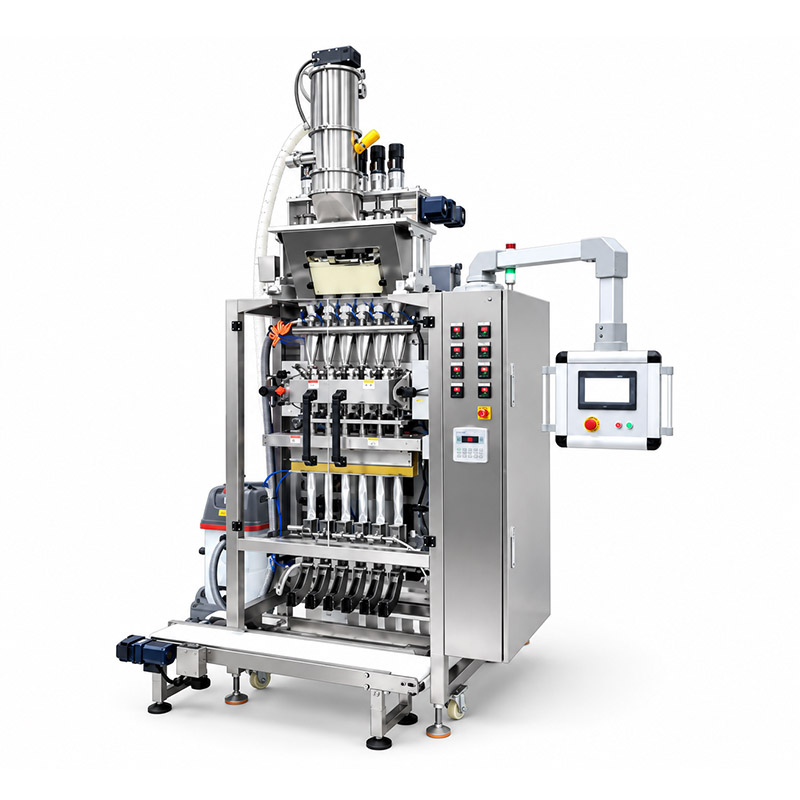
AIPAK-SP840P High-Output Stick Pack Machine

You’re running one product at volume and the stick line is what limits the shift. The SP840P takes an 840 mm film — up to 14 lanes at a 25 mm stick, the widest platform in our back-seal range.

  • Film width — 840 mm, the widest in the range

  • Stick width — 20 to 100 mm, also the widest

  • Lanes — up to 14 at a 25 mm stick  

Built in our factory        |        Spare parts listed in your quote         |        Installation about a week per machine

Is this the right machine for you?

✓ Yes, if…

✕ Buy something else if…

Technical specification

Specification

AIPAK-SP840P

What it means for you

Film width

840 mm

The widest back-seal platform we build

Lanes

4 – 16

14 at a 25 mm stick. See the note on build history below

Output

Ask us

We haven’t built 14 lanes on this platform yet, so we don’t publish an output for it. Tell us your target and we’ll tell you what we can show at the factory acceptance test

Stick length

50 – 180 mm

Same across the range

Stick width

20 – 100 mm

The widest of the three models

Metering

Servo auger — long, short, or short with spinner

—

Installed power

7.5 kW

Highest in the range. Three-phase

Frequency / Voltage

60 Hz, 480 V or 208 V, built to your local supply

Depending on your supply, a transformer or stabilizer may be included in the build. We confirm this with the quotation

Compressed air

0.8 MPa, 0.8 m³/min

Same as the smaller models

Dimensions

1,600 × 1,800 × 2,560 mm

—

Weight

900 kg

—


Model comparison

Model

Film width

Lanes 25 mm

Output

Best for


AIPAK-SP300P

300 mm

5

100 – 150 sticks/min

Your first automated stick line — one SKU, launch or pilot volume

View →

AIPAK-SP600P

600 mm

10

200 – 300 sticks/min

Medium to high-speed stick pack production

View →

AIPAK-SP840P

840 mm

 Up to 14

Ask us

Contract manufacturers and high-volume single products

You are here

All three run the same back-seal format, the same stick length range and the same servo auger metering. What changes between them is film width, and film width is what sets lane count. Output ranges are from production, not peak ratings — your powder and your film move the number.

What we've actually built

The 840 mm platform is rated to 16 lanes and calculates to 14 lanes at a 25 mm stick. We have not built a 14-lane machine on this platform yet.

We’re telling you that because you’ll find out at the factory acceptance test otherwise. If you need 14 lanes, say so early and we’ll talk through what it means for lead time and for the FAT. If your target is inside what’s proven, we’ll tell you that too.

The widest stick we handle

100 mm at the top of the range, against 90 on the SP600P and 70 on the SP300P. If your stick is wider than a standard drink-mix stick — a larger protein serve, or a two-dose format — this is the platform that takes it.

Servo auger metering

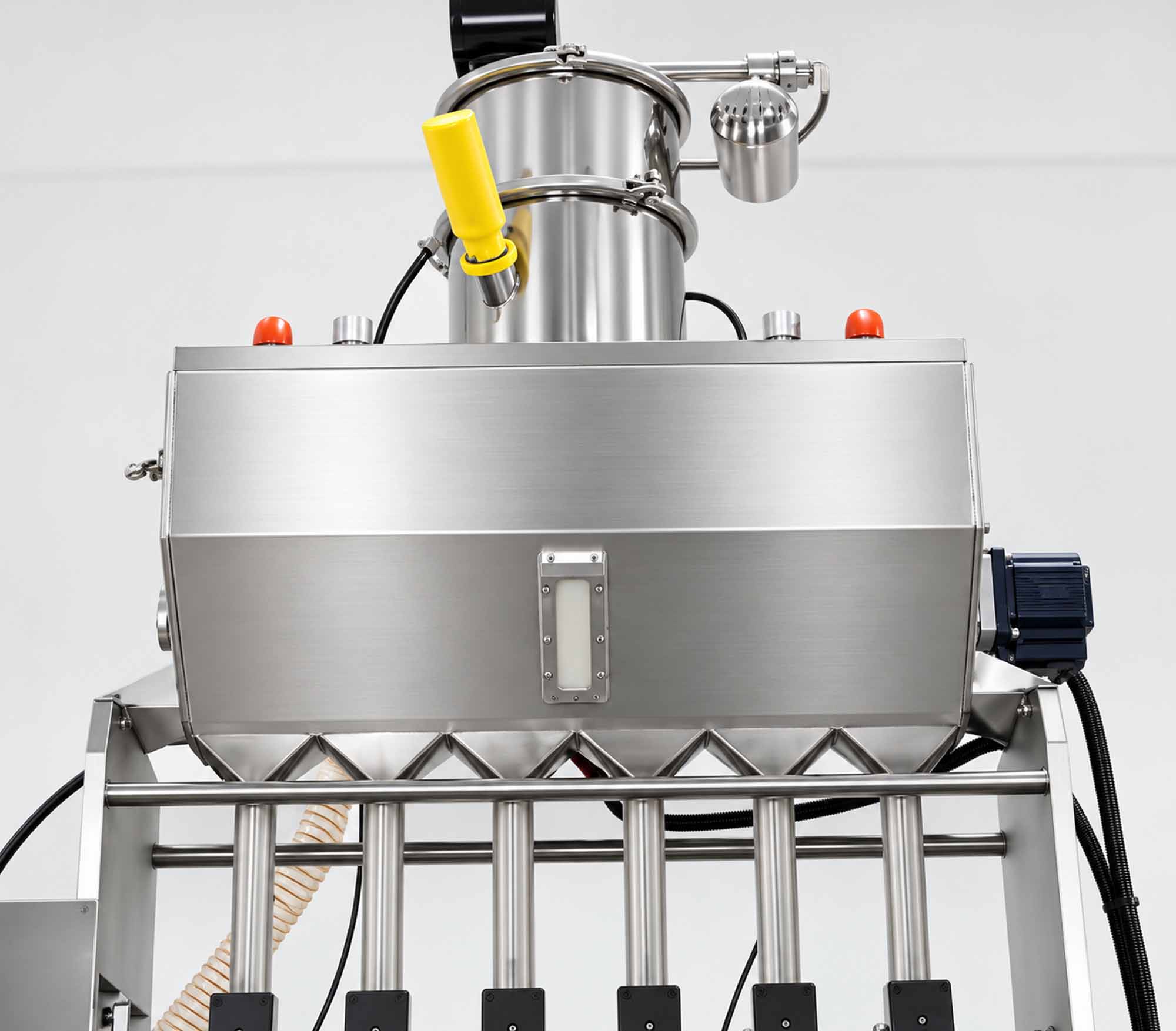
Fill weight is set by the servo auger, and we fit one of three types depending on how your powder behaves. A long auger, a short auger, or a short auger with a spinner. Which one suits your powder is not something a spec sheet answers — it’s what the sample test is for.

The tube forms continuously

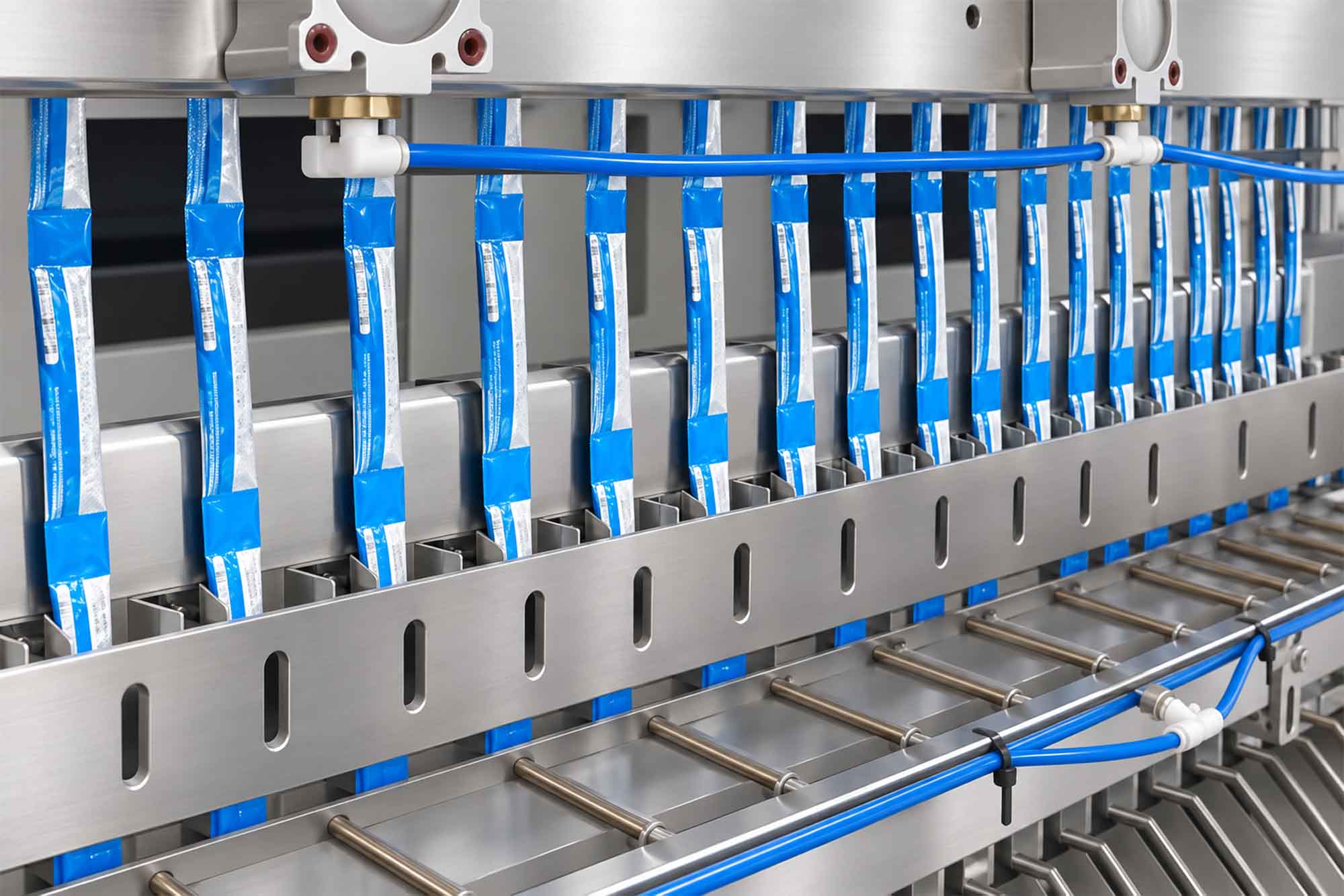
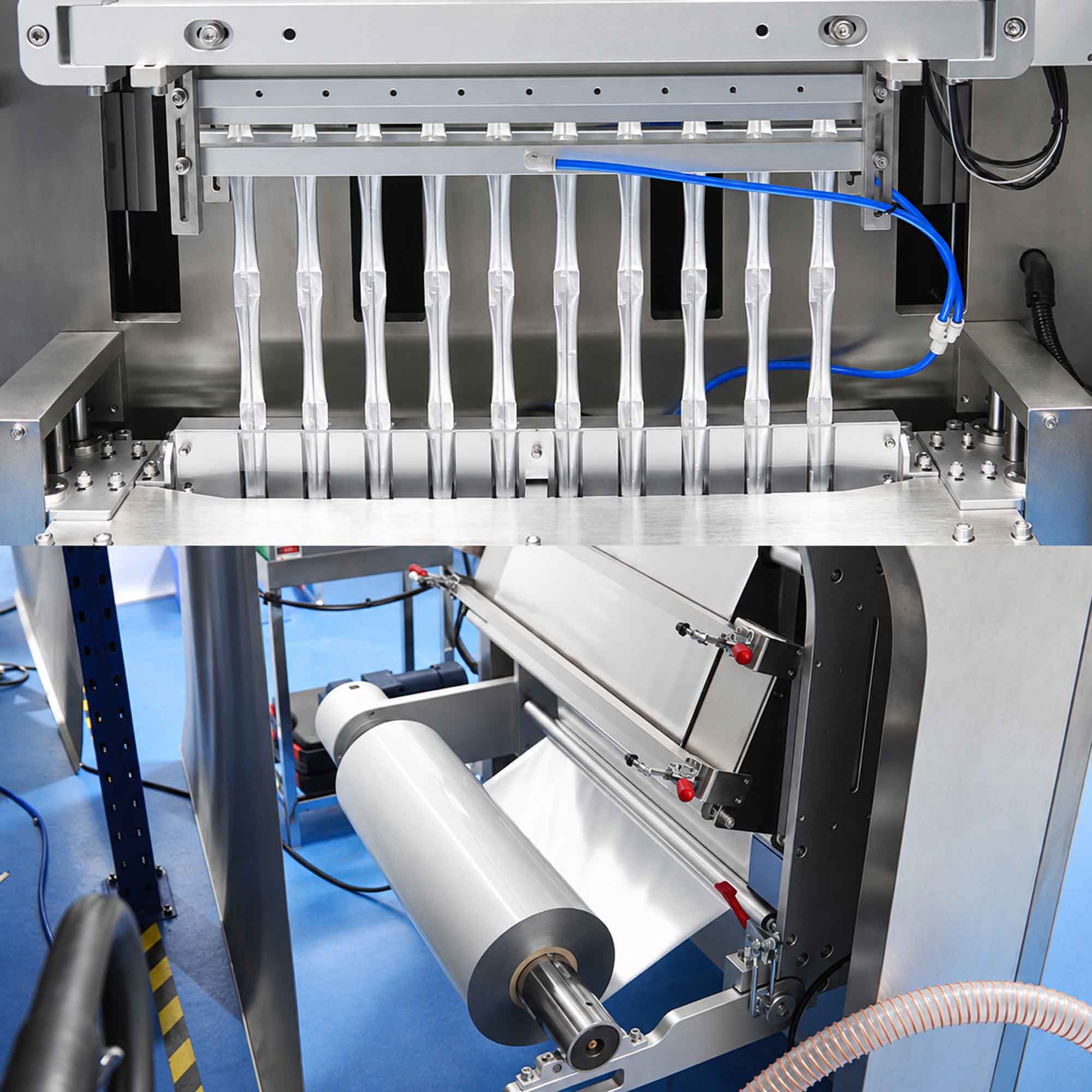
A back-seal stick is a sealed tube with one seam running down the back. The tube forms continuously as film comes off the roll, so the only intermittent motion in the machine is the horizontal seal. That is the whole reason sticks run faster than four-side sachets, where every bag needs four seals and four dwell times.

Ideal Applications & Industries

A single high-volume SKU

One hero product running continuously. More lanes only pays back when you are not changing stick width — changeover is about three hours whatever the lane count.

Wide sticks up to 100 mm

Larger protein serves and two-dose formats that the 300 and 600 platforms cannot form. This is the widest stick in our back-seal range.

Contract manufacturing at volume

Where line speed decides how many client orders fit into a shift, and one stick size runs for weeks at a time.

Free-flowing powders at high lane counts

More lanes means more fill points, and a free-flowing powder floods more of them. Dosing timing is set per lane, which is part of what commissioning covers.

Changeover

Changing stick length is a screen setting. Changing stick width is a three-hour job.

What changed

What you adjust

Roughly

Stick length

Touchscreen setting

15-30 minutes

New film roll, same size

Splice the new roll

15-30 minutes

Stick width

Change the format parts, then fine-tune

About 3 hours, whole machine

Different powder, same stick

Auger may change — depends on flowability

15–30 minutes

So we build the machine around your primary stick, not around every stick you might run someday.

If you’re switching between two very different stick widths every day, two machines will cost you less than the downtime.

What to check before you buy

01

Whether anyone has run your powder

Powder fails in two directions. Too damp and it bridges in the hopper; too free-flowing and gravity beats the screw. A spec sheet won't tell you which end yours is on. Ask any supplier to run a sample before you order — and ask to see the fill weight data, not just a photo of finished sticks.

02

The manual

A clear English manual gets your operator running in a week. A bad one takes a month. Ask to see a sample page before you order.

03

Installation and training

Our engineers come to your plant, about a week per machine. Travel and on-site costs are quoted separately. Installation isn't free anywhere — it's either a line item or it's inside the machine price. We quote it as a line item so you can see it.

Why Choose AIPAK?

One Point of Contact

One project engineer handles your machine from proposal to commissioning, so you’re not chasing five suppliers for one answer.

We Run Your Powder Before You Order

Send us a powder sample and we’ll run it on the machine and send you the fill weight data. We sign an NDA before your sample ships. You decide whether to talk quotes after that.

A U.S. Number, Answered by Us

+1 (213) 526-8644, answered by our engineers 9 AM–7 PM China time, Monday to Friday. That’s evening and overnight in the U.S., so leave a message or send a WhatsApp anytime and we’ll pick it up first thing.

Spare Parts and Lead Time, in Writing

A kit of wear parts ships with your machine. Every part in the kit, and the lead time for anything outside it, is listed in your quote in writing.

Deep Dive FAQ

Can you run my powder?

That’s the right question, and we can’t answer it from a spec sheet. Powder fails in two directions — too damp and it bridges in the hopper, too free-flowing and gravity beats the screw and floods the fill. Send us a sample. We run it, adjust the auger and the dosing timing, and send you the fill weight data. NDA signed before your sample ships.

How many lanes do I need?

Work back from your stick width. Each lane uses roughly twice your stick width, plus an allowance for the back-seal lap. On this machine, a 25 mm stick calculates to 14 lanes on the 840 mm film, though we haven’t built 14 yet. Tell us your stick width and your target output and we’ll tell you which film width you need.

How fast does it actually run?

It depends on how many lanes you run. Each lane makes 20 to 30 cuts a minute in production, and it moves with your powder’s flowability and your film. We haven’t built 14 lanes on this platform yet, so we won’t quote you a figure for it. Tell us your target and we’ll tell you what we can demonstrate at the factory acceptance test.

Should I use a stick or a sachet?

For a powder drink mix at production volume, a stick. A stick is a sealed tube with one seam down the back — the tube forms continuously, so the machine runs fast. A sachet is sealed on all four sides, which means more seal area, more dwell time and a slower cycle. Sachets earn their place when you need the extra print area, or when you’re running a gel or a liquid.

How long does it take to change stick size?

Length is a touchscreen setting — minutes. Width is about three hours for the whole machine. If you’re switching between two very different widths every day, two machines will cost you less than the downtime.

Do you install the machine in the US?

Our engineers travel to your plant, about a week per machine. Travel and on-site costs are quoted separately. Installation isn’t free anywhere — it’s either a line item or it’s inside the machine price. We quote it as a line item so you can see it.

What voltage do you build to?

60 Hz, 480 V or 208 V, built to your local supply. Depending on your supply, a transformer or stabilizer may be included in the build. We confirm this with the quotation.

How do spare parts work?

A kit of wear parts ships with your machine. Every part in the kit, and the lead time for anything outside it, is listed in your quote in writing.

Have you built a 14-lane machine?

Not on this platform yet. It’s rated to 16 lanes and calculates to 14 at a 25 mm stick, and we’ve built fewer. If 14 lanes is what you need, tell us early — it changes what we can promise on lead time and what we’d want to demonstrate at the factory acceptance test.

Why is the air consumption the same as the smaller machines?

Air demand on these machines is driven by the sealing and cutting stations rather than by lane count, so 0.8 m³/min covers all three models. Size your compressor for the machine, not for the number of lanes.

Do your machines meet U.S. electrical certification requirements?

Yes. Our machines are certified and use certified electrical components. Because the exact scope depends on the model and electrical configuration you select, our factory confirms it in writing before production.

Customers Also Interested In...

Tell Us What You're Packing

Two of these fields is enough to get a real answer back. All of them gets you a configuration.

Not sure which model ⇢

Tell us your powder and stick size

Send us a powder sample ⇢

We'll run it and send you the data

Send your full specs ⇢

Get a line quote

Scroll to Top