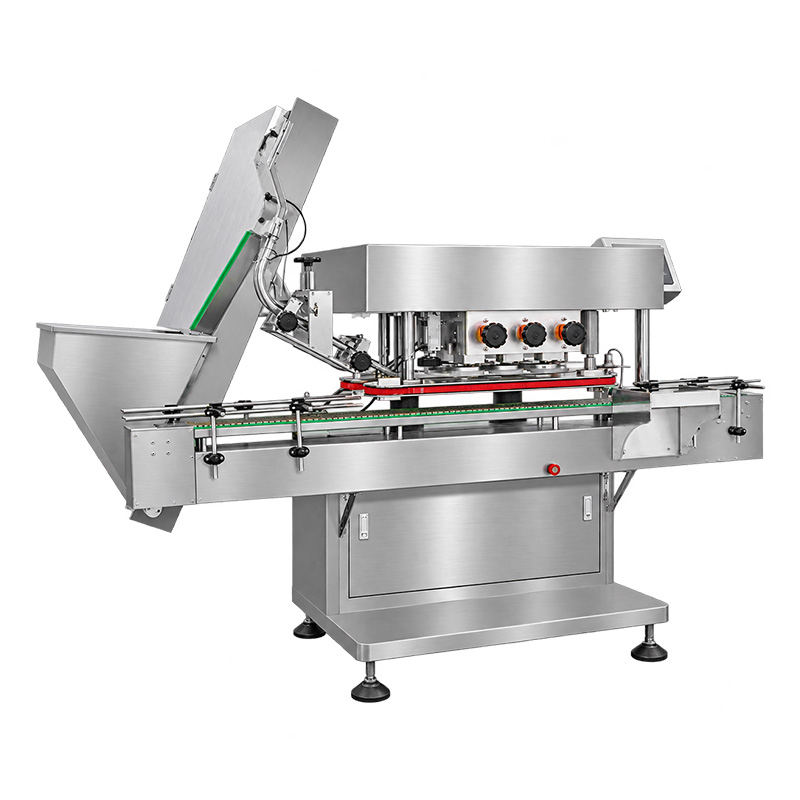
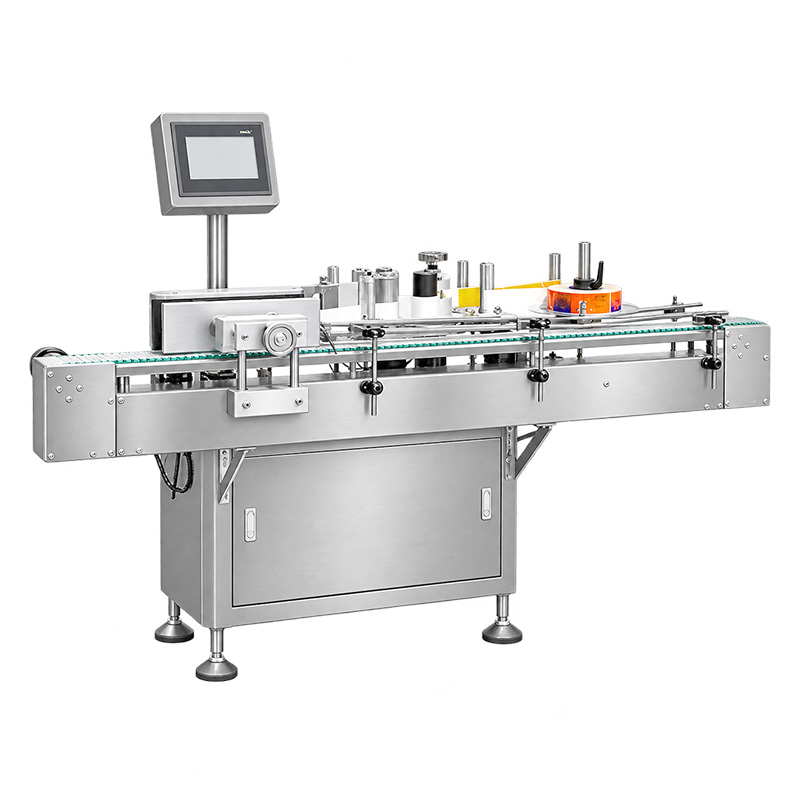
Home » APC-A160 Automatic Bottle Unscrambler
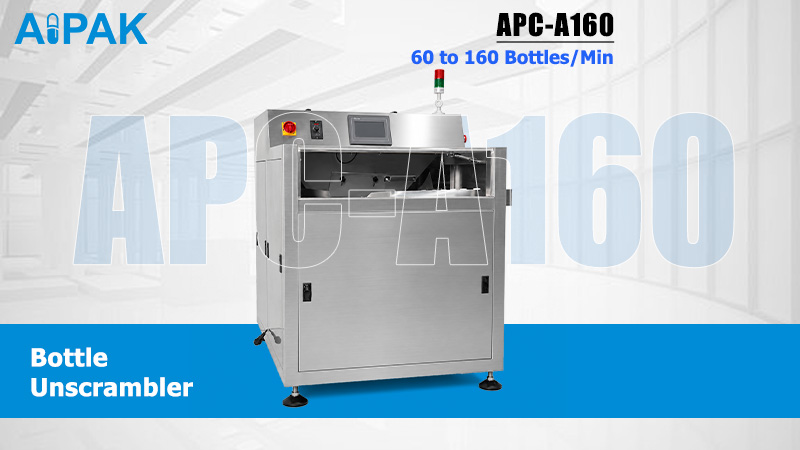
APC-A160 Automatic Bottle Unscrambler — 60 to 160 Bottles/Min
Mechanical orientation for 50–300 ml round bottles, with no compressed air
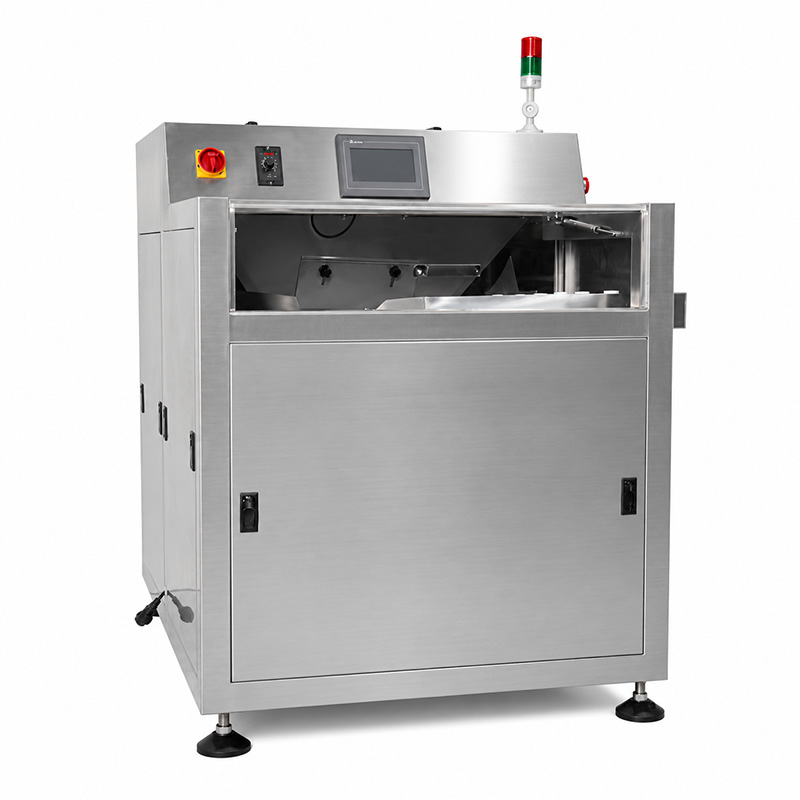
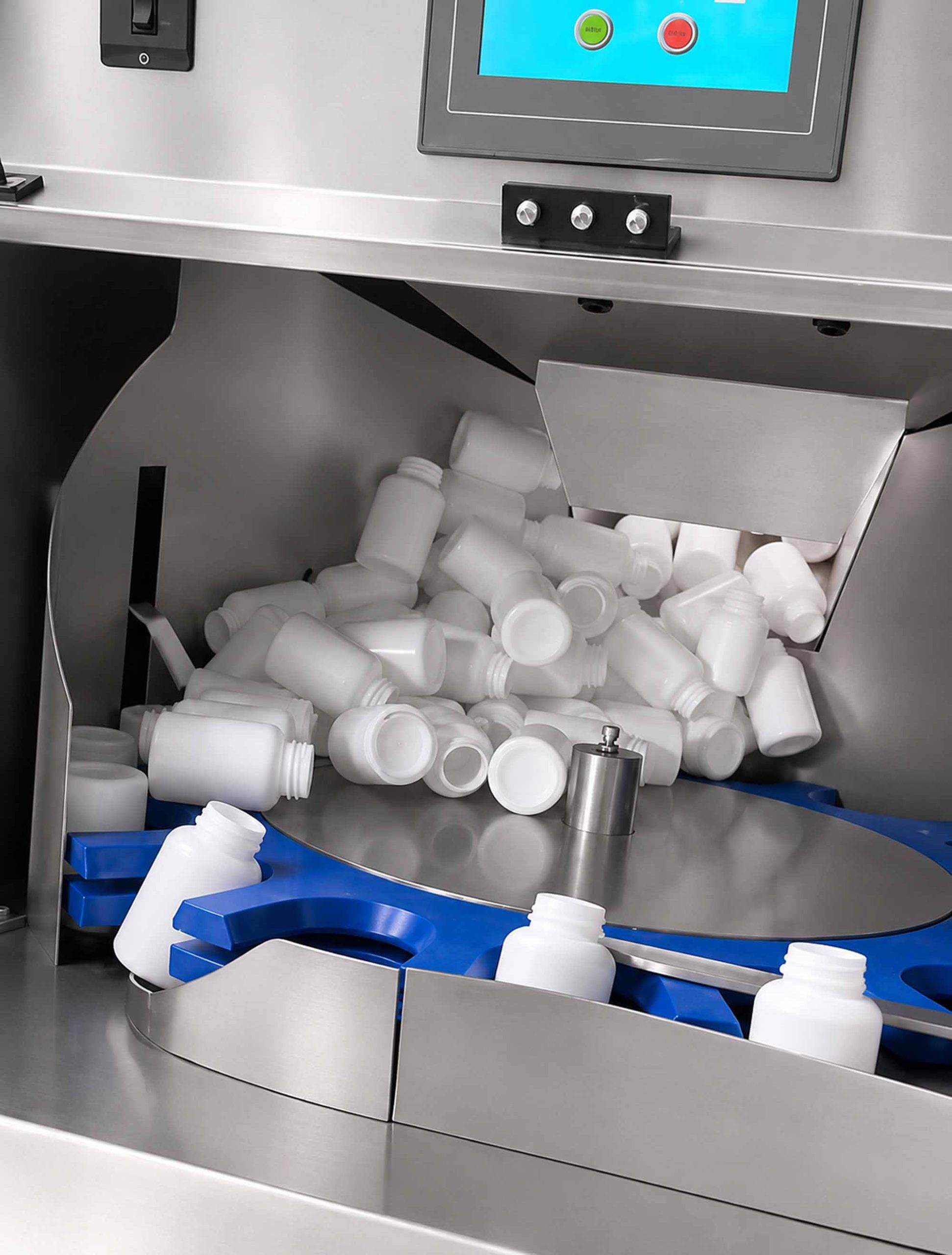
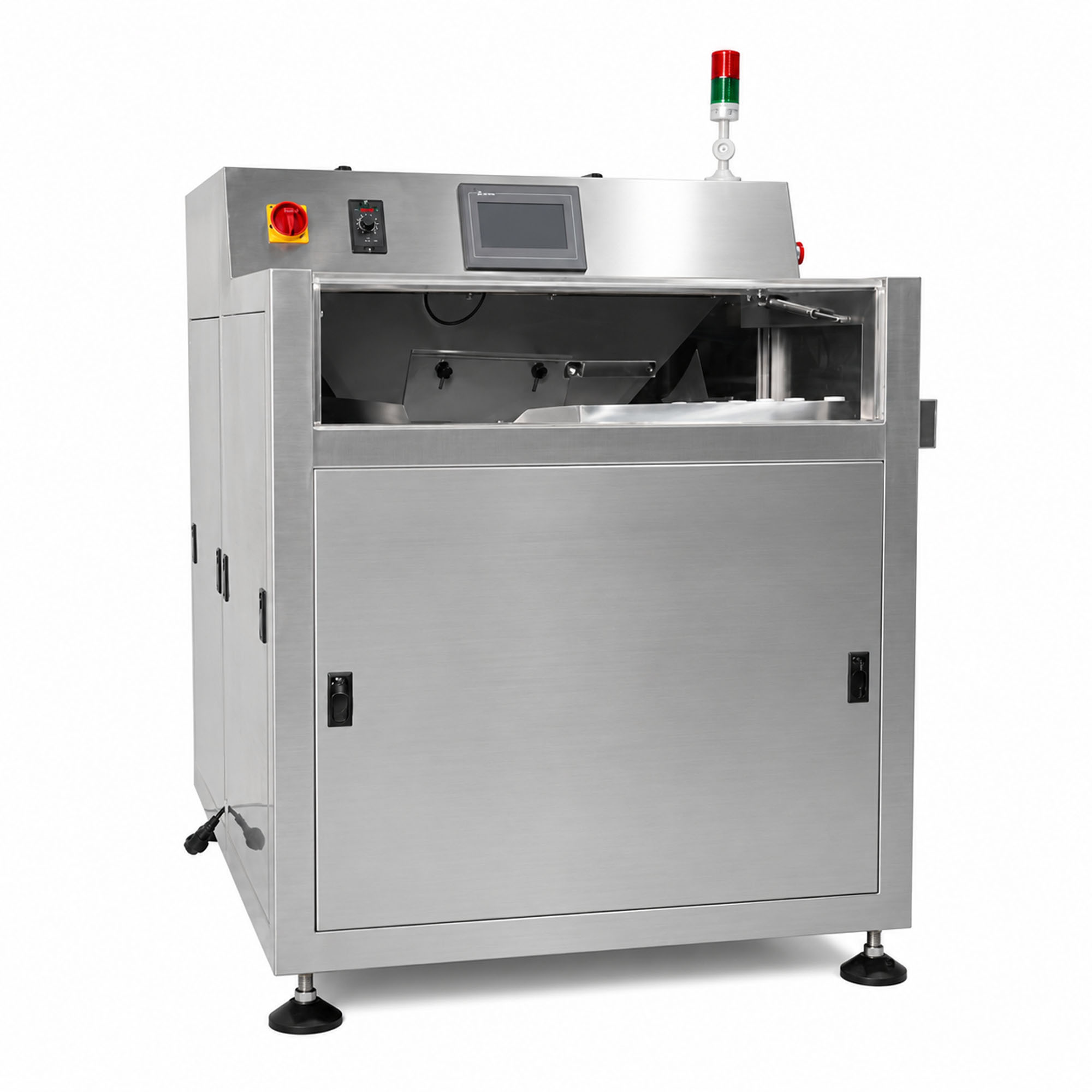
Someone on your line is standing at the conveyor putting bottles the right way up, all shift. This machine takes that job over. It orients 50 to 300 ml round bottles at 60 to 160 a minute, the top of our range for round containers.
Output — 60 to 160 bottles per minute, the top of our range for round bottles
- Bottle volume— 50 to 300 ml, which covers most supplement containers
- No compressed air— orientation is mechanical, one less utility at the head of your line
- Footprint— 1,050 × 1,150 mm, 300 kg
Is this the right machine for you?
✓ Yes, if…
- Your bottles are round, 50 to 300 ml
- You need 60 to 160 bottles a minute
- You have no compressed air at the head of your line
- You change bottle size several times a week
✕ Look elsewhere if…
- Your bottles are glass → an automatic unscrambler tumbles bottles against a rotating disc, and glass chips at the base and scuffs at the shoulder. Use the APC-SP1
- Your bottles are square, flat or irregular → this machine orients round containers. The APC-2000 is built for the other shapes
- Your bottles are under 50 ml → below that a container has too little mass to orient reliably against a disc sized for 300 ml. The APC-A100 covers 15 to 150 ml
- Your bottles are over 300 ml → the APC-SP1 covers up to 750 ml, at lower speed
- You run one shift with an operator already at that end of the line → hand-feeding costs you nothing extra. Buy the counting machine first — that's the station that actually limits your output
Mechanical Bottle Reversing
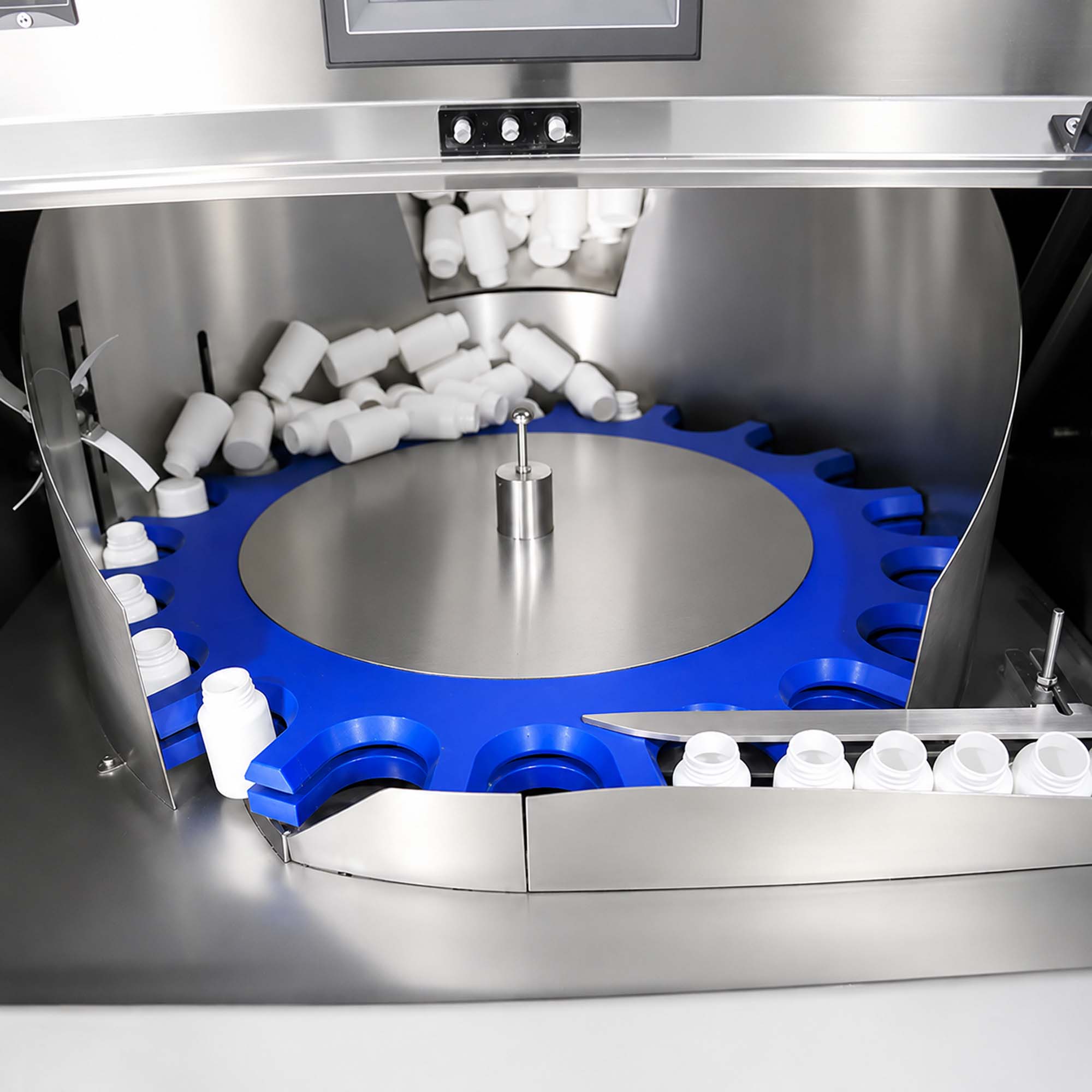
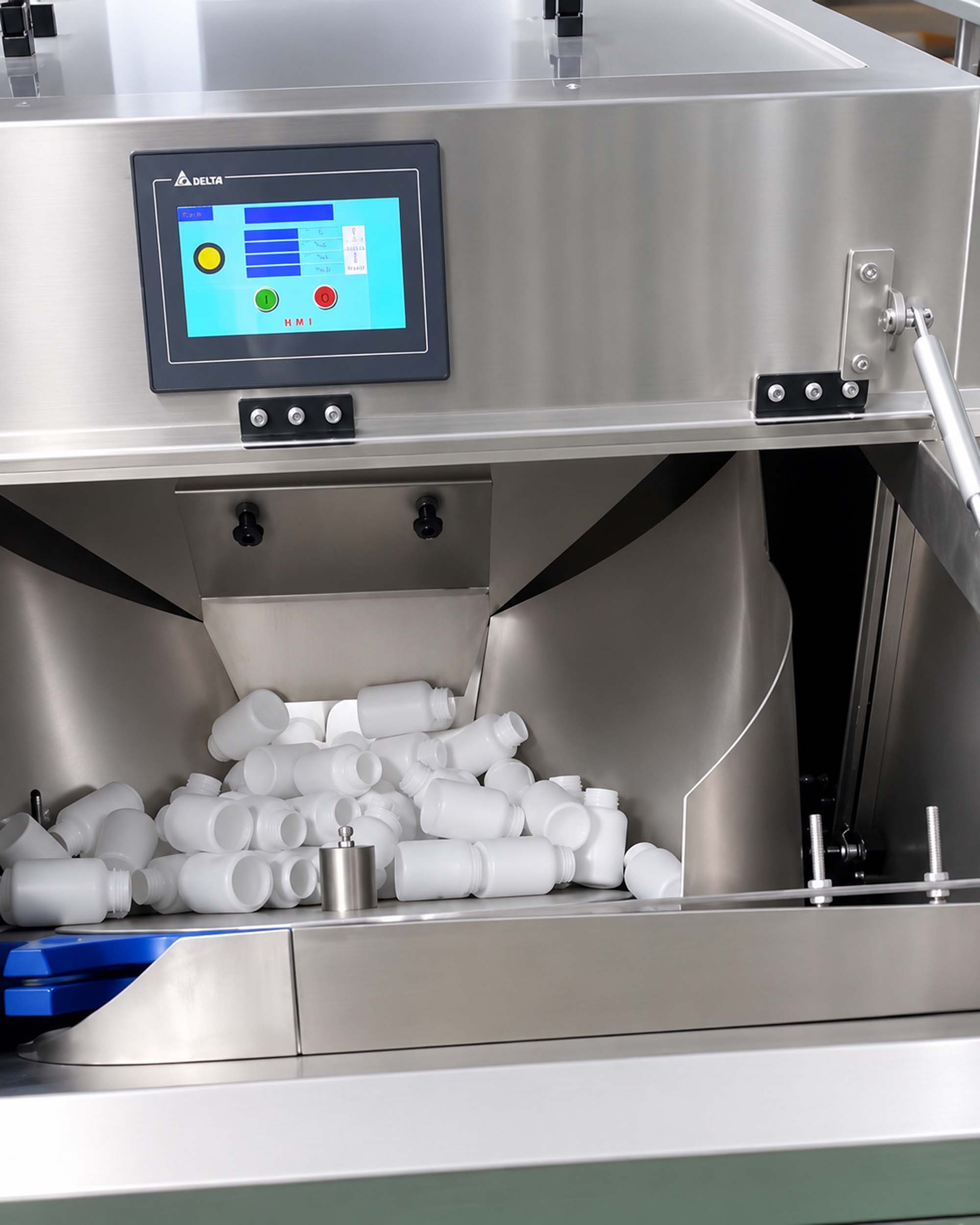
Bottles arriving upside-down are turned neck-up by a mechanical reversing mechanism rather than an air jet. Fewer utilities to connect at the head of the line, nothing to clog, and no air consumption added to your line’s total. For conventional round bottles this handles orientation reliably at full speed.
Bottle-Collecting Buffer
A collecting device holds a short buffer of oriented bottles ahead of the conveyor. When the counting machine pauses for a bottle change or a brief stop, the unscrambler doesn’t have to stop and restart with it. The buffer absorbs the gap and the line keeps its rhythm.
Outlet Quantity Control and Overload Protection
Detection at the bottle outlet regulates output to match what the line is consuming, rather than overrunning it. If a bottle jams, overload protection stops the machine instead of forcing bottles through — which protects the bottles as much as the drive.
304 Stainless Steel, No Dead Corners
Frame and body are 304 stainless steel, structured so there are no dead corners where dust or debris can collect. The machine washes down without disassembly.
Technical specification
Specification | APC-A160 | What it means for you |
Output | 60 – 160 bottles/min | The top of our range for round bottles, shared with the APC-A160B |
Bottle volume | 50 – 300 ml | Covers 60, 100, 120 and 250 ml supplement bottles |
Bottle shape | Round | Square or irregular? See the APC-2000 |
Bottle material | Plastic | Glass needs the APC-SP1 |
Orientation | Mechanical bottle-reversing mechanism | No air jet to clog or maintain |
Outlet control | Quantity detection with overload protection | Feeds at the rate your line consumes |
Power | 0.15 kW, 60 Hz | Built to your U.S. supply. We confirm the voltage with your quote |
Compressed air | Not required | One less utility at the head of your line |
Dimensions | 1,050 × 1,150 × 1,250 mm | Add clearance for hopper loading and cleaning |
Weight | 300 kg | No special foundation |
Construction | 304 stainless steel | Frame and body, no dead corners |
Model comparison
Model | Bottle volume | Output | Bottle shape | Air | Best for |
APC-SP1 | 15–750 ml | 20–80/min | Round, square, flat-square | No | Glass bottles, large containers, frequent bottle changes |
APC-A100 | 15–150 ml | 30–100/min | Round | No | Small supplement and dispensing bottles |
APC-A160 | 50–300 ml | 60–160/min | Round | No | Standard supplement bottles, highest throughput |
APC-A160B | 50–300 ml | 60–160/min | Round | Yes | Same range and speed, with air-assisted orientation |
APC-2000 | 15–500 ml | 40–150/min | Round, square, flat, irregular | Yes | Square and irregular plastic bottles |
Start with your bottle, not with speed. Volume sets the shortlist; shape can rule out four of the five; and whether it’s glass decides the question before either.
Note that the APC-2000 is rated below the APC-A160 despite being the more capable machine. That’s because its range covers mixed bottle shapes, not because it’s the slower unit on round containers.
Ideal Applications & Industries
Supplement bottles, 60 to 250 ml
The most common container on a counting line. Round HDPE or PET, 30 to 120 count, and squarely in this machine’s range.
Protein and sports nutrition bottles
Larger containers at the top of the range, 250 to 300 ml. Check the neck diameter as well as the volume — a wide-mouth bottle at 300 ml behaves differently from a narrow one.
Gummy and chewable jars
Wide-mouth jars are heavier and sit lower than a standard bottle. They orient reliably here, but tell us the jar shape — a very wide base changes how it rides on the disc.
Contract packing
Bottle changeover is adjustment rather than a parts change, which matters when you switch between clients’ containers several times a week.
Where This Machine Sits on Your Line
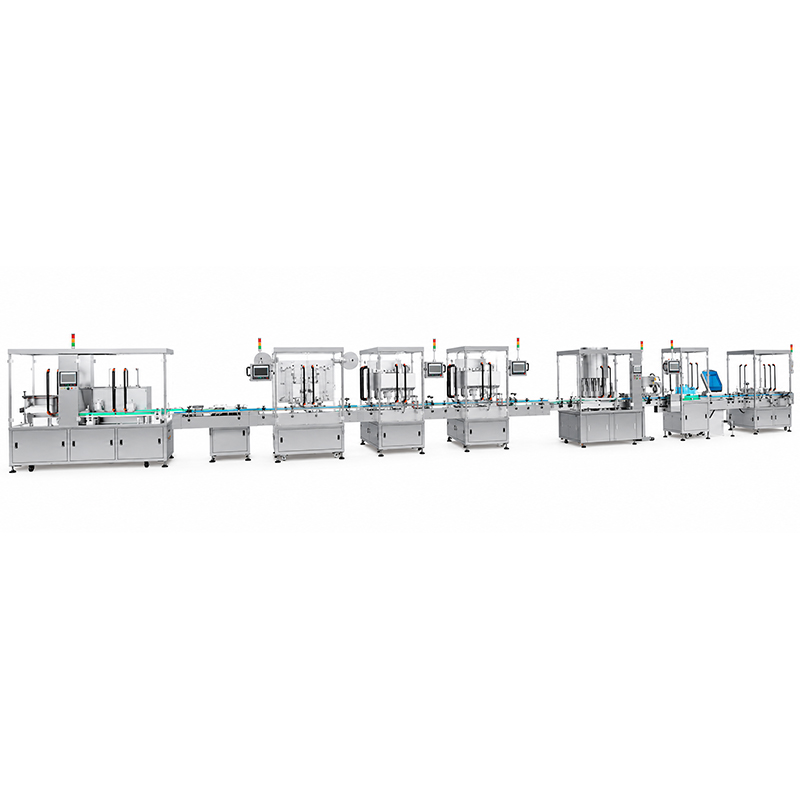
SEVEN STATIONS, ONE LINE
Desiccant or Cotton Inserter
Adds moisture control or fill material on top of the product.
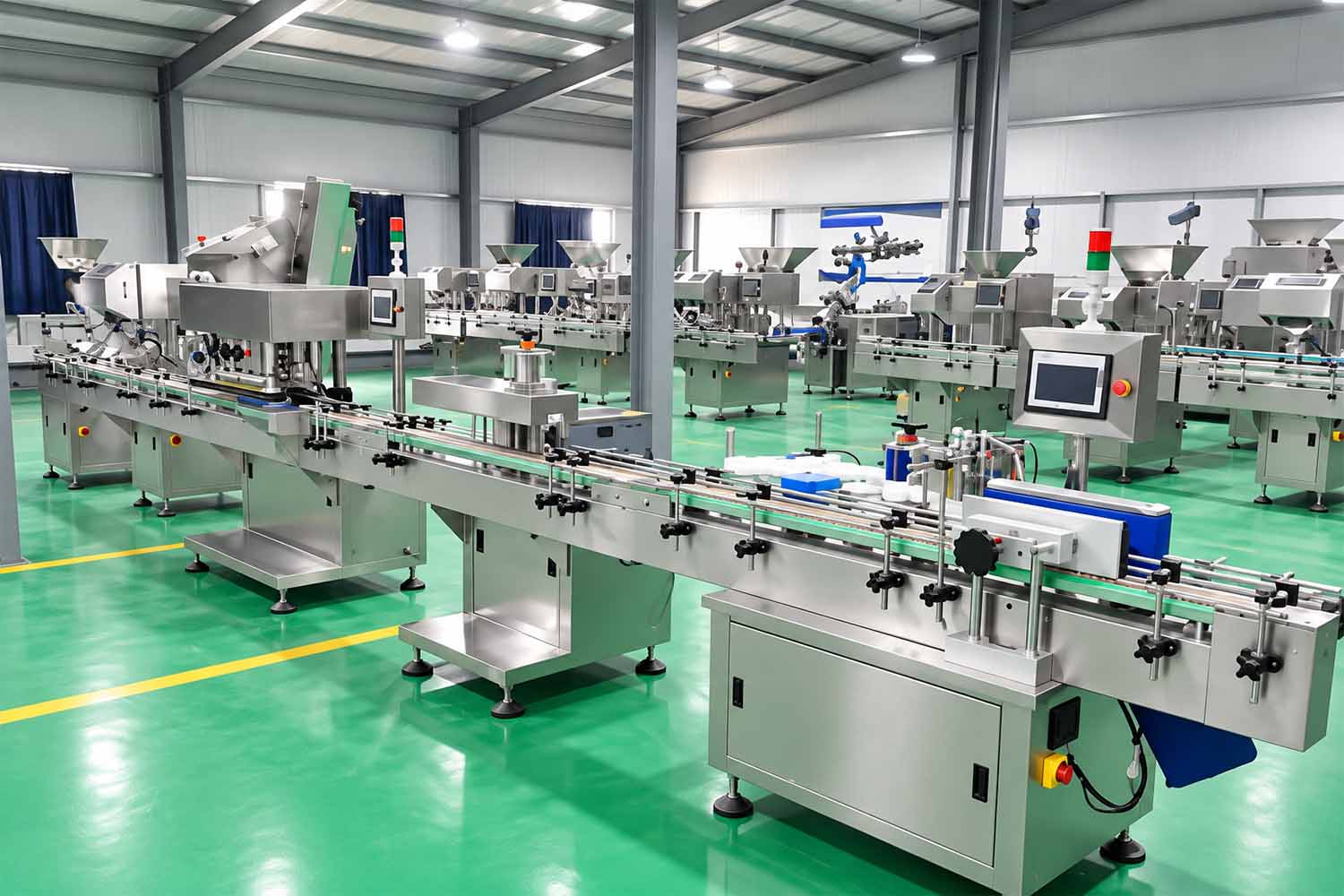
The unscrambler feeds the line, but the counting machine sets its pace. A mid-speed line runs 40 to 100 bottles per minute; a high-speed line runs 70 to 160. Both fit in under 30 m² with roughly three operators and a single compressed air supply.
You do not need to buy the whole line at once. Most customers start with the counting machine and add stations as volume grows — the counter is the one machine that has to be right from the start, because everything else is timed to it.
What changing over involves
Bottle size changes are an adjustment, not a parts change
What changed | What you adjust | Roughly |
Same bottle, different product | Nothing on this machine | — |
Bottle diameter or height changes | Guides and the outlet, by hand | 15–30 minutes |
Bottle shape changes entirely | Different machine, not a changeover | — |
There are no change parts to buy per bottle size, and none to store on a shelf.
One honest note: this is the unscrambler. On a full line the guide rails, the capping chuck and the label recipe all change too — four jobs at four stations. Ask us for the line number, not just this one.
What to check before you buy
Whether anyone has run your bottle
Round is not one shape. A slight taper, an oval cross-section, or a molding seam all change how a bottle behaves against the disc. Ask any supplier to run your actual bottle before you order — not a bottle like yours.
The manual
A clear English manual gets your operator running in a week instead of a month. Ask to see a sample page before you order.
Installation and training
Installed, commissioned, and your people taught to run it. Ask what's included and what costs extra — the answer varies more between suppliers than the machine price does.
Why buy from us?
One Point of Contact
One project engineer handles your machine from proposal to commissioning, so you’re not chasing five suppliers for one answer.
We Run Your Bottle Before You Order
Send us your bottles and we’ll run them on the machine and send you the video. You decide whether to talk quotes after that.
A U.S. Number, Answered by Us
+1 (213) 526-8644, answered by our engineers 9 AM–7 PM China time, Monday to Friday. That’s evening and overnight in the U.S., so leave a message or send a WhatsApp anytime and we’ll pick it up first thing.
Spare Parts and Lead Time, in Writing
A kit of wear parts ships with your machine. Every part in the kit, and the lead time for anything outside it, is listed in your quote in writing.
Deep Dive FAQ
50 to 300 ml round bottles. Below 50 ml, the APC-A100 covers 15 to 150. Above 300, the APC-SP1 covers up to 750 at lower speed.
No. Orientation is mechanical. If you want air-assisted orientation for a lower misfeed rate, the APC-A160B adds an air jet at the transfer point — same speed, same bottle range.
Automatic unscramblers orient bottles by centrifugal motion against the disc wall, which chips and scuffs glass over a production run. For glass we supply the APC-SP1, where the operator places bottles neck-up and no tumbling happens.
Detection at the bottle outlet regulates output to match what the line is consuming. Combined with the collecting buffer, bottles arrive at the counter infeed at a steady rate rather than surging and starving.
Overload protection stops the machine rather than forcing bottles through. Clearing a jam is manual, but the machine won’t damage bottles or the drive trying to push past one.
Changeover is adjustment rather than a parts change — the guides and the outlet are repositioned for the new diameter and height.
Yes. It installs at the head of the line and needs 0.15 kW of power, built to your U.S. supply, and 1,050 × 1,150 mm of floor plus clearance. No air and no cooling water.
A kit of wear parts ships with your machine. Every part in the kit, and the lead time for anything outside it, is listed in your quote in writing.
Yes. Our machines are certified and use certified electrical components. Because the exact scope depends on the model and electrical configuration you select, our factory confirms it in writing before production.
Customers Also Interested In...
Not sure which model?
Tell us your bottle volume and shape. We’ll tell you which one, and why.
Send us a sample bottle
We run it on the machine before you order and send you the result. Round is not one shape — a taper or a seam changes how it behaves.
Send your floor dimensions
Length, width, height, and where the doors and columns are. We’ll lay out your line and check the space for free.
Reply within one business day. Send us a sample bottle and we’ll run it before quoting.