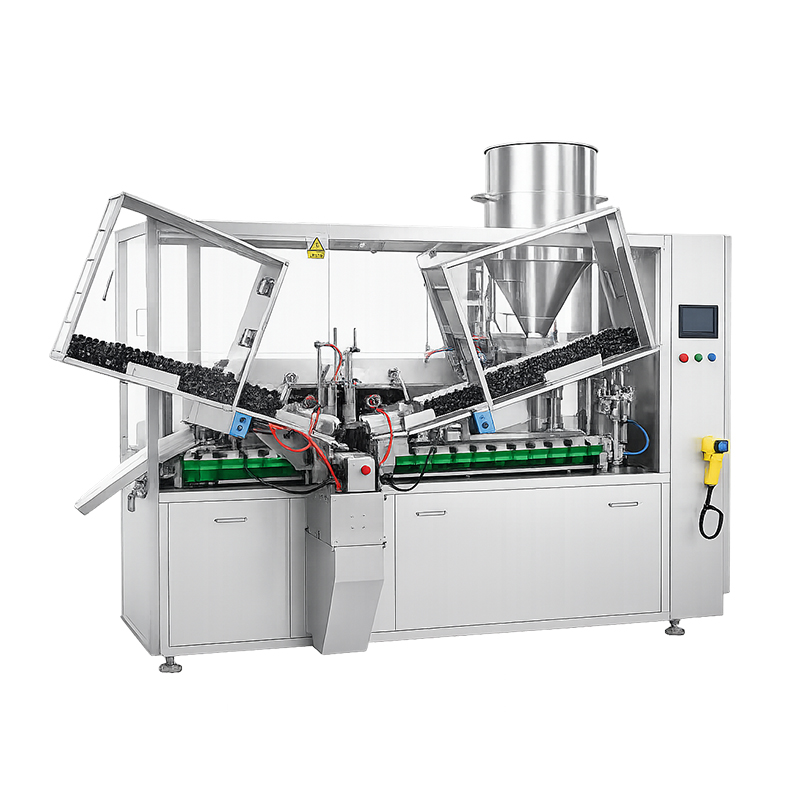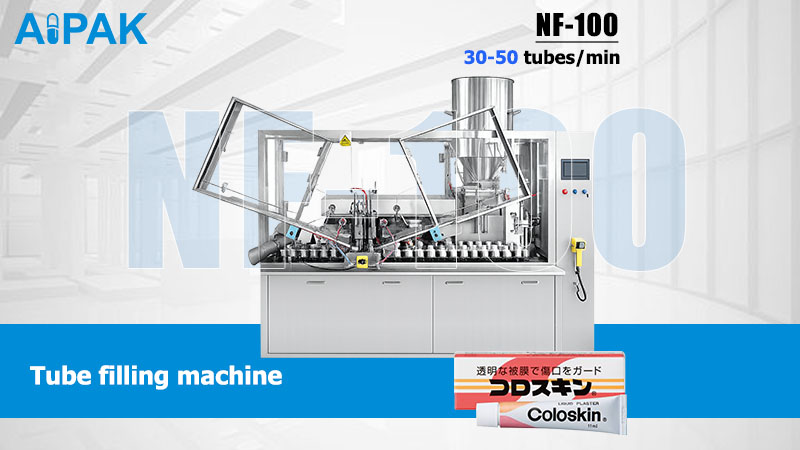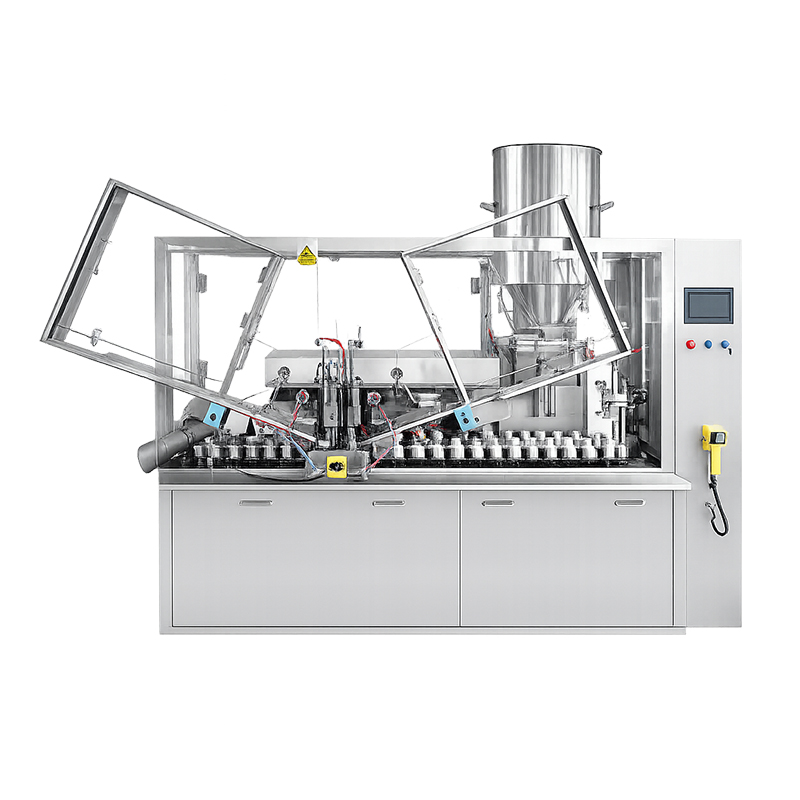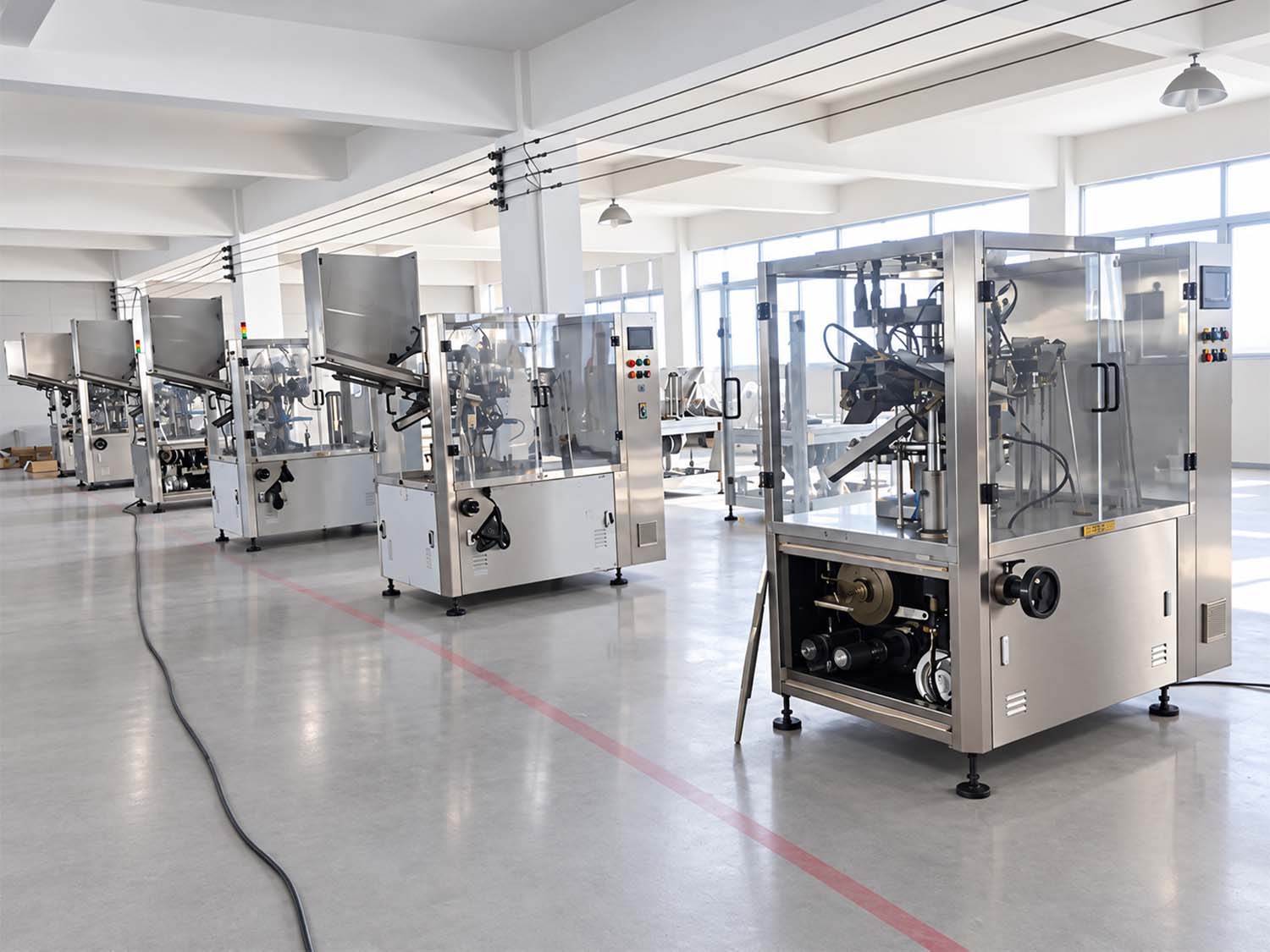
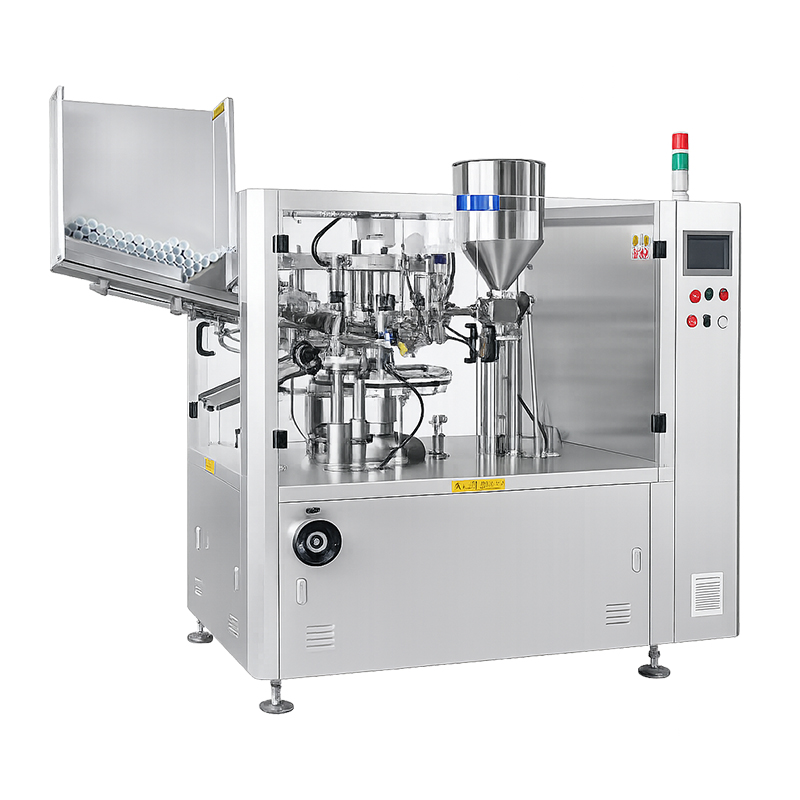
NF-100 Automatic Tube Filling and Sealing Machine

Plastic and aluminum tubes on one machine — hot-air sealing and mechanical folding both on board

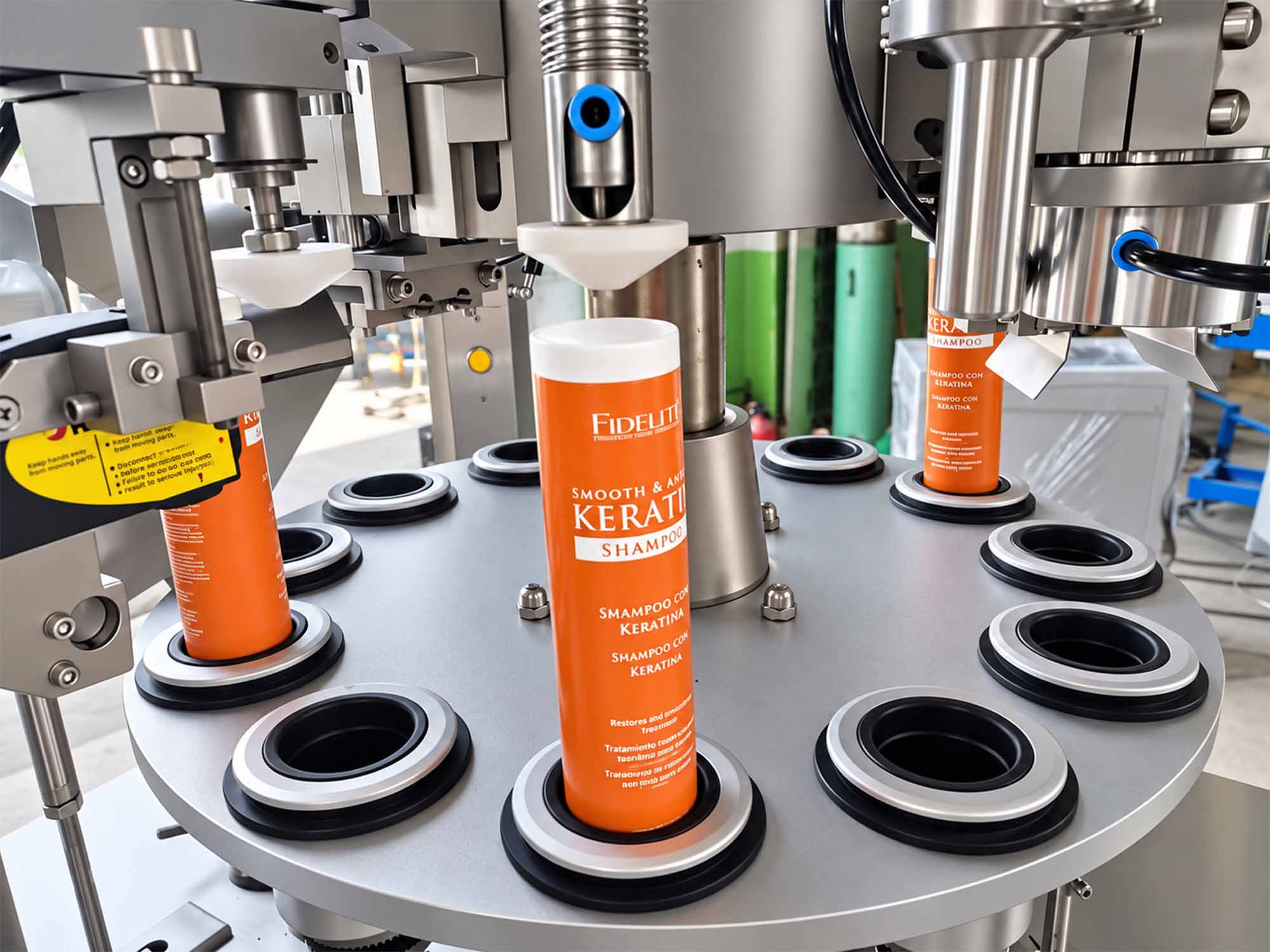
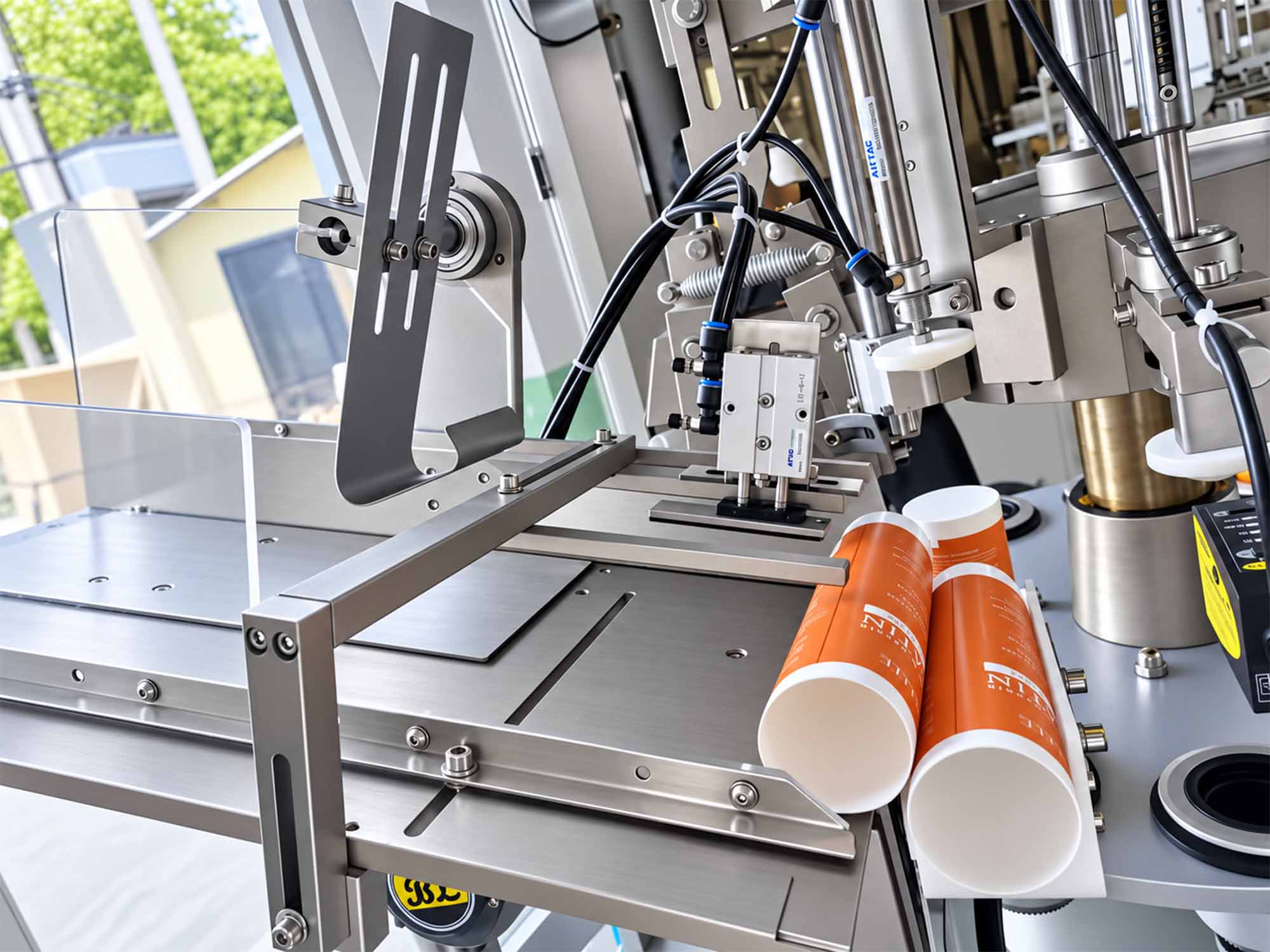
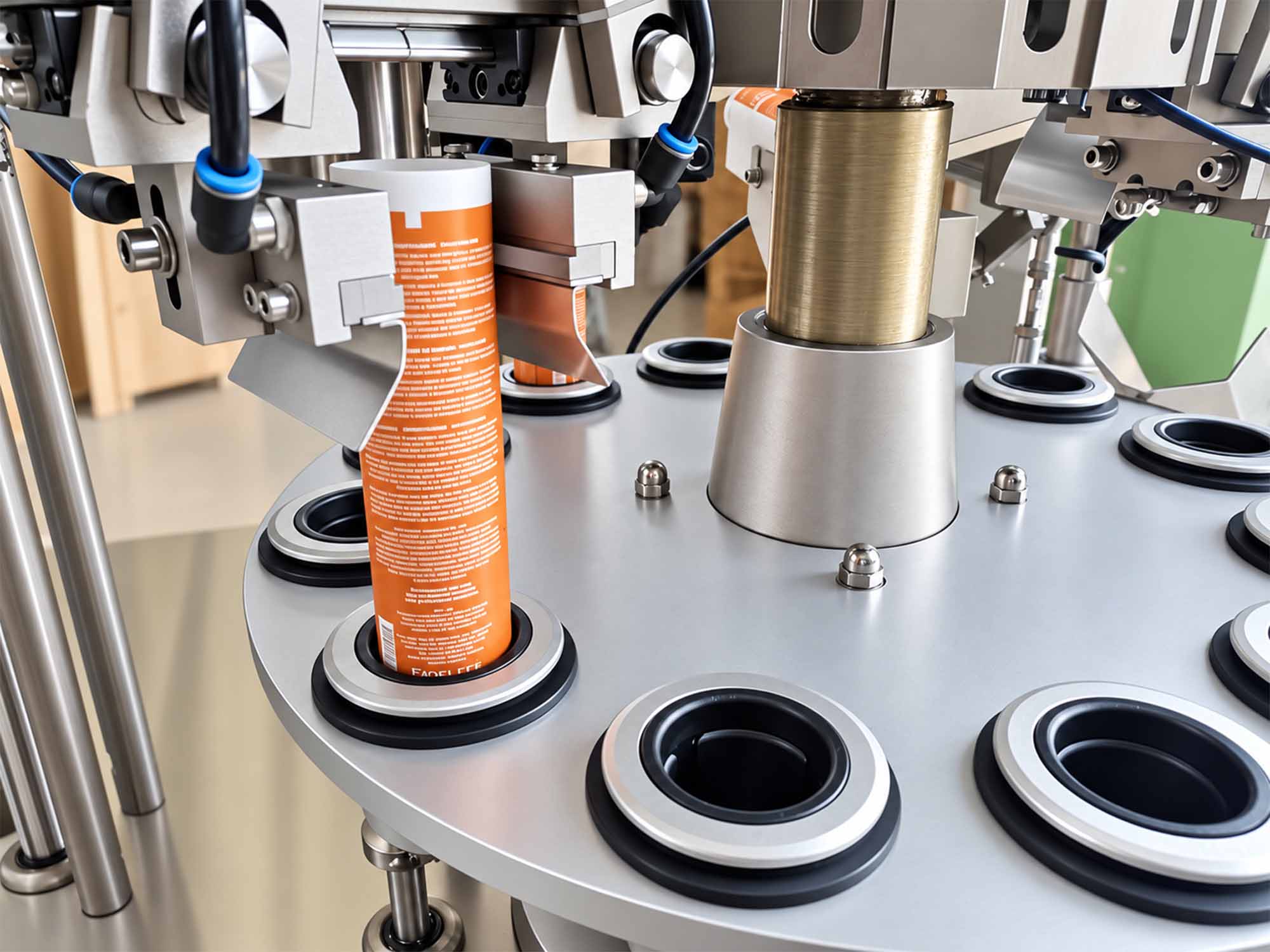
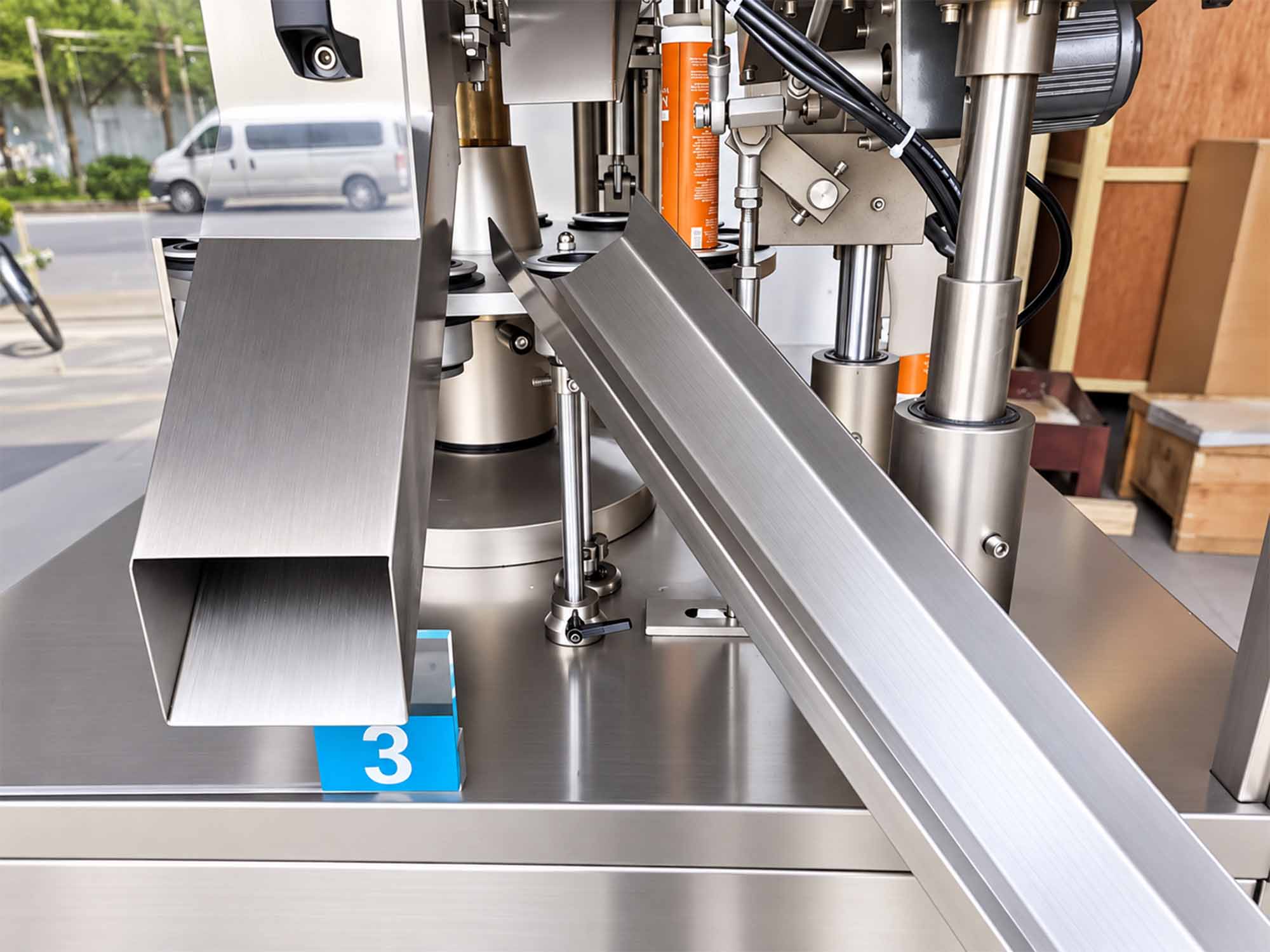
Plastic tubes are heat-sealed; aluminum tubes are folded. This machine carries both sealing methods, so one line can run either kind of tube. Tubes feed from a magazine into 40 holders, the print is turned to the front, and each tube is filled, sealed, coded and discharged tail-first — or head-first as an option, to feed a cartoner.

1.  Plastic and aluminum: hot-air sealing and mechanical folding on the same machine

2. Tubes: Ø13–32 mm

3. Fill: up to 180 ml in plastic tubes, 100 ml in aluminum

4. Output: 30-50/min

Is the NF-100 the right size for you?

✓ Yes, if…

✕ Buy something else if…

Two Sealing Methods on One Machine

A hot-air sealer for plastic and laminated tubes and a mechanical folding station for aluminum tubes, both on the same machine.

Tubes Pushed into Their Holders Under Vacuum

Tubes slide into a flip unit that holds them by vacuum, and a mechanical pusher seats each one in its holder on the conveyor. 40 holders in all.

Print Registered Before Filling

A stepper motor and a precision photoelectric switch turn each tube until its printed eye-mark faces the right way.

Discharge Tail-First or Head-First

Tubes leave tail-first as standard. Head-first discharge is available as an option, to line up with a cartoner.

Technical specification

Parameter

NF-100

Output

30-50/min

Tubes

Plastic, laminated and aluminum

Tube diameter

Ø13–32 mm

Fill

Plastic 5–180 ml; aluminum 5–100 ml

Sealing

Hot air (plastic); mechanical folding (aluminum)

Tube holders

40

Speed control

Inverter

Motor

1.5 kW

Power supply

Three phase, 60 Hz. Built to your U.S. supply; we confirm the voltage with your quote

Hot-air heating

6 kW; water 6 L/min

Contact parts

316L stainless steel

Dimensions

2,300 × 1,350 × 1,800 mm

Weight

1,500 kg

Options

Head-first discharge; servo nozzle lift; heated hopper; hopper level control


Model comparison

Model

Operation

Tubes

Speed

Fill

Power

NF-30 / NF-30M

Semi-automatic

Plastic / aluminum

10–30/min

5–250 ml

Single phase

NF-60A

Automatic

Plastic, laminated

up to 60/min

5–250 ml

Three phase

NF-80

Automatic

Plastic, laminated

50–75/min

5–250 ml

Three phase

NF-100

Automatic

Plastic and aluminum

80–100/min

5–180 ml

Three phase

NF-120

Automatic, twin station

Plastic and aluminum

80–120/min

5–250 ml

Three phase

Industry Applications

Typical OTC products in U.S. supplement and OTC plants:

Ointments and Creams on One Line

An antibiotic ointment in aluminum tubes and an anti-itch cream in plastic tubes, on the same machine — it carries both hot-air sealing and mechanical folding.

Small OTC Tubes up to Ø32 mm

Antifungal and hydrocortisone creams in the smaller tube sizes that most retail OTC products use.

Medicated Lip and Nasal Ointments

Small aluminum or plastic tubes where a full barrier matters and the fill is only a few millilitres.

Boxed OTC Tubes

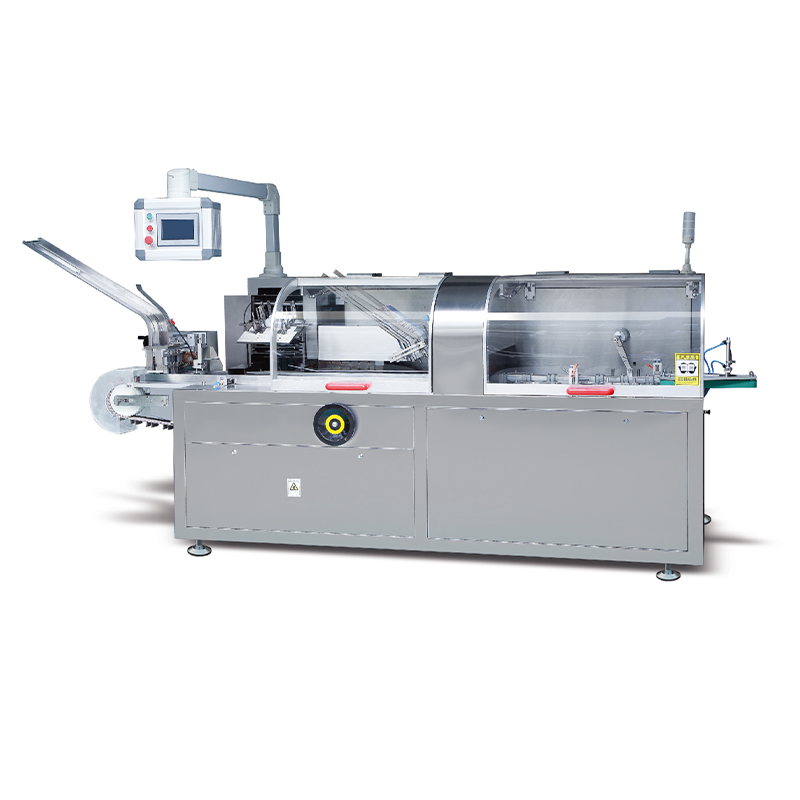
Tubes discharged head-first as an option, so they line up for a cartoner that adds the box and the leaflet.

What changing over involves

What changed

What you adjust

Roughly

Different fill

Pump setting

15–30 minutes

Different tube diameter

Tube holders

15–30 minutes

Different product

Clean the hopper and pump

15–30 minutes

What to check before you buy

01

Your tube, not a sample tube

Plastic, laminated and aluminum tubes seal in different ways. Ask any supplier to run your tube, not one of theirs.

02

Plastic or aluminum — or both?

Many semi-automatic fillers seal only one kind of tube. If you run both, ask whether that's one machine or two.

03

Your power supply

This machine needs three-phase power. Only the semi-automatic NF-30 runs on single phase — check before you choose.

Why Choose AIPAK?

One Point of Contact

One project engineer handles your machine from proposal to commissioning, so you’re not chasing five suppliers for one answer.

We Run Your Tubes Before You Order

Send us a few of your empty tubes and a sample of your product. We need your tube to size the holders and set the sealer anyway, so we fill and seal them on the machine and send them back. You’ll see the seal, the code and whether the print still looks right after the heat — on your own tube and your own product, not a sample we chose.

A U.S. Number, Answered by Us

+1 (213) 526-8644, answered by our engineers 9 AM–7 PM China time, Monday to Friday. That’s evening and overnight in the U.S., so leave a message or send a WhatsApp anytime and we’ll pick it up first thing.

Spare Parts and Lead Time, in Writing

A kit of wear parts ships with your machine. Every part in the kit, and the lead time for anything outside it, is listed in your quote in writing.

NF-100 Tube Filling Machine Comprehensive Technical FAQ

How does it seal plastic tubes without damaging heat-sensitive products?

A plastic tube is sealed by heating the inside of its tail with hot air until the layers soften and fuse, then pressing it flat. The heat is aimed at the tail, and a water chiller keeps the tube holders cool, so the rest of the tube — and the product in it — isn’t cooked while the seal is made.

What happens if a tube holder is empty?

A photoelectric sensor checks each holder before the filling station. If a tube is missing or didn’t seat properly, the filler doesn’t fire for that cycle, so no product lands on the turntable.

How does it handle thick products that string or drip from the nozzle?

Thick creams and ointments tend to leave a thread of product behind when the nozzle lifts away. The NF-100 can be fitted with either a suck-back nozzle or a blow-off nozzle, chosen to suit your product, so the dose breaks cleanly and the seal area stays clear.

Can it feed a cartoner downstream?

Tubes are discharged tail-first as standard. Head-first discharge is available as an option, so the tubes line up for a cartoner downstream. Tell us which cartoner you’re using and we’ll check its rate against the filler’s.

Can it fill both plastic and aluminum tubes?

Yes. The NF-100 carries both sealing methods: a hot-air sealer for plastic and laminated tubes, and a mechanical folding station for aluminum tubes. Fill range is 5–180 ml in plastic tubes and 5–100 ml in aluminum.

What's the largest tube it takes?

Ø32 mm, for both plastic and aluminum tubes. For plastic tubes up to Ø50 mm, see the NF-80.

Does it run on US power?

Yes. We build to your U.S. supply at 60 Hz and confirm the voltage with your quote.

How do spare parts work?

A kit of wear parts ships with your machine. Every part in the kit, and the lead time for anything outside it, is listed in your quote in writing.

Customers Also Interested In...

Send Us an Empty Tube and a Sample

Two things decide which machine you need: whether your tubes are plastic, laminated or aluminum, because each is sealed differently, and how many you need a day. Tell us both and we’ll tell you whether a semi-automatic machine is enough.

Better still, send us a few empty tubes and a sample of your product. We’ll fill and seal them and send them back.

  • Direct from our factory
  • Lead time confirmed in your quote
  • Installation and training available
  • Spare parts listed in your quote
Scroll to Top