
The order isn’t arbitrary. A bottle travels the line once, and every machine’s position is set by the machines on either side of it. This section separates the backbone from the add-ons, so you can look at your quote and tell which is which.
The backbone — five machines
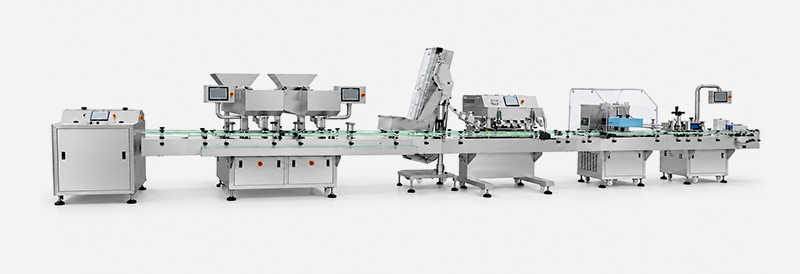
Bottle feeding → counting → capping → induction sealing → labeling
Take any one of these out and the line doesn’t run.
Optional stations, added for your product and channel
Bottle cleaner
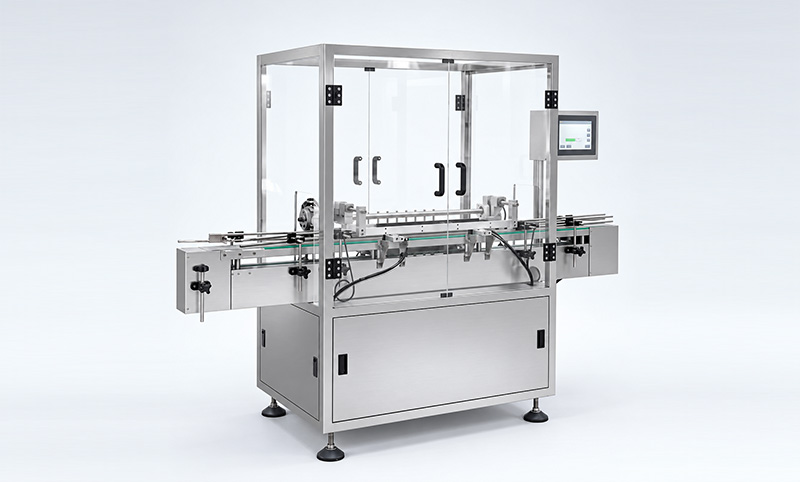
Sits between feeding and counting
Checkweigh reject
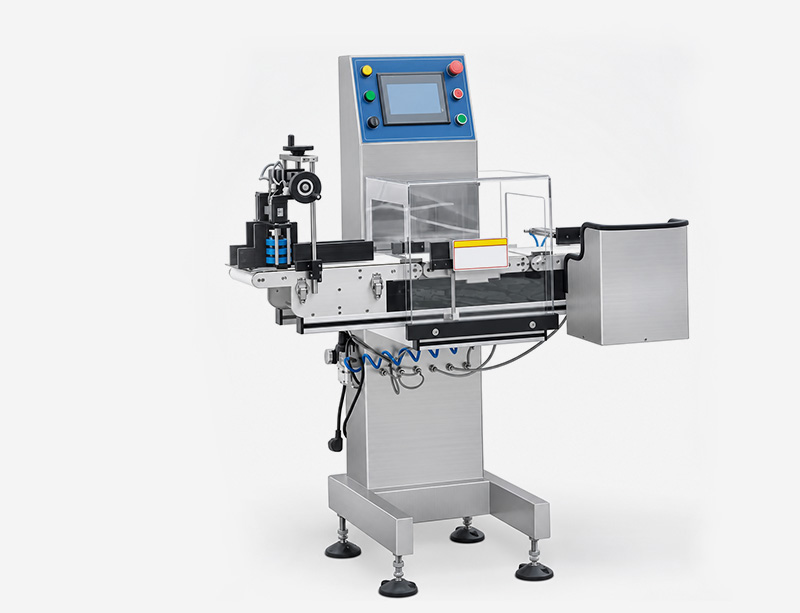
Sits between counting and capping
Desiccant inserter, cotton inserter
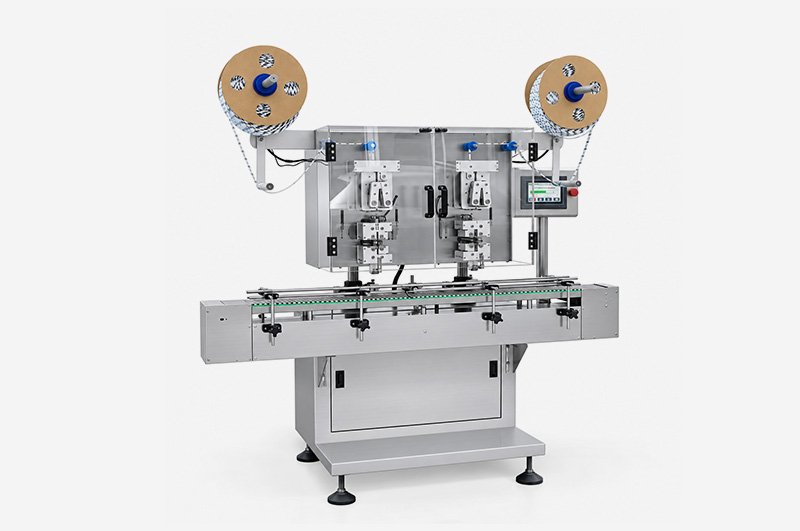
Also between counting and capping
Neck sleeving + shrink tunnel
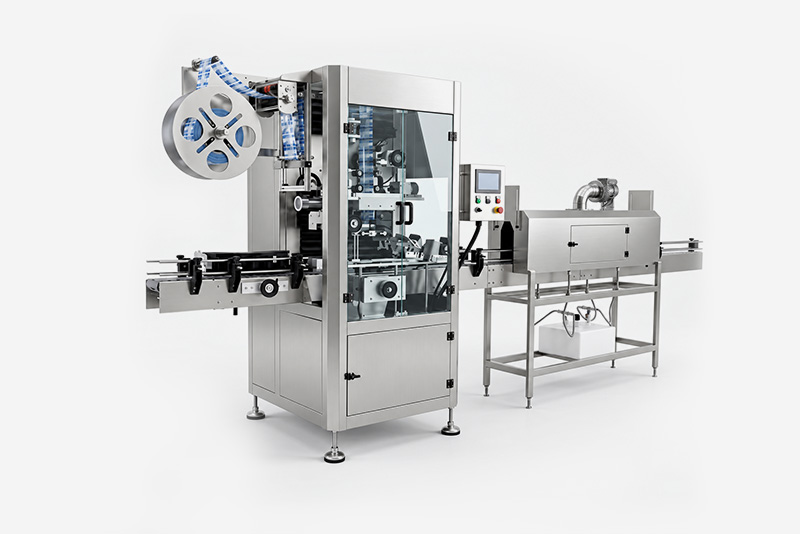
After labeling
Cartoner, case packer
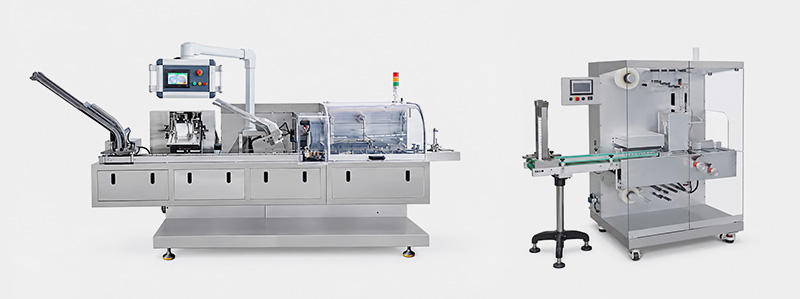
End of line
Collecting turntable
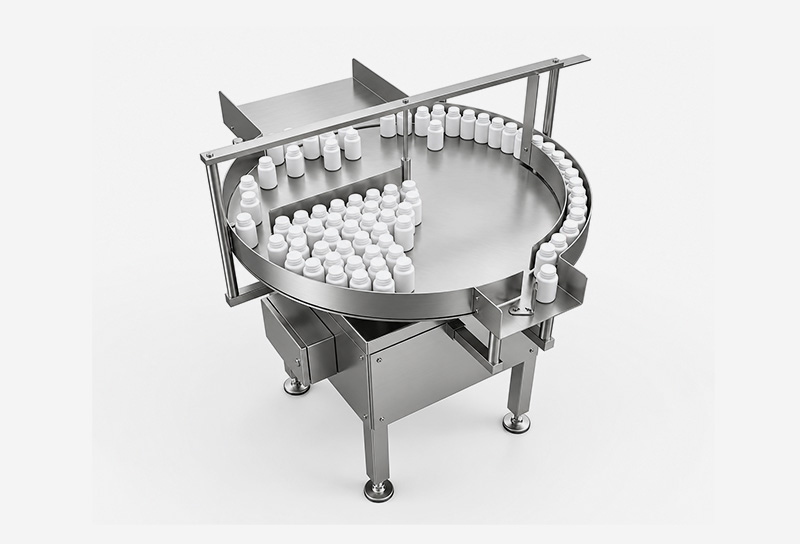
Only if nothing follows the line
One thing to file away now: your line’s output isn’t set by the fastest machine on it. It’s set by the slowest. There’s a section on that at the end.
Two ways to get empty bottles onto the line: an automatic unscrambler, or a turntable. This isn’t a question of good versus cheap. It’s a question of budget and what your floor actually looks like. A lot of buyers pick wrong here and live with it for years.
Automatic unscrambler
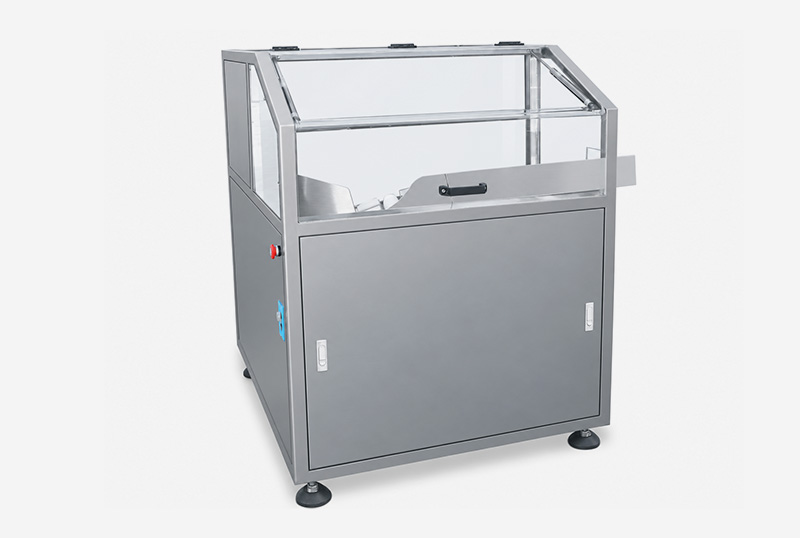
AIPAK’s automatic unscrambler
What it does. Takes a case of loose empty bottles, rights them, lines them up, and feeds them onto the line. Nobody has to touch them.
Speed comes in three tiers — low, medium, high — and you pick against your target output. Small units run a few dozen bottles a minute. Our high-speed models reach 200 a minute.
There’s a height ceiling. Very tall bottles won’t unscramble. Up to about 25 cm is fine. If your bottle is taller than that, say so before we quote — don’t let it surface during line layout.
What else to look at

Various bottle formats
- Bottle format range. Round, square and odd shapes behave differently. How wide a range one machine covers decides how easily you add SKUs later.
- Speed matched to the counter. Feeding faster than the counter can fill gets you nothing.
- Changeover parts.When you switch bottle formats, is it a few bolts or a full set of change parts?
The pitfall. Shopping on speed and never asking about format range. It runs your current bottle fine. Next year you add a square bottle and it won’t.
Turntable feeding
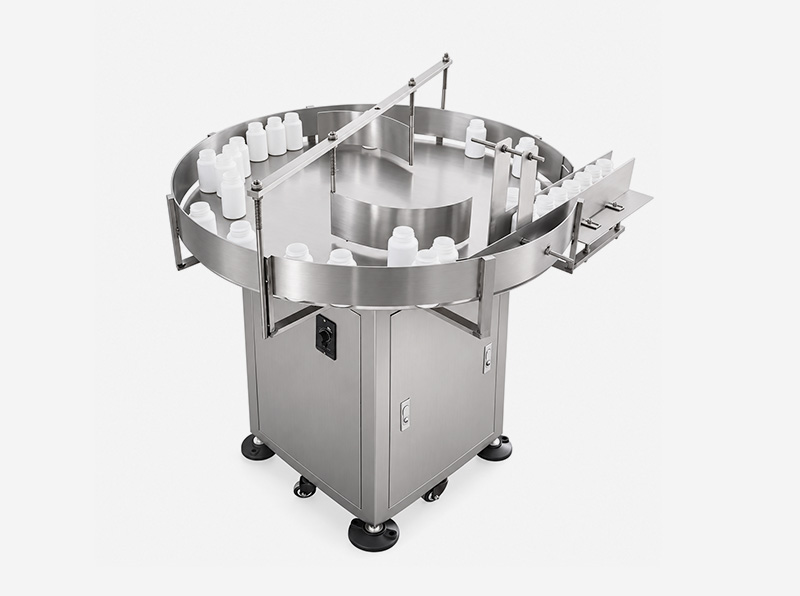
AIPAK’s turntable feeding machine
What it does. A large rotating disc. Someone stands there setting empty bottles on it upright, and the disc feeds them into the line.
Worth correcting a common assumption: a turntable is not the budget option, and it isn’t semi-automatic.
If it isn’t feeding fast enough, you increase the diameter. Standard sizes are 800 mm and 1 m, and we build custom at 1.2 m and 1.4 m.
At higher output you can also run two turntables into one line, feeding it together. It keeps up.
So turntable versus unscrambler comes down to your budget and your floor, not to which one is more advanced.
The collecting turntable at the end
This is the one people forget.
When you need it: nothing follows the line — no sleeve applicator, no cartoner. Finished bottles come off and something has to catch them.
When you don’t: sleeving or cartoning follows, and bottles feed straight into it.
Buyers put all their attention on the infeed end and forget the discharge end needs somewhere to go.
The counter is the core of the line and the line item on your quote that deserves the most scrutiny. It decides two things: whether the count is right, and how fast the whole line runs. There are two technology paths right now, and picking the wrong one for your product means daily rework.
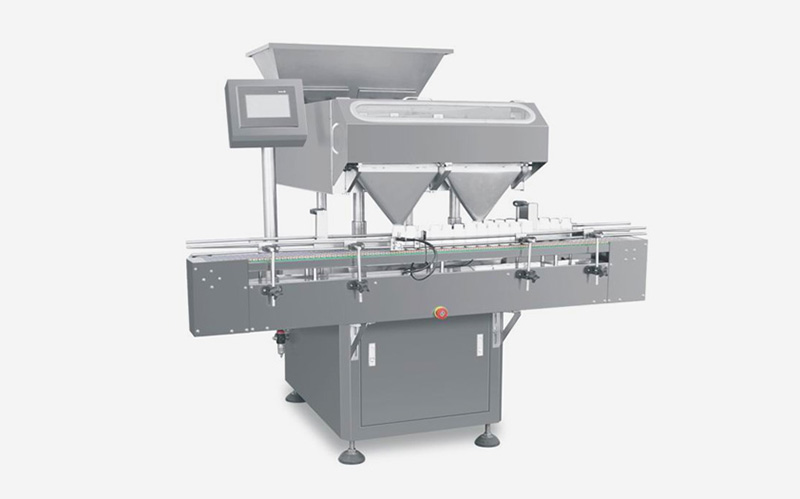
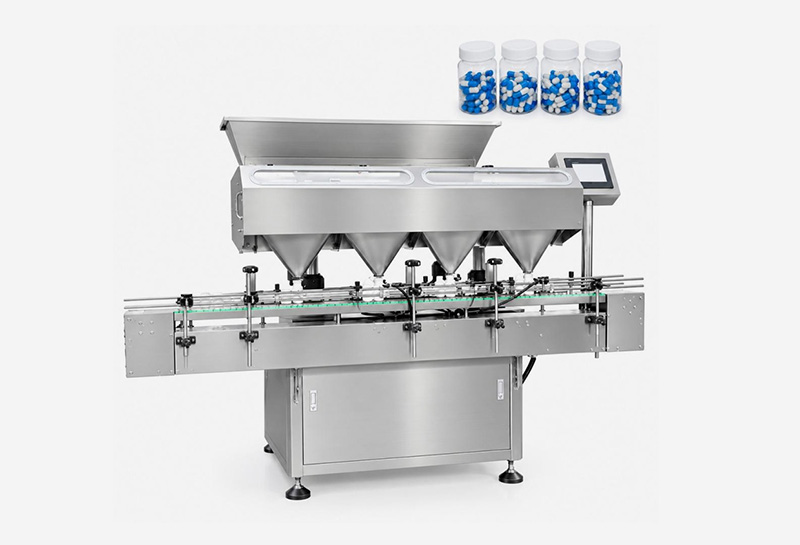
AIPAK’s counting and filling machine
What it does. Fills the bottle by count, not by weight.
Why supplements are counted instead of weigh-filled is a separate topic. We wrote that one up on its own.
Two counting technologies
Infrared electronic counting — the market mainstream
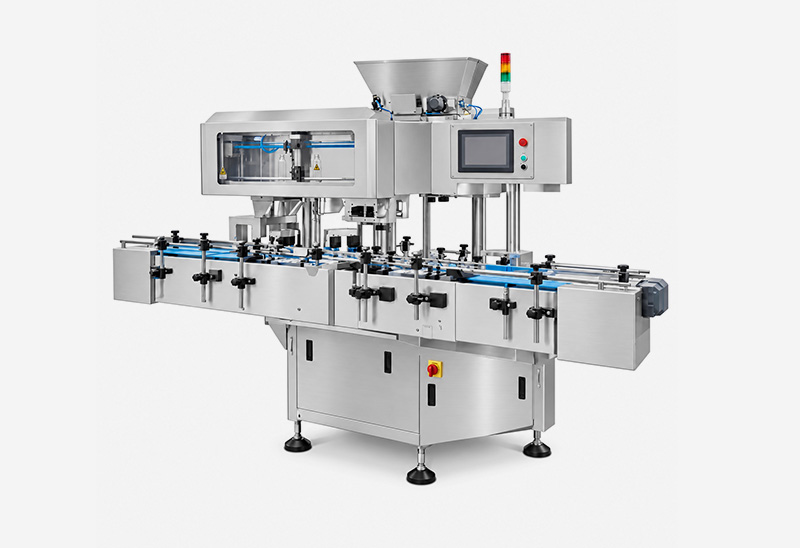
How it works, in one line: an infrared eye watches the drop, and every product that breaks the beam adds one to the count.
Where it’s strong. Mature, stable, easier on the budget. Most lines running today use it.
Where it’s limited. Tablets shed dust. Enough dust on the optics and the count starts drifting. If you’re looking at infrared, ask specifically what the dust handling design is.
Vision counting — moving fast the last couple of years
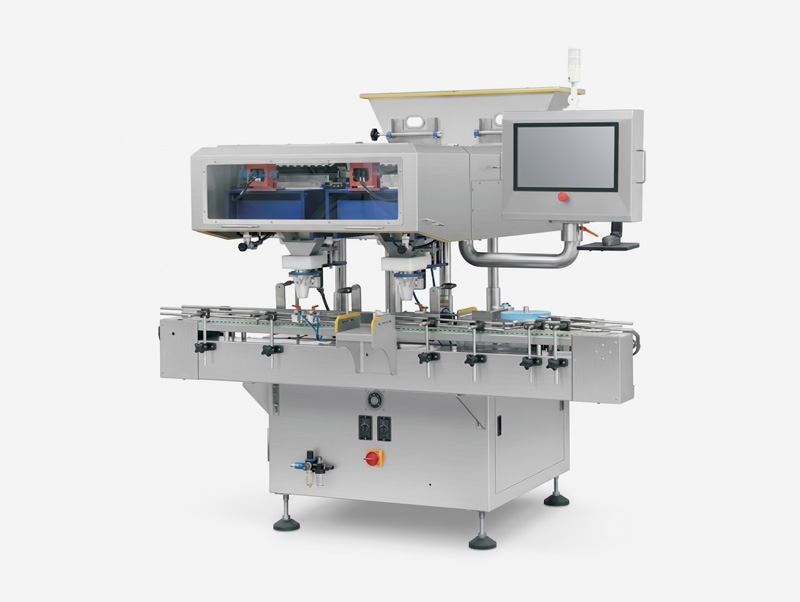
How it works, in one line: a vision system identifies each product and counts as it goes.
Where it’s strong. Dust doesn’t affect it, and accuracy is higher. It also picks out broken pieces and foreign material — not just how many, but whether each one is right.
What it costs you. More than infrared.
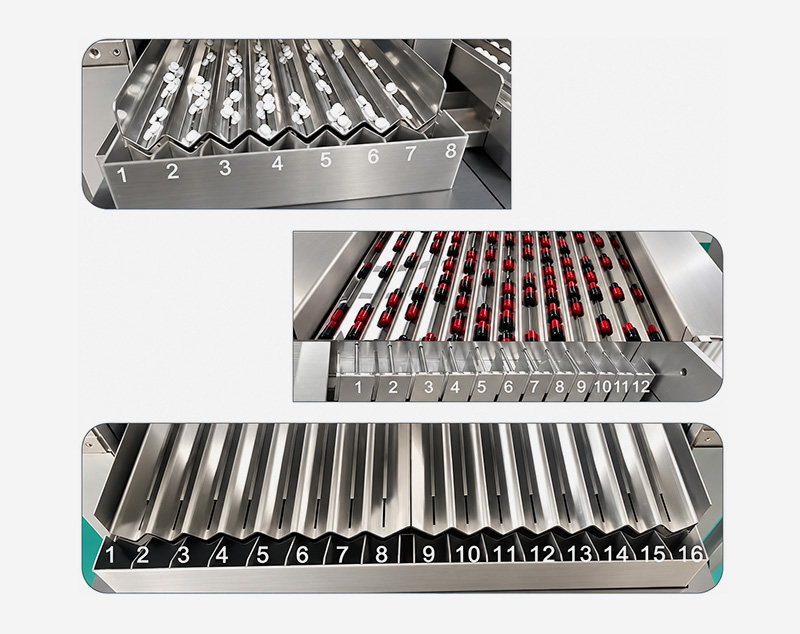
Channel count is the main spec on this machine. We build five: 8, 16, 24, 32 and 48 channels.
But channel count doesn’t convert to speed.
Take two 24-channel machines. One fills 30 count per bottle, the other fills 120. Their bottles-per-minute are nowhere near each other. More count per bottle means more dwell time per bottle.
So choosing a channel count isn’t choosing a speed. Give us two numbers — how many pieces per bottle, and how many bottles per minute you need — and we work backward to the channel count. Trying to pick it off a spec sheet the other direction doesn’t land.
Counting accuracy
Our counting accuracy typically runs 99.5%.
Worth saying plainly. You’ll see “100% counting accuracy” claimed on other suppliers’ sites. No machine hits 100%. A number like that either hasn’t been measured or isn’t meant to be held to. We’d rather hand you one we can stand behind.
If your product needs tighter than that, the answer isn’t a better counter — it’s a checkweigh reject after the counter. There’s a section on that below.
What else to look at

- Dosage form.Tablets, capsules, softgels and gummies behave very differently. Softgels and gummies are tacky and will hang up in the channels.
- Product changeover. When you switch products, is it a quick adjustment or half a shift?
The pitfalls
Sizing channels off your largest product. You have one big-gummy SKU, you spec channels for it, and every other day you’re running small tablets with capacity you paid for and can’t use.
Ignoring product shape. Odd-shaped gummies and tacky softgels don’t ask the same thing of channel width and sensors that a plain round tablet does. Send actual product dimensions before quoting.

Various odd-shaped gummies and tablets
Buying infrared purely on price. It is genuinely cheaper. But if your tablets shed, the downtime, rework and recheck that dust causes never show up on anyone’s quote.
There are two ways to put a cap on a bottle: screw capping and press-on. Which one you need isn’t your call — your cap decides it. Get this wrong and the machine shows up and won’t run your caps. Settle it before you order.
The two methods
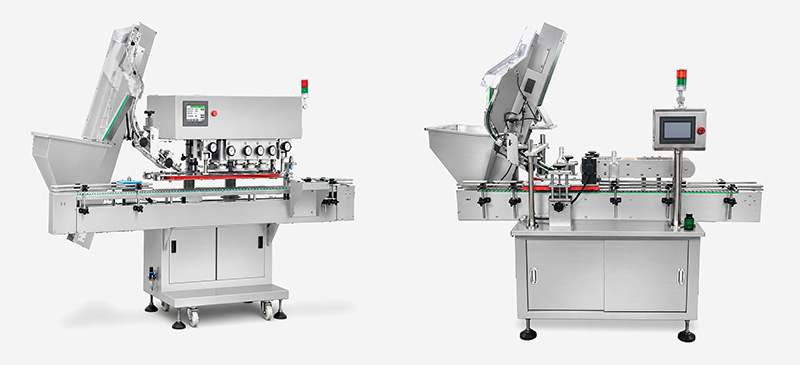
AIPAK’s screw capping machine and press-on machine
Screw capping — the cap threads straight onto the neck. The common one.
Press-on — some caps have to be pressed down before they’ll thread. Others are press-fit by design.
Send us cap samples. Don’t assume. You can’t judge this from a photo. Somebody has to handle the cap.
What to look at
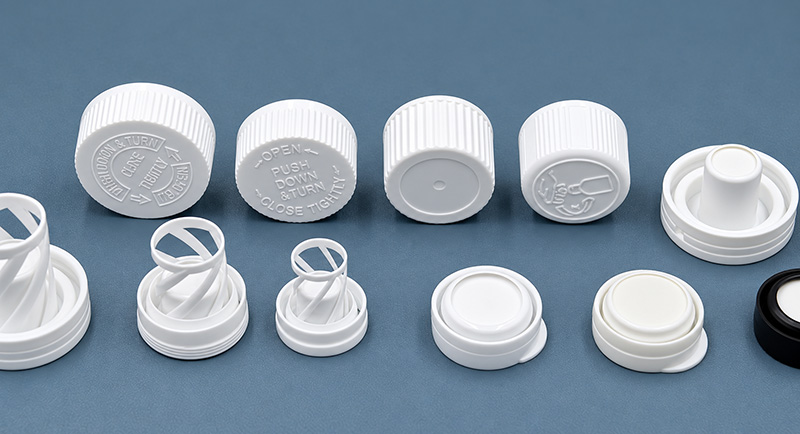
Different type of caps
- Cap format range.Flat caps, child-resistant caps (CRC) and flip-tops are all different.
- Torque control.This is the one that matters. Too loose and you get moisture and leaks. Too tight and your customer can’t open the bottle at the kitchen counter. Both ends are complaints.
- Cap changeover. How many cap formats do you run, and what does switching take?
The pitfalls
Overlooking child-resistant caps. Some US products need them, and a CRC changes both the cap format and how it goes on. If you have SKUs like that, raise it at the start.
Ordering a screw capper when your cap needs pressing first. The machine arrives and won’t seat the cap. This is the most common version of this mistake, and sending samples early makes it disappear.
An induction sealer bonds a foil liner across the bottle mouth — moisture protection, leak protection, and the tamper signal your customer looks for. Nearly every US supplement bottle has one. The machine itself isn’t complicated, but there’s one hard limit that will stop you cold if you don’t check it first.
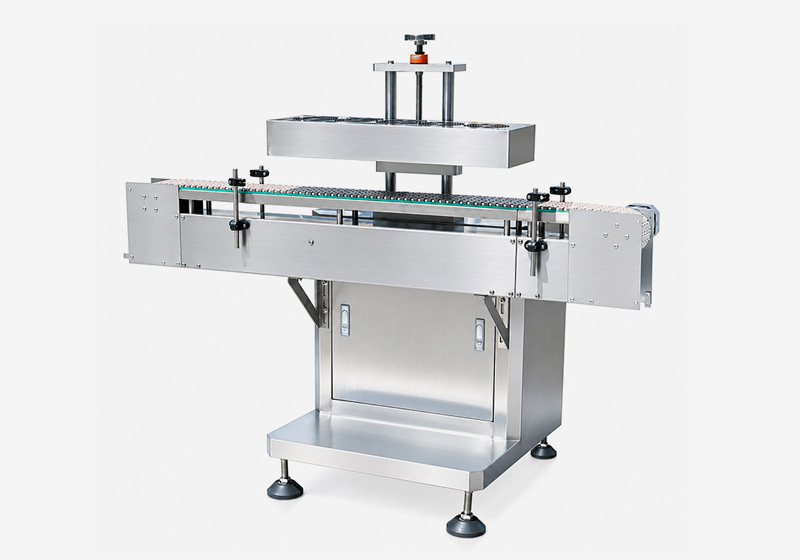
AIPAK’s induction sealer
Check this first: metal caps can’t be induction sealed
Induction sealing works by heating the foil electromagnetically. If your cap is metal or aluminum, it shields the field and the seal won’t form. There’s no workaround for this.
If you’re on metal caps today and you want foil sealing, you change the cap. Keep the metal cap and you’re on a screw closure with no foil layer.
Confirm this before you order, not when the machine lands.
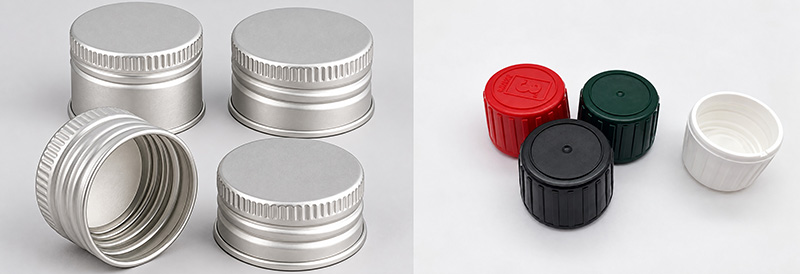
Metal caps vs. plastic caps
Air-cooled or water-cooled
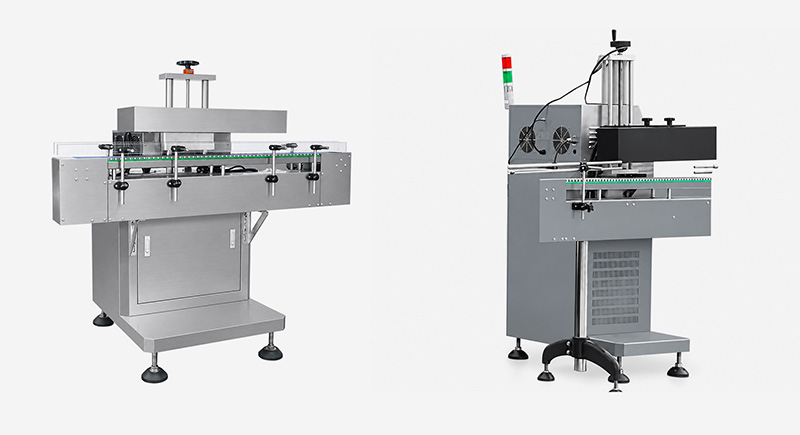
AIPAK’s air-cooled sealer and water-cooled sealer
You don’t have to agonize over this one. It follows your speed.
Higher speed → water-cooled. Water cooling handles heat far better than air, and it holds up under continuous high-speed running.
Lower speed → air-cooled is fine. Simpler build, and it costs less.
One more limit on air cooling: it doesn’t suit large bottle necks. Bigger neck means more area to seal, and air cooling runs out of headroom.
Odd necks need a custom machine
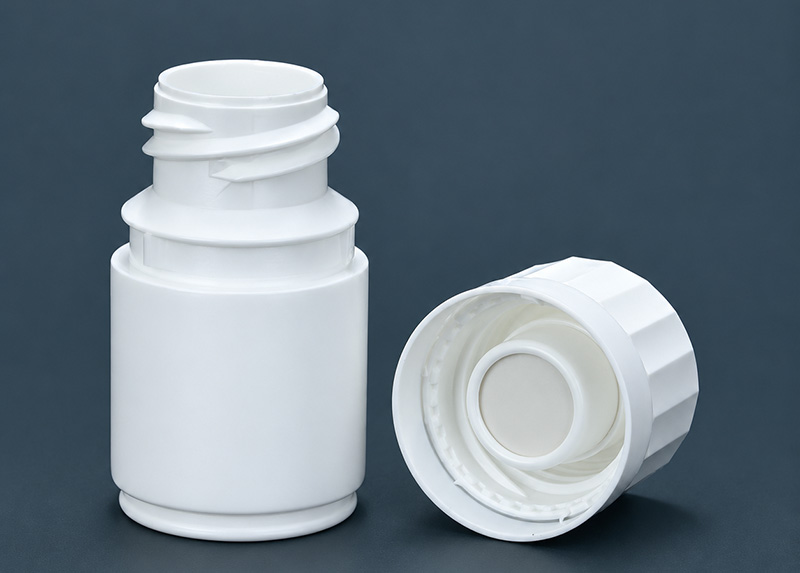
If your bottle has a raised or irregular neck, a standard sealer won’t seat on it and the machine has to be built for your bottle. Flag it before quoting and send the bottle or a drawing.
The pitfalls
Not enough power and the seal doesn’t hold — which you find out when it reaches your customer. Too much and you scorch or deform the neck. Either way it’s a setup job, not plug-and-play.
Neck dimensions, line speed and cap material — get all three on the table before you order and the sealer comes configured right.
A labeler applies your label and can print lot codes and expiration dates inline. Straightforward machine. But when the label design and the labeling method don’t match each other, you get lifted edges and bubbles, and your rework rate never comes down.
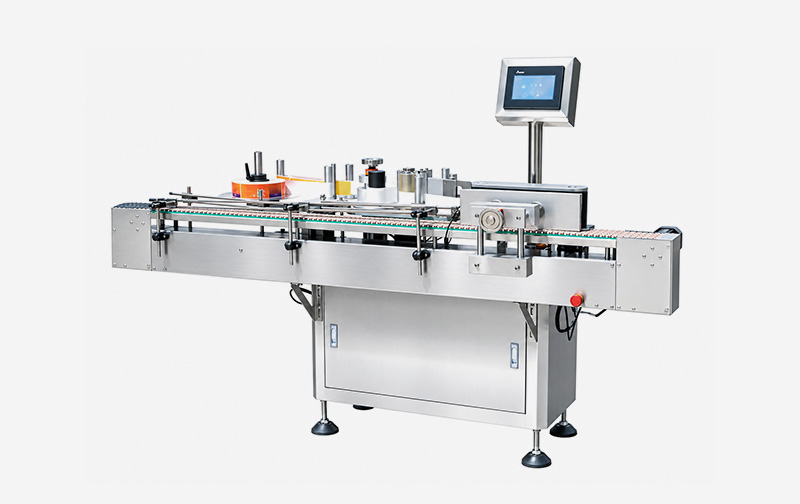
AIPAK’s labeling machine
Speed follows the machine in front of it
Labeler speed has to match your front end. Common tiers are 50, 100 and 150 bottles per minute. However fast the counter runs, the labeler has to keep pace, or it becomes the bottleneck for the whole line.
Which labeler
| Labeler Type | Description |
|---|---|
| Round-bottle labeler | The one most bottling lines use. The bottle spins as the label lays down. |
| Square-bottle labeler | Square bottles need positioning, so the mechanism is different. |
| Two-sided labeler | Applies separate labels to the front and back of the bottle. |
| Star wheel labeler | Runs faster and is suitable for higher-output bottling lines. |
Do you need registered labeling?
Standard labeling wraps the bottle without controlling exactly where the label lands. Registered labeling puts the label in a fixed position — aligned to a molded feature or a printed mark, for instance.
Registered labeling costs more. Check whether your packaging design actually requires it instead of assuming it does.
There are also tamper labels, top labels and bottom labels, added as your packaging calls for them.
The pitfall
Label design and labeling method that were never reconciled. A label that’s too long, a bottle with too much curvature, the wrong adhesive — and you get lifting and bubbles.
Lock the bottle format and the labeling method together, before the label art is finalized. Not the other way around.
This is the section most often missed at quote stage, and missing it gets expensive. It’s two machines as a set, and their position is fixed — after labeling, before cartoning. Try to add them once the line is laid out and you’re changing line length and floor plan.
Do you need it?
A lot of retail channels and large buyers require a tamper-evident band at the neck. The way it’s done: a clear plastic sleeve goes over the neck, shrinks down tight, and carries a tear strip. One pull tells the consumer whether the bottle has been opened.
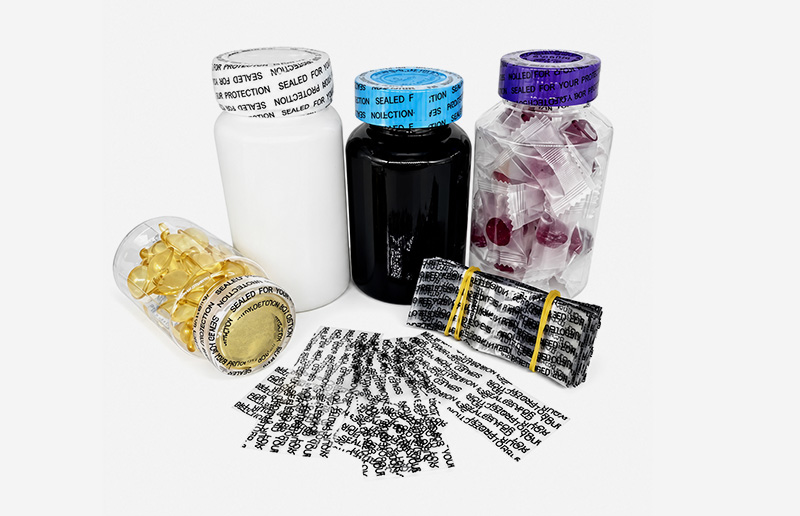
Confirm which channels you’re selling into and whether they require it. If they do, it has to be in the layout. If they don’t, you can skip it.
The sleeve applicator
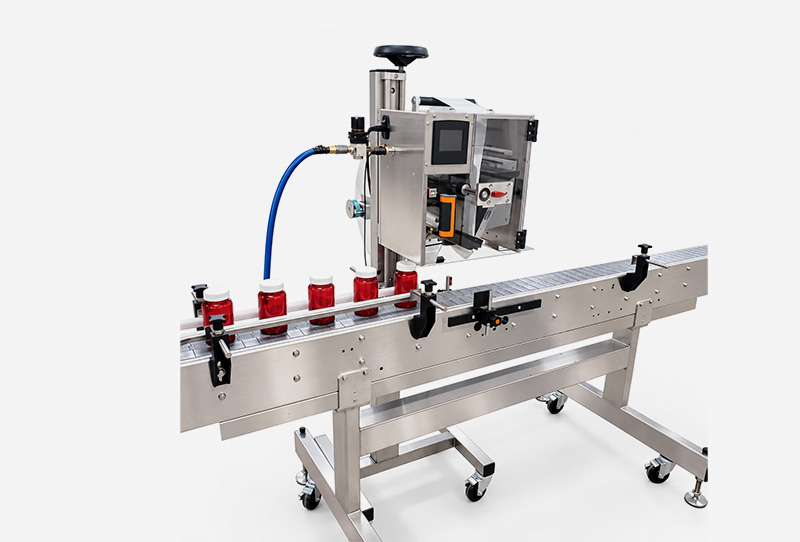
What it does. Places a tube of plastic film over the bottle neck.
Note this is neck sleeving, not full-body sleeving. Different machines. Don’t let the two get mixed up in a quote.
What to look at
- Speed matched to the labeler ahead of it
- Neck and cap diameter range it covers
- Tear strip format
The shrink tunnel
What it does. The sleeve goes on loose. Heat shrinks it down tight.
Heating is electric. On length, 1.5 m or 2 m is generally enough — you’re only shrinking the neck band, so you don’t need a long tunnel.
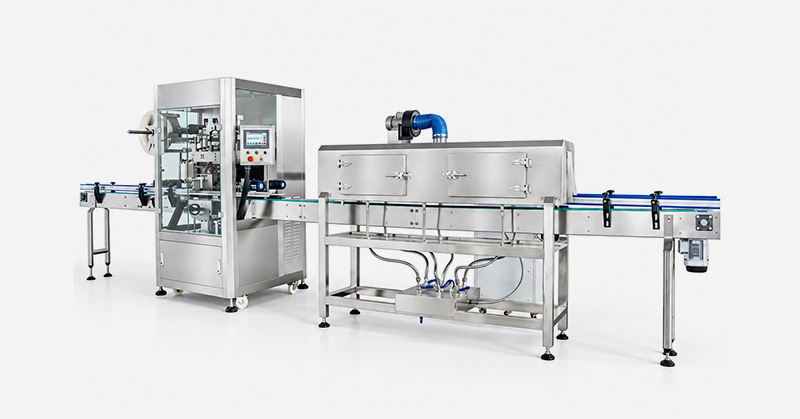
Automatic shrink sleeve applicator machine
Hot air, not steam.
Steam shrinking puts moisture on the bottle. A damp bottle cartons badly — the board takes up moisture, and forming and pushing both suffer. One thing feeding into the next.
About industrial heat guns
You’ll hear about shops that skip the tunnel and point two industrial heat guns at the band instead. Since it’s only the neck, the shrink area is small, and it does technically work.
We don’t recommend it and we don’t sell heat guns. It isn’t a proper production method — it’s what small batches and temporary fixes look like. The shrink comes out uneven, the temperature wanders, and somebody has to stand there watching it. Run any volume and it falls apart. If you’re doing this, do it with a tunnel.
The position rule
Labeling → sleeving → shrinking → cartoning. That order is fixed.
Leave room for these two when the line is first laid out. Coming back to add them means lengthening the line and rearranging the floor — much more work than planning them in.
Run a line long enough and you’ll get short counts, missed caps and bad seals. One of the things a full line buys you is that those bottles come off before they ship. It’s four checkpoints working together, not a feature sitting on one machine.
First — after counting
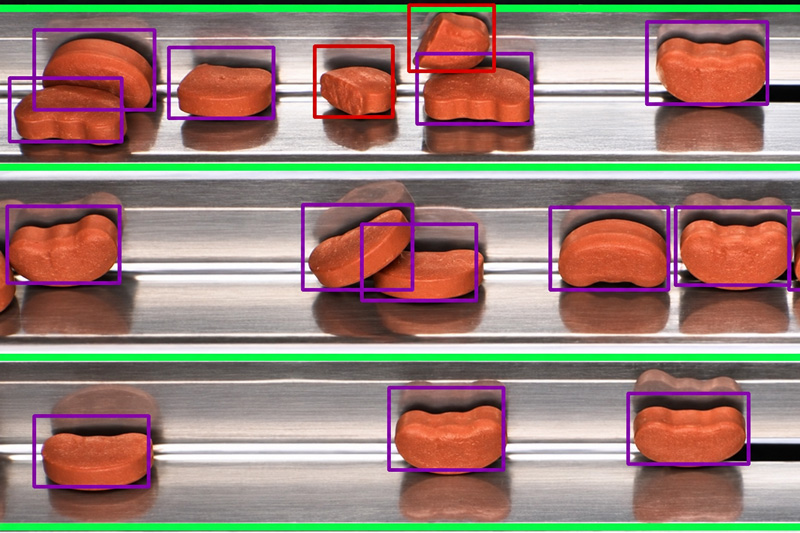
Process of vision counting and rejection
Overcount, short count, broken pieces → rejected. The counter handles this itself.
Vision counting is stronger here: it recognizes fragments and foreign material, not just quantity.
Second — checkweigh reject (optional, and worth it)
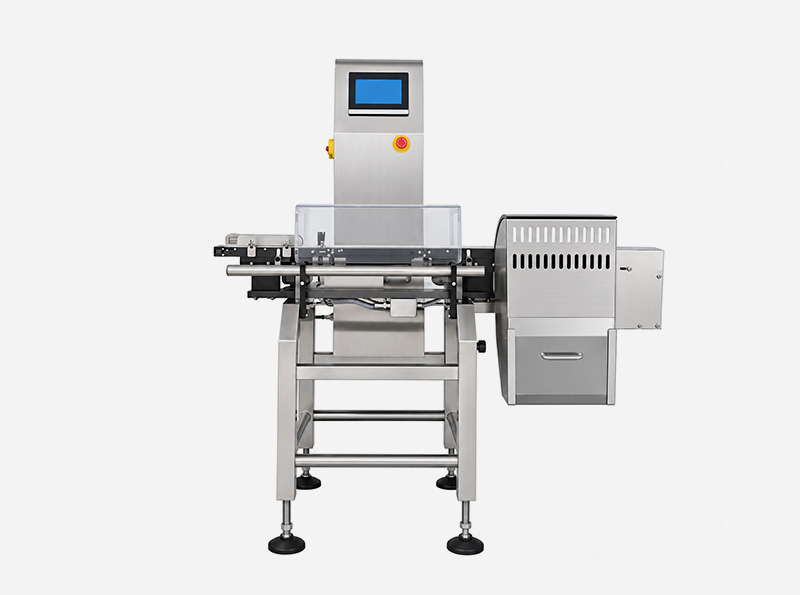
AIPAK’s checkweighter
Its position is fixed: after counting, before capping.
Why it has to be before capping. Reject a bottle after the cap is on and somebody has to take the cap back off. That’s a nuisance you don’t want built into your line.
How it detects. By weight. The bottle passes a load cell, and anything off-weight gets pushed off. Accuracy on this is high.
Why it’s worth adding. The counter has its own reject function, but it isn’t always right, and over- and under-counts still slip through. A weight check behind it is a second opinion.
When to add it: tight fill-count requirements, high unit value, or a customer you can’t afford a complaint from.
Third — after capping
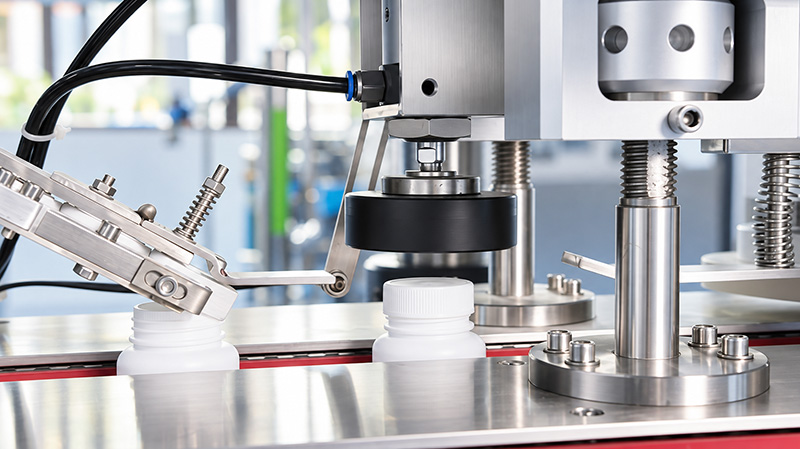
Process of bottle capping
Missing caps, crooked caps, cocked caps → rejected.
How it detects. By height. A cap that’s missing or seated wrong changes the overall bottle height, and the sensor picks it up.
Fourth — after sealing
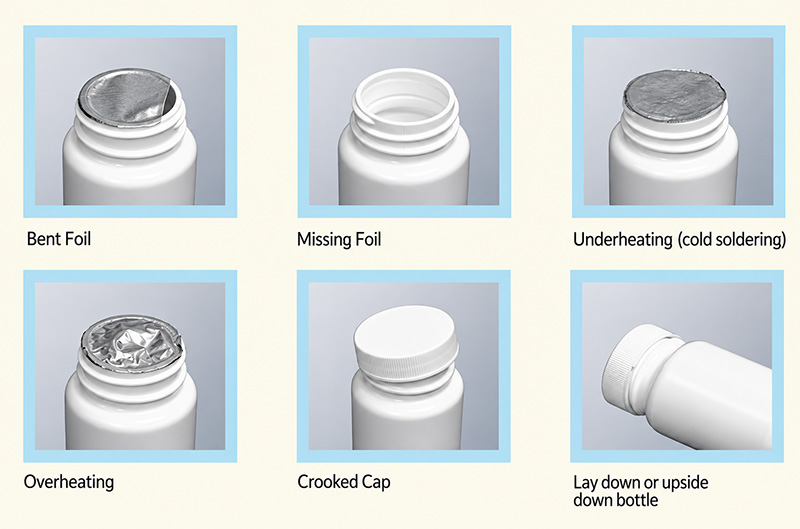
Types of sealing problems
Missing foil → rejected.
How it detects. By metal detection. The foil is metal, so its presence or absence reads directly.
Put together
Those four checkpoints in sequence are what keeps a bad bottle from reaching your customer.
Buy machines one at a time and each one’s reject function works in isolation. Buy the line and the signals are tied together. That’s one of the real differences between the two.
Optional doesn’t mean nice-to-have. These stations are set by your product. Leave out one you need and the product suffers. Add one you don’t and you’ve paid for floor space you can’t use. Go down this list against what you actually make.
Bottle cleaner
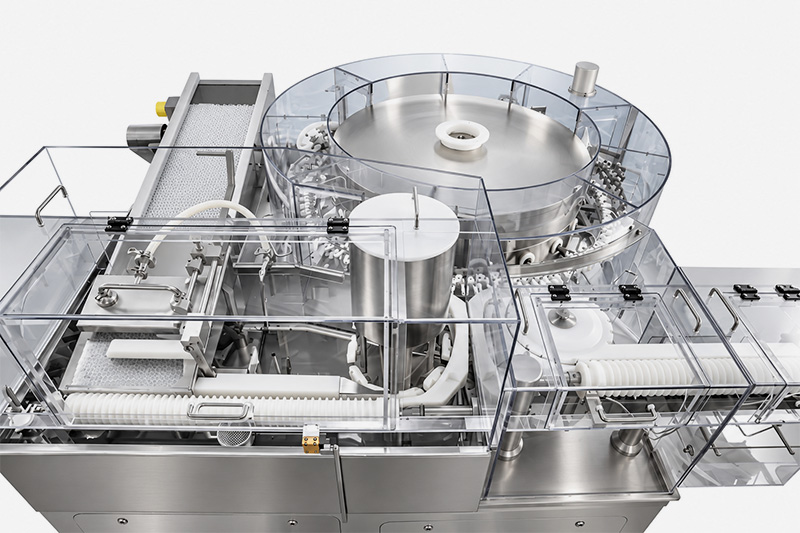
AIPAK’s bottle cleaner
Bottles come out of the case with dust in them. The cleaner blows it out.
The basic method is air. High-pressure air, dust out.
Ours comes standard with ionized air as well. The ions carry the dust away and neutralize static — otherwise static pulls the dust you just blew out right back onto the bottle wall, and you’ve accomplished nothing.
This is standard, not an option, and there’s no extra charge for it. The ionizing and the air blow are the same station, mounted on the cleaner. You aren’t buying a second machine.
Desiccant inserter
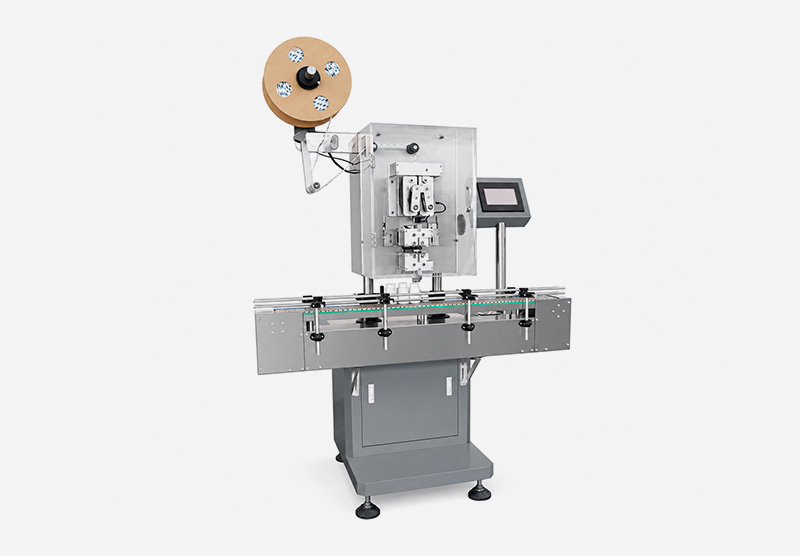
AIPAK’s desiccant inserter
For products that take up moisture. Vitamins, probiotics, that category.
Cotton inserter
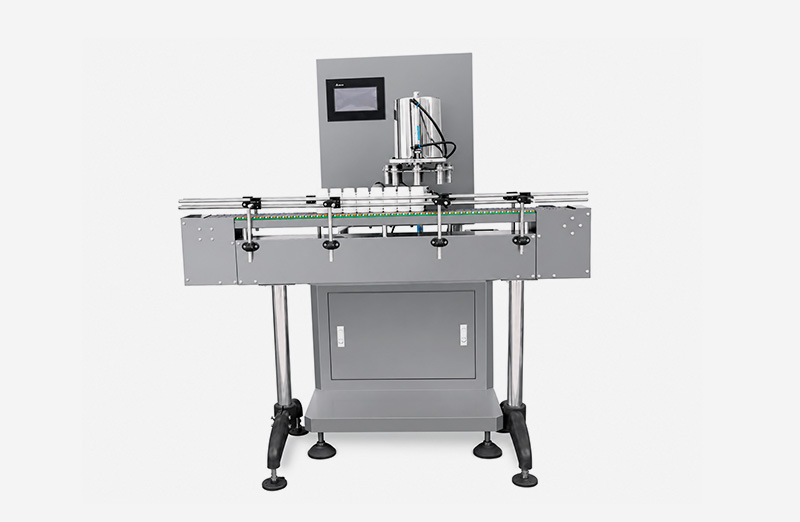
AIPAK’s cotton inserter
Protects against transit damage, and it’s part of the shelf impression — the customer opens the bottle and it reads as intact.
Nitrogen flushing
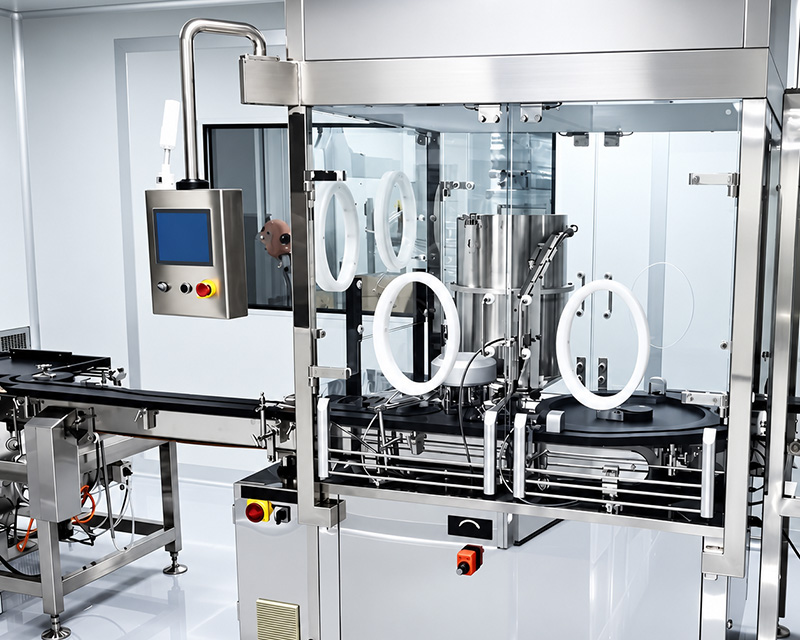
AIPAK’s nitrogen flushing
For oxygen-sensitive products.
Checkweigh reject
Covered in the section above. Position is after counting, before capping.
One practical note: every station you add makes the line longer. Put that into your floor planning before the equipment ships, not after. We wrote up floor space and layout separately.
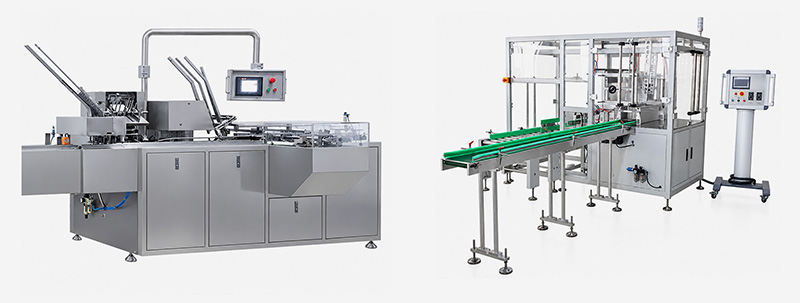
AIPAK’s cartoner and case packer
A cartoner puts bottles into individual cartons. A case packer puts cartons into shippers. Whether you need them comes down to your channel: retail wants a carton, straight wholesale sometimes goes bottle-to-case.
Cartoner selection is its own subject — closure style, infeed format, loading method, each of them worth an article. We built a separate set for that.
This section covers what isn’t on your quote: conveyors, accumulation buffer, line PLC, reject signals. These are what turn a dozen machines into a line, and they’re the most practical difference between buying a full line and buying machines one at a time.
Accumulation buffer: machines can’t sit too close together
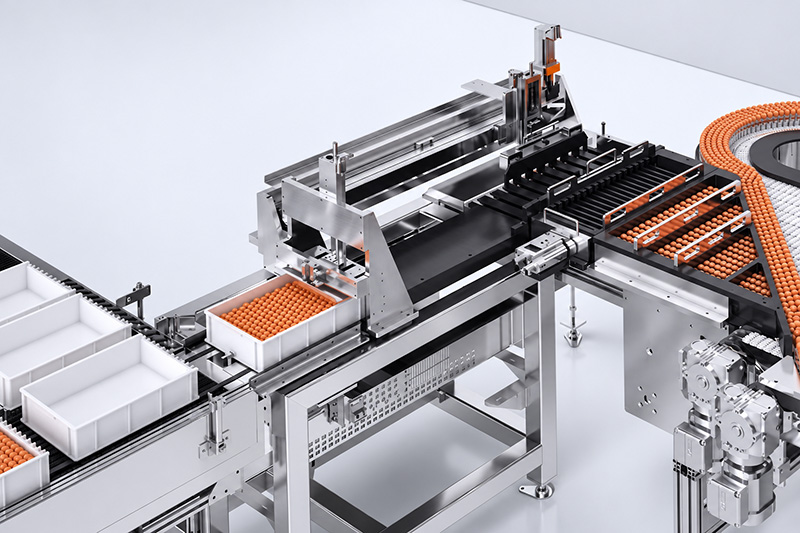
Buffer and convey in a production line
This is the part of line layout that gets underestimated most.
The conveyor between two machines can’t be too short. You need accumulation in between. When the machine ahead runs a little fast and the one behind runs a little slow, the buffer absorbs it and the line keeps moving.
The faster the line, the more essential this is. A slow line can squeeze through. On a high-speed line with no buffer, a small timing mismatch either backs bottles up or starves the next machine within seconds.
How much and where isn’t a matter of adding some conveyor — it’s calculated against the line’s overall speed during layout.
Line PLC control
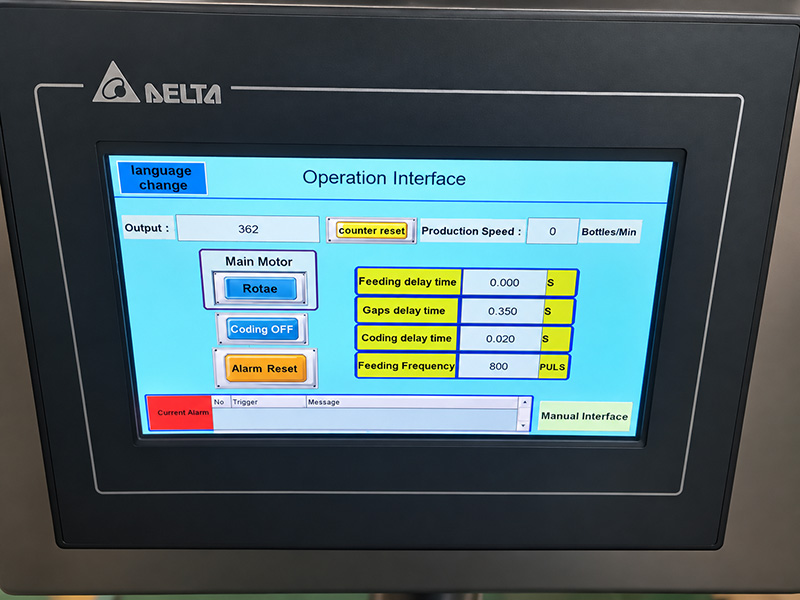
AIPAK’s PLC control system
One station stops and the rest respond. Not each machine stopping on its own — that’s how you end up with a pile of bottles in the middle.
Reject linkage
The four checkpoints from the previous section have to report into one place. Which station rejected, how many, visible line-wide.
Buy the machines separately and these all land on you: who runs the conveyors, who calculates the buffer, who ties the PLC together. Full line or core machines — we ran that decision through its own article.
Your line’s output equals your slowest machine’s output. Not the average — the slowest one. That sounds obvious, but every machine on your quote lists its own speed, and it’s easy to read down the page and assume the line runs at the fastest number on it.
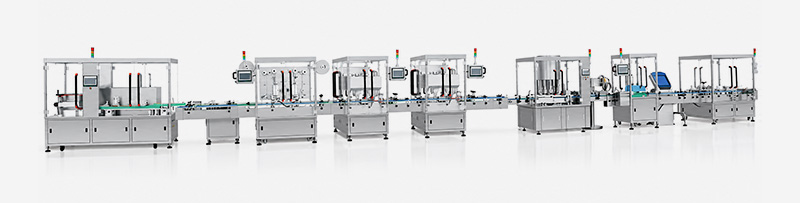
AIPAK’s supplement bottling line
Take an example. Your counter is quick, but the labeler can’t keep up. The production line runs at labeler speed. Everything the counter gains ahead of it just piles up in between.
It’s a queue into a venue. The narrowest gate decides how many people get in. The wide ones don’t help.
It’s not only about “too slow” — neither direction can be far off
Speed matching isn’t just about the machine behind falling short. Fast-then-slow backs bottles up. Slow-then-fast starves the next machine. Neither is good.
What you want is speeds roughly level across the line, buffer in between to absorb the swings, and everything running in sync.
How to avoid it
Work backward from your target output and check every machine’s speed against it, with some headroom on each. Not just the counter.
When the quote is in front of you, list every machine’s speed in a column and find the smallest number. That’s your line’s real output.
