
What Line Speed Do You Actually Need for Your Output?
Start with fill count and production hours, then choose the counter and match the rest of the line.

Start with how many pieces go in each bottle. Divide your target monthly output by the production time you can schedule, then allow for changeovers, cleaning and stops. Use that requirement to choose the counter configuration and check whether every required station can keep up.
We usually start with an 80% factor for capacity planning. It helps you avoid filling the schedule with theoretical output. The final configuration still needs to be confirmed with your product, bottles and fill count.
1. First, the anchor: how many pieces per bottle?
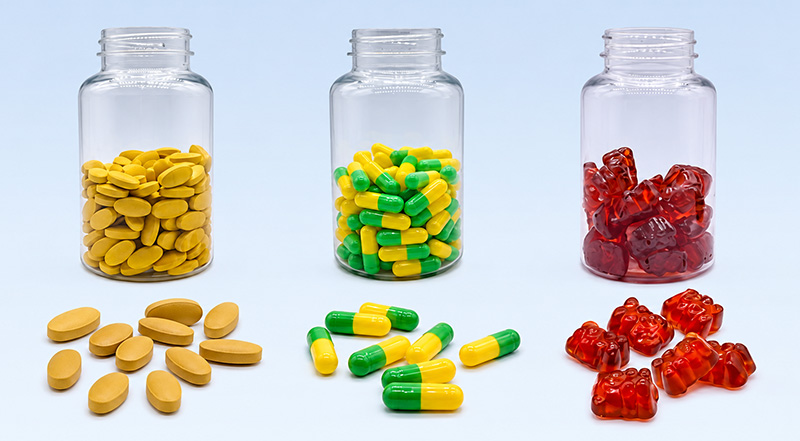
“80 bottles per minute” is only part of the requirement. We also need to know whether you are filling tablets or capsules, how many pieces go in each bottle, and which bottles you use. At the same bottle speed, a different fill count means a different counting workload.
Suppose two products both need to run at 80 bottles per minute. For this calculation, keep the other conditions the same:
| Fill count | Target bottle speed | Pieces to count per minute |
|---|---|---|
| 50 pieces/bottle | 80 bottles/min | 4,000 pieces/min |
| 100 pieces/bottle | 80 bottles/min | 8,000 pieces/min |
This is a workload calculation, not a machine specification. Doubling the fill count does not mean the actual bottle speed will fall by exactly half. Product feeding, shape, discharge and the bottle opening also affect the result.
Before comparing two quotations, line up the conditions behind the speed figures. A figure based on 50 pieces per bottle cannot be compared directly with one based on 100 pieces per bottle.
When discussing speed ranges for tablets and capsules, we often use 50 pieces per bottle as a reference. This makes the conditions clear. It does not mean every machine uses that fill count or every product reaches the same speed.
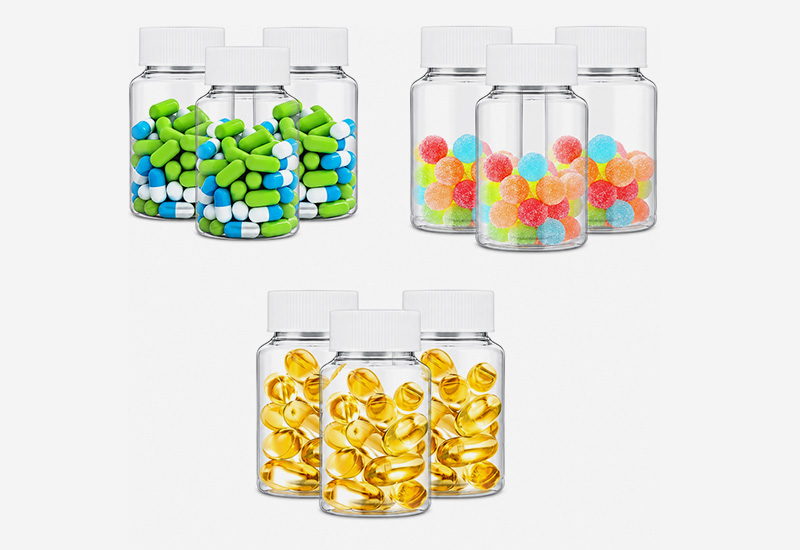
If you also plan to fill softgels or gummies, include samples. Suitability for those products needs a separate check; a tablet trial does not establish their bottle speed.
Specify the product, fill count and bottle first. Then the speed figures become comparable.
Same bottle speed, different counting workload
At the same bottle speed, the number of pieces handled can differ. Compare speeds at the same fill count.
80 × 50 = 4,000; 80 × 100 = 8,000. The calculation compares piece counts; it does not predict an exact change in machine speed.
2.Turn your monthly output into bottles per minute
Monthly output does not directly tell you which machine to buy. First calculate how much production time you can schedule, then divide your target output by that time. Use the number of acceptable finished bottles you need to deliver, with the production endpoint agreed for the project.
For an initial calculation, we usually start with one eight-hour shift per day. If your factory uses a different schedule, use your actual working days, shifts and hours per shift.
Average required bottle speed = target monthly output ÷ (working days per month × shifts per day × hours per shift × 60).
Work through one example
These are illustrative assumptions, not machine specifications or a customer case: a tablet product has a 50-count fill, with a target of 600,000 bottles per month. Production is scheduled for 20 working days, one shift per day and eight hours per shift.
| Input or calculation | Example value |
|---|---|
| Target monthly output | 600,000 bottles |
| Working days per month | 20 days |
| Daily schedule | 1 shift × 8 hours |
| Monthly scheduled time | 20 × 1 × 8 × 60 = 9,600 minutes |
| Average output required across that time | 600,000 ÷ 9,600 = 62.5 bottles/min |
Across the full scheduled time, you need to finish an average of 62.5 bottles per minute.
That is not yet the equipment speed you should select. If you fill the entire schedule at 62.5 bottles per minute, time spent cleaning, changing products or waiting for materials will reduce monthly output.
If you only have an annual target, break it down further. Check the output needed in each month and the production time available. When orders are concentrated in a few months, an annual average can understate the requirement.
3.Rated speed vs real output: plan with an 80% reference
Keep two figures separate: the continuous speed achievable under the agreed product conditions, and the acceptable finished bottles you can produce in a month. Reaching a speed during a trial does not mean the line will deliver that output throughout every shift.
Changeovers, cleaning, replenishment, waiting for packaging materials, routine stops and fault handling all use production time. Rejected bottles and bottles requiring rework cannot be counted toward the delivery target either.
For initial planning, we usually estimate effective output at 80% of the confirmed continuous bottle speed across the scheduled time. This reference comes from our equipment and production experience. Adjust it for your product mix, schedule and actual production records.
Continue the 600,000-bottle example
Use an 80% output factor for this example:
Required continuous speed reference = 62.5 ÷ 0.80 = 78.125 bottles/min.
Rounded upward to one decimal place, the calculated minimum is about 78.2 bottles per minute. An average requirement of 62.5 does not justify selecting a line that can only run continuously at 62.5 under those product conditions.
The result identifies a capacity range. It is not a precise decimal setting for the machine. Next, confirm whether the proposed configuration can sustain the required speed with your 50-count product.
You can also work backward. Suppose a line has been confirmed to sustain 100 bottles per minute with the product in this example. Using the same schedule and 80% factor:
Estimated monthly output = 100 × 9,600 × 0.80 = 768,000 bottles.
The 100 bottles per minute is still an illustrative assumption, not a performance promise for an AIPAK model. It shows why you should put the proposed speed back into the production schedule and check whether it covers your target.
Account for each loss once
The calculation above starts with the full scheduled time, then uses a factor to allow for production losses. If you have already deducted changeover, cleaning and downtime from that time, do not deduct those same losses again through an 80% factor.
For an existing operation, your own records are more useful than applying one percentage to every line. A mix of products, small batches and frequent changeovers needs its own calculation. The changeover article explains that part of output planning in more detail.
Use headroom to cover real production losses. First confirm that the product can run at the required speed.
From monthly output to required bottle speed
Use the calculated speed to identify a configuration range. Confirm it with the actual product and line conditions.
The 600,000-bottle target, 20 working days and fill count are example assumptions. The result is not a model specification or a capacity guarantee.

4.Choose the channel configuration for your required speed
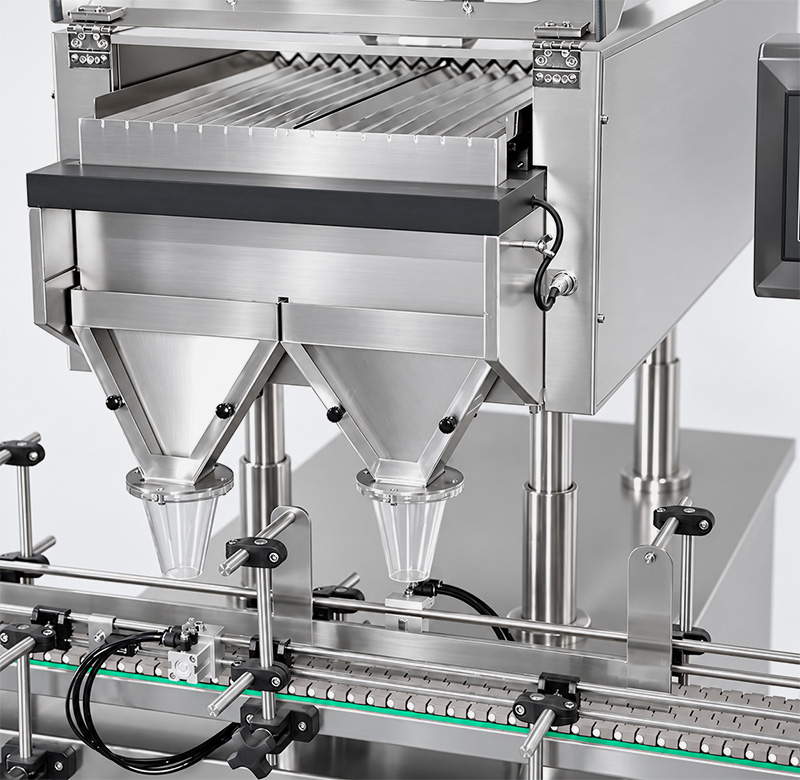
Once you know the speed you need, choose the counter configuration. Our available channel options include 8, 16, 24, 32 and 48 channels. Channel count is part of the equipment configuration; it does not determine bottles per minute on its own.
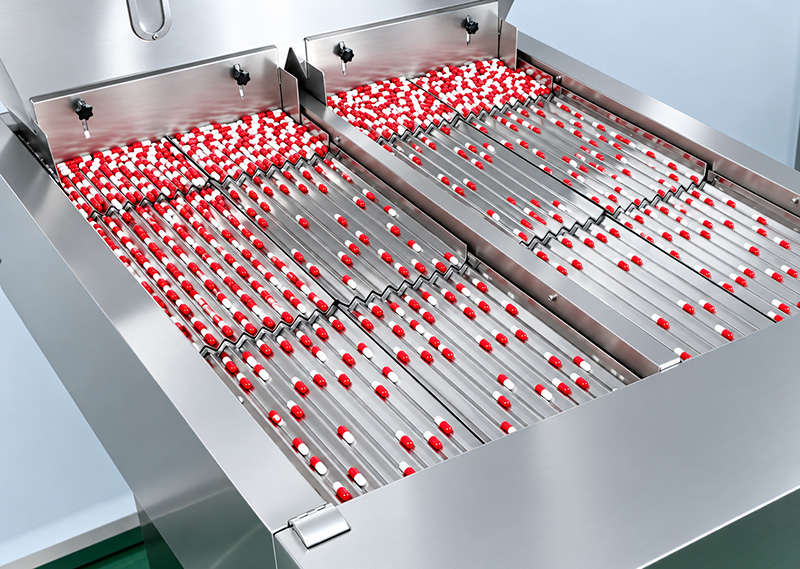
Adding parallel channels is one way to increase counting capacity. Actual bottle speed also depends on product size and flow, fill count, discharge arrangement, bottle opening and bottle feeding.
We therefore do not assign a fixed bottle speed to “16 channels” without the product conditions. Nor do we automatically recommend the most channels just because you want more output.
Discuss the speed range, then confirm the configuration
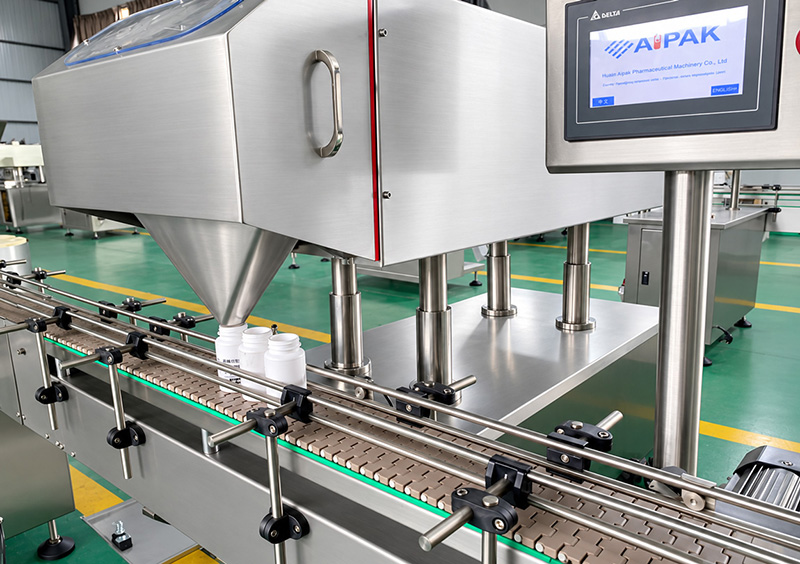
For tablets and capsules at 50 pieces per bottle, we commonly use these ranges to discuss the requirement:
| Planning range | Reference bottle speed | What to confirm next |
|---|---|---|
| Lower-speed requirement | Below 50 bottles/min | Whether the product feeds smoothly and a smaller configuration covers the actual output |
| Medium-speed requirement | 80–100 bottles/min | Whether counting, discharge and bottle movement stay coordinated |
| Higher-speed requirement | 150 bottles/min and above | Whether feeding, counting, capping, sealing and labeling work together at the required speed |
These are reference ranges for our discussions, not a complete classification of every speed. They do not map to fixed channel counts. Requirements between the ranges are confirmed under their actual conditions too.
A selected machine can have its operating parameters adjusted within its permitted range. If you need more counting capacity, we then assess additional channels or another configuration. Adjusting running speed and selecting hardware are separate decisions.
Choose a configuration that covers your output and runs consistently. The requirement and product trial should determine the channel count.
Define the requirement, then choose the channels
Channel count is a configuration choice. Bottle speed is a result under specified conditions. There is no fixed mapping without the product.
Each symbol represents one channel quantity. The drawing does not establish machine structure, bottle speed or an upgrade path.
5.When the counter speeds up, the whole line must keep up
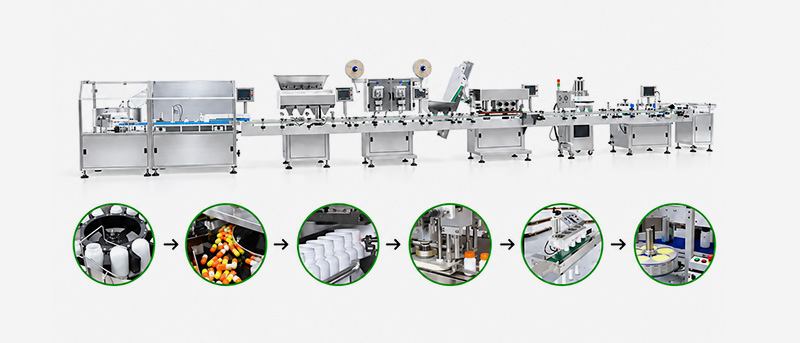
The counter is one station in the line. If bottle feeding falls behind, it waits for empty bottles. If capping or labeling cannot keep up, bottles accumulate on the conveyor. Check every required station under the same product conditions when assessing line output.
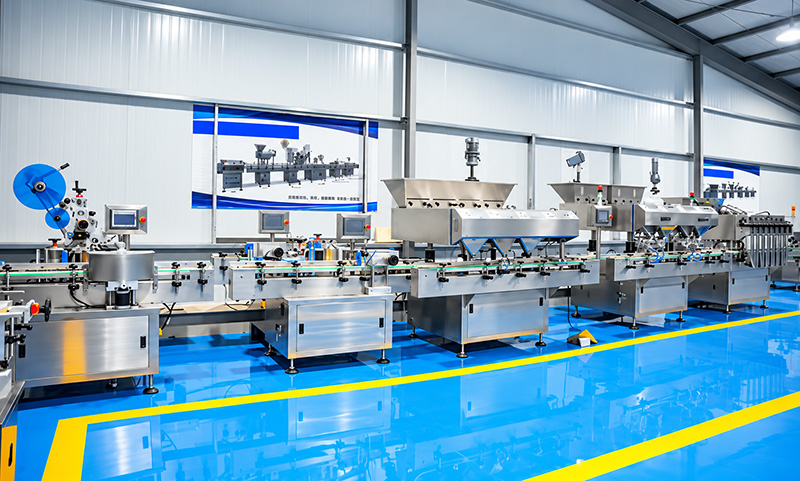
When increasing speed, confirm the following with the main supporting stations:
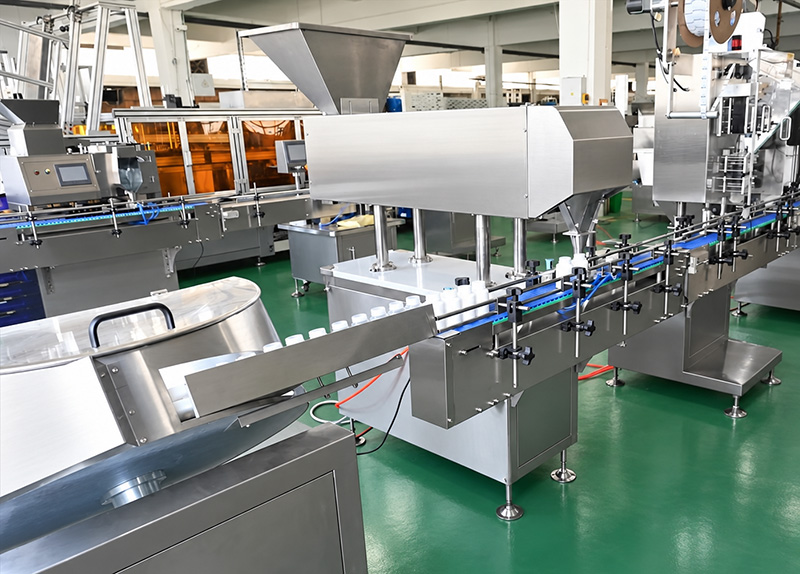
| Station | What to confirm |
|---|---|
| Bottle unscrambling / feeding | A continuous supply of correctly oriented empty bottles, so the counter does not wait for bottles |
| Capping | Cap feeding and capping at the target pace, with the required capping quality; any structural change depends on the closure and actual speed |
| Induction sealing | Whether the sealing head, power setting, closure and liner combination produces acceptable seals at the target conveyor speed |
| Labeling | Whether the bottle shape, labeling method and machine arrangement support the target pace while maintaining the required label quality |

The unscrambler and counter usually need particular attention when bottle speed rises. A capper does not necessarily need a different structure for every increase, but you cannot assume it will handle any speed. Assess whether a rotary or other configuration is needed for the project.
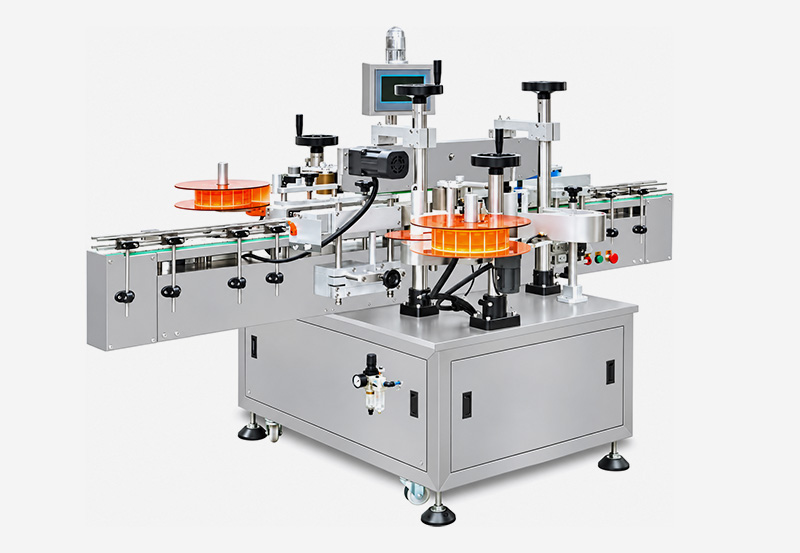
AIPAK labeling machine
Labeling needs the same attention. Round and square bottles, and single-sided and double-sided labels, make different demands on the equipment. One maximum speed figure is not enough to match the line.
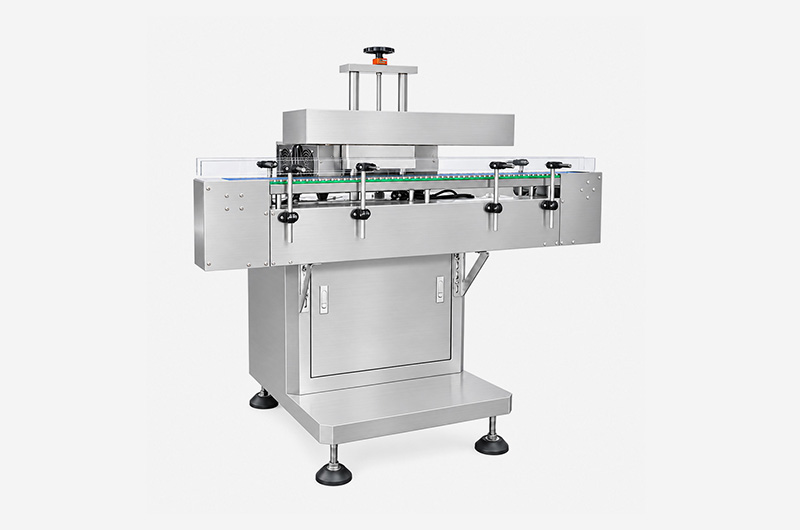
AIPAK induction sealing machine
For sealing, bottles passing through the machine is not proof of adequate output. Recheck seal quality when speed changes. For higher-speed projects, we also assess whether a water-cooled configuration is appropriate.
A simple bottleneck example
Suppose the continuous capacities for the same product, bottle and fill count are: feeding at 100, counting at 120, capping at 100, sealing at 100 and labeling at 80 bottles per minute.
These figures illustrate the principle only. Even before allowing for stops, the line cannot exceed the labeling station’s 80 bottles per minute. Increasing the counter speed does not make the labeler run faster.
The stations also need suitable conveyor space, buffering and coordinated controls. A buffer can absorb short fluctuations. It cannot compensate for one station that is consistently slower than another.
Include any other required operations, such as desiccant insertion, cotton insertion, inspection and rejection, sleeving or cartoning. The bottling-line equipment breakdown article explains the equipment and speed relationships in more detail.
The line needs a shared production pace
In this example, continuous line output is limited to ≤ 80 bottles/min.
This considers continuous station capacity, before stops or other production losses.
Conveyor space and buffering absorb short fluctuations. They do not turn a station that sustains 80 bottles/min into one that sustains 120.
6.How to size your line
For an initial selection, take four steps: define the product and fill count, calculate average demand across the schedule, allow for production losses, then confirm the counter and supporting stations together. The result should be a capacity plan for your actual products.
Step 1: Define the product conditions
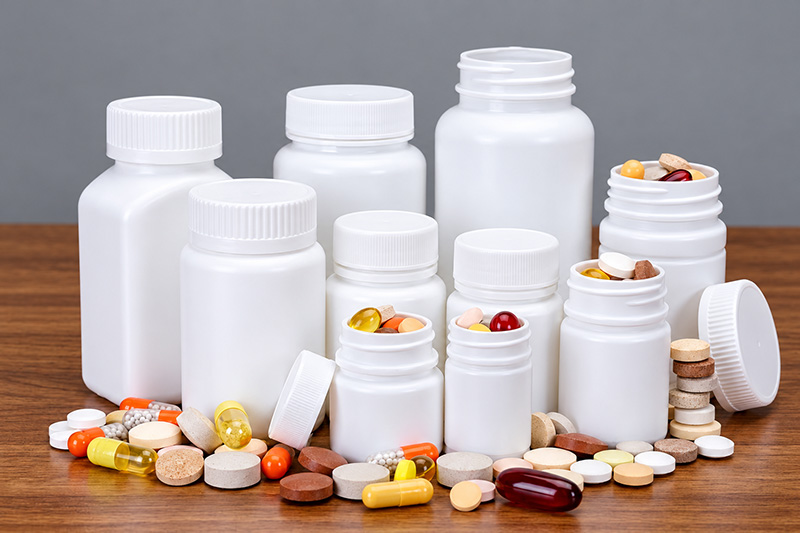
List the main products, pieces per bottle, and bottle, opening and closure details. If you have several products, show the differences. Do not supply only the easiest product to run.
Step 2: Put output into the actual schedule
Provide the monthly target, working days, shifts and hours per shift. For a new project, one eight-hour shift per day can be a starting reference. Then adjust it to your actual production plan.
Step 3: Base headroom on production conditions
If you start with an 80% factor, be clear about which losses it covers. Use your actual records where available. If changeover and cleaning time have already been deducted, keep the calculation consistent.
Step 4: Confirm the counter and line together
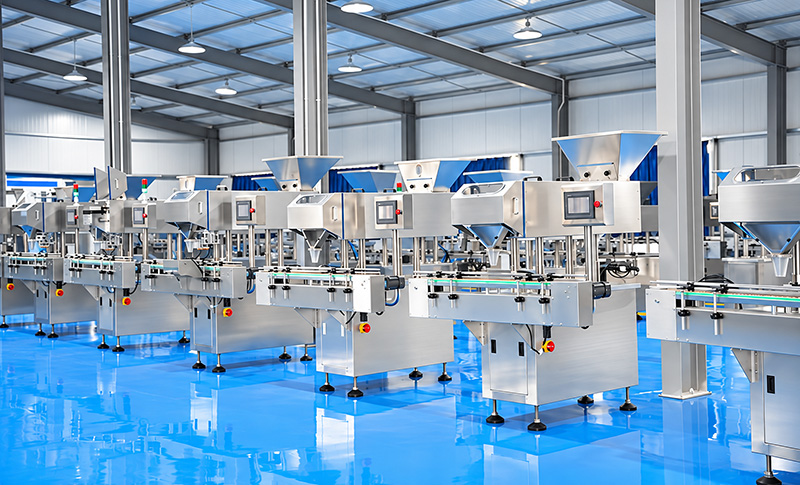
Give us the calculated bottle-speed requirement. We will assess channel options with your product and bottles, then check feeding, capping, sealing, labeling and other required stations. State the product and fill count alongside the proposed speed.
For multiple SKUs, do not use one fill count for the whole month
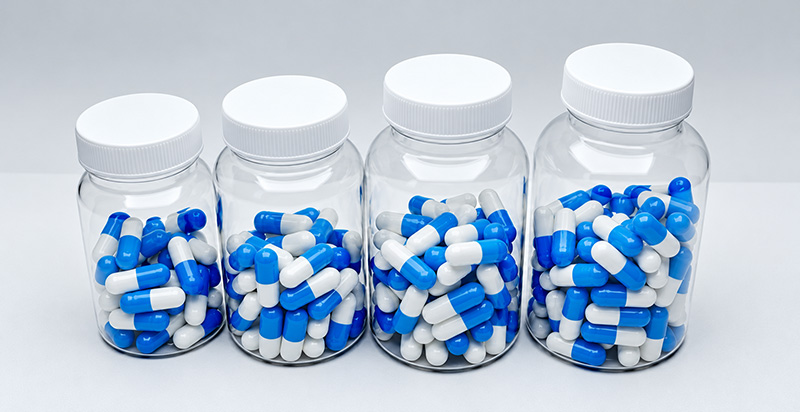
If a line alternates between 50-count and 100-count fills, or between dosage forms, confirm each product’s sustainable bottle speed separately. Then calculate the production time needed for each one.
Add those times together with changeover, cleaning and other scheduled activities, and check whether they fit into the month. Do not apply the fastest product’s speed to the entire monthly output.
You can start by sending us these details:
| Information to provide | Suggested details |
|---|---|
| Target output | Bottles to deliver each month, including any months with concentrated orders |
| Products and fill counts | Tablets, capsules or other dosage forms; pieces per bottle for each SKU |
| Production schedule | Working days, shifts, hours per shift and main changeover arrangements |
| Packaging materials | Bottle shape, opening, closure and label requirements; samples where available |
| Existing equipment | Which machines you will retain, and the speeds already confirmed with the relevant product |
Send AIPAK your target output and fill count. We will calculate the required speed first, then confirm suitable channel and line configurations.
Frequently asked questions
Specify the fill count first. For tablets and capsules at 50 pieces per bottle, we treat 150 bottles per minute and above as a higher-speed requirement in our planning discussions. At 50–60 pieces per bottle, 250 bottles per minute is already a very high speed reference. Neither figure guarantees that speed for every product; the actual conditions still matter.
With this example’s 20 working days and one eight-hour shift per day, average demand is 62.5 bottles per minute. Using an 80% factor gives a calculated minimum continuous speed of about 78.2 bottles per minute. Confirm the actual configuration with the product, fill count and line conditions.
At the same bottle speed, a different fill count changes how many pieces the counter handles per minute. A 50-count and a 100-count fill cannot automatically use the same speed assumption. We also need to check the bottle opening and product feeding.
Do not multiply rated speed by all scheduled time and treat the result as deliverable output. Confirm that the speed applies to your product, then allow for production losses. We usually start with an 80% reference and adjust it using your actual records when available.
Use your actual schedule. We usually begin with one eight-hour shift per day. If you run two shifts or use a different shift length, change those inputs and check replenishment, changeover and maintenance arrangements too.
Find the bottleneck first. If bottle feeding, capping or labeling cannot keep up, a faster counter will not automatically raise line output. Check the speed, quality requirements, buffering and coordination of all required stations together.
Yes. Our machines are certified and use certified electrical components. Because the exact scope depends on the model and electrical configuration you select, our factory confirms it in writing before production.
LET’S SIZE YOUR LINE
Tell AIPAK how many bottles you need each month, how many pieces go in each bottle, and your product and schedule details. We will calculate the speed requirement, then confirm the counter channels and line configuration with your samples, bottle format and existing equipment.
Prefer to talk it through? +1 (213) 526-8644
Target monthly output, pieces per bottle and the actual schedule. Calculate the speed requirement, then confirm the counter and line.