
Our advice is to define the job before comparing models. An extra camera is worth buying when it performs a task you actually need.
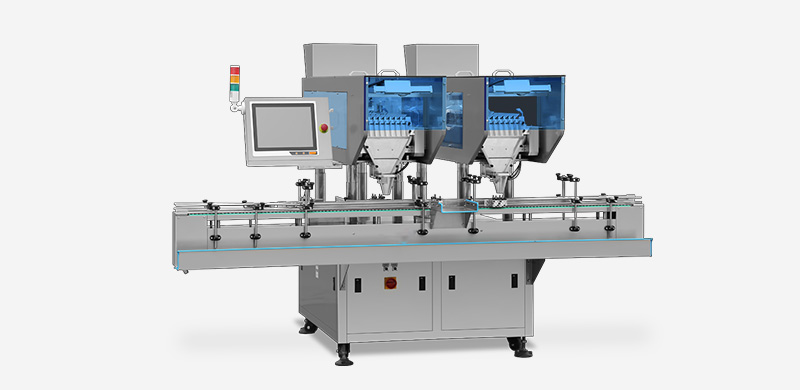
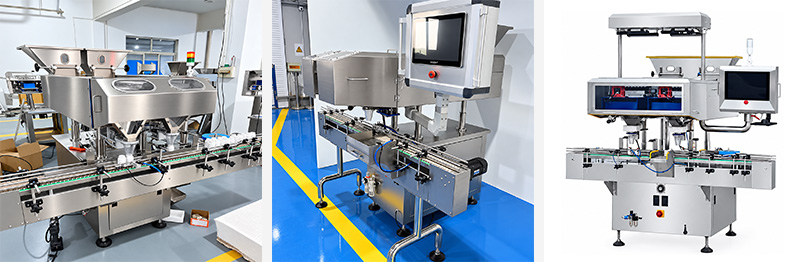
AIPAK’s visual tablet counting machine
Start with the job you need done
“Infrared or vision?” is only the first question. You also need to know whether the proposed system counts products, identifies specific defects, and automatically rejects what fails. A quote that says “vision” does not tell you which of those tasks are included—or how they work together.
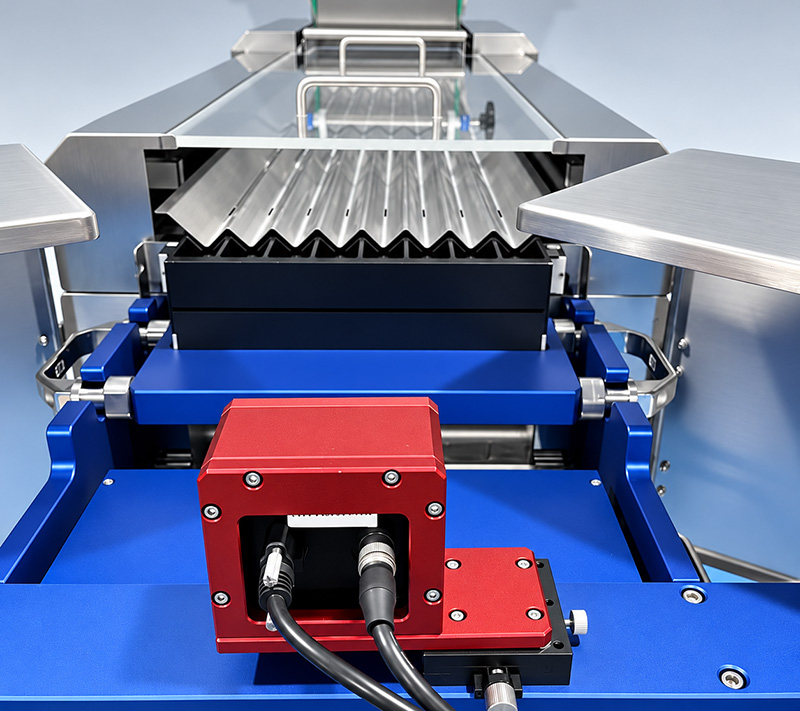
Here, we compare infrared counting, single-camera vision counting, and a configuration that adds a second camera for dedicated inspection. These are the configurations discussed in this guide. Judge a specific machine by its assigned tasks, rather than camera count alone.
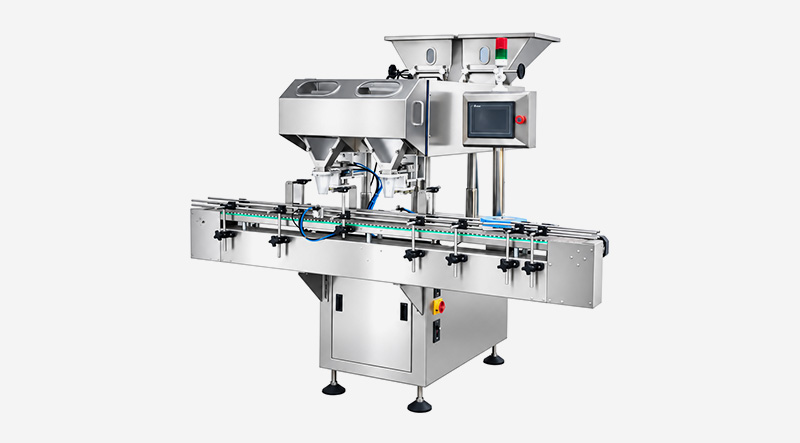
AIPAK’s infrared counting machine
Check whether infrared meets your needs
For opaque tablets with a consistent shape and smooth product flow, infrared counting is a reasonable place to start. If it meets your count and output requirements with your actual product, there is no reason to upgrade just because another machine has a camera.
Infrared counting uses photoelectric signals generated as products pass through the detection area. What matters to you is whether products pass reliably, whether detection is consistent, and whether the results hold up during continued operation.
Check performance as dust builds up
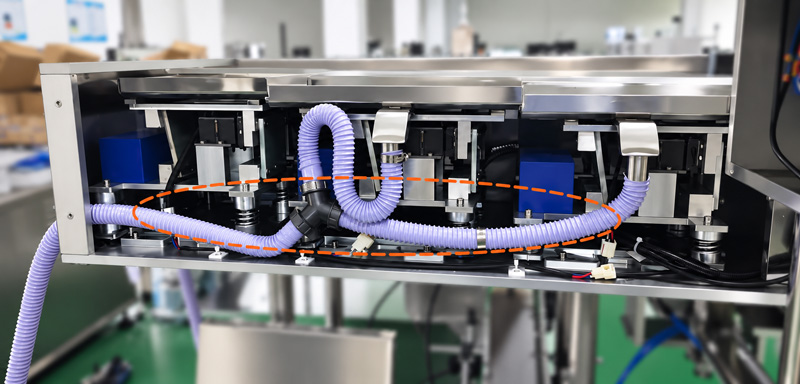
Dust extraction design
If your tablets shed powder, dust extraction and cleaning of the detection area belong in the discussion. A short demonstration with a freshly cleaned machine does not answer what happens as dust accumulates.
We would check the extraction setup, cleaning requirements, and performance during a sustained run with your product. Changing the counting technology does not eliminate the need to assess dust and cleaning conditions.
Evaluate challenging products separately
Do not apply a standard tablet test result to transparent, translucent, irregular, or sticky products. Treat those as separate compatibility questions for the proposed model.
First establish whether infrared can do your job. Then ask which specific problem vision would solve.
Vision counting can identify some defects
A single-camera vision counter uses image information, including shape and size, to identify and count products. It can recognize some size and outline abnormalities, fragments, and broken products. Those capabilities should not be treated as a complete appearance inspection system without checking the actual scope.
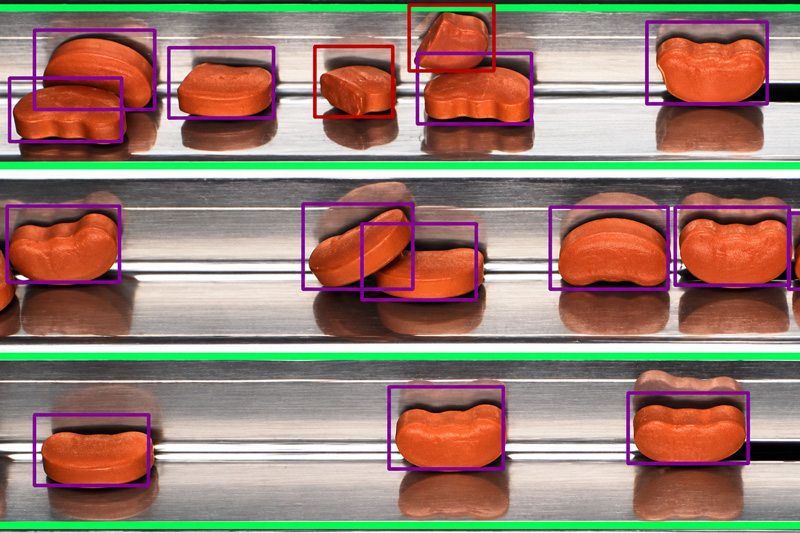
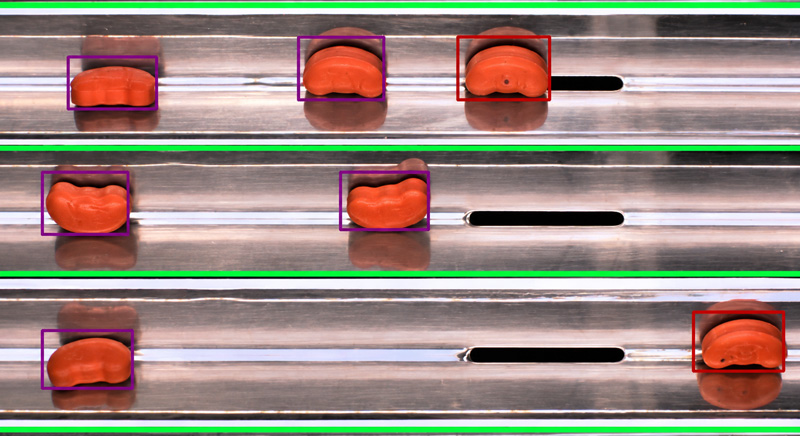
Irregular tablets identification
One distinction matters here: a bottle with too few products and an individual broken product are different problems. One concerns the bottle count; the other concerns the condition of a product. Specify and evaluate them separately.
Also ask what happens after an abnormality is identified. Detection, deciding whether a product fails, and physically rejecting it are separate steps to confirm. “It can recognize a fragment” does not establish that the quote includes the entire rejection process.
Two-color recognition is not full color inspection

The vision counting configuration described here has some ability to recognize two-color tablets. That capability has limits; it should not be purchased on the assumption that it provides dedicated color inspection.
If you only need to count two-color tablets, check the counting results. If you also need to verify a color combination or reject a particular color difference, specify that separately and provide acceptable and unacceptable samples.
Compare speed with inspection and rejection enabled
Asking the same vision configuration to count, inspect, and reject can affect operating speed. A demonstration with counting alone does not establish the output you will get with every required function enabled.
Do not stop at “Can it see the fragment?” Ask: “What are the results at our required speed, with inspection and rejection enabled?”
Add dedicated inspection for defined defects
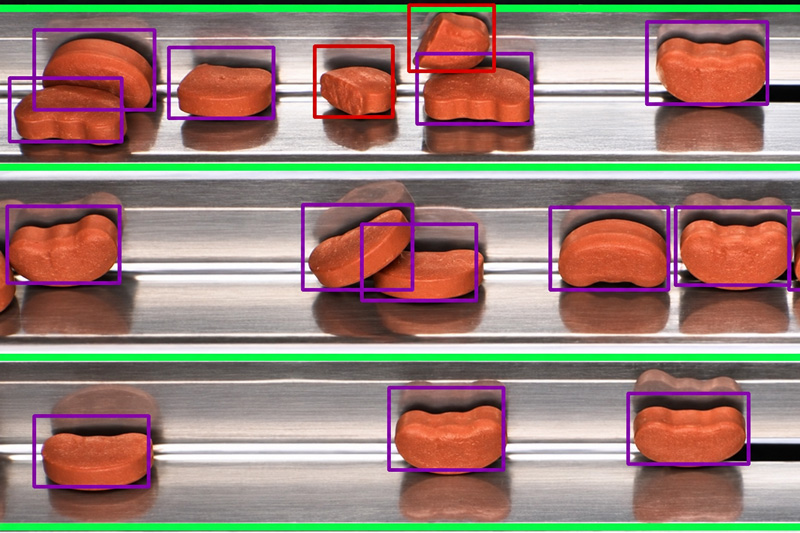
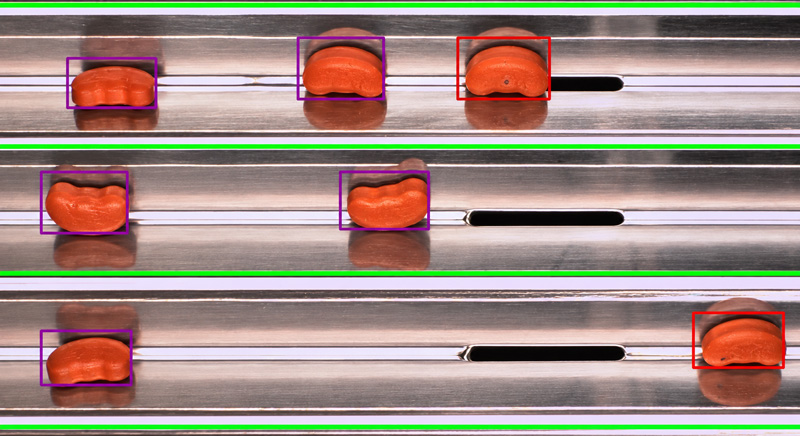
Fragment/stain detection
If you need broken, incomplete, or spotted products identified and rejected, make that a separate inspection requirement. Define what is unacceptable first. Then confirm the configuration that will detect it and carry out the required rejection, rather than relying on a general “vision inspection” description.
The configuration described here assigns dedicated inspection to another camera, separating that task from counting. This is a way to divide the work. Two cameras alone do not establish the defect coverage, rejection method, or operating results.
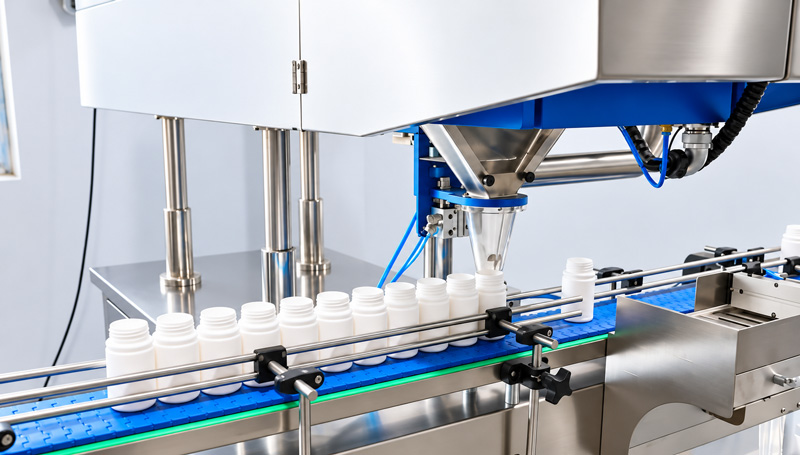
Tablets counting and filling process
Compare the same product, count per bottle, and inspection tasks
Compare speed using the same product, count per bottle, and inspection tasks. A counting-only result and a result with inspection and rejection enabled represent different operating conditions. Put those conditions beside each output figure before deciding that one proposed configuration is faster than another.
Channel count does not translate directly into a fixed number of bottles per minute. Product size, shape, feeding conditions, and count per bottle all belong in the selection requirements.
List the tasks that must run together
Ask each proposed configuration to answer three questions:
- Which product is being run, and how many go into each bottle?
- Which inspection and rejection tasks are enabled?
- What output and inspection results does it achieve under those conditions?
If a speed figure was measured with a function you need switched off, it has not yet answered your purchasing requirement.
We would not assume greater accuracy just because a machine uses vision. We would not assume inspection has no effect on speed just because there are two cameras. Compare results with the same tasks enabled.
Narrow the options around your main problem
Before requesting quotes for all three options, identify the problem you need to solve. Is it product compatibility and counting, or do you also need defined appearance defects detected and rejected? That distinction helps you narrow the configurations worth evaluating before you compare their cost.
List each SKU and each customer’s requirements

If you package for several customers, “tablets, capsules, and softgels” is not a complete product specification. List the product and packaging conditions for each SKU. Then check whether one counting configuration can cover them, including the differences between customers who need counting alone and those who require inspection.
Include product size and shape, transparency, dust or sticking, bottle shape and opening, count per bottle, and inspection requirements.
We would look at both the products that occupy most of your production time and the product with the most demanding requirement. Looking only at the main product can miss a compatibility limit. Designing everything around the most complex product can lead you to add functions you do not need across the rest of your work.
Confirm the upgrade path for the specific model
“Can we add inspection later?” is a useful purchasing question. It is not a capability to assume. Before ordering, confirm whether the proposed model can be modified, which components would change, and what needs to be reserved upfront.
Adding a station to an automatic line and adding dedicated inspection to an existing single-camera counter are different questions. An expandable line does not, by itself, establish an upgrade path for the counter.
Choose the counting and inspection approach first. Compatibility across dosage forms, product changeovers, and bottle changes are separate questions to evaluate next.
