
Why a California Co-Packer Started Gummies on the Smallest Line
A California supplement co-packer already ran capsules, tablets, powders and protein bars. Then their customers started asking for gummies — a process unlike anything on their floor, for a category nobody could size yet. They started with the smallest line they could buy, and it has been running at capacity ever since.
Supplement co-packer
California (anonymous)
Gelatin gummies
four shapes
Small-scale depositing line
rated 80 kg/h
About 600 kg a day
In 2020, a California supplement co-packer faced a decision with no comfortable answer.
Their floor already ran capsules, tablets, powders, liquids, ready-to-drink products, protein bars and energy bars. The customer list was long. That year, more and more of those customers began asking the same question: can you make gummies?
The problem was that gummies had nothing in common with anything already on that floor. Capsules and tablets are dry processes — equipment, know-how and operators carry across from one to the next. Gummies are melting, cooking, depositing, cooling and curing. That is a different discipline, not an extra machine. It meant opening a new line.
What made it harder was that nobody could say how far the gummy category would go. The thing a co-packer fears most is buying a large line for demand that has not been proven, then watching it take up floor space while the orders fail to arrive.
They chose to start with the smallest line on the market.
The line as it runs: depositing into molds, straight into the cooling tunnel.
Prove the category first, then talk about capacity
The line was built around a small depositing machine rated at 80 kg an hour. In gummy equipment, that is the entry size.
For a co-packer of their size, that capacity is modest. But capacity was not what they were buying. They were buying a line that actually runs end to end: one that melts, deposits, cures, and turns out samples a customer will sign off on — samples they could take into a meeting and win work with. Once the volume was there, they could move up to a larger machine, and the recipes, process settings and operator experience would all carry over.
The same reasoning holds today. Plenty of U.S. brands are in exactly that position: gummy inquiries are rising, nobody knows how far they will go, and the question is whether to commit to a full-size line now.
Why the line was built this way
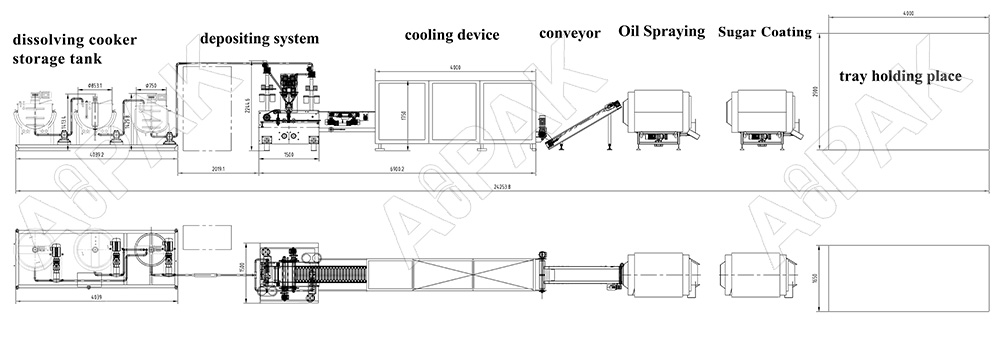
Every item on this line maps to a step in making a gummy.
Two melting tanks, one for gelatin and one for syrup. The two jobs need different temperatures and different hold times. Keeping them apart means neither waits on the other, and the depositor gets a continuous feed. Combine them into one tank and every product change stops the line.
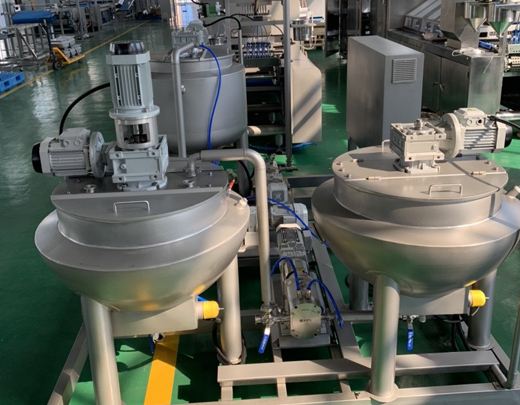
Two tanks: one melts gelatin, the other boils syrup, so neither step waits on the other.
Depositing and a cooling tunnel. Once the mix goes into the mold it has to come down in temperature and set. The length and temperature of the cooling tunnel decide how fast the depositor can actually run — a short tunnel means the machine waits, however fast it is rated.
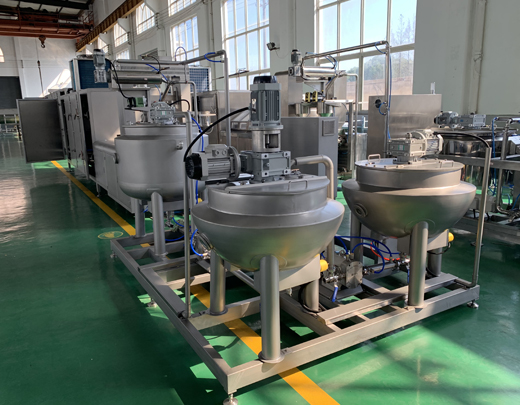
The depositor feeds straight into the cooling tunnel. Tunnel length sets the real speed limit.
Two parts of that unit are worth looking at on their own. The depositing head is what meters each cavity, and it is the part that gets changed when the mold changes. The cooling device behind it is what decides how quickly a deposited gummy is firm enough to come out of the mold.
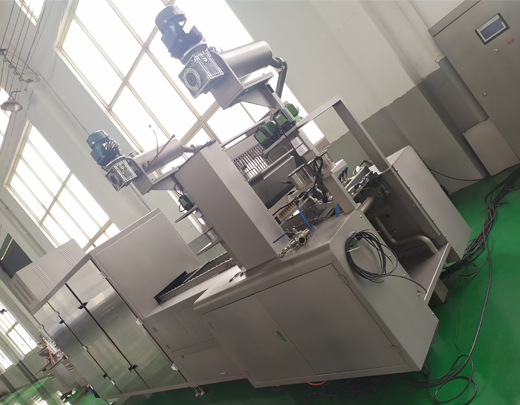
The depositing head meters every cavity.
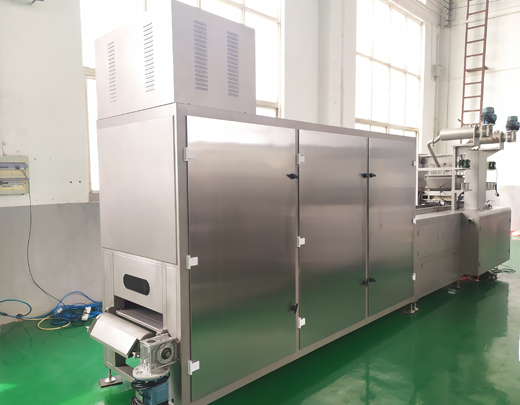
The cooling device sets how fast a gummy firms up.
Turnover trays and a holding area. Gummies are not finished when they leave the mold. They sit in trays while they continue to cure and the moisture settles. This part needs no machine, but it needs floor space and trays, and it is the part most often left out of a layout.
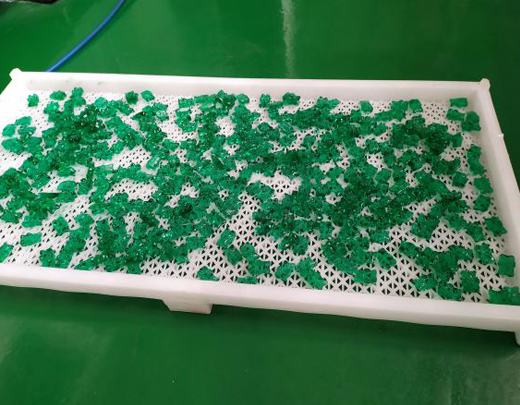
Turnover trays: gummies keep curing after they leave the mold.
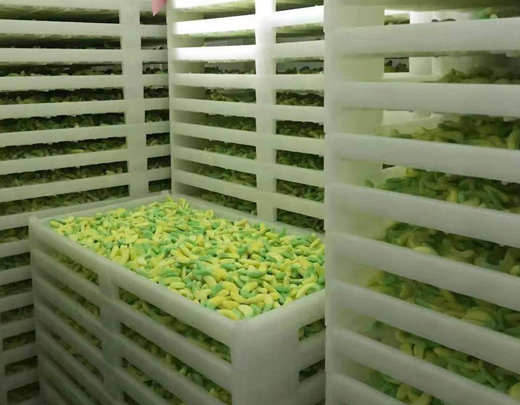
The holding area costs floor space, not equipment budget.
An oil spray coater. A thin film of oil keeps gummies from sticking to each other and gives the surface a finish.
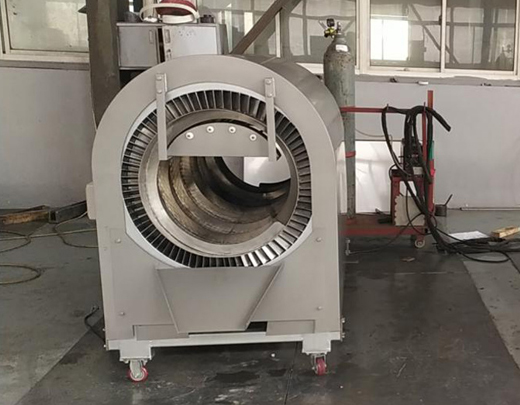
The oil coater keeps gummies apart and puts a finish on the surface.
Four molds were chosen: bear, heart, berry and square. The photos below show the molds for each one — the cavity pattern is the only thing that changes from one shape to the next. Four molds are the start of four product lines: same recipe, different shape, another SKU. In gummies, that is the cheapest way to widen a range.
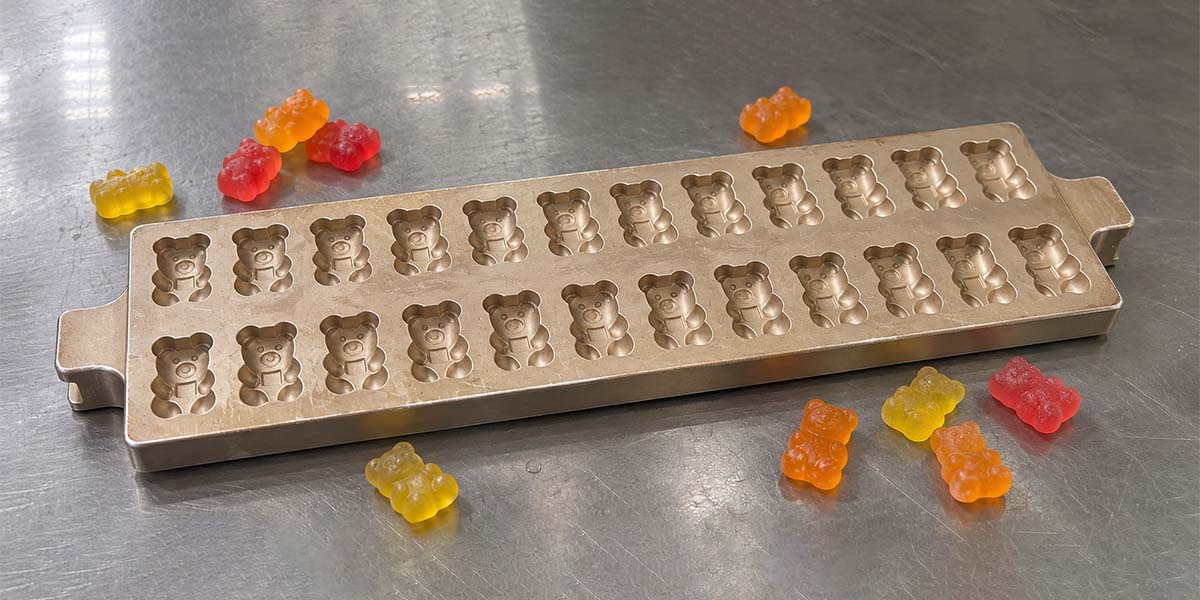
Bear
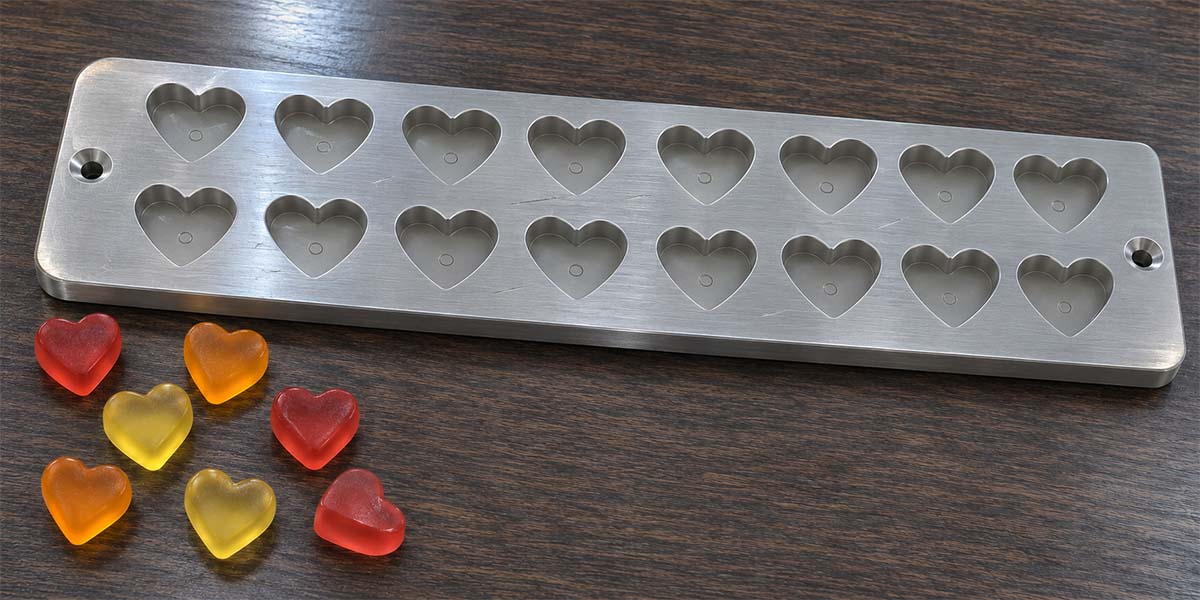
Heart
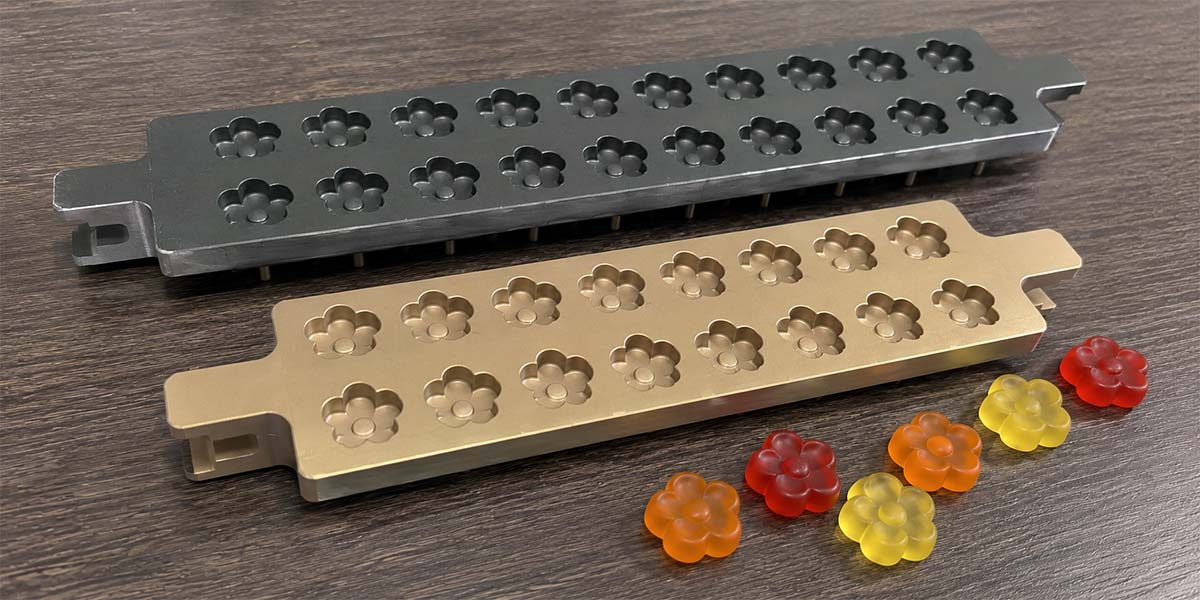
Berry
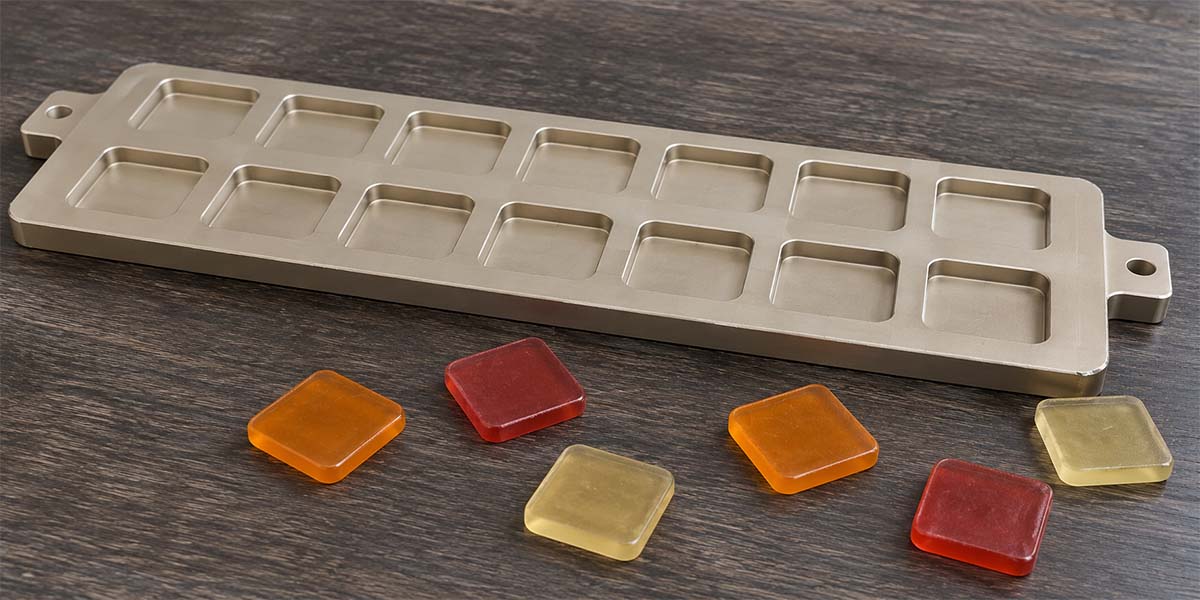
Square
A small line, running full
The line settled at around 600 kg a day.
Put that next to the machine’s rating and it gets more interesting. A machine rated at 80 kg an hour turning out 600 kg a day means the depositing step runs close to flat out for a full shift. The smallest line on the market has not been sitting idle. It has been running at capacity.
Which suggests the original call was right. Had they bought a 300 kg an hour line on day one, the first couple of years would have been a large machine running two or three hours a day — same depreciation, same floor space, same operators.
From order to a running line in California took about six months. That covers building the equipment, ocean freight, the customer's own room preparation and utilities, and commissioning on site. A gummy line is more than a single machine, and that is worth allowing for at the planning stage.
The three things they added later
Once the line was running, the customer came back for three more pieces of equipment. All three are the parts of a gummy project that tend to be left out of the first budget.
A CIP cleaning system. A co-packer runs one line for several customers, which means cleaning thoroughly between recipes, colors and allergens. Stripping and washing by hand costs most of a day per changeover, and the result varies with whoever did it. Once the orders get dense, cleaning speed turns into capacity.
A sugar coater. Sour and sanded gummies need this step. It is also a signal that a range is growing — from one base product into more flavors and finishes.
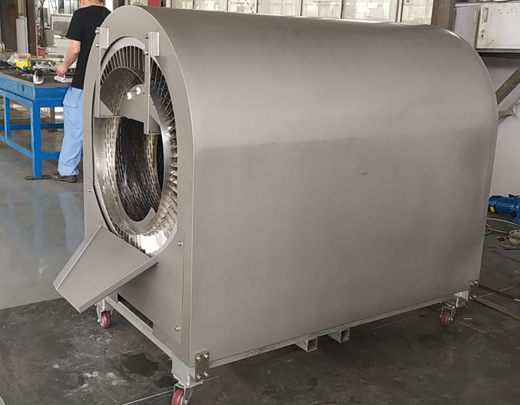
The sugar coater is what sour and sanded versions run through.
An air compressor. This is the one that gets missed. Pneumatics on the depositor and the cooling tunnel all run on compressed air, but the compressor is usually not on the equipment list — the customer supplies it. Leave it out of the budget and it surfaces right before startup, when it holds up the schedule.
The part worth borrowing here is not the equipment list. It is the order of events: prove the category on the smallest line you can buy, get samples in front of customers, and let the orders tell you how much capacity to buy next. CIP, coating and compressed air are all easier to plan for early than to discover late.
Equipment on this line
Planning a gummy line? Start with your target output.
Tell us what kind of gummies you want to make, how much a day, and how much room you have. We’ll tell you which size to start at, and what you need alongside the depositor.
01 · Still evaluating
Tell us what your customers are asking for, and we’ll cost out a trial line.
02 · Decided to build
Send your target output and room size. We’ll send back a configuration and a layout drawing.
03 · Already running
Looking to expand, or add CIP and coating? We’ll check it against the line you have.
Want to see the machine run first? We can set up a live video test.
Rather talk it through?
You can open with: “I’m looking at gummies and not sure what size line to start with.”
