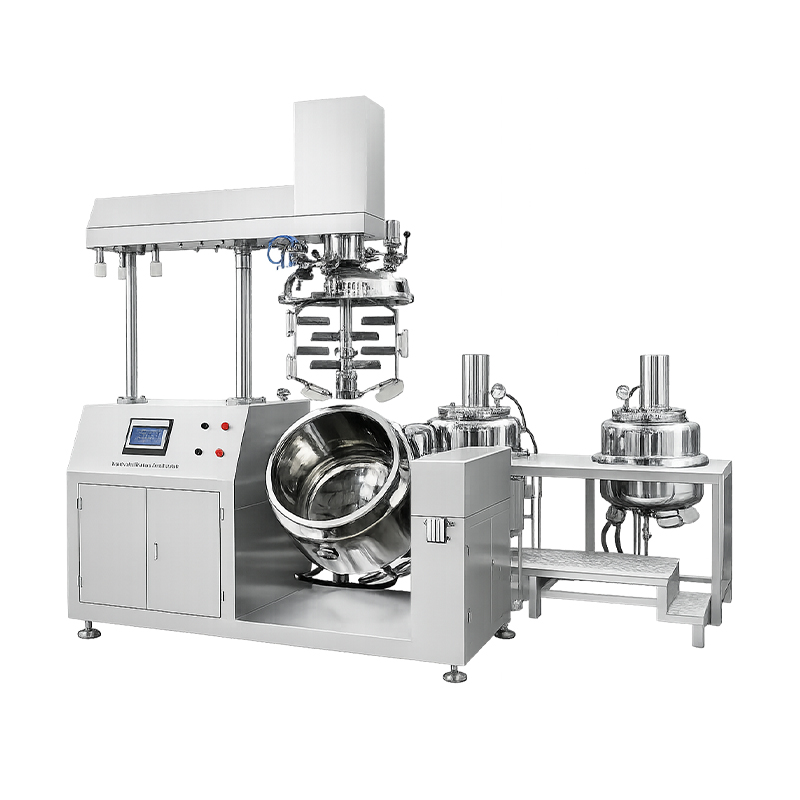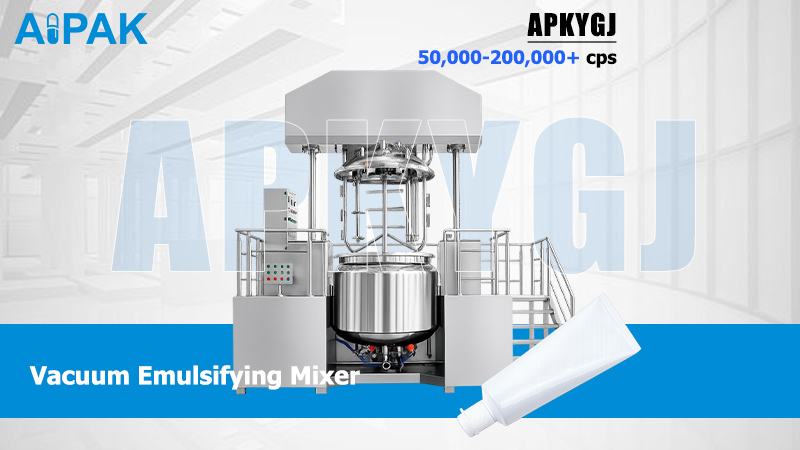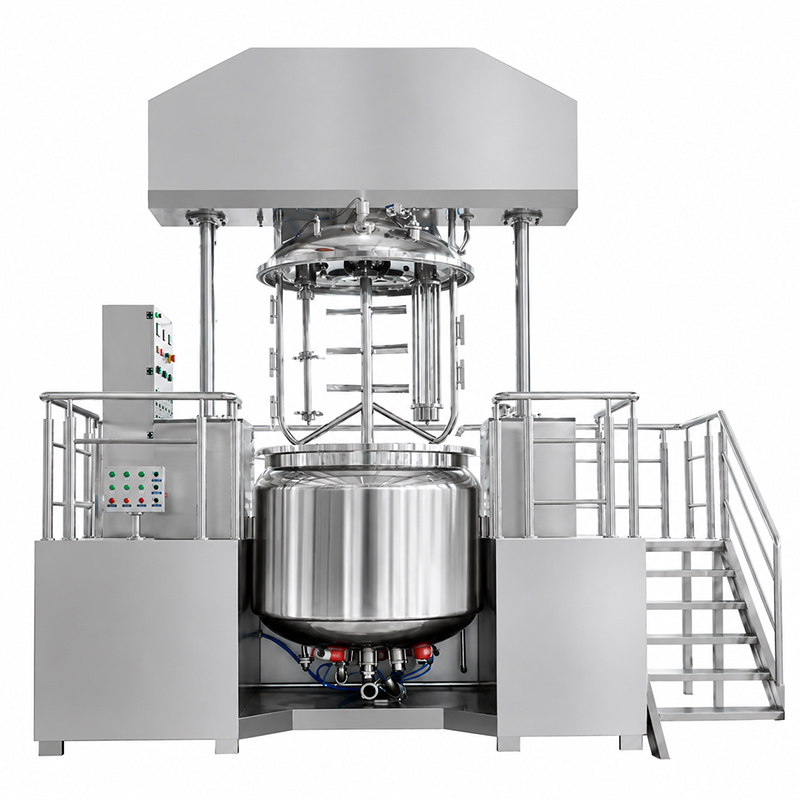
APKYGJ Vacuum Toothpaste Making Machine

Vacuum mixer for toothpaste — powders drawn in under the liquid, mixed into a dense paste

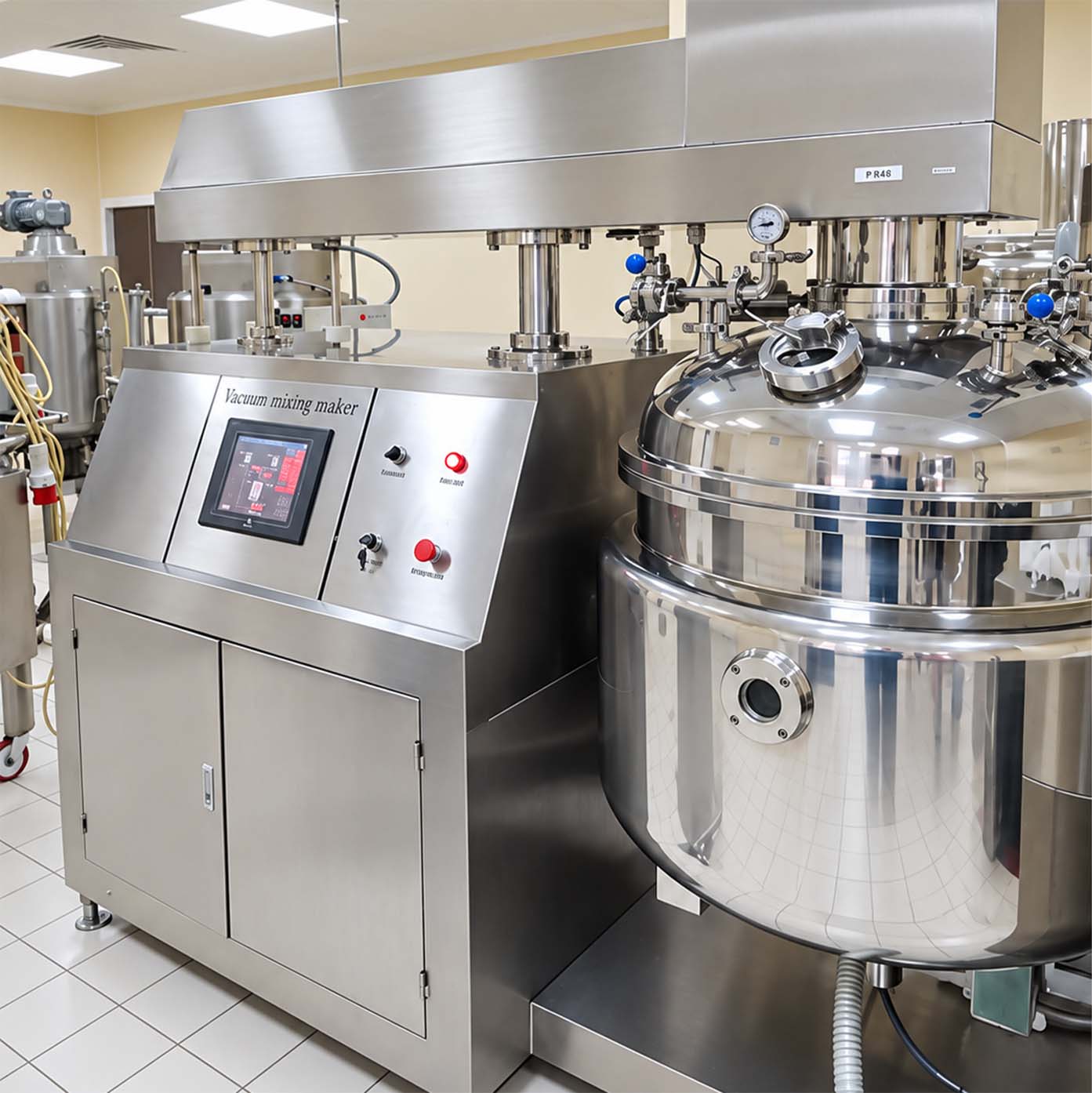
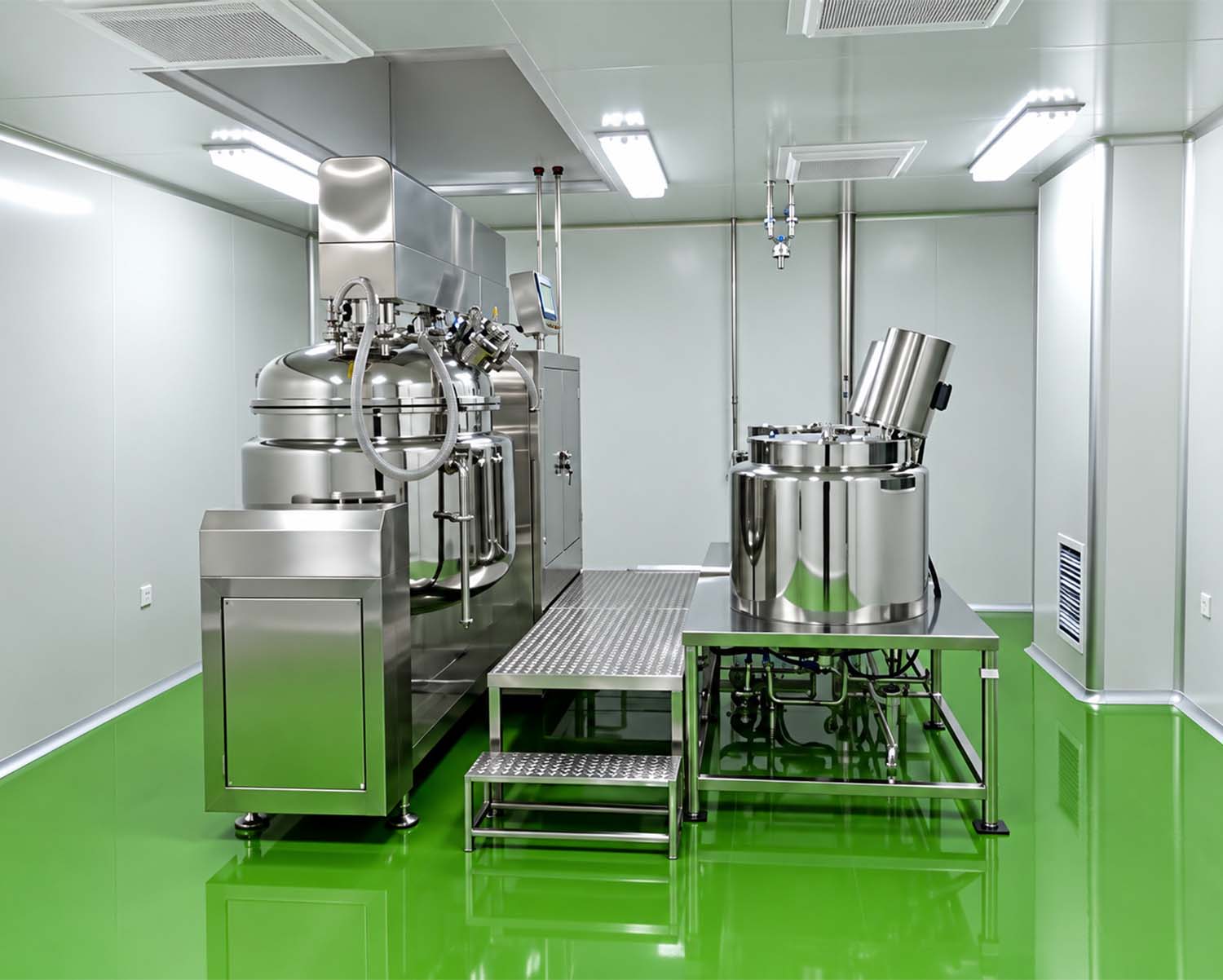
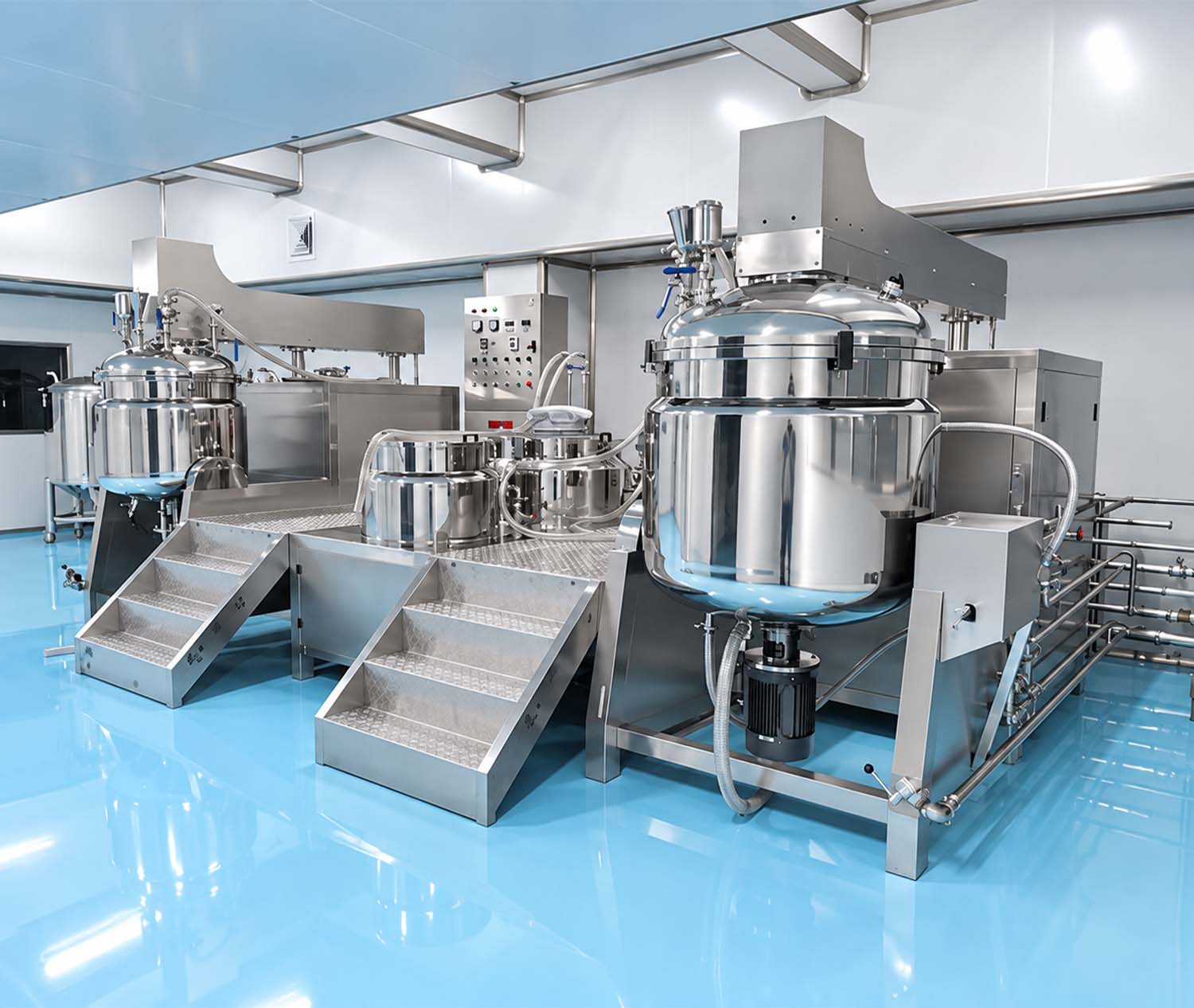
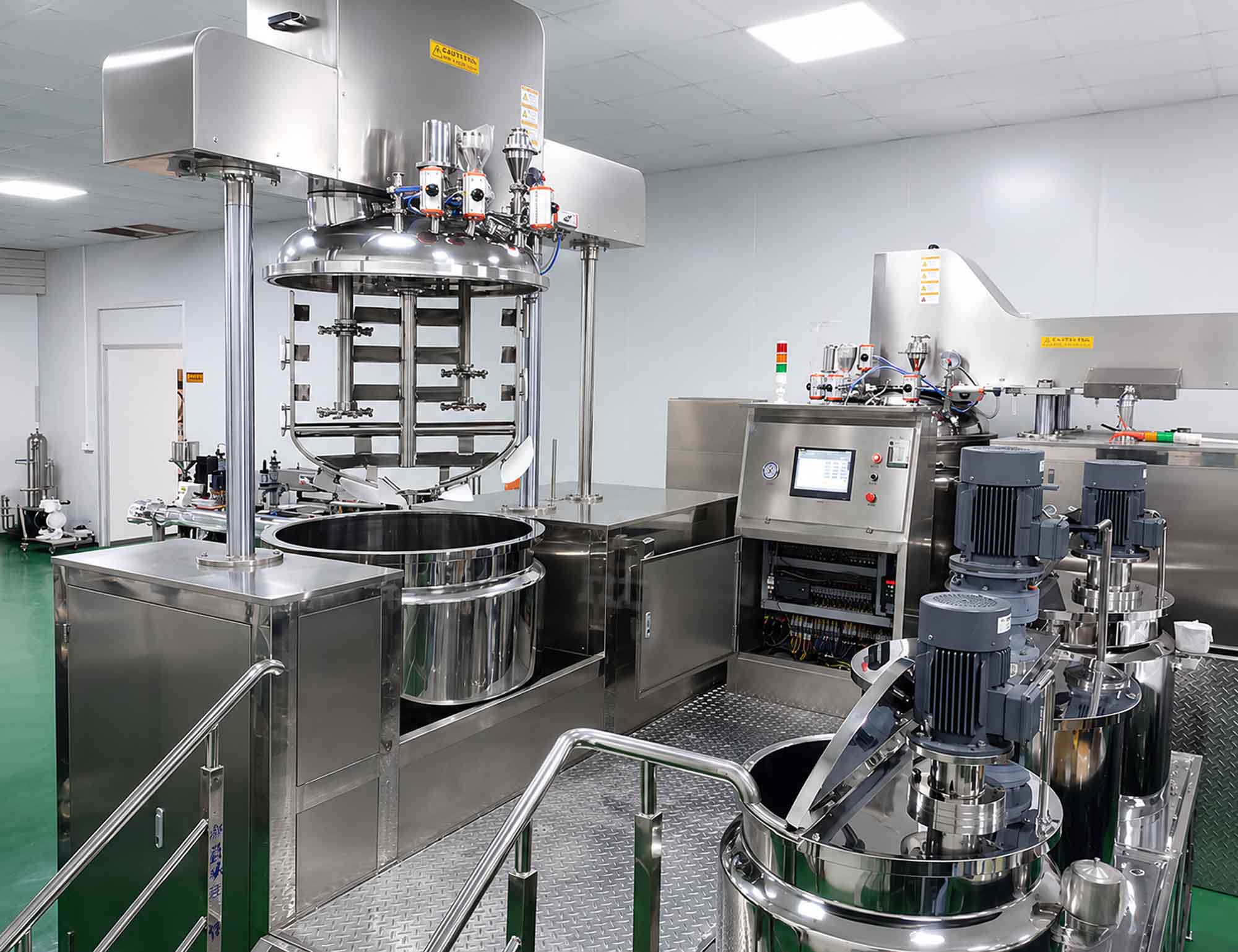
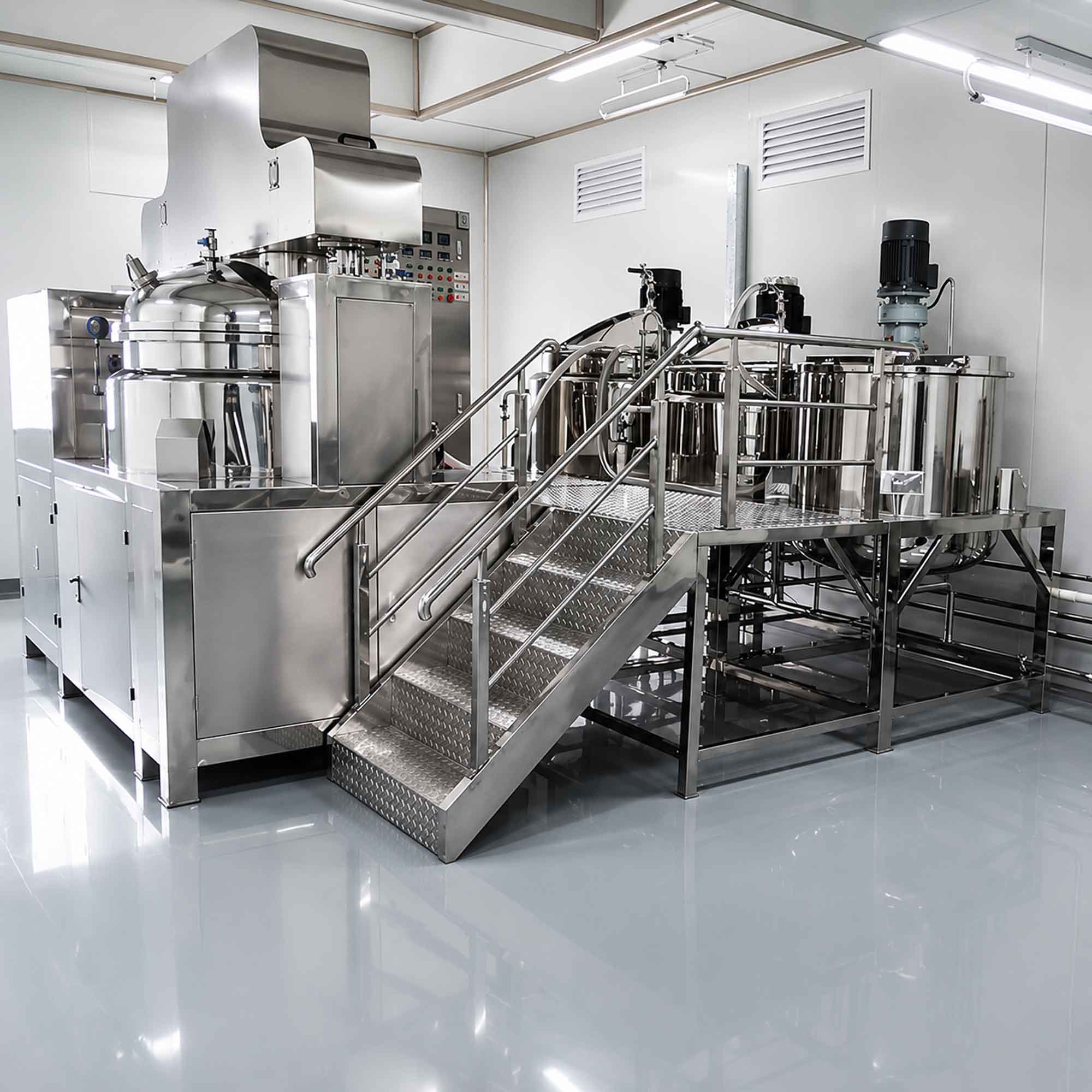
Toothpaste is mostly powder — abrasives and thickeners — held in a small amount of liquid. Tip that powder onto the surface and it floats, lumps and traps air. This machine draws the powder in under vacuum, into the liquid, while the paste is mixed and homogenized, so it comes out dense, smooth and free of bubbles.

1. Powder drawn in under vacuum: into the liquid, not onto the surface

2. Capacity: 300 to 2,000 liters per batch

3. Homogenizer: 5 to 22 kW, up to 3,500 rpm, with a slow mixer up to 60 rpm

4. Contact parts: 316L stainless steel

Is the APKYGJ the right size for you?

✓ This is a fit if…

✕ Buy something else if…

Powder In Under the Liquid

Abrasives and thickeners are drawn in under vacuum below the liquid surface, where they’re wetted straight away rather than floating and forming lumps.

Air Out of a Dense Paste

Toothpaste is thick enough to hold air bubbles indefinitely. Mixing under vacuum pulls the air out while the paste is being made.

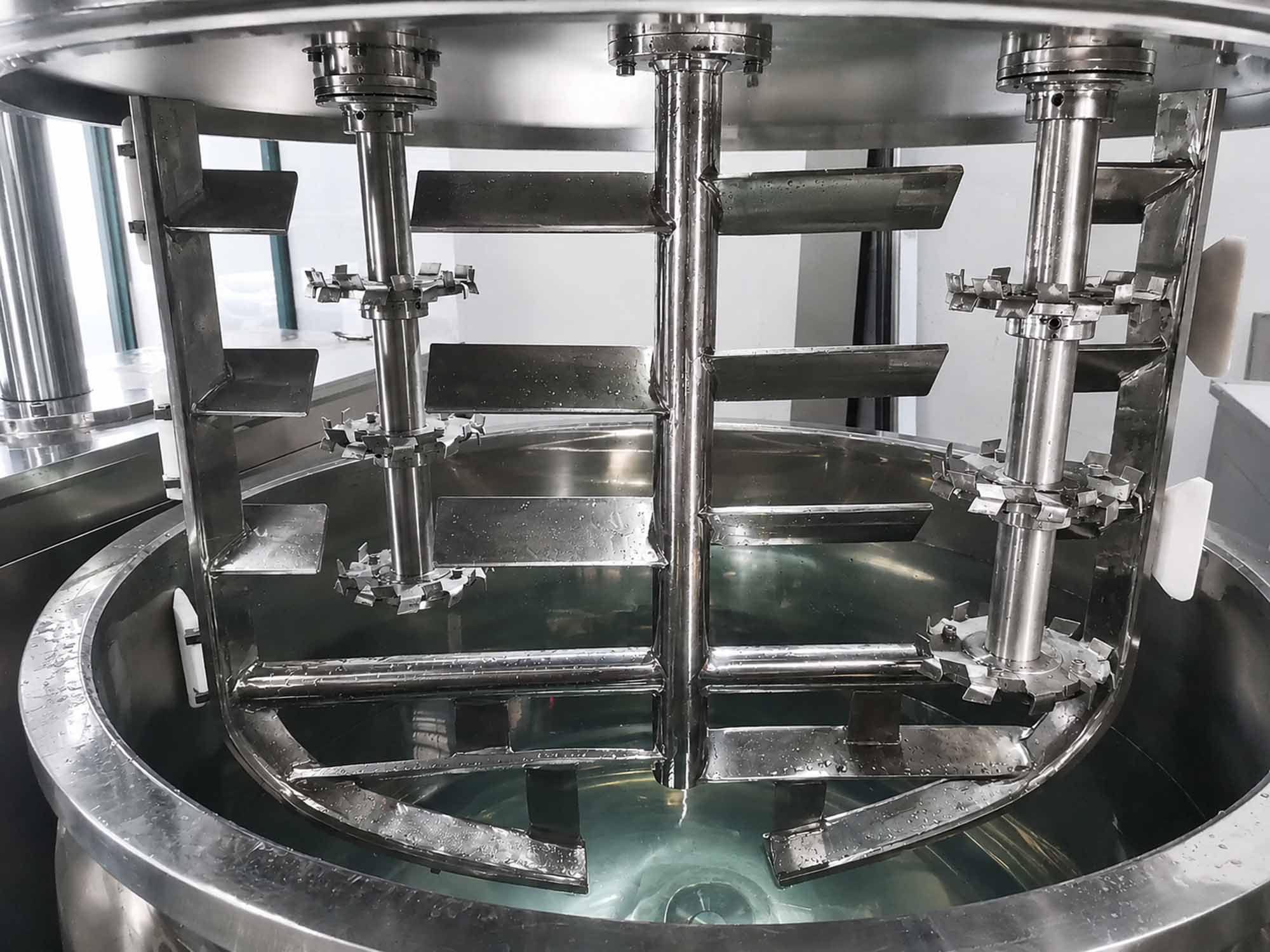
Mixer Built for Thick Paste

A thick paste turns as one mass unless it’s mixed from more than one direction.

Technical specification

Model Working
capacity
Homogenizer motor Homogenizer speed Mixer
motor
Mixer
speed
Dimensions (L × W × H) Height, lid
raised
APKYGJ–300 300 L 5 kW 0–3,500 rpm 2.2 kW 0–60 rpm 3,000 × 2,600 ×
2,500 mm
3,550 mm
APKYGJ–500 500 L 7.5 kW 0–3,500 rpm 2.2 kW 0–60 rpm 3,800 × 2,800 ×
2,700 mm
3,950 mm
APKYGJ–750 750 L 11 kW 0–3,500 rpm 3.7 kW 0–60 rpm 3,900 × 3,900 ×
2,900 mm
4,400 mm
APKYGJ–1000 1,000 L 11 kW 0–3,500 rpm 3.7 kW 0–60 rpm 3,900 × 3,400 × 3,150 mm 4,550 mm
APKYGJ–2000 2,000 L 22 kW 0–3,500 rpm 7.5 kW 0–60 rpm 4,850 × 4,300 ×
3,600 mm
4,550 mm

10 to 200-litre models are available for formulation trials and small batches — see the APKZRJ vacuum emulsifying mixer.

Model comparison

Model

Type

Capacity

Homogenizer

Height, lid raised

Best for

APKZRJ

Lid-lift, top homogenizer

10–2,000 L

1.1–22 kW, 0–3,500 rpm

1.7–4.55 m

Creams, lotions and gels; light powders that float

APKZRJ-B

Bottom homogenizer

50–1,000 L

1.1–22 kW, 0–3,500 rpm

1.3–3.6 m

Formulas with heavy powders that settle

APKZRJ-F

Fixed lid

100–1,000 L

1.1–22 kW, 0–3,500 rpm

1.3–3.6 m

Rooms with limited headroom

APKYGJ

Toothpaste mixer

300–2,000 L

5–22 kW, 0–3,500 rpm

3.55–4.55 m

Toothpaste and tooth gels

Making toothpaste in production volumes? This is the machine. For formulation trials and batches under 300 liters, see the APKZRJ.

Industry Applications

Fluoride Toothpaste

The standard white paste, with a high load of abrasive powder drawn in under vacuum.

Clear Tooth Gels

Transparent gels, where any trapped air shows. Mixing under vacuum keeps them clear.

Sensitivity Toothpaste

Toothpaste for sensitive teeth, sold as an OTC product in the U.S., with the same heavy powder load as a standard paste.

Switching Products

There are no change parts on a vacuum emulsifier. Switching from one product to the next means emptying the vessel, cleaning it and setting new temperatures and speeds.

What changed

What you do

Roughly

Same product, next batch

Discharge, rinse through the CIP port

15–30 minutes

Different product

Discharge, clean through the CIP port, lift the lid to inspect

15–30 minutes

Different heating temperature

Set on the touchscreen

Seconds

Different mixing speed

Set on the touchscreen

Seconds

The vacuum is broken through a filtered valve before the product is discharged and before the lid lifts — the machine won’t let you do either under vacuum.

What to Check Before You Buy

01

Your batch size, not the vessel size

A vessel is never filled to the top. Ask for the working capacity and size the machine to your usual batch, not your largest one.

02

How the powder goes in

Toothpaste is mostly powder. Ask whether the powder is drawn in under the liquid surface or poured onto it — that decides whether you get lumps.

03

How you'll heat it

Electric heating works anywhere. Steam is faster on large vessels but needs a steam supply. Confirm which you have, and confirm your voltage before the machine is built.

Why Choose AIPAK?

One Point of Contact

One project engineer handles your machine from proposal to commissioning, so you’re not chasing five suppliers for one answer.

We Look at Your Formula First

Send us your formula, or just what you’re making and how big your batches are, and we’ll tell you which model and which size suits it before we quote.

A U.S. Number, Answered by Us

+1 (213) 526-8644, answered by our engineers 9 AM–7 PM China time, Monday to Friday. That’s evening and overnight in the U.S., so leave a message or send a WhatsApp anytime and we’ll pick it up first thing.

Spare Parts and Lead Time, in Writing

A kit of wear parts ships with your machine. Every part in the kit, and the lead time for anything outside it, is listed in your quote in writing.

Questions About the APKYGJ

Why does toothpaste need a dedicated mixer?

Toothpaste is thick enough to turn as a single mass in an ordinary mixer, with the paste near the wall barely moving. This machine works it two ways at once: a high-speed homogenizer at up to 3,500 rpm breaks up the powders, while a slow mixer at up to 60 rpm keeps the whole batch turning. And it does it under vacuum, which pulls out the air a paste this thick would otherwise hold.

How are the powders added without lumps?

Powders are drawn in under vacuum below the liquid surface, so they’re wetted as they enter instead of floating on top and forming a gel skin with dry powder trapped inside.

How is the paste discharged?

Through the bottom valve, pushed out by compressed air. The vacuum has to be broken first, through a filtered valve on the lid — the paste can’t be discharged while the vessel is under vacuum.

Can flavors be added without breaking the vacuum?

The lid has a port reserved for flavors, so they can be added toward the end of the batch.

What batch sizes are available?

From 300 to 2,000 litres per batch, in five sizes: 300, 500, 750, 1,000 and 2,000 litres. For formulation trials and smaller batches, the APKZRJ goes down to 10 litres.

How much headroom does it need?

The lid lifts clear of the vessel for cleaning and inspection, so the machine needs more height with the lid raised than it does in use: 3,550 mm on the 300-litre model, up to 4,550 mm on the 1,000-litre. Check your ceiling before you choose a size.

Electric or steam heating?

Either. The vessel jacket is filled with water and heated electrically as standard, or it can be connected to your steam supply if you have one.

Can the lid be opened while the vessel is under vacuum?

No. A vacuum protection switch stops the lid from lifting while there’s vacuum in the vessel. The vacuum is broken through a filtered valve first, then the lid can rise.

How do you clean it between batches?

A CIP port on the lid connects to your water supply for washing inside the vessel. The lid then lifts clear so you can inspect the vessel, the homogenizer and the mixer.

Can I see the paste while it's being made?

Yes. The lid has a sight glass and a light, so the operator can watch the paste without breaking the vacuum.

What controls does it use?

A Siemens PLC and touchscreen.

Does it run on US power?

Yes. We build to your U.S. supply at 60 Hz and confirm the voltage with your quote.

How do spare parts work?

A kit of wear parts ships with your machine. Every part in the kit, and the lead time for anything outside it, is listed in your quote in writing.

Customers Also Interested In...

Send Us Your Formula — or Just Your Batch Size

Three things decide which emulsifier you need. Your batch size decides the capacity. Your ceiling height decides lid-lift or fixed lid — a lid-lift model needs room above the vessel for the lid to rise. And if your formula carries a heavy powder load that settles, that decides where the homogenizer should sit.

Tell us those three and what you’re making, and we’ll point you to the right model. If you can share your formula, even better — we’ll look at it before we quote.

  • Reply within one business day
  • A model matched to your batch, ceiling and formula
  • Your formulation stays with us

No sales calls — we reply by email or WhatsApp, whichever you gave us.

Scroll to Top