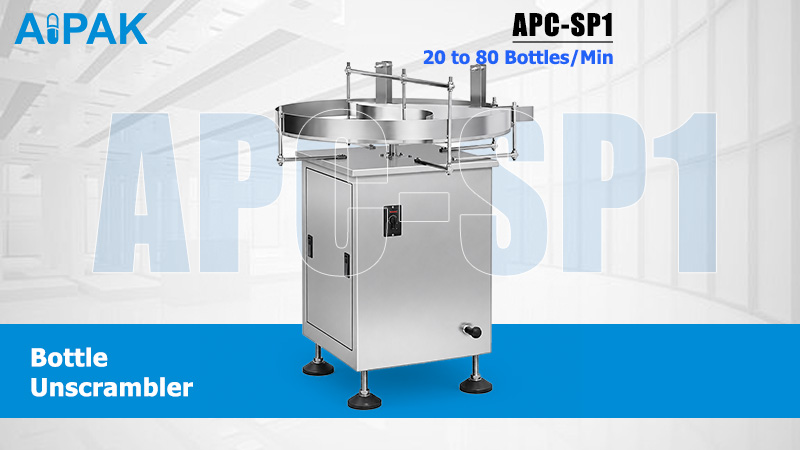
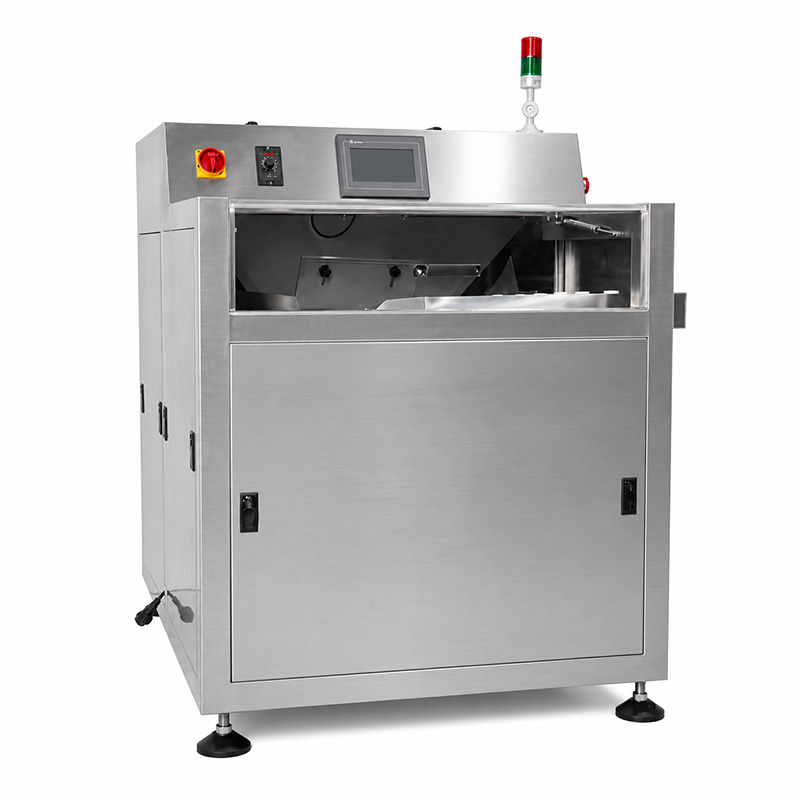
APC-SP1 Semi-Automatic Bottle Unscrambler — Up to 750 ml

Operator-fed rotary table for glass bottles, large containers and frequent changeovers

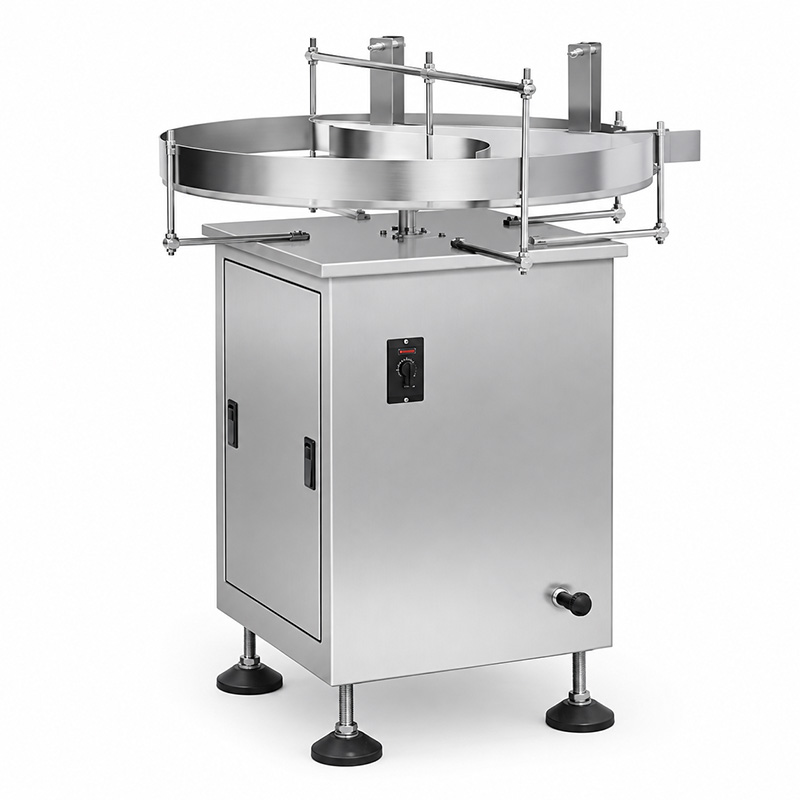
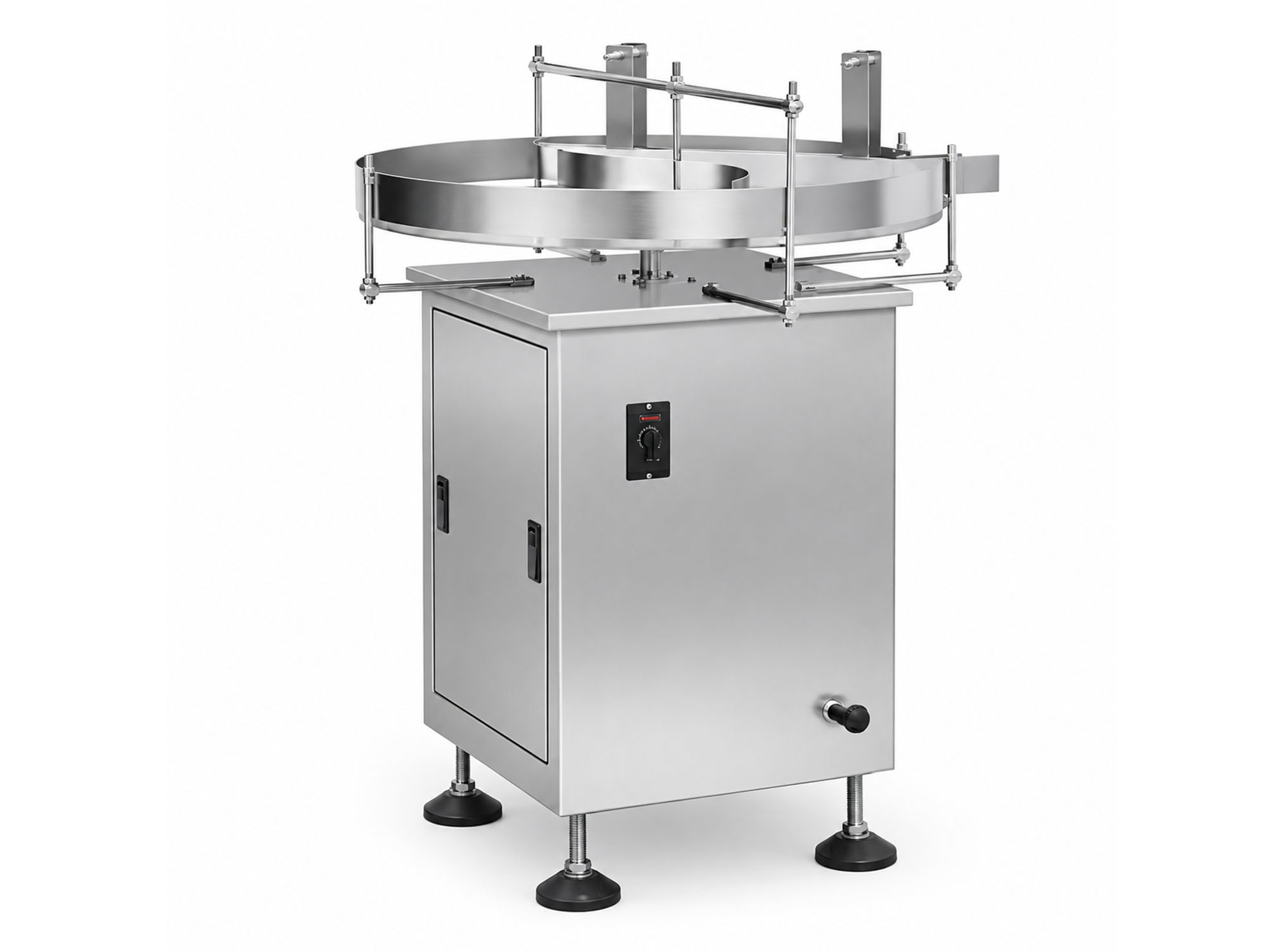
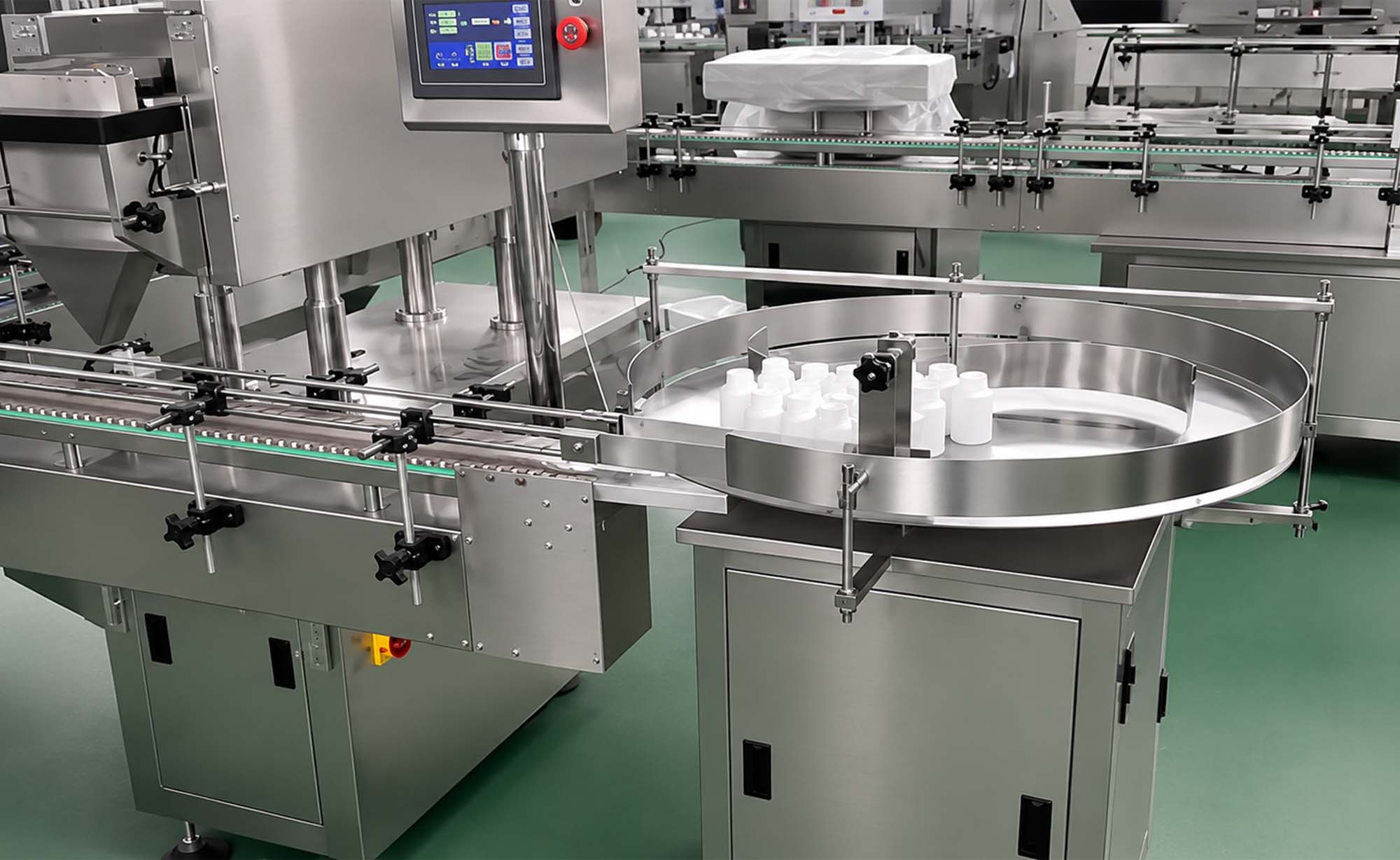
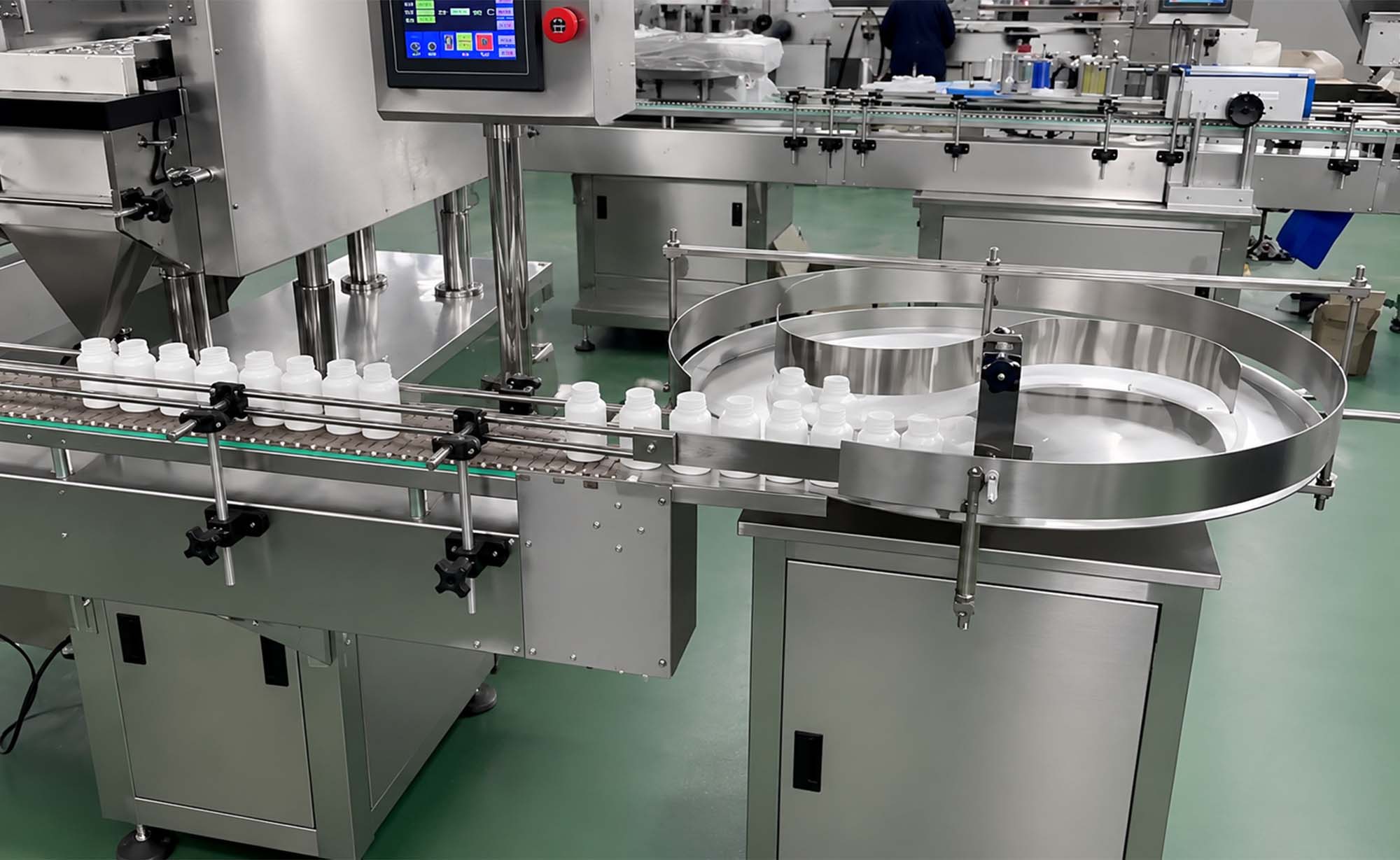
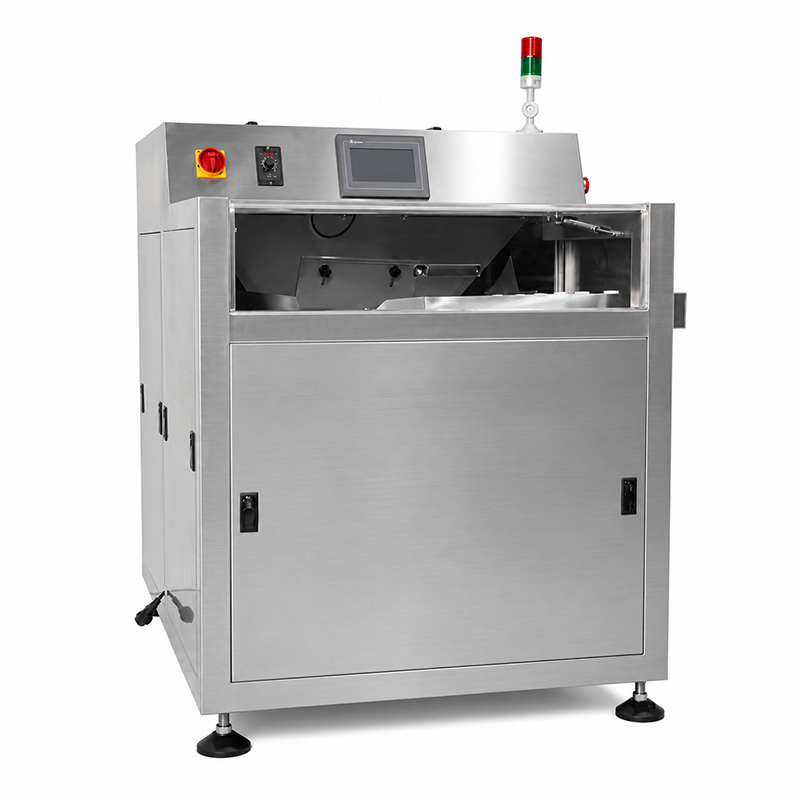
An automatic unscrambler orients bottles by tumbling them against a rotating disc. That works well on plastic and badly on glass — chipping and scuffing show up on the shoulder and the base, and a chipped container is a rejected container. This machine takes a different approach: the operator places bottles neck-up on the rotating table, and the machine feeds them onto the conveyor in a controlled single-file stream.

1. Any bottle material: round, square and flat-square containers in glass, plastic or anything else

2. Largest container range: up to 750 ml, the widest we supply

3. No change parts: switching bottle size needs adjustment only

4. Smallest and lightest: 900 × 900 mm, 95 kg, 0.1 kW

Is this the right machine for you?

✓ Yes, if…

✕ Look elsewhere if…

Why Glass Needs a Different Approach

Automatic unscramblers orient bottles by tumbling them against a rotating disc until they settle neck-up. Glass survives that less well than plastic — chips on the base and scuffing on the shoulder appear over a production run, and both are rejection criteria. On the SP1 the operator places each bottle neck-up on the rotating table, so no tumbling occurs at any point.

Round, Square and Flat-Square

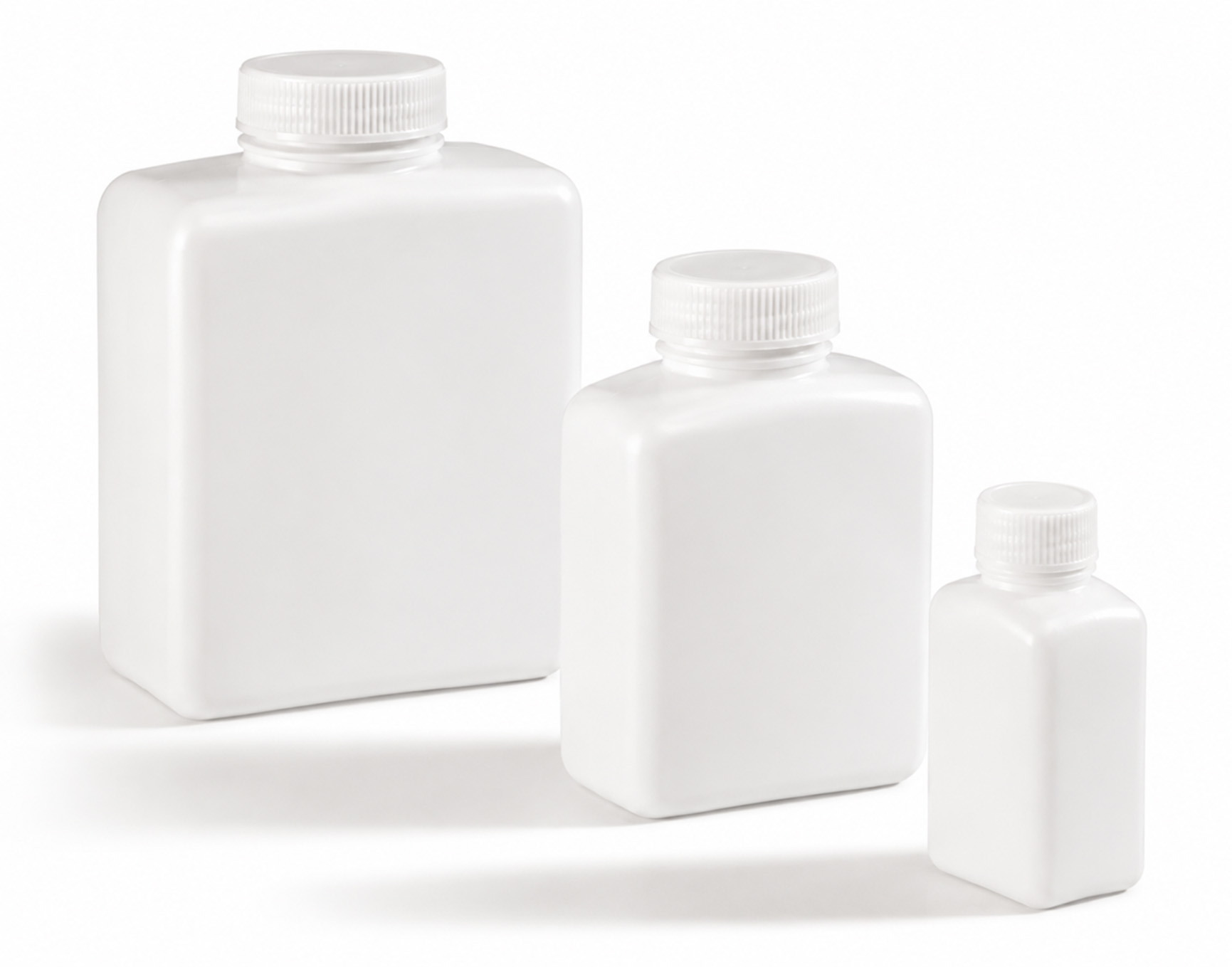
Because orientation is done by the operator rather than by the machine’s geometry, container material is not a constraint. Glass, plastic, and other materials all run on the same table, in round, square or flat-square profiles.

Adjustment, Not Tooling

Switching between bottle sizes requires simple adjustment only — no parts to swap, none to store, none to order per container. On a line running several SKUs a week, that is often worth more than the throughput an automatic machine would add.

900 × 900 mm, 95 kg, 0.1 kW

The SP1 takes less floor space than a pallet and draws just 0.1 kW. It fits at the head of an existing line without a layout change, and it moves if you need to reconfigure the room.

Technical specification

Specification

APC-SP1

What it means for you

Output

20 – 80 bottles/min

Matched to counting machines up to 16 channels

Bottle volume

15 – 750 ml

The widest range we supply

Bottle shape

Round, square, flat-square

—

Bottle material

Glass, plastic and other materials

The only model here that handles glass

Orientation

Operator-fed rotary table

No tumbling, no chipping

Change parts

None

Adjustment only between sizes

Power

0.1 kW, 60 Hz

Built to your U.S. supply. We confirm the voltage with your quote

Compressed air

Not required

—

Dimensions

900 × 900 × 1,000 mm

Smallest footprint in the range

Weight

95 kg

Light enough to move without a forklift

Model comparison

Model

Bottle volume

Output

Bottle shape

Air

Best for

APC-SP1

15–750 ml

20–80/min

Round, square, flat-square

No

Glass bottles, large containers, frequent bottle changes

APC-A100

15–150 ml

30–100/min

Round

No

Small supplement and dispensing bottles

APC-A160

50–300 ml

60–160/min

Round

No

Standard supplement bottles, highest throughput

APC-A160B

50–300 ml

60–160/min

Round

Yes

Same range and speed, with air-assisted orientation

APC-2000

15–500 ml

40–150/min

Round, square, flat, irregular

Yes

Square and irregular plastic bottles

Start with your bottle, not with speed. Volume sets the shortlist; shape can rule out four of the five; and whether it’s glass decides the question before either.

Note that the APC-2000 is rated below the APC-A160 despite being the more capable machine. That’s because its range covers mixed bottle shapes, not because it’s the slower unit on round containers.

Ideal Applications & Industries

Glass Bottle Packaging

Tumbling glass against a rotating disc risks chipping and scuffing. Operator-fed feeding avoids tumbling entirely.

Herbal and botanical supplements

Amber glass remains standard for many herbal and botanical products, and it’s exactly where an automatic unscrambler causes problems.

Large Containers up to 750 ml

Bulk and institutional pack sizes, above the range of every automatic model.

Short Runs and Frequent Bottle Changes

No change parts are needed between bottle sizes, only adjustment — which matters more than speed when you change containers several times a week.

Low-Volume and Startup Production

At 0.1 kW, 95 kg and the lowest cost in the range, the SP1 removes hand-feeding without the capital of an automatic machine.

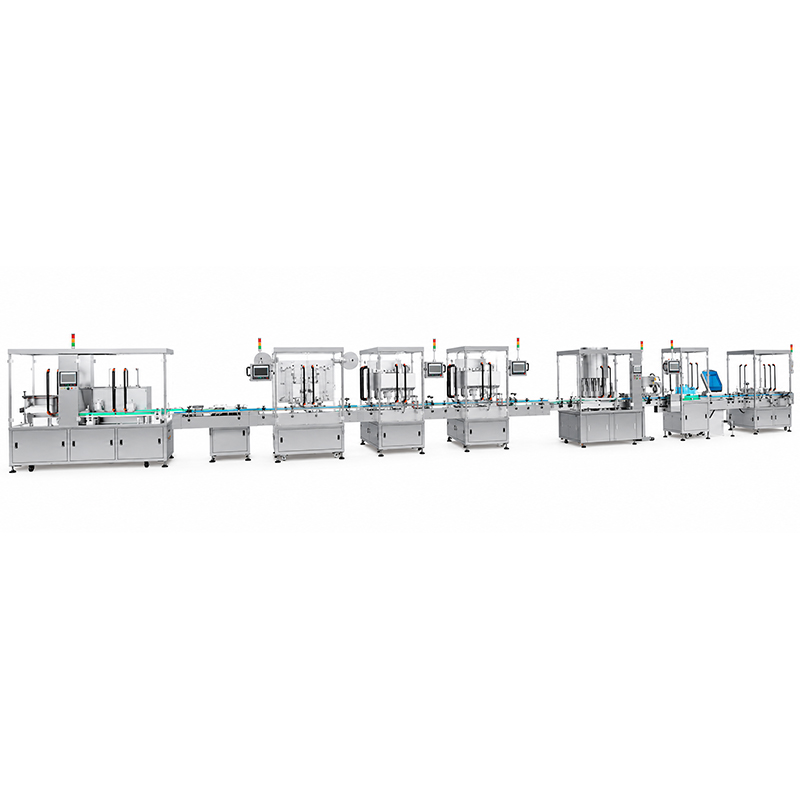
Where This Machine Sits on Your Line

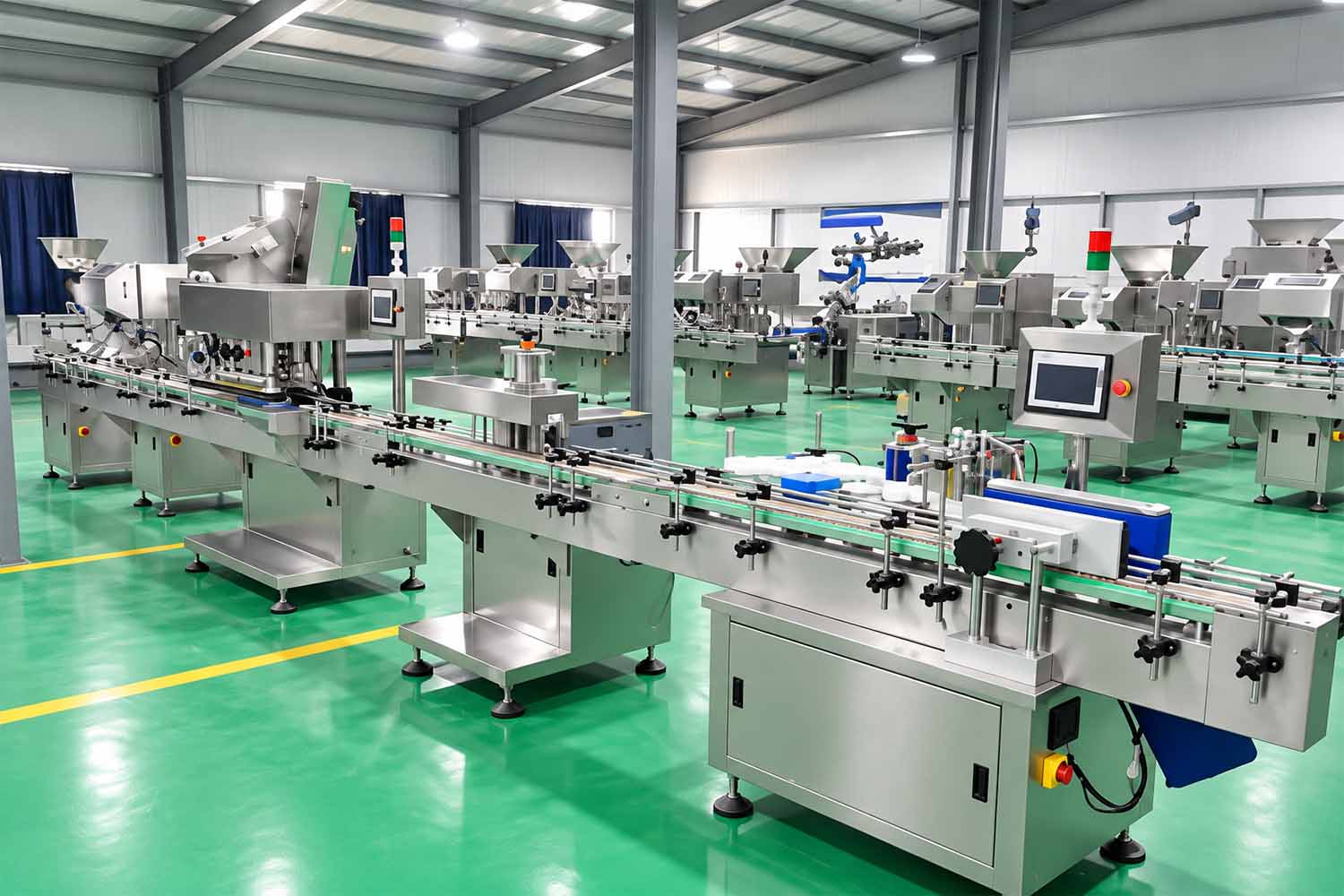
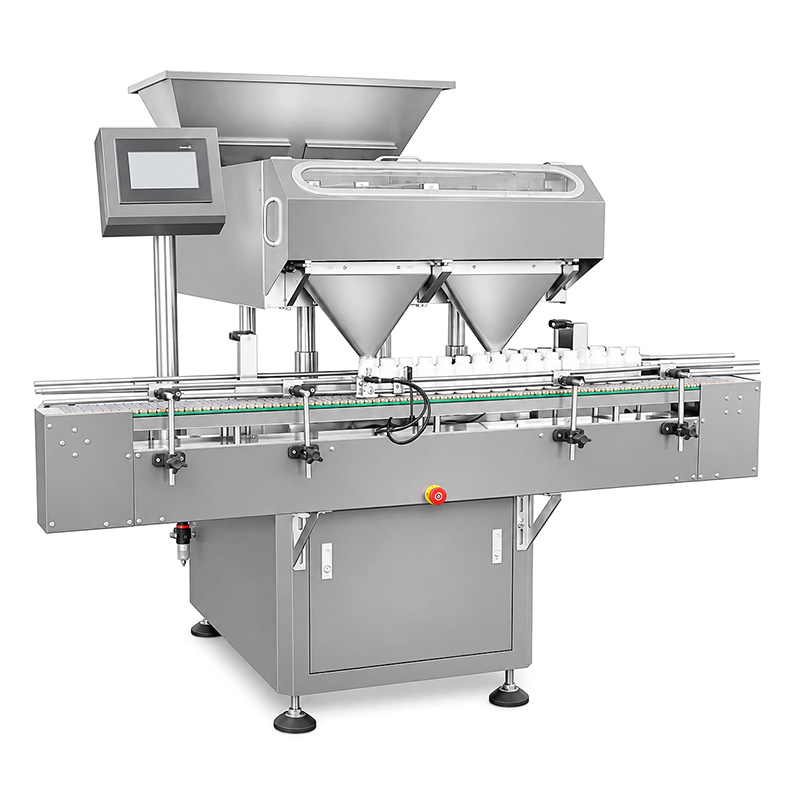
SEVEN STATIONS, ONE LINE

Station 1

Bottle Unscrambler

Orients bottles neck-up and feeds them onto the conveyor.

Station 2

Bottle Air Cleaner

Ionized air removes static; vacuum draws out dust before filling.

Station 3

Counting Machine

Counts and fills. Sets the pace of the whole line.

Station 4

Desiccant or Cotton Inserter

Adds moisture control or fill material on top of the product.

Station 5

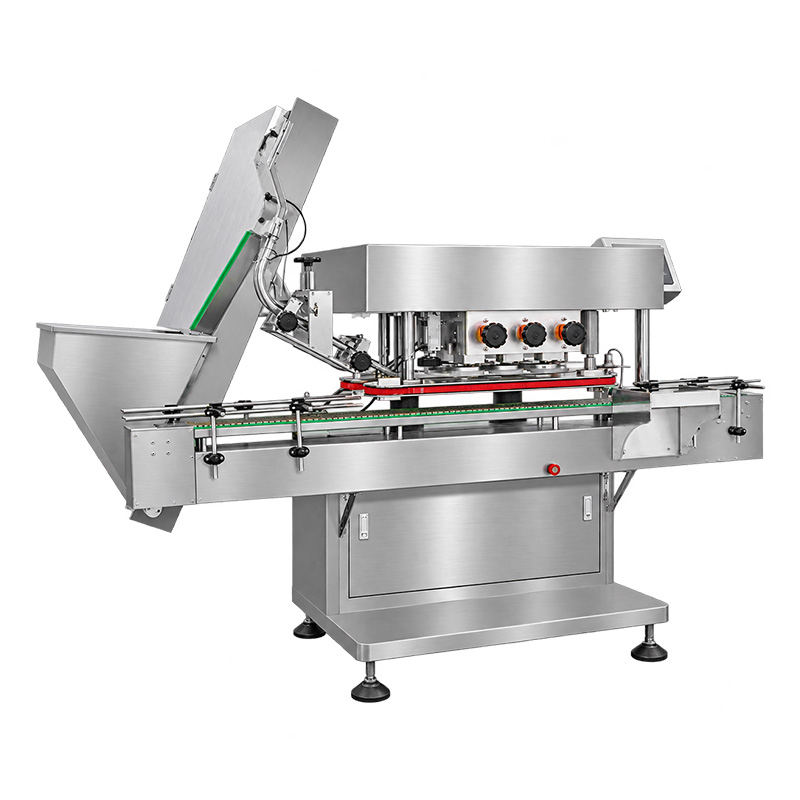
Capping Machine

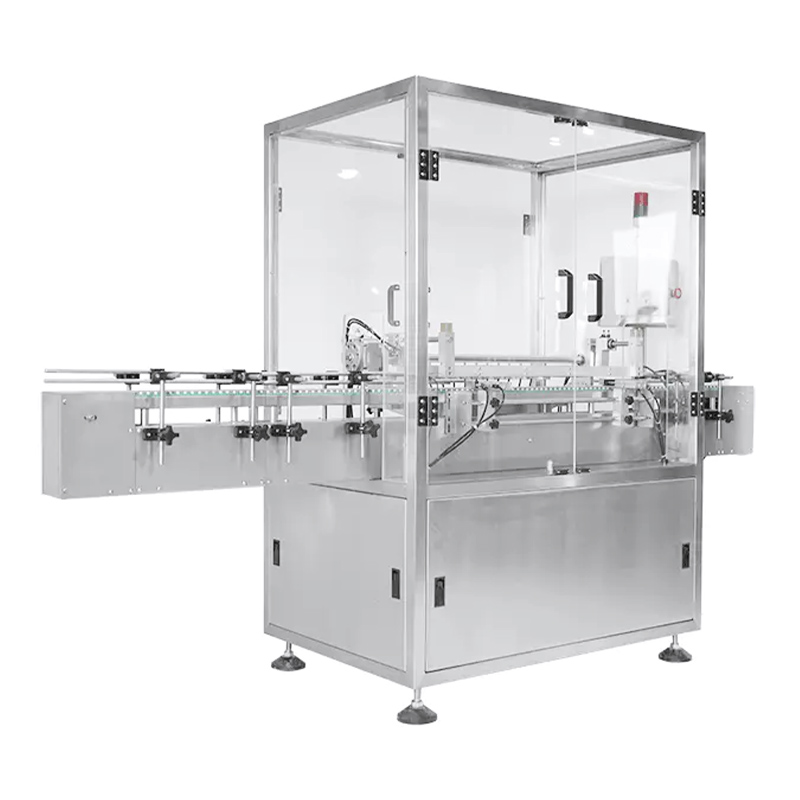
Applies and torques the cap; rejects crooked and reversed caps.

Station 6

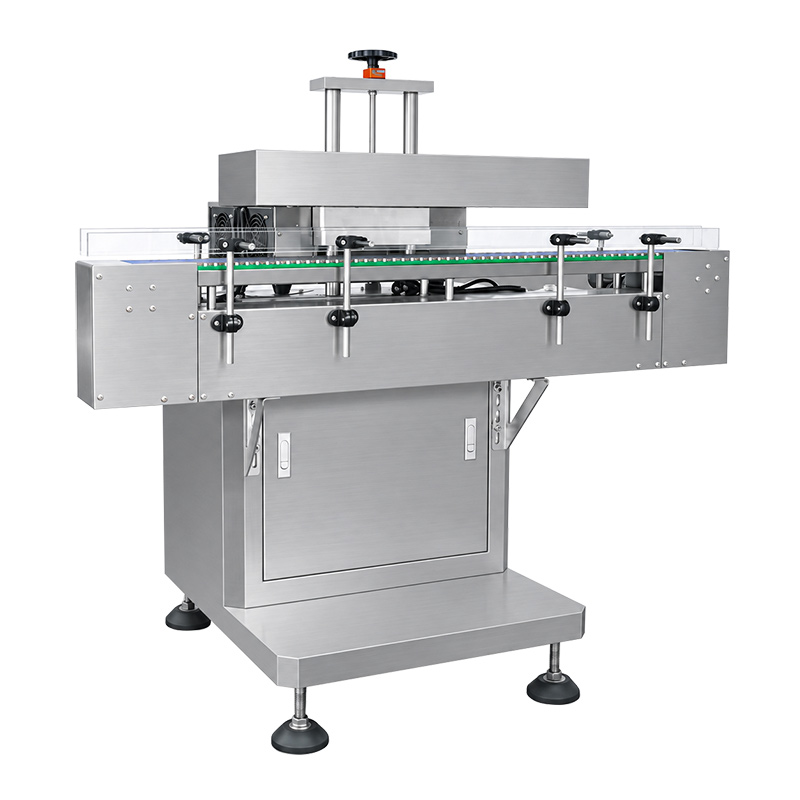
Induction Sealer

Bonds the foil liner to the bottle mouth.

Station 7

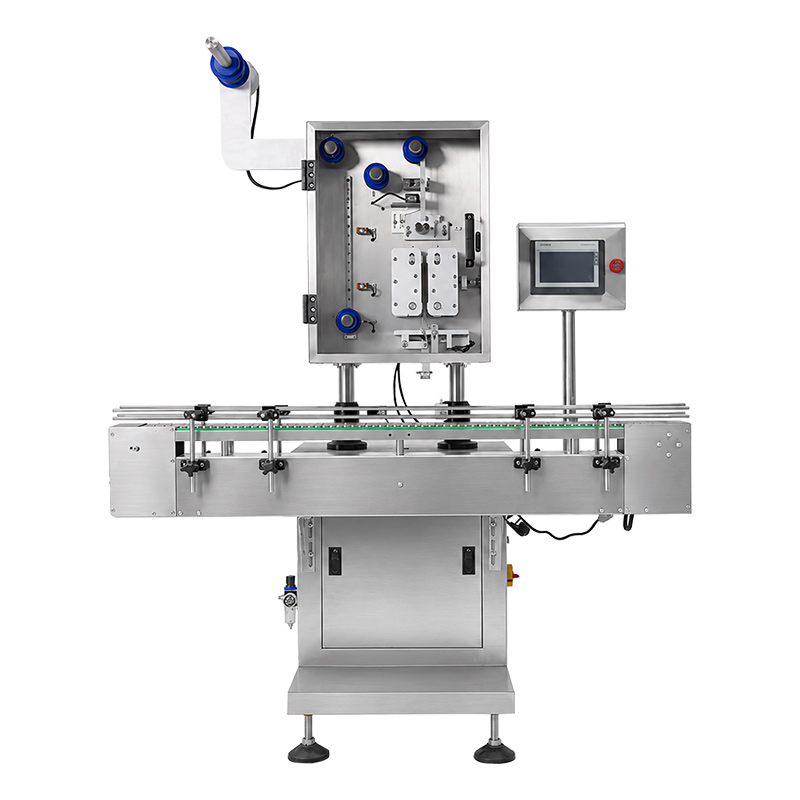
Labeler

Applies the label and discharges the finished bottle.

The unscrambler feeds the line, but the counting machine sets its pace. A mid-speed line runs 40 to 100 bottles per minute; a high-speed line runs 70 to 160. Both fit in under 30 m² with roughly three operators and a single compressed air supply.

You do not need to buy the whole line at once. Most customers start with the counting machine and add stations as volume grows — the counter is the one machine that has to be right from the start, because everything else is timed to it.

What changing over involves

Bottle size changes are an adjustment, not a parts change

What changed

What you adjust

Roughly

Same bottle, different product

Nothing on this machine

—

Bottle diameter or height changes

Guides and the outlet, by hand

15–30 minutes

Bottle shape changes entirely

Different machine, not a changeover

—

There are no change parts to buy per bottle size, and none to store on a shelf.

One honest note: this is the unscrambler. On a full line the guide rails, the capping chuck and the label recipe all change too — four jobs at four stations. Ask us for the line number, not just this one.

What to check before you buy

01

Whether anyone has run your bottle

Round is not one shape. A slight taper, an oval cross-section, or a molding seam all change how a bottle behaves against the disc. Ask any supplier to run your actual bottle before you order — not a bottle like yours.

02

The manual

A clear English manual gets your operator running in a week instead of a month. Ask to see a sample page before you order.

03

Installation and training

Installed, commissioned, and your people taught to run it. Ask what's included and what costs extra — the answer varies more between suppliers than the machine price does.

Why buy from us?

One Point of Contact

One project engineer handles your machine from proposal to commissioning, so you’re not chasing five suppliers for one answer.

We Run Your Bottle Before You Order

Send us your bottles and we’ll run them on the machine and send you the video. You decide whether to talk quotes after that.

A U.S. Number, Answered by Us

+1 (213) 526-8644, answered by our engineers 9 AM–7 PM China time, Monday to Friday. That’s evening and overnight in the U.S., so leave a message or send a WhatsApp anytime and we’ll pick it up first thing.

Spare Parts and Lead Time, in Writing

A kit of wear parts ships with your machine. Every part in the kit, and the lead time for anything outside it, is listed in your quote in writing.

Deep Dive FAQ

What are the installation requirements?

0.1 kW of power, built to your U.S. supply. Floor space of 900 × 900 mm plus room for the operator at the table. No compressed air and no cooling water. The machine weighs 95 kg.

How does the unscrambler keep pace with the counting machine?

The rotary table feeds bottles onto the conveyor in single file. Your operator keeps the table loaded, and the counting machine takes bottles at its own pace.

Can I buy this on its own, or only as part of a line?

Either. Many customers buy the counting machine first and add the unscrambler when hand-feeding becomes the constraint. Send us your bottle dimensions and target output and we will confirm the configuration.

Why can't I run glass on an automatic unscrambler?

Automatic unscramblers orient bottles by centrifugal motion — bottles tumble against the disc wall until they settle neck-up. Glass survives that less well than plastic: chips on the base and scuffing on the shoulder appear over a run, and both are rejection criteria. This machine avoids tumbling because the operator sets each bottle neck-up.

How many operators does it need?

One, placing bottles on the table. On a line already running with three operators, this station usually absorbs into existing coverage rather than adding headcount — which is what makes it economical for glass lines and shorter runs.

What is the largest bottle this machine handles?

750 ml, the widest range in our unscrambler line. Every automatic model stops at 500 ml or below.

Do I need change parts when switching bottle sizes?

No. Switching containers requires simple adjustment only, with no parts to swap or store. On a line running several SKUs a week, that is often worth more than the speed an automatic machine would add.

Is 20 to 80 bottles per minute enough for my line?

It depends on your counter. An 8 or 12-channel counting machine runs at 10 to 40 bottles per minute, so the SP1 keeps ahead of it comfortably. Above about 80 bottles per minute you need an automatic unscrambler — but check whether your product is glass first, because that constraint usually decides the question before speed does.

How do spare parts work?

A kit of wear parts ships with your machine. Every part in the kit, and the lead time for anything outside it, is listed in your quote in writing.

Do your machines meet U.S. electrical certification requirements?

Yes. Our machines are certified and use certified electrical components. Because the exact scope depends on the model and electrical configuration you select, our factory confirms it in writing before production.

Customers Also Interested In...

Not sure which model?

Tell us your bottle volume and shape. We’ll tell you which one, and why.
Send us a sample bottle
We run it on the machine before you order and send you the result. Round is not one shape — a taper or a seam changes how it behaves.
Send your floor dimensions
Length, width, height, and where the doors and columns are. We’ll lay out your line and check the space for free.

Reply within one business day. Send us a sample bottle and we’ll run it before quoting.

Scroll to Top