Why Supplements Are Counted, Not Weigh-Filled
Counting pieces, weighing portions, and checking filled bottles are different jobs.
For supplement bottles sold by count, use a filling process that directly controls the number of pieces. A bottle labeled for 60 tablets, capsules, softgels, or gummies needs that count. Reaching a target weight alone does not independently prove the count, because individual pieces can vary in weight.
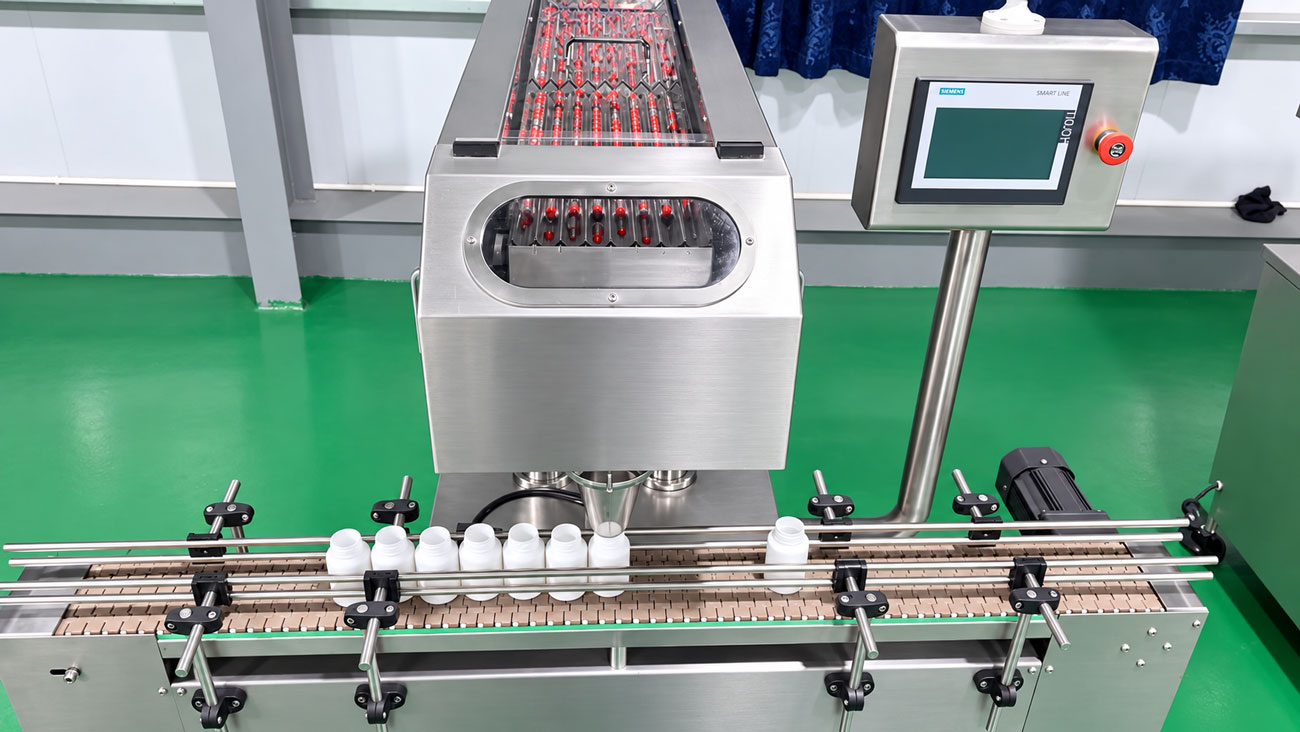
Counting and bottle filling process
We recommend counting for these bottling projects. A multihead weigher creates portions by weight; a checkweigher checks weight after filling. Define those jobs separately before deciding whether a proposed configuration meets your packaging requirements.
1.The short answer: bottles labeled by count need counting
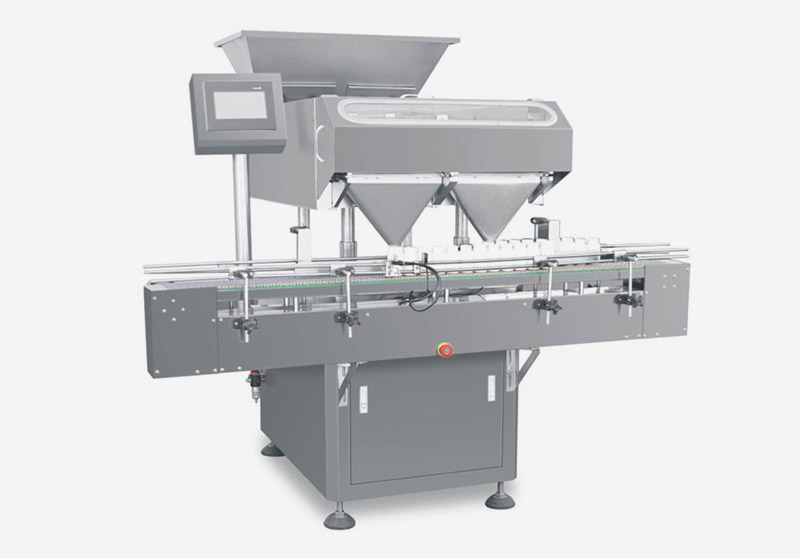
AIPAK’s counting machine
For supplement contract manufacturers and contract packagers, the starting point is the customer’s quantity specification. Confirm the required count per bottle, then assess the product, container, and target output. If the order is defined by pieces, the filling process should directly control that count.
When a quote or demonstration mentions “weighing,” ask where it happens and what it controls. Counting, multihead weighing, and bottle checkweighing have different jobs:
A checkweigher on a counting line adds a weight check. The counter still measures and fills the products by count. One machine fills; the other checks the filled bottle.
2.Why counting, not weighing? It's about the exact piece
The label defines the quantity you need to fill
A specification of 60 or 80 pieces per bottle defines a count requirement. Your customer needs that number of finished products in the container. Multiplying an average piece weight by the required count gives a target weight; it does not turn a weight measurement into direct counting.
Think of apples. Weighing out a pound answers “How much do these apples weigh?” Counting out 12 answers “How many apples are there?” The two instructions control different quantities.
The same distinction applies to packaging. Your filling process should control the quantity you promise to deliver, whether that specification is a number of pieces or a net weight.
Two quantity specifications
Different measurement targets.Total weight alone does not independently prove the specified bottle count.
Apples illustrate the difference between count and weight. Sizes and quantities on the right are illustrative; they are not a measured one-pound portion.
Total weight does not independently prove the count
Using average piece weight to estimate a bottle count overlooks actual variation between pieces. Reaching the same total weight does not automatically establish the same count. Passing a weight check and meeting a count specification need separate evaluation.
For supplement bottles labeled by count, establish the counting task first. Counting performance still needs verification with the actual product; direct counting alone is not a promise of error-free results for every material.
3.Which products need a count-based filling process?
Tablets, capsules, and softgels sold by count
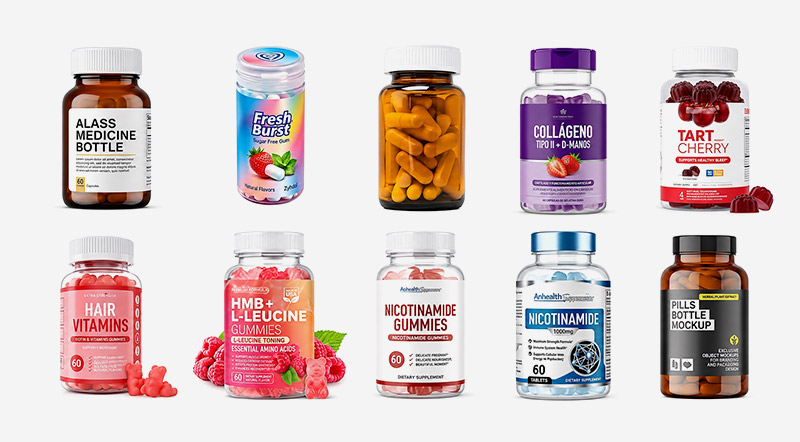
If tablets, hard capsules, or softgels are sold by the number of pieces in each bottle, start with a counting route. The next question is which counting configuration handles your actual product. A target portion weight does not replace the required count for that order.
Transparency, size, shape, dust, sticking, and product flow affect the configuration. Once the counting task is clear, evaluate infrared counting, vision counting, and any dedicated appearance inspection separately.
Filling powder into a capsule, or liquid into a softgel, is a different production step from counting those finished capsules into bottles. This article concerns the packaging of finished products.
Powders need a separate filling assessment
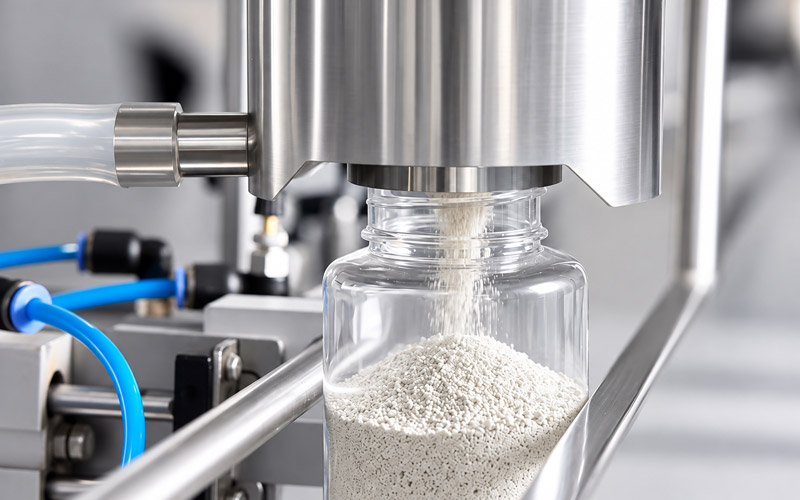
If you are filling powder directly into bottles, evaluate a powder filling system. Select the dosing and filling method around the actual powder, target fill quantity, and packaging conditions. Weighing can be one of the dosing methods considered.
Our counting recommendation applies to finished products packaged by piece count. Powder filling needs its own product and equipment assessment; do not apply the tablet or capsule bottling conclusion to it.
4.So where does weighing actually fit?
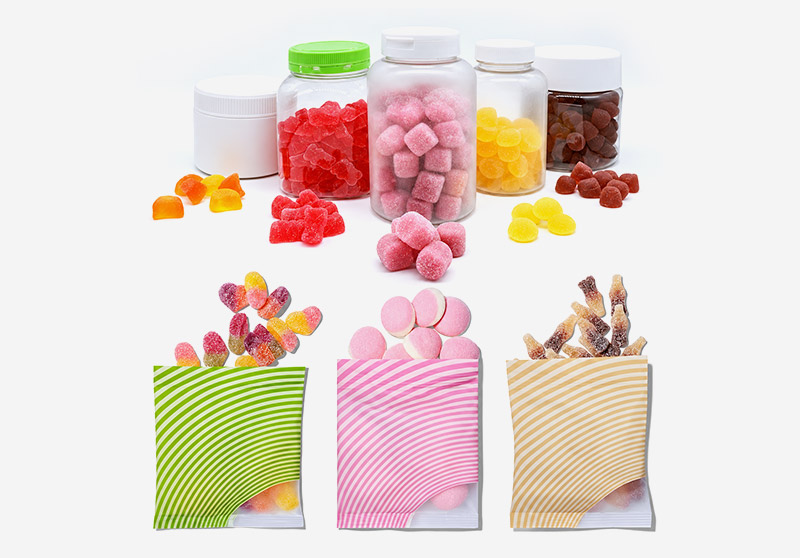
When the specification calls for a target net weight per portion, weighing directly matches that task. For some gummies sold in pouches by net weight, a multihead weigher may be worth evaluating with the pouch packaging equipment. That is a different measurement requirement from a bottle sold by count.
The system first creates a portion by weight, then transfers it to the packaging equipment for filling and sealing. Evaluate the portion weight, product feeding, and receiving arrangement together for the actual product.
Before borrowing another line’s configuration, ask three questions:
- Is that equipment creating portions, or checking packages after filling?
- Is the order delivered by count or by net weight?
- Are the product and package format comparable to yours?
A demonstration is useful when those conditions match. For supplement orders that specify a number of pieces per bottle, we would still start with counting, then consider bottle checkweighing for the defined checking task.
5.What a multihead weigher does and what to check
It combines weights from several hoppers
A multihead weigher distributes product among several weighing hoppers, weighs the contents of each, and compares combinations of those weights. The control system selects a combination suited to the target portion weight, then the selected hoppers release their product into the collection and discharge path.
The basic process has three steps:
- Distribute product among the weighing units and obtain each hopper’s weight.
- Compare combinations of those weights and select one suited to the specified target.
- Discharge the selected hoppers through the collection and discharge path into the downstream packaging equipment.
The multihead weighing task
A multihead weigher selects and discharges a combination based on hopper weights. The number of units and selected combination shown here are illustrative.
It directly controls the combined portion weight. That weight combination alone does not establish a specified number of pieces in each discharge.
Check the complete feeding and discharge arrangement
Assess how the weigher, feeding equipment, discharge path, and packaging machine work together. Layout, product transfer, and product integrity depend on the proposed model and the actual material.
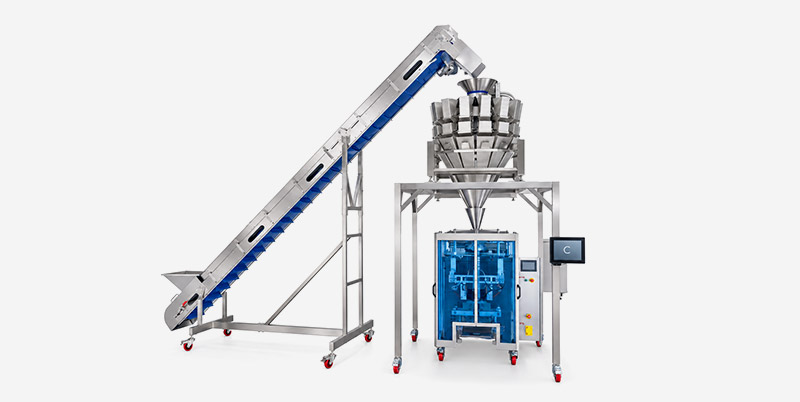
A complete multihead weighing arrangement: an incline conveyor feeds the weigher, and the packaging machine below receives each portion.
These conditions vary by machine and material; there is no single conclusion that applies to every multihead weigher. Counters also require feeding and discharge assessment. Evaluate product integrity with actual samples.
For an order specified by bottle count, the first question remains how the filling process controls that count. Layout and handling assessments cannot replace the quantity requirement.
6.Gummies: choose by fill quantity and packaging format
Gummy bottles sold by count use a counting route
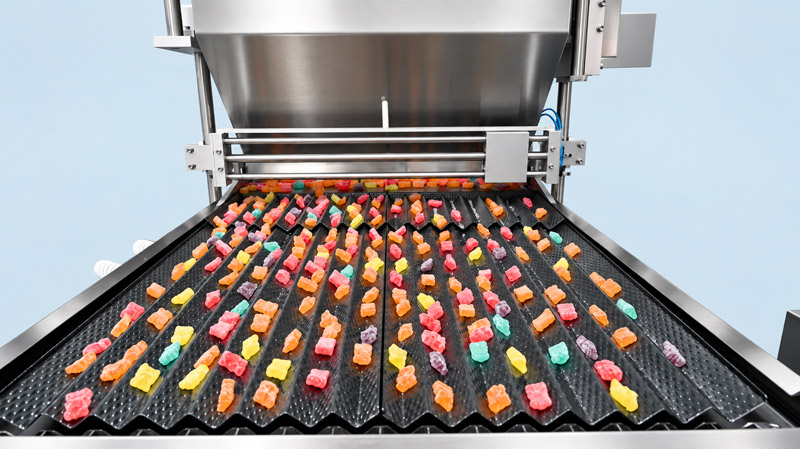
For gummies in plastic bottles with a specified number of pieces, evaluate a counting route. The shared requirement with tablets and capsules is the count you deliver, rather than a target portion weight. Still, assess the actual gummies separately before deciding that a particular counting configuration is suitable.
Pouches may call for weighing or counting、
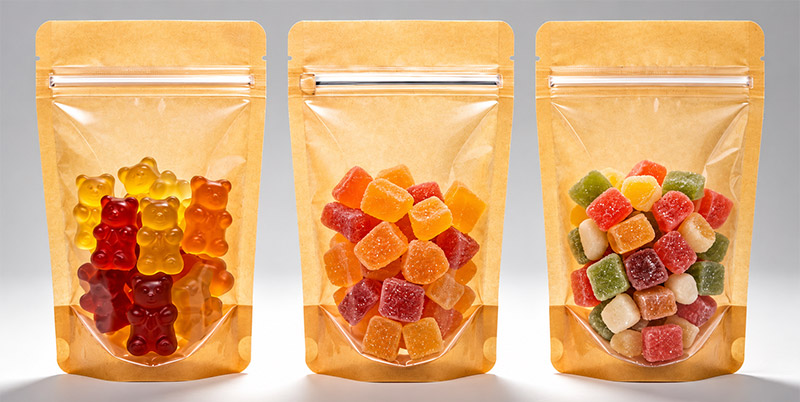
For gummy pouches, start with the quantity specification. A target net weight calls for weight-based portioning; a specified piece count still requires a counting task.
Gummy packaging routes
Bottle or pouch defines the package format. Count or net weight defines the measurement task.
The examples separate quantity requirements from package format. Pouches do not automatically mean weighing; the bottle example is an order specified by count.
The bottle or pouch determines the downstream packaging format. Count or net weight determines the measurement task. The package format alone does not determine whether to count or weigh.
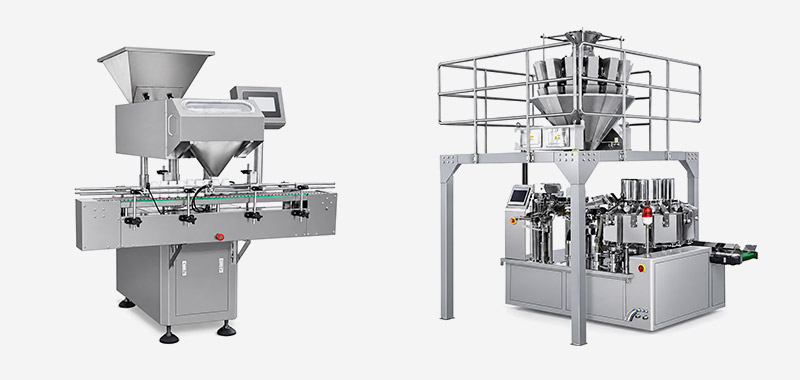
AIPAK’s counting machine & rotary pouch filling machine
For premade pouch or rotary pouch equipment, also confirm how portioning works with bag pickup, opening, receiving, and sealing. Evaluate gummy bottling and pouch packaging as separate configurations.
7.Don't confuse weigh-filling with a checkweigher
A multihead weigher creates portions by weight during filling. A checkweigher measures bottles that have already been filled, compares their total weight with a preset range, and works with the specified rejection arrangement to handle bottles outside that range. It performs a checking task; it does not count and fill the products.
Filling and bottle weight checking
A checkweigher checks weight after product filling. Confirm its position and handling of bottles outside the range against the actual configuration.
In the counting line configurations discussed here, checkweighing is typically placed before capping, where an identified issue is easier to address. Confirm the position around the inspection objective and other stations, including desiccant or cotton insertion where specified.
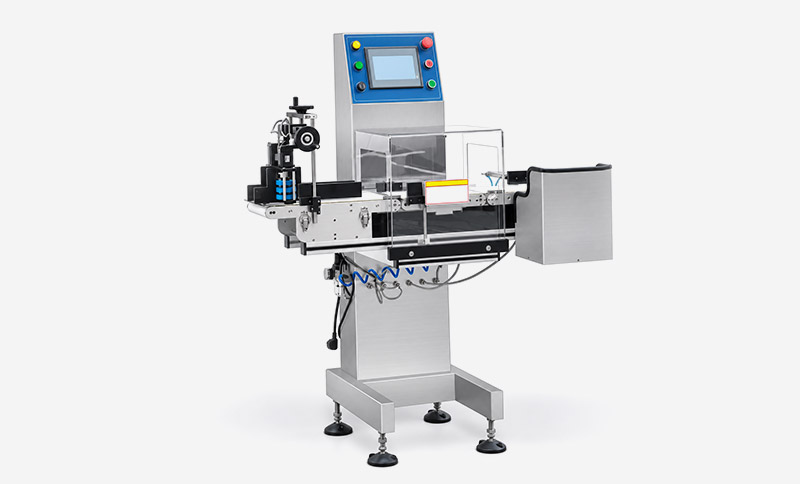
A bottle checkweigher: filled bottles are weighed on the conveyor, and bottles outside the preset weight range go to the reject bin.
If you want checkweighing to identify a bottle missing one piece, validate that task against piece weight variation, empty bottle weight variation, and operating conditions. Adding a checkweigher does not by itself guarantee the count in every bottle.
Define the counting, weight checking, and rejection tasks separately. That tells you which equipment is needed and which conditions the acceptance test must cover.
Frequently asked questions
START WITH YOUR PACKAGING REQUIREMENTS
Send us your product and dosage form, required count or target net weight, package format, and target output. We will reply within 24 hours to review the measurement and packaging configuration for your requirements.
Prefer to talk it through? +1 (213) 526-8644