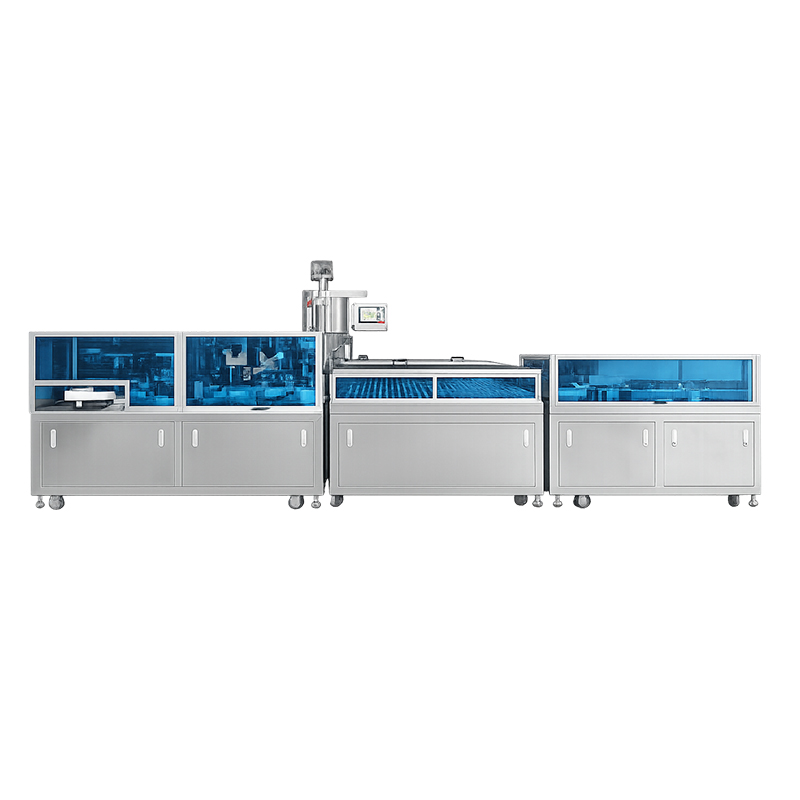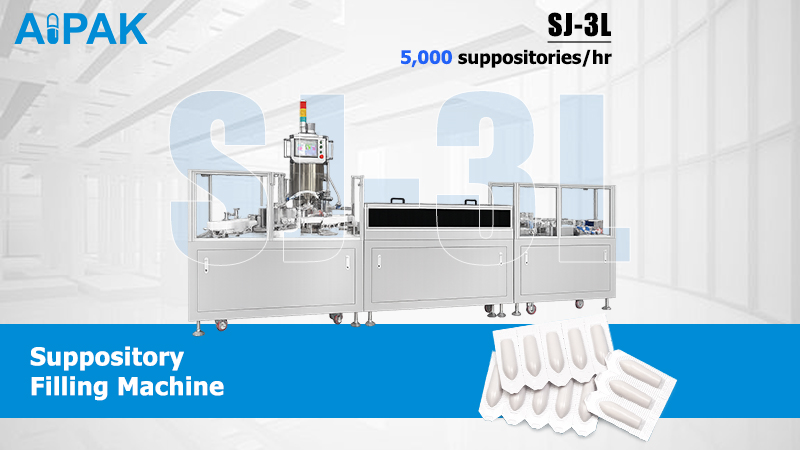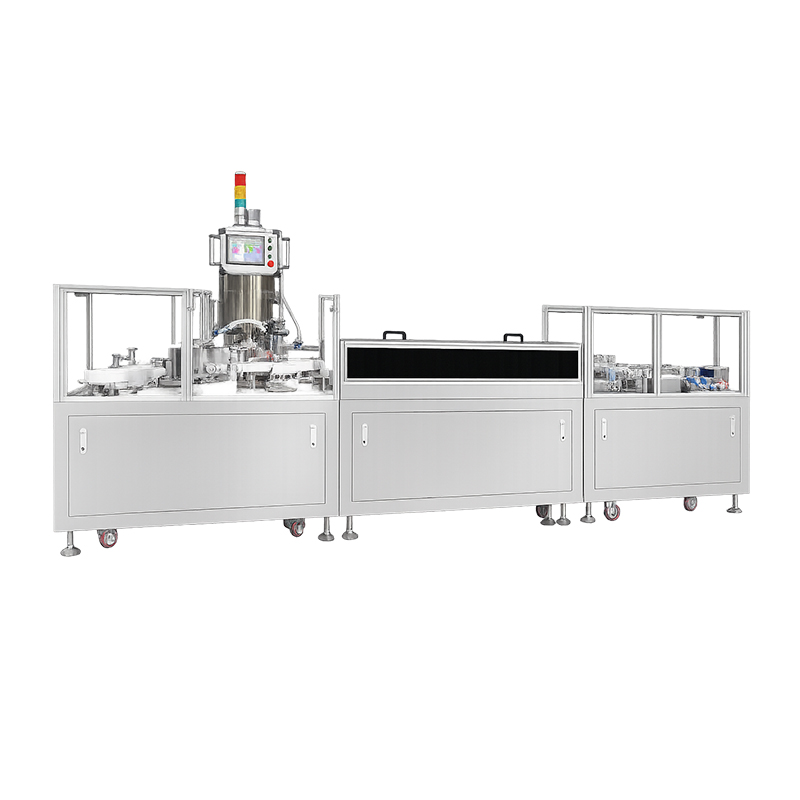
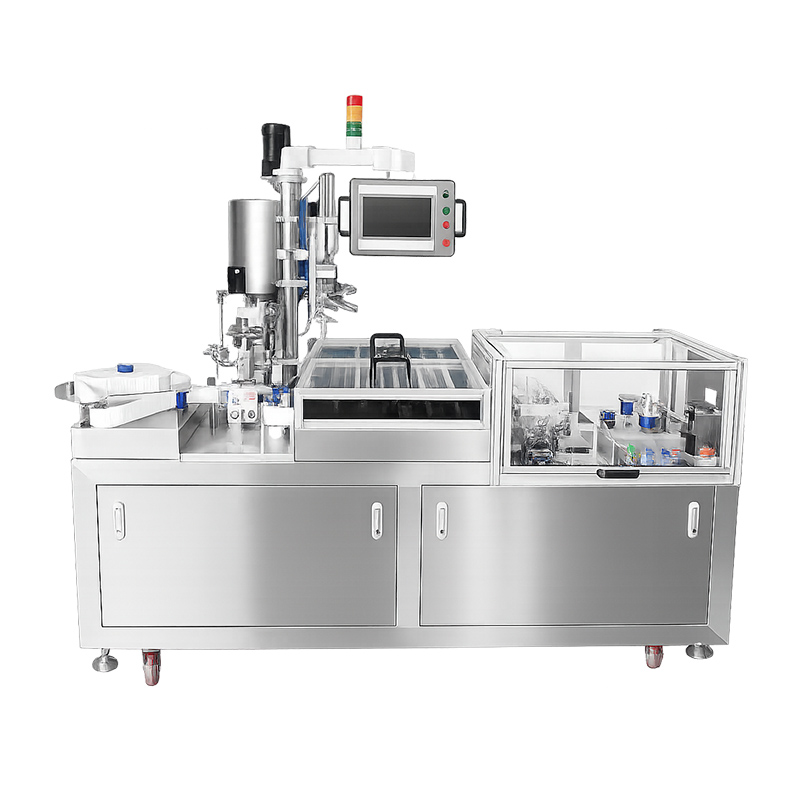
SJ-3L Automatic Suppository Production Line

5,000 suppositories an hour — shells formed, filled, cooled, sealed and cut in one line

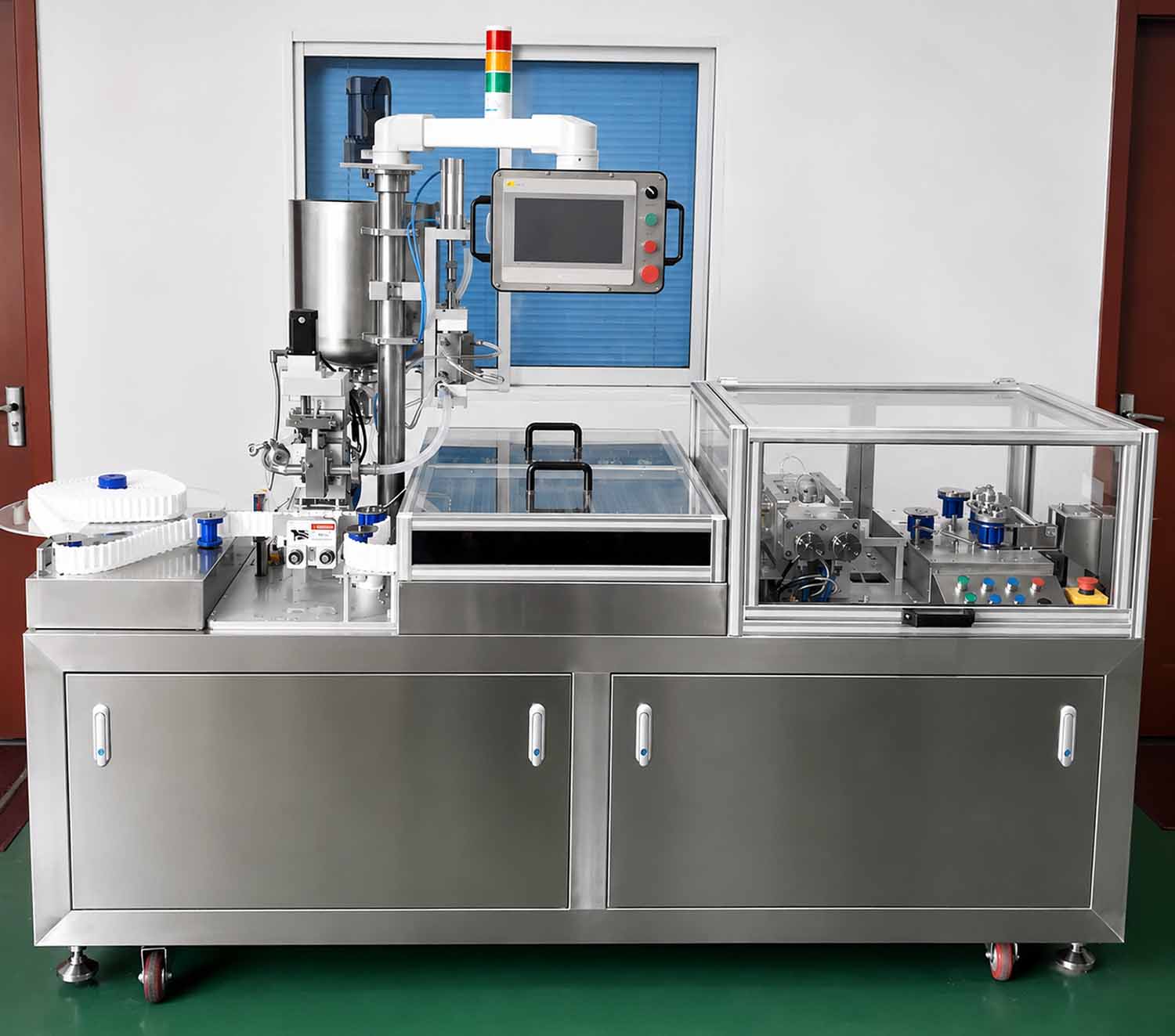
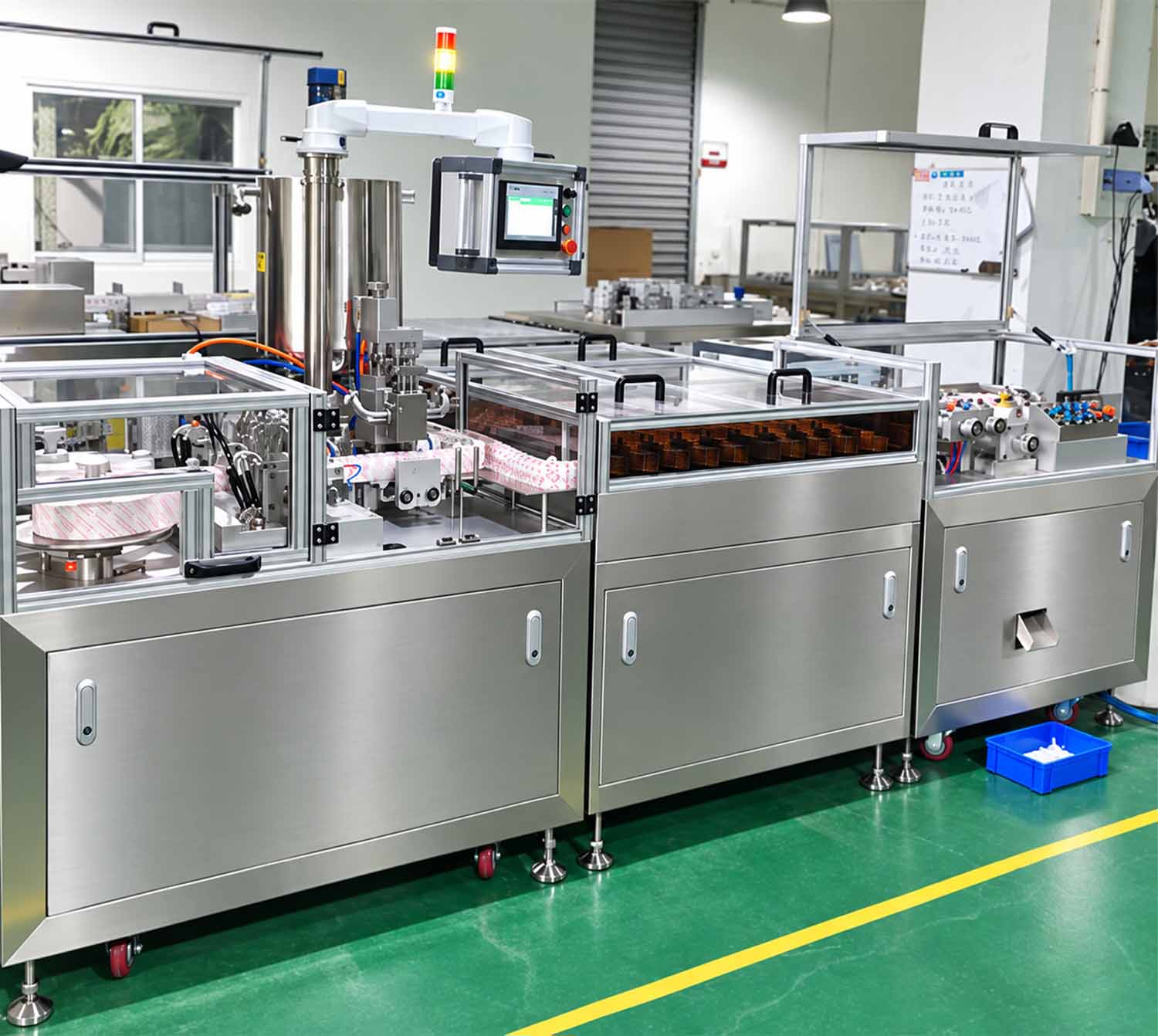
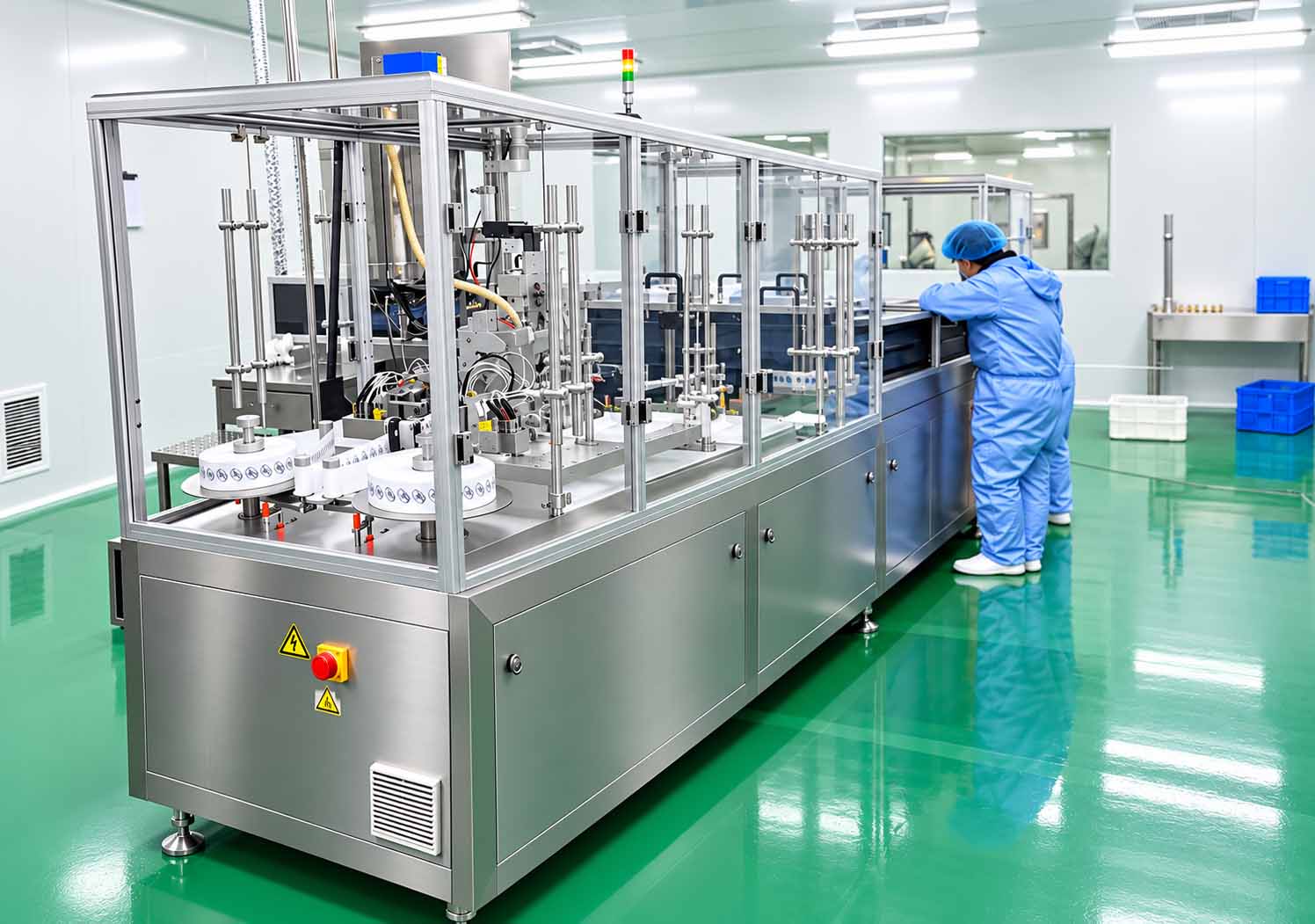
This is the step from pilot batches to production. PVC/PE film is formed into shells, three filling heads dose the heated base, a graded cooling section sets it from the outside in, and the strip is sealed, stamped with the lot number and cut with an easy-tear notch — all in one line, 5,000 an hour.

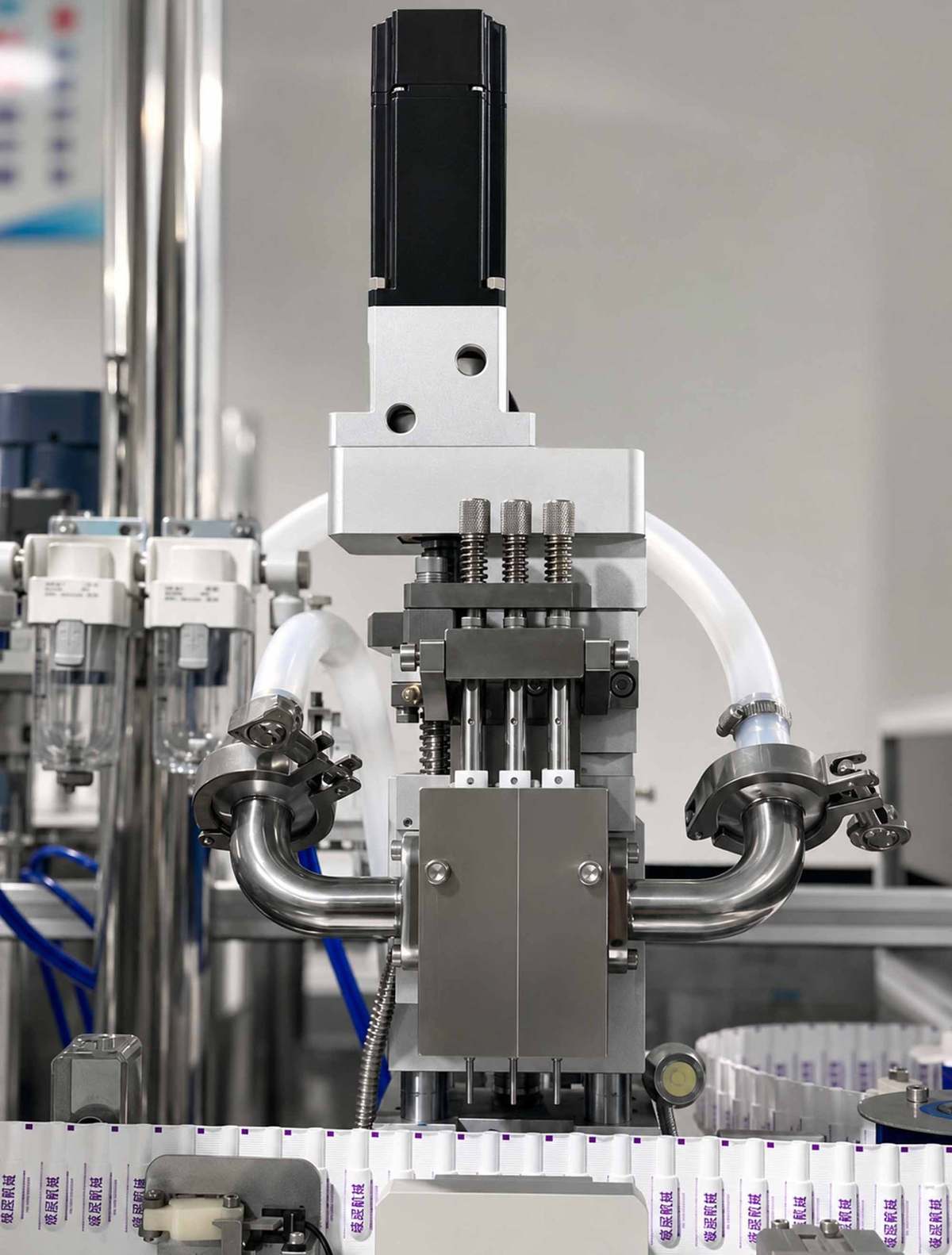
1. Output: 5,000 suppositories an hour, three filling heads

2. Shells formed in line: from PVC/PE film, 0.15–0.18 mm

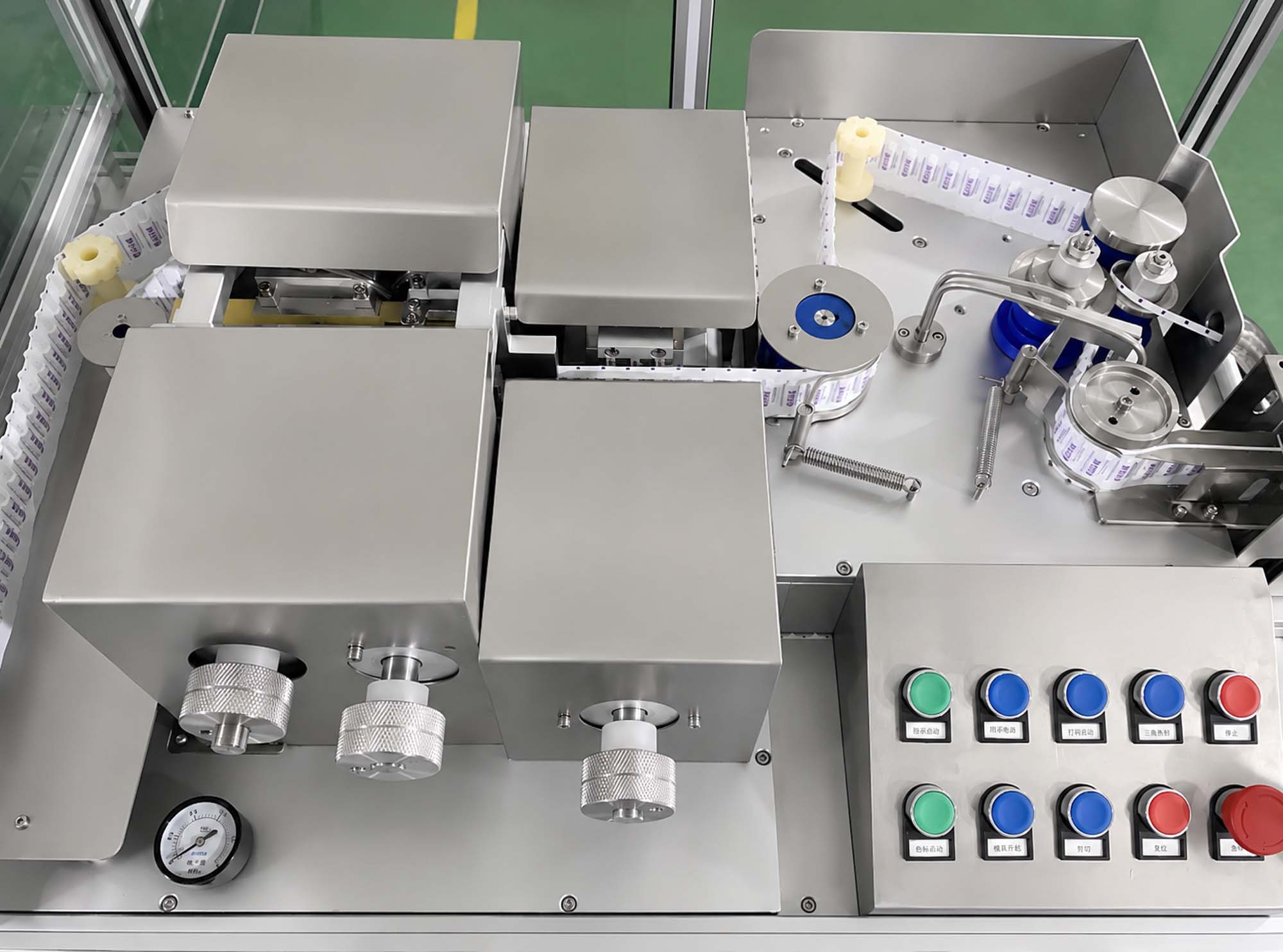
3. Easy-tear strips: triangle notch and dotted tear line cut at one station

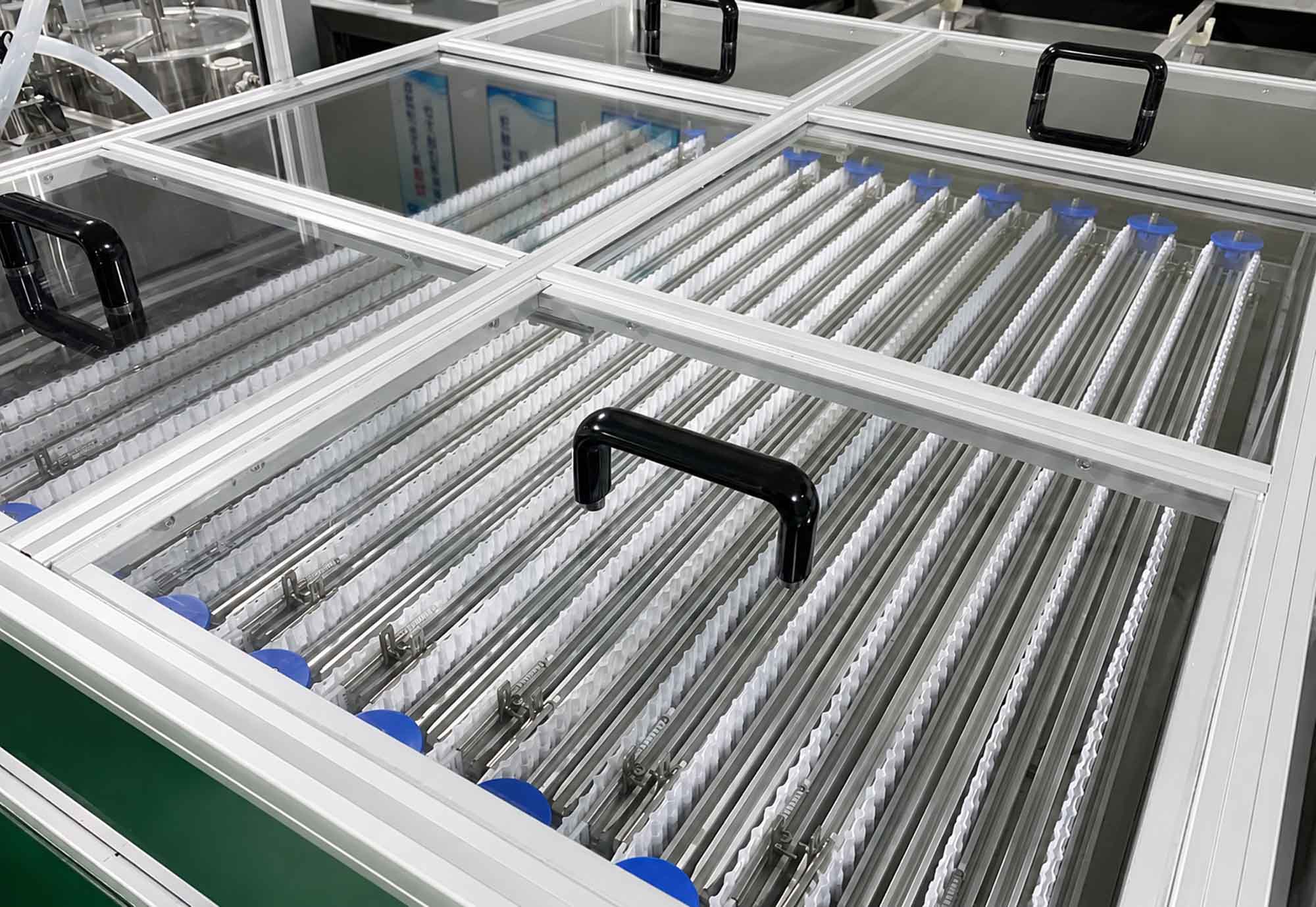
4. Graded cooling:the base sets gradually, so strips tear cleanly

Is the SJ-3L the right size for you?

✓ This is a fit if…

✕ Buy something else if…

Shells Formed from Film, in Line

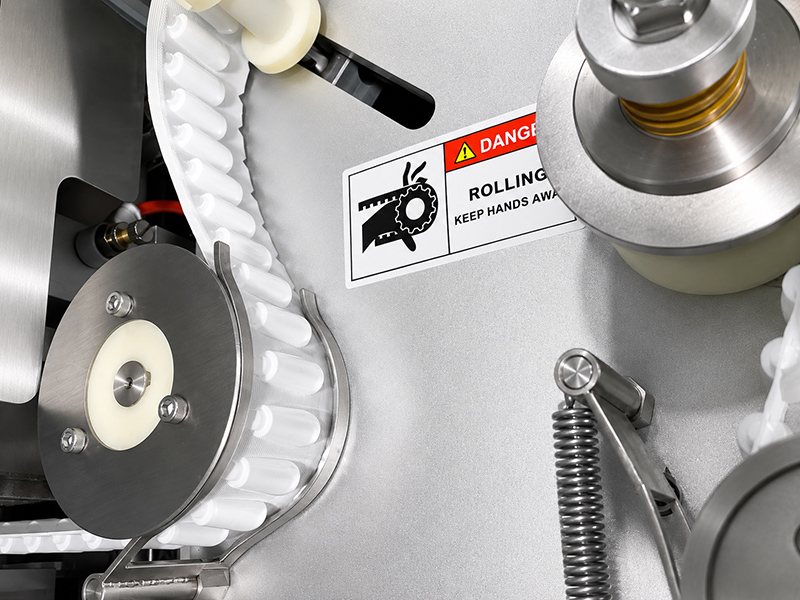
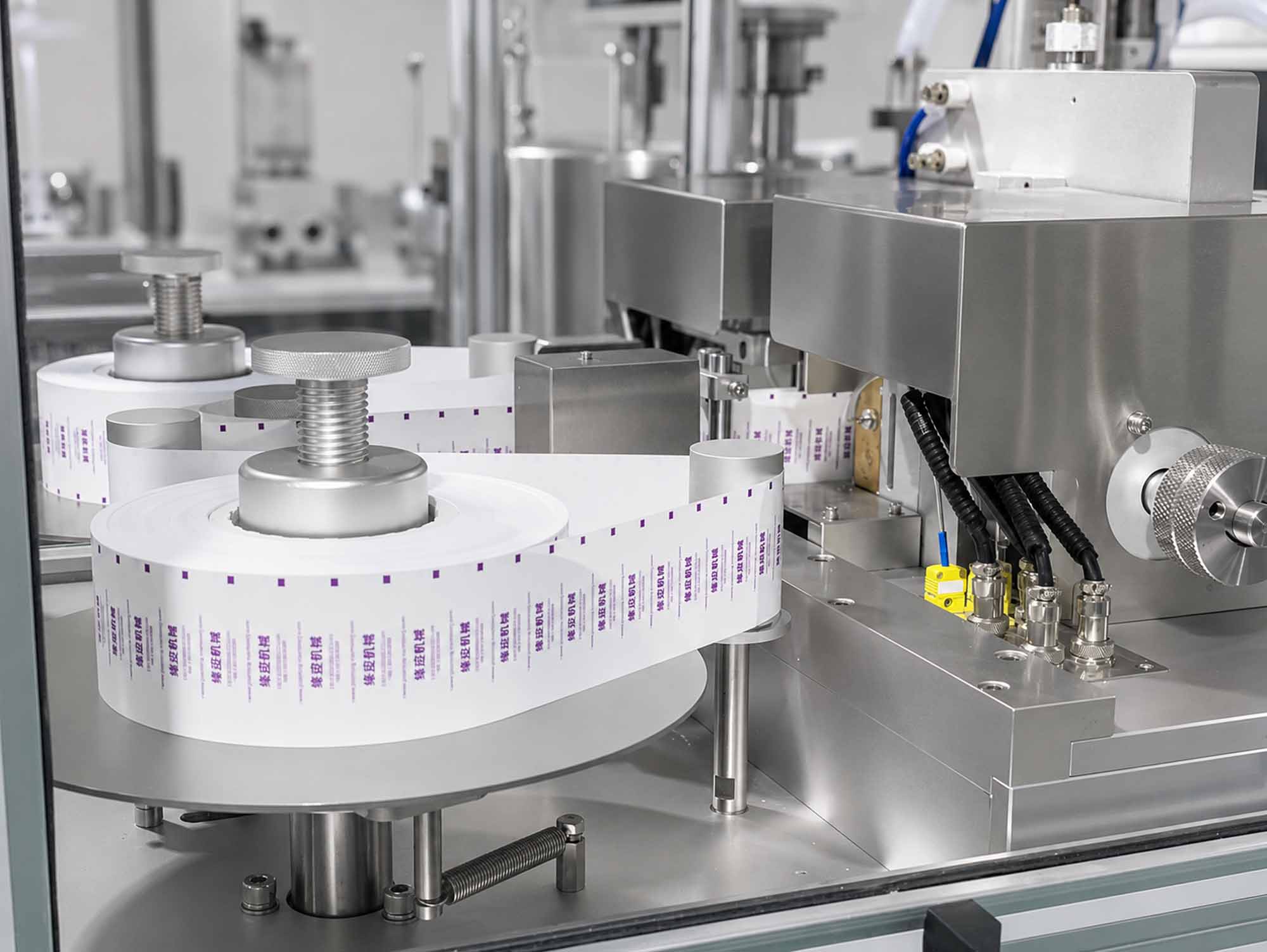
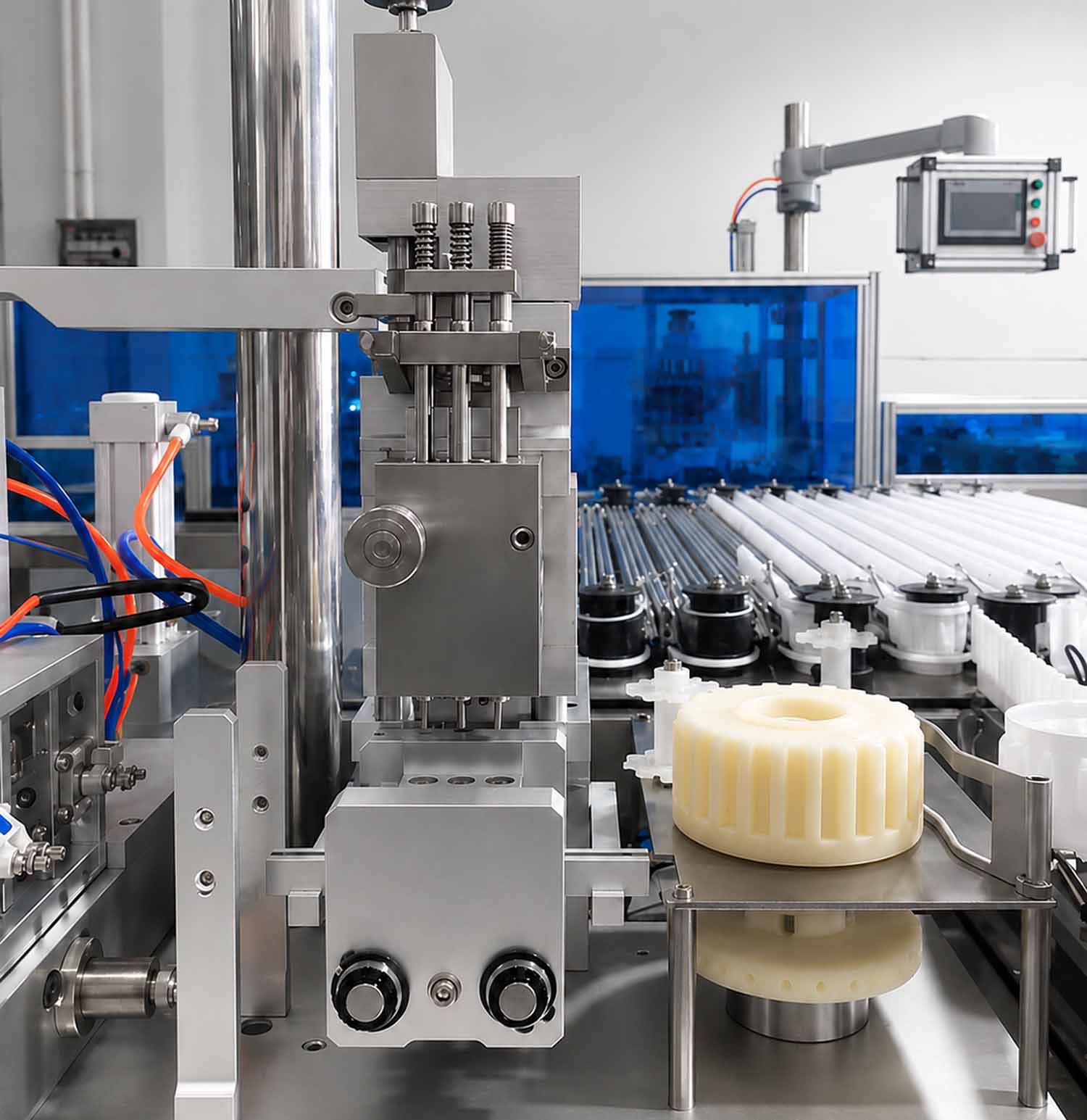
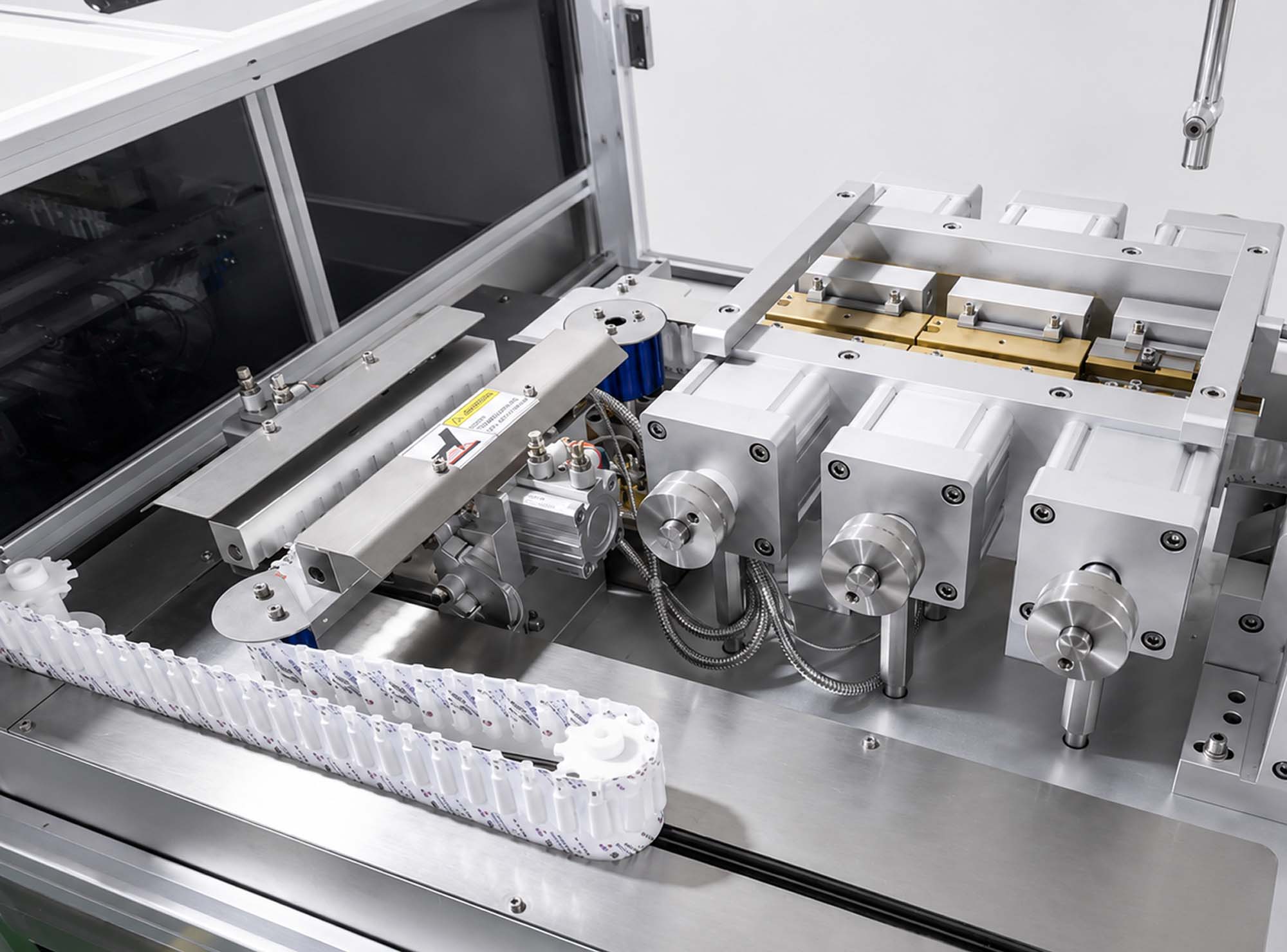
PVC/PE film is clamped, preheated, heated and blown into shells before it reaches the filler. No separate shell-making machine and no bought-in shells.

Three Filling Heads, Adjusted Individually

Three plunger pumps dose the base, each fine-tuned on its own. Filling is adjusted manually as standard; servo filling, set from the touchscreen, is available as an option.  

Static Removed Before Filling

Film running at speed picks up static, and static pulls base up the shell wall toward the seal. The line neutralizes the charge just before the filling station, so the base settles in the shell and the seal stays clean.

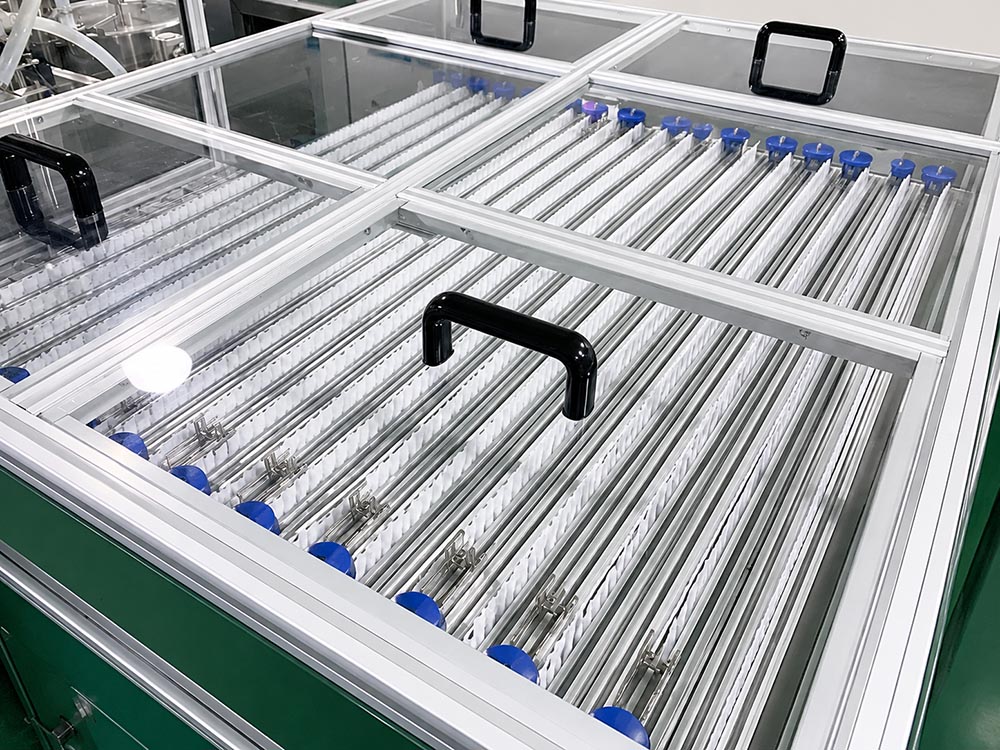
Graded Cooling

Filled strips pass through cooling zones at stepped temperatures rather than one cold blast. The base sets evenly, so the tail edge stays thick and the strip tears without crumbling.

Easy-Tear Notch and Dotted Line at One Station

The triangle notch and the dotted tear line are cut by one combined knife, so they always line up. The strip tears where it should.

Technical specification

Parameter

SJ-3L

What it means for you

Output

5,000 suppositories/hour

—

Filling heads

3, plunger type

—

Fill

0.5–5 g per suppository

—

Fill accuracy

±2%

—

Fill adjustment

Manual; servo optional

—

Base tank

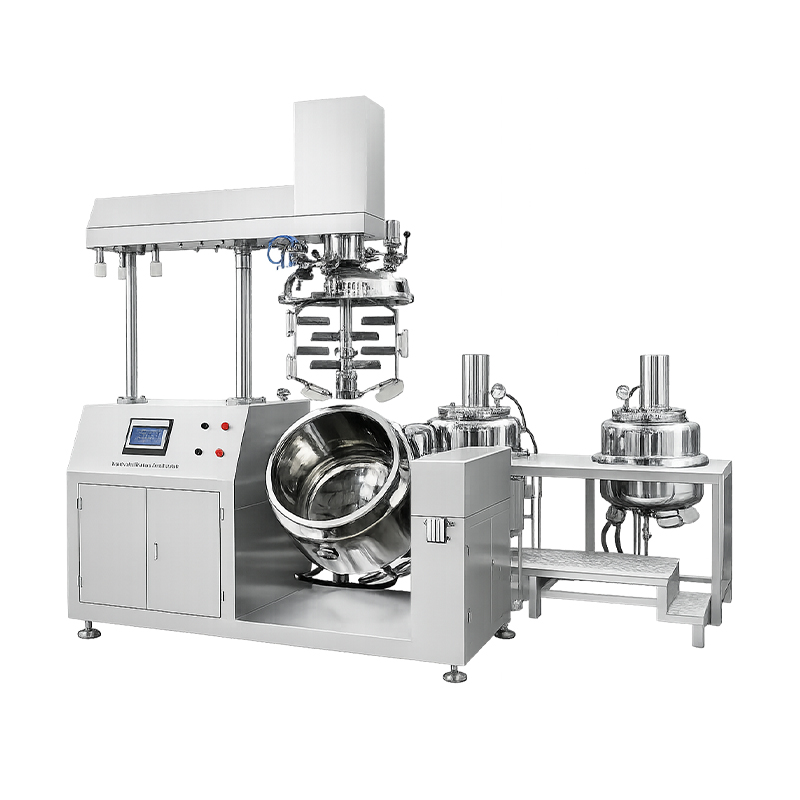
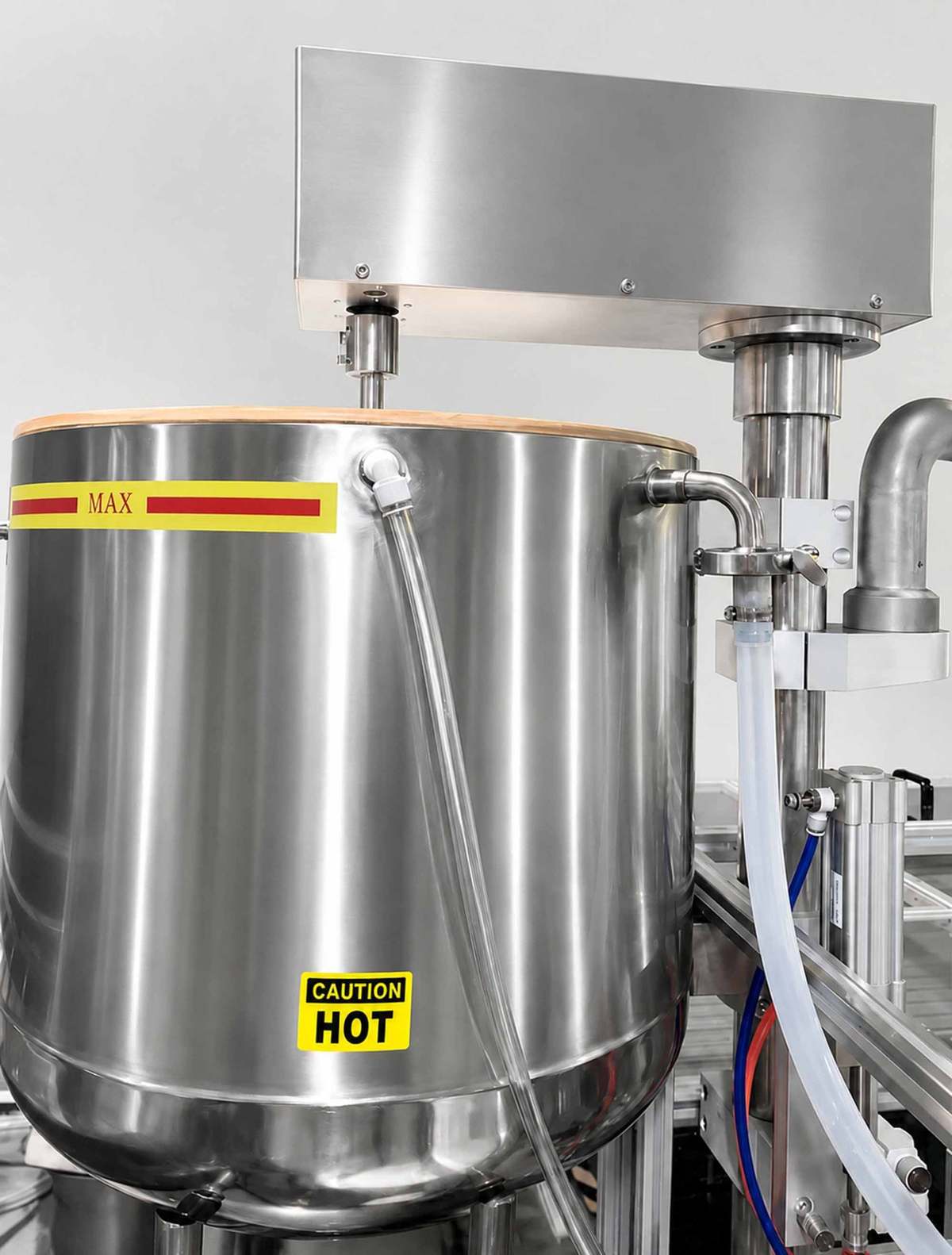
30 L, 316L, heated and stirred

—

Bases

Hard fat, glycerinated gelatin, PEG

—

Shapes

Bullet, torpedo, duck-bill

Mold made to your shape

Film

PVC/PE, 0.15–0.18 mm, roll up to 270 mm

—

Suppository pitch

17.4 mm

—

Cooling

Graded, 2P chiller, water 50 kg/h recirculated

—

Compressed air

≥0.7 MPa, 1.5 m³/min

—

Power

 5 kW, three-phase

Built to your local supply; we confirm the voltage and frequency with your quote

Controls

industrial PLC and touchscreen

—

Dimensions

3,587 × 1,388 × 1,828 mm

—

Weight

1,000 kg

—

Options

Servo filling, servo transfer, color-mark registration, empty-shell detection and rejection

Standard on the SJ-7L

Model comparison

Model

Output

Filling heads

Fill adjustment

Shell forming

Easy-tear cutter

Weight

SJ-1L

1,000–1,500/h

3

Manua

No — pre-formed shells

—

450 kg

SJ-3L

5,000/h

3

Manual, servo optional

Yes

Yes

1,000 kg

SJ-7L

10,000–12,000/h

7

Servo

Yes

Yes

2,000 kg


Industry Applications

Scaling Up a Settled Formulation

A formulation proven on a pilot machine, moved to a line that forms its own shells and runs a full shift of production.

Retail Strips with an Easy-Tear Notch

Suppositories sold over the counter in strips the customer can tear open without scissors.

Boric Acid and Probiotic Vaginal Suppositories

Formats sold over the counter in the U.S., on a hard-fat or glycerinated gelatin base.

Contract Manufacturing

Several clients’ products on one line, each with its own mould and base temperature.

What changing over involves

What changedWhat you adjustRoughly
Different fillAdjust each filling head15–30 minutes
Different baseTank temperature and stirrer speed; clean tank and line15–30 minutes
Different shapeChange the forming mould15–30 minutes
Suppositories per stripSet on the touchscreenA few minutes

What to check before you buy

01

Your base, at its melting point

Hard fat, glycerinated gelatin and PEG all behave differently in a heated line. Ask any supplier to run your actual base, not a sample of theirs.

02

What happens before and after filling

Some machines form the shells, fill, cool and seal in one line. Others only fill and seal, and the shells come from somewhere else. Ask which you're buying.

03

Your power supply

Most suppository lines are built for 380 V, 50 Hz. Confirm your voltage and frequency before the machine is built, not after it arrives.

Why Choose AIPAK?

One Point of Contact

You deal with us for the machine, the moulds, the spare parts and the service call. If something goes wrong on your floor, there’s one number to ring and one team responsible for fixing it.

We Run Your Base Before You Order

Send us a sample of your base material and we will conduct a test run on our machine. We will ship back completed suppository strips so you can evaluate dosing precision, sealing integrity, and peelability on your exact formula before making a commitment.

A U.S. Number, Answered by Us

+1 (213) 526-8644, answered by our engineers 9 AM–7 PM China time, Monday to Friday. That’s evening and overnight in the U.S., so leave a message or send a WhatsApp anytime and we’ll pick it up first thing.

Spare Parts and Lead Time, in Writing

Wear parts and moulds are listed and priced in your quote before you sign. Lead time is confirmed in writing with your order — not estimated on a call.

Expanded FAQ Section: SJ-3L Suppository Filling Line

How does the "Fractional Cooling System" improve the quality of the final product?

Standard refrigeration often leads to uneven contraction of the suppository base, which makes the base brittle, so it crumbles when the strip is torn open. Graded cooling sets the base in steps from the outside in, so the tail edge stays thick and the strip tears cleanly.  

What is the primary benefit of the "Triangle & Dotted Line Knife" structure?

In conventional equipment, the triangular tear notch and the linear dotted perforation line are often processed by two independent stations, which can lead to misalignment. One combined knife cuts both, so they always line up and the strip tears along the line.

How do you prevent the "hanging wall" (material sticking) phenomenon during filling?

This is a common issue caused by high-precision pumps struggling with varying viscosities. We resolve this using two technologies: a specialized mirror-finish processing of the pump’s inner wall and an electrostatic removal system at the filling inlet. This combination prevents drug particles from adhering to the pump or climbing the shell wall due to static electricity, ensuring accurate dosage.

Is the SJ-3L suitable for drug matrices with varying viscosity levels?

Yes. The liquid storage tank is equipped with an independent mixing device and a variable-speed regulating system. This ensures that even high-viscosity or complex drug matrices rstay evenly mixed through the run, so the active doesn’t settle in the tank that could otherwise lead to inaccurate active ingredient distribution.

How does the PLC system assist operators during the production process?

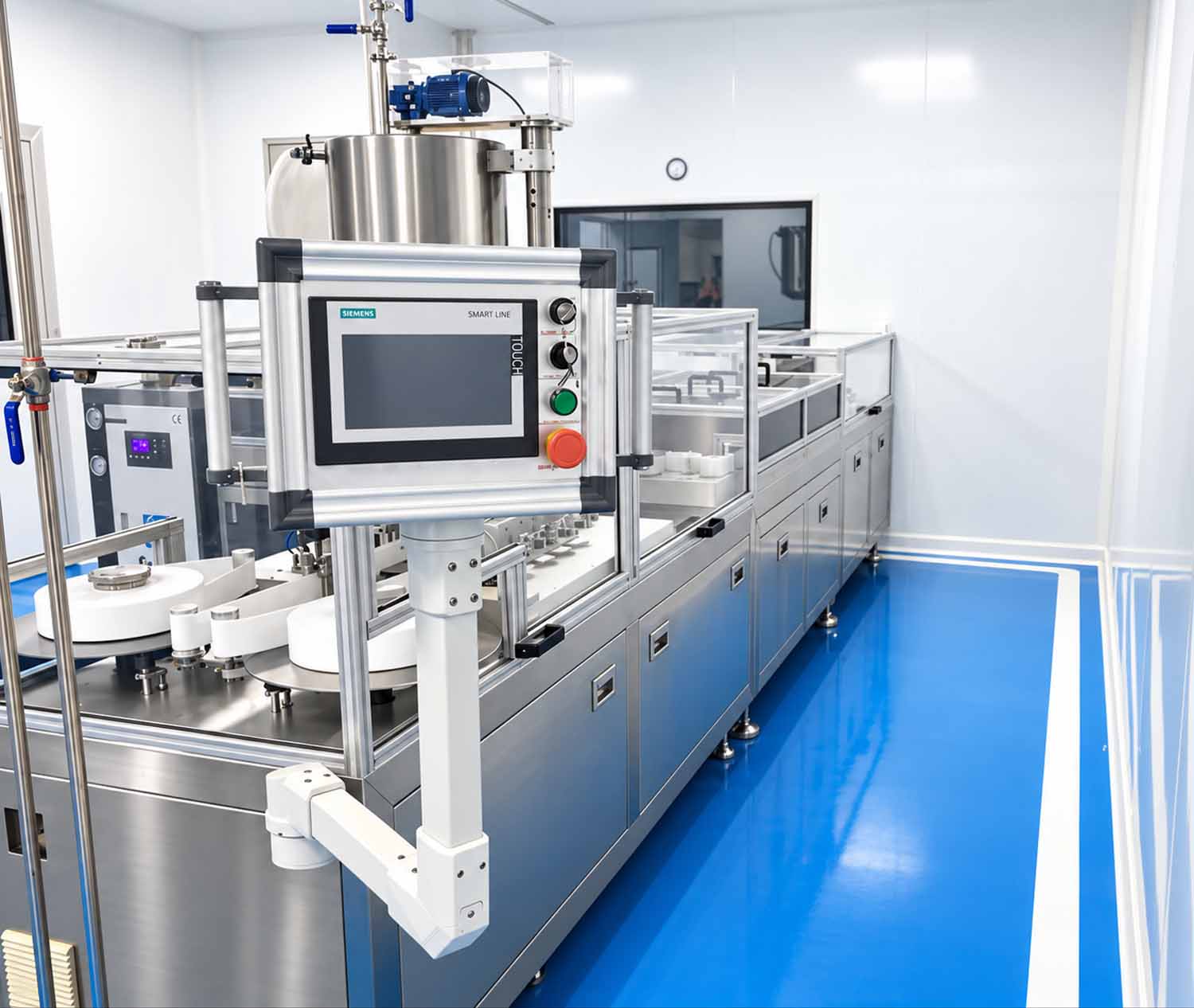
The SJ-3L is integrated with An industrial PLC that features a robust online monitoring and alarm system. If a mechanical station encounters a fault, the system immediately triggers an alarm and displays the specific cause of the failure on the touch screen, allowing for rapid troubleshooting and minimal downtime.

Can the machine handle different suppository shapes?

 Yes, the SJ-3L is highly versatile and is engineered to process special shapes, including bullet, torpedo, and duck-bill configurations. The forming molds are designed to be easily interchangeable to meet your specific product specification requirements.

How is the dosage accuracy maintained at high speeds?

The equipment is engineered to maintain a precise dosing accuracy of ±2% at continuous production speeds. The standard configuration utilizes a highly reliable precision mechanical adjustment system for the filling volume. For fully digital control, an optional servo-driven filling system is also available, which allows operators to adjust the filling volume and motion directly via the PLC touch screen.

Does it come with servo filling?

The standard configuration features manual adjustment, while servo filling is available as an optional upgrade.

What's the difference between the SJ-3L and the SJ-7LS?

The primary difference is the output capacity: the SJ-3L produces around 5,000 suppositories per hour, whereas the SJ-7LS produces 10,000–12,000 per hour. Regarding equipment features, the SJ-7LS includes seven filling heads and comes standard with servo filling, color-mark registration, and empty-shell rejection. On the SJ-3L, these three features are available as optional upgrades.

Does it run on US power?

Yes. We build to your local supply and confirm the voltage and frequency with your quote.

How do spare parts work?

A kit of wear parts ships with your machine. Every part in the kit, and the lead time for anything outside it, is listed in your quote in writing.

Customers Also Interested In...

Send Us Your Base and Your Shape

Two things decide how this machine runs for you: the base, because each one melts and sets at a different temperature, and the shape, because each shape needs its own mould. Tell us both and your fill volume, and we’ll tell you what to expect.

Better still, send us a sample of your base. We’ll run it and send back finished suppositories, so you can check the fill and the seal on your own formulation.

  • Direct from our factory

  • Lead time confirmed in your quote

  • Installation and training available

  • Spare parts listed in your quote

No sales calls — we reply by email or WhatsApp, whichever you gave us.

Scroll to Top