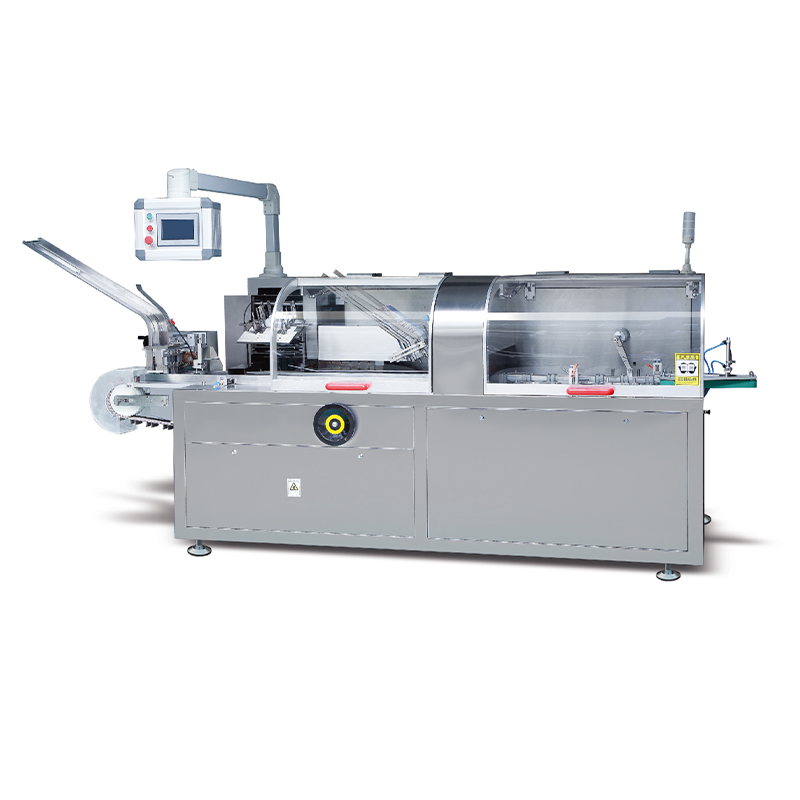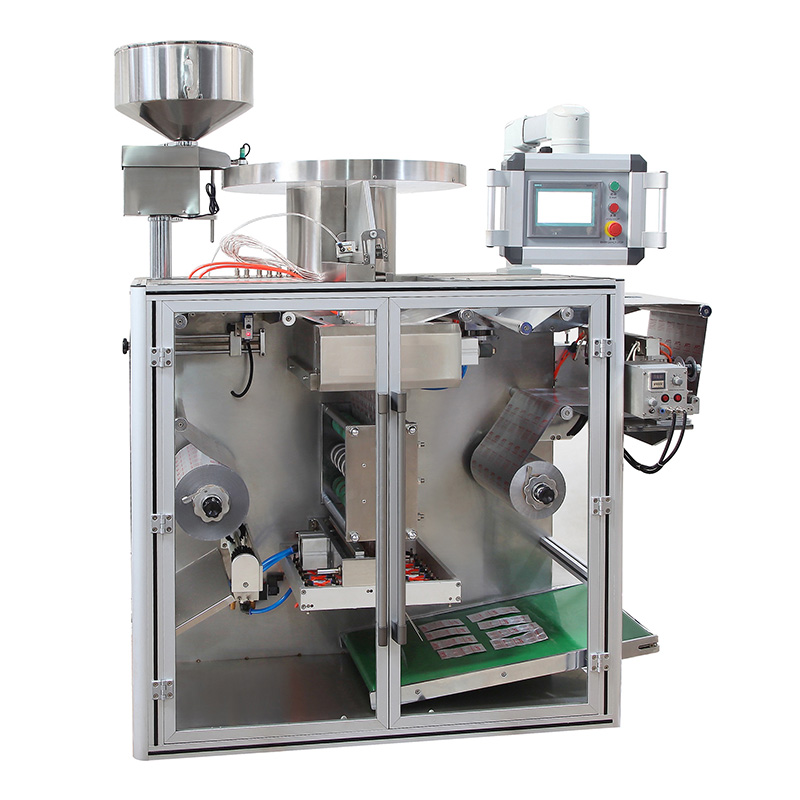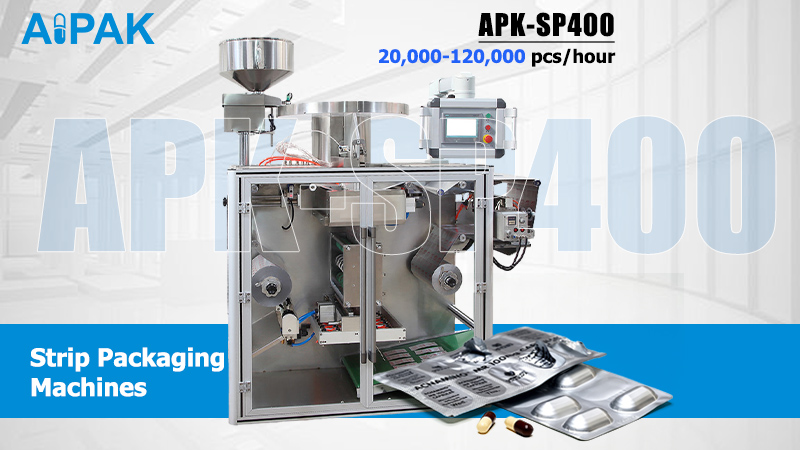
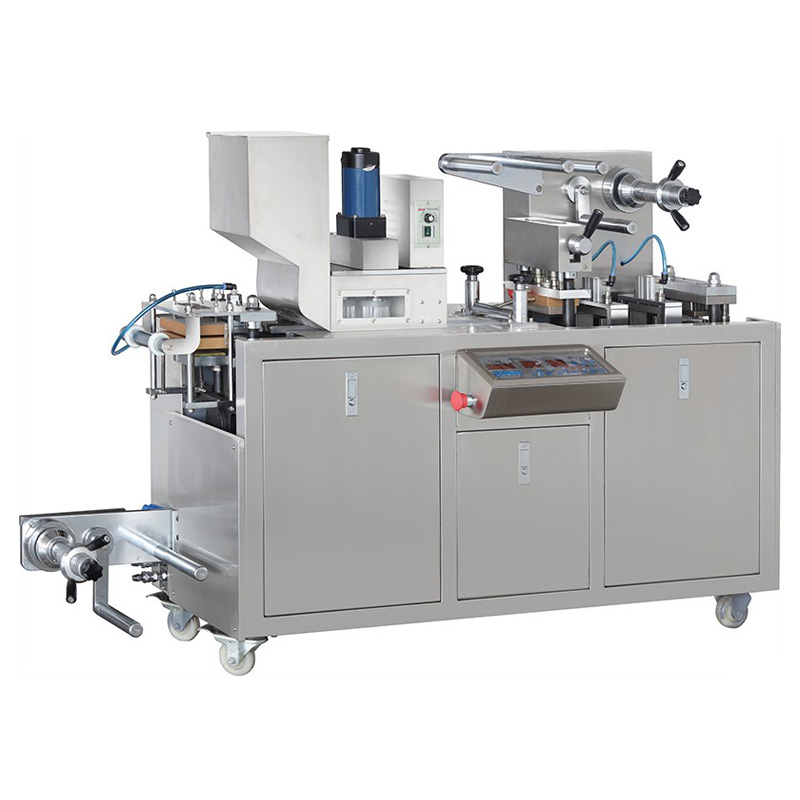
APK-SP400 Strip Packing Machine — 20,000 to 120,000 Tablets an Hour
400 mm film, servo cutting, soft Alu-Alu heated-roller sealing
Same servo cutting and heated-roller sealing as the SP300, on a 400 mm film. The extra width is where the output comes from — more lanes across the rollers at the same drum speed. 20,000 to 120,000 tablets an hour, depending on your tablet and layout.
1. Output: 20,000 to 120,000 tablets an hour, depending on tablet size and layout
2. Film width: 400 mm
3. Cutting: servo — same as the SP300
4. Foil: soft Alu-Alu 0.08–0.10 mm, or plastic-plastic 0.05–0.10 mm
Is this the right machine for you?
✓ Yes, if…
- Your tablets need a full light and moisture barrier
- You need more than 80,000 tablets an hour
- Your strip layout fills a 400 mm film
- You change strip length between SKUs — the cut is set on screen
✕ Buy something else if…
- Your layout doesn't fill 400 mm → the SP300 does the same job on 300 mm for less
- You want every station on servo, not just the cutter → the SP500 runs on a servo motion controller
Technical specification
Feature | APK-SP400 | What it means for you |
Drum speed | 7–14 rpm, stepless | Set on the touchscreen |
Output | 20,000–120,000 pcs/h | Depends on tablet size and how many lanes fit |
Film width | 400 mm | More lanes than the SP300 at the same drum speed |
Alu-plastic laminate | 0.08–0.10 × 400 mm | Soft Alu-Alu strip |
Medical PVC | 0.05–0.10 × 400 mm | For plastic-plastic strips |
Reel core | 70–75 mm | — |
Heating | 1.5 kW × 2 | One per sealing roller |
Main motor | 1.5 kW | — |
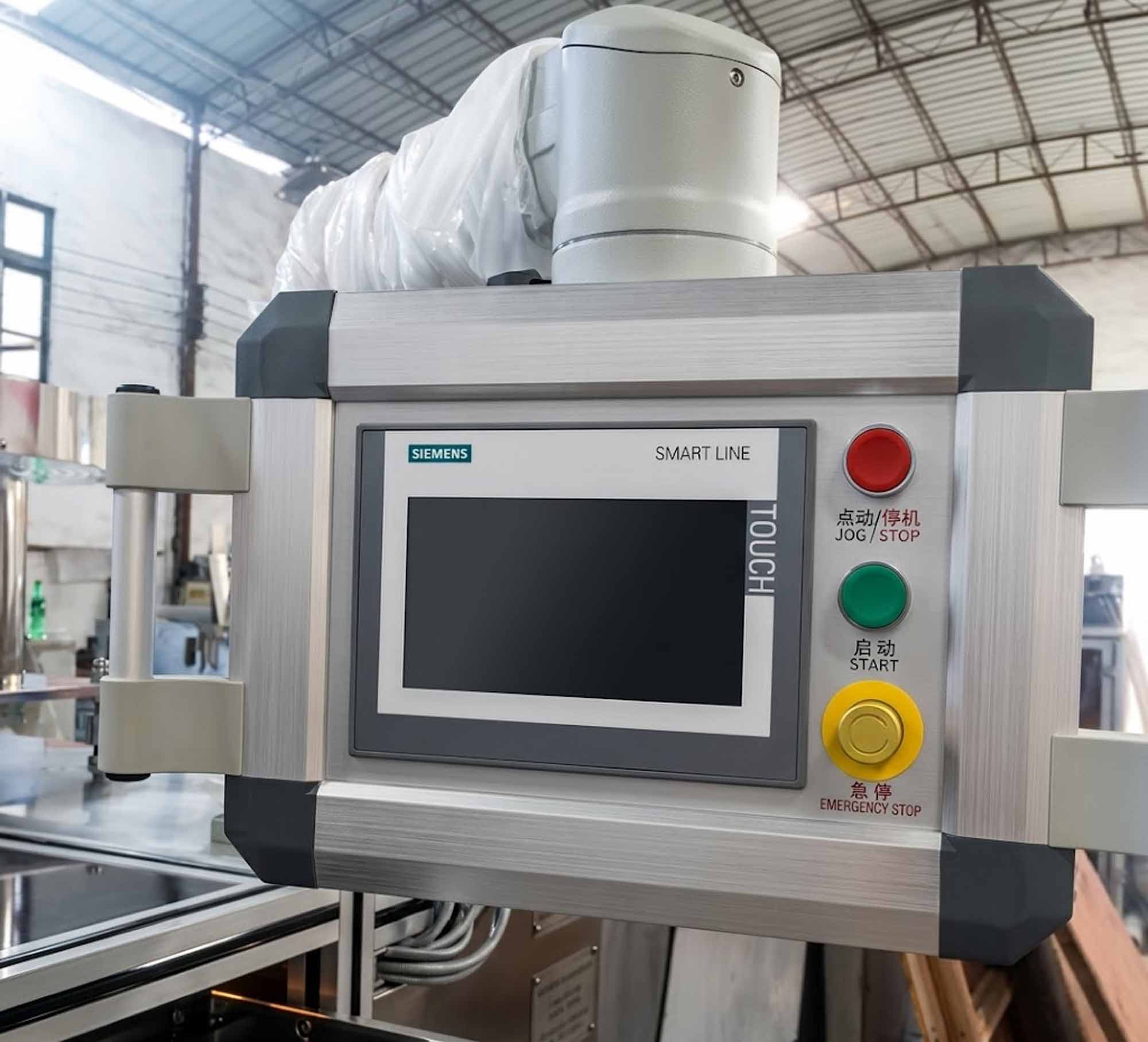
Cutting | Servo | Strip length changes on screen |
Air | 0.4–0.6 MPa, ≥0.1 m³/min | — |
Power supply | 60 Hz | Built to your U.S. supply. We confirm the voltage with your quote |
Dimensions | 1,750 × 1,050 × 2,100 mm | — |
Weight | 1,100 kg | — |
Controls | Siemens PLC, Siemens V20 drive | — |
Model comparison
Model | Film width | Drum speed | Cutting | Output | Heating |
APK-SP220 | 220 mm | 7–14 rpm | Air cylinder | 20,000–60,000 pcs/h | 1.5 kW × 2 |
APK-SP300 | 300 mm | 7–14 rpm | Servo | 20,000–80,000 pcs/h | 1.2 kW × 2 |
APK-SP400 | 400 mm | 7–14 rpm | Servo | 20,000–120,000 pcs/h | 1.5 kW × 2 |
APK-SP500 | 500 mm | 6–20 rpm | Full servo, motion controller | Depends on layout | 1.5 kW × 2 |
The film width sets how many lanes fit across the rollers. The cutting drive sets how easily you change strip layout. Output depends on both — and on your tablet size — so tell us your tablet and your strip layout and we’ll give you your number, not the headline one.
400 mm of Film, More Lanes
The extra width over the SP300 is where the output comes from: more lanes across the rollers at the same drum speed. How many lanes depends on your tablet — send us samples and we’ll lay it out.
Servo-Controlled Cutting
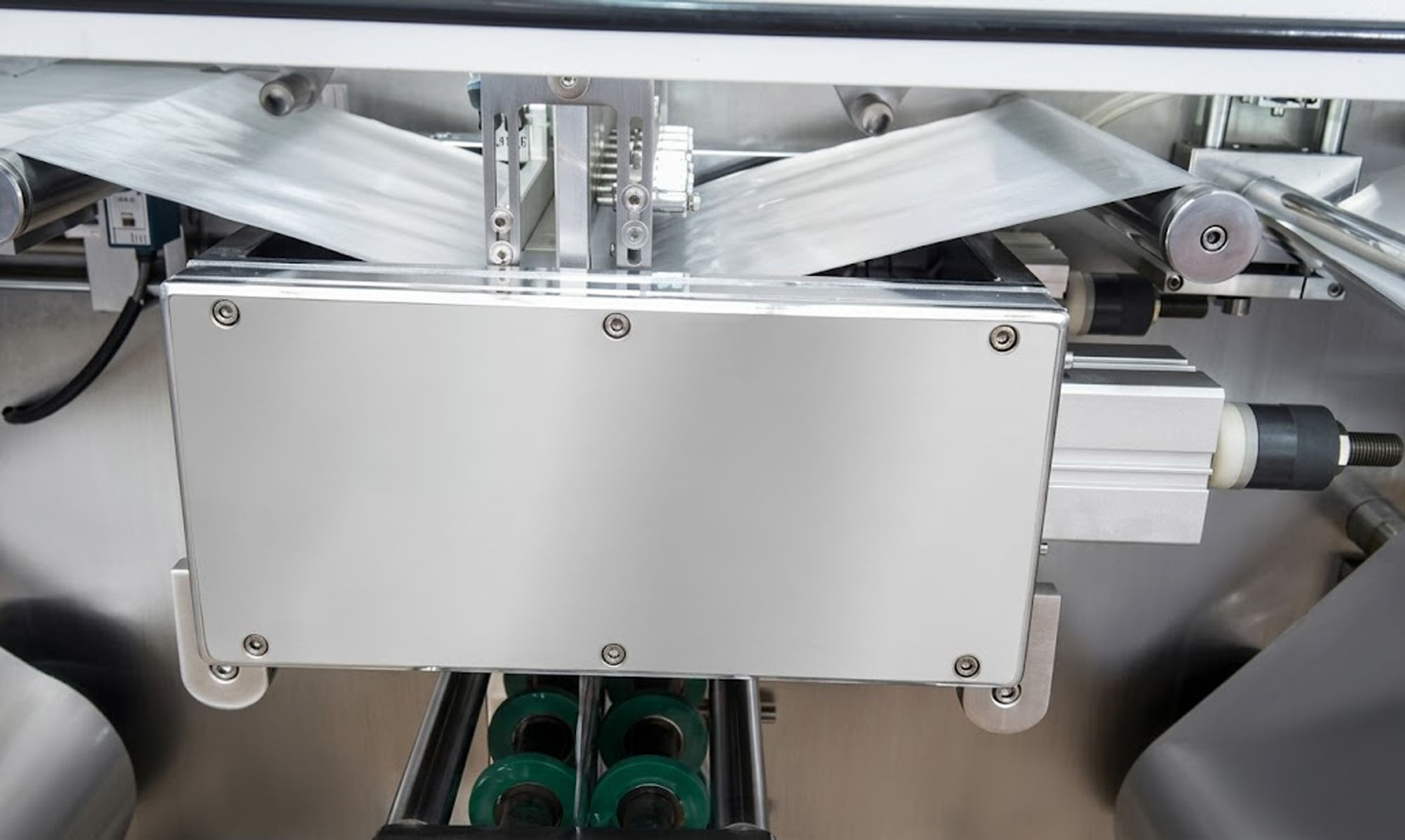
The cut is driven by a servo, the same as on the SP300. Strip length and cutting stroke are set on the touchscreen when you change SKU. A different tablet size still means a different set of sealing rollers.
Heated Rollers, Controlled Separately
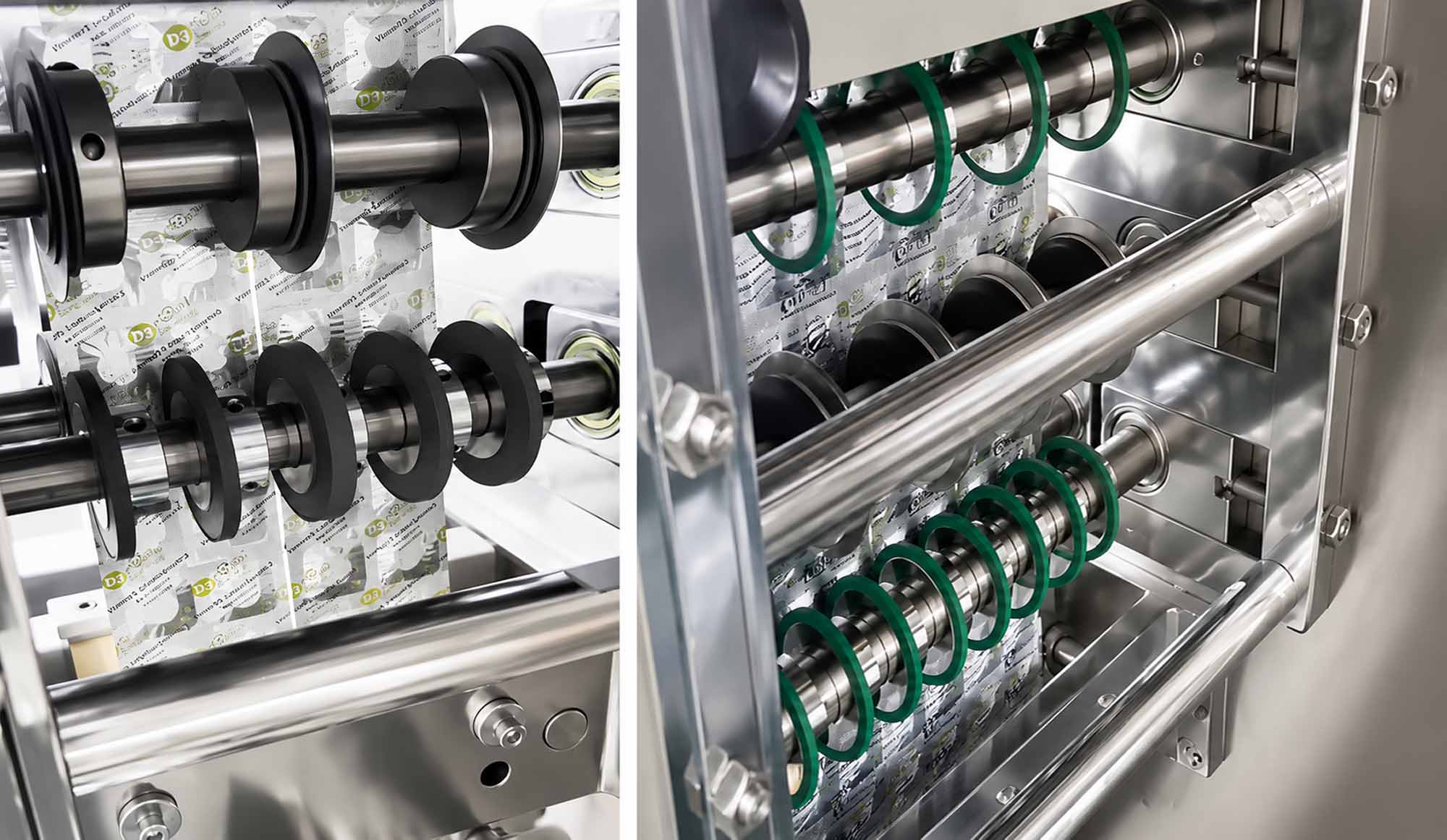
Each sealing roller has its own 1.5 kW heater and its own temperature controller, so the seal stays even across all 400 mm. When you switch between Alu-Alu and plastic-plastic, you set the temperature to suit the material.
Vibratory Feeding with Broken-Tablet Screening
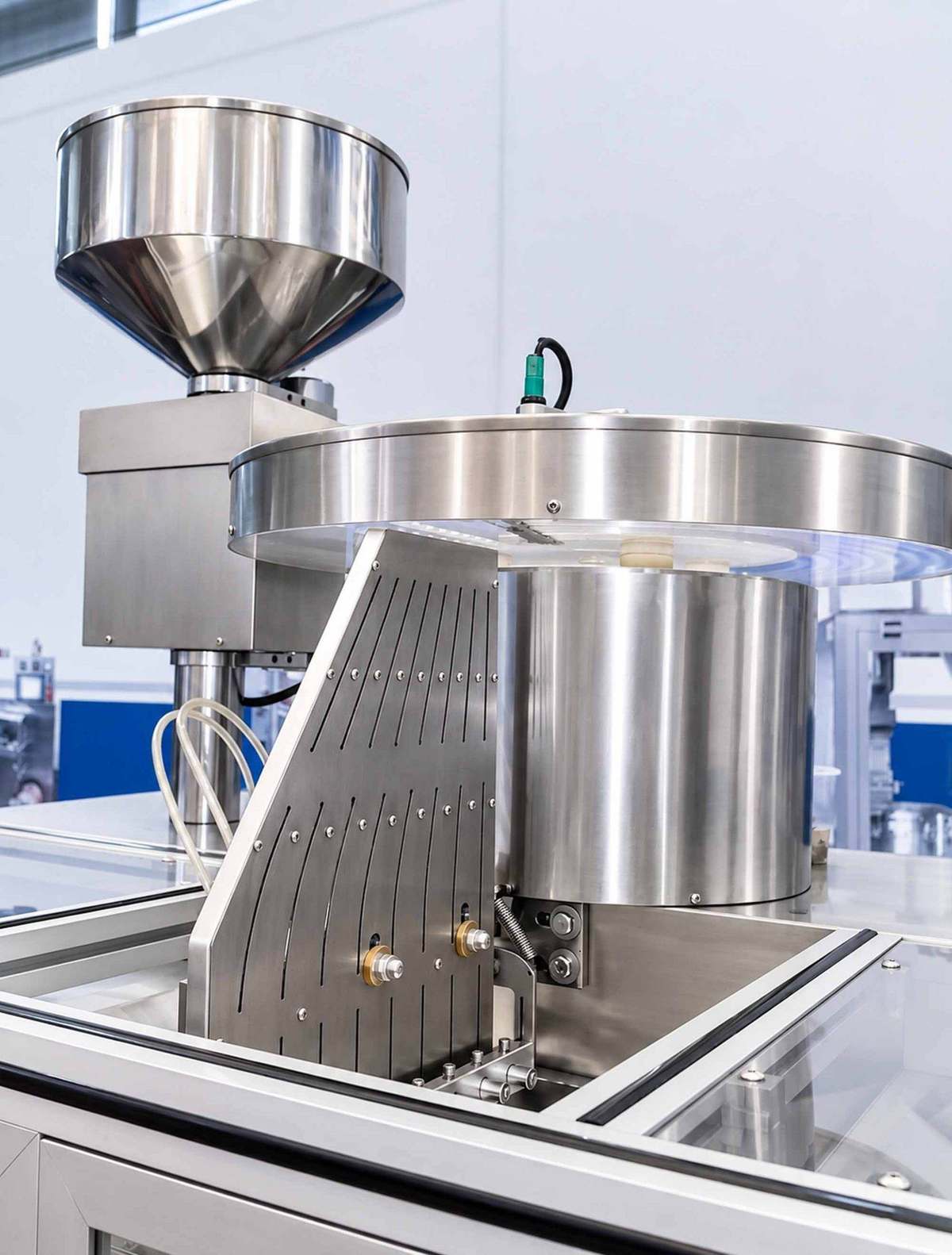
Tablets are fed from a vibrating hopper through a screen that separates broken pieces and powder before they reach the rollers. A fragment sealed into the margin is what causes a leak, so this step matters more than it looks.
Batch Printing and Scrap Rewind
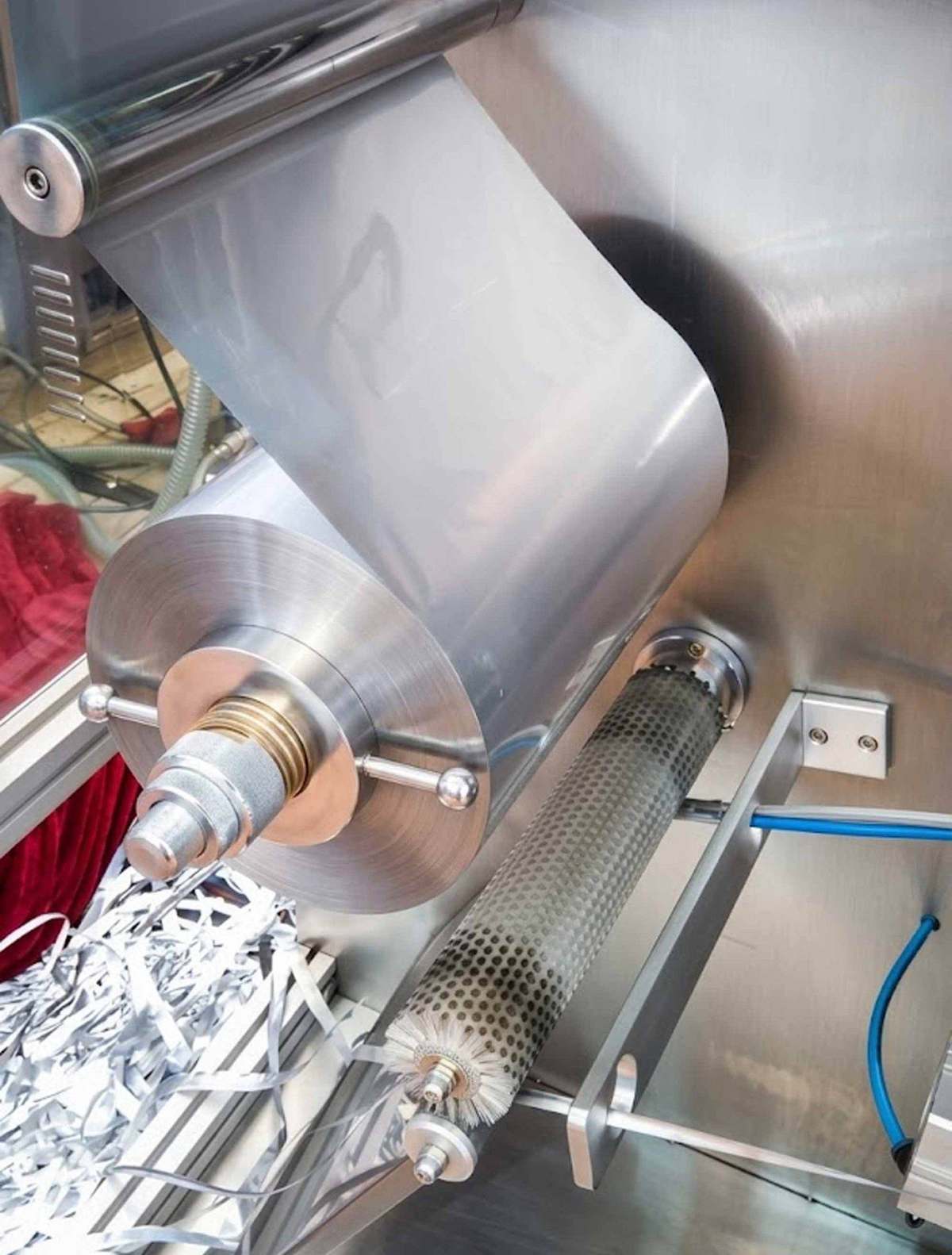
Batch numbers are stamped by steel type during the run. The trimmed foil edge rewinds onto its own reel instead of piling up under the machine.
Industry Applications
Where this machine is used:
Effervescent tablets
The textbook case for Alu-Alu strips. An effervescent tablet starts reacting the moment it picks up moisture, and foil on both faces keeps it out.
Probiotic and moisture-sensitive capsules
Where the moisture barrier is the shelf life. Each capsule is sealed in its own pocket, so opening one doesn’t expose the rest.
Light-sensitive vitamins and botanicals
Foil on both faces blocks light completely — something a clear blister can’t do.
Lozenges and compressed candies
Flat strips that fit a pocket or a wallet, sealed without the tablet surface touching a forming die.
What changing over involves
Strip length is a screen setting. Tablet size is a roller change.
What changed | What you adjust | Roughly |
Strip length or cut position | Cutting stroke on the touchscreen | A few minutes |
New foil roll, same size | Change the reel | A few minutes |
Tablet size or shape | Sealing roller dies and feeder parts | 15–30 minutes |
Alu-Alu → plastic-plastic | Foil and temperature settings | 15–30 minutes |
The pocket is cut into the heated sealing rollers, so a different tablet means a different roller set. An extra set of rollers and feeder change parts are both options you can order with the machine.
What to check before you buy
The roller dies, not the machine
The pocket is machined into the heated sealing rollers. Ask who designs it around your tablet, how long a new set takes, and what it costs — that's where a strip project succeeds or fails.
The manual
A clear English manual gets your operator running in a week instead of a month. Ask to see a sample page before you order.
Installation and training
Ask what's included and what costs extra. The answer varies more between suppliers than the machine price does.
Why Choose AIPAK?
One Point of Contact
One project engineer handles your machine from proposal to commissioning, so you’re not chasing five suppliers for one answer.
Roller Dies Designed Around Your Tablet
Send us a few samples and tell us your strip layout. We design the pocket and the layout around your tablet before you order.
A U.S. Number, Answered by Us
+1 (213) 526-8644, answered by our engineers 9 AM–7 PM China time, Monday to Friday. That’s evening and overnight in the U.S., so leave a message or send a WhatsApp anytime and we’ll pick it up first thing.
Spare Parts and Lead Time, in Writing
A kit of wear parts ships with your machine. Every part in the kit, and the lead time for anything outside it, is listed in your quote in writing.
Questions About the APK-SP400
Film width. Both cut with a servo and seal on heated rollers. The SP400 takes 400 mm instead of 300, so more lanes fit across the rollers and output goes from up to 80,000 to up to 120,000 an hour. If your layout doesn’t fill the extra width, the SP300 is the better buy.
On an air-cylinder cutter, changing strip layout means stopping and adjusting the cutter by hand. With a servo, you enter the new strip length on the touchscreen. Changing tablet size is still a roller change — the pocket is cut into the sealing rollers.
Each sealing roller has its own heater and its own temperature controller. If one roller drifts, its controller corrects it without touching the other, which is what keeps the seal even across the width and through a long run.
Yes, as an option. Eye-mark sensors read the register marks on one or both foils and keep your printed artwork centered on each strip. Tell us at the quotation stage if your foil is printed.
Tablets are fed from a vibrating hopper through a screen that separates broken pieces and powder before they reach the rollers. A fragment sealed into the margin is what causes a leak, so this step matters more than it looks.
Yes. We build to your U.S. supply at 60 Hz and confirm the voltage with your quote.
A kit of wear parts ships with your machine. Every part in the kit, and the lead time for anything outside it, is listed in your quote in writing.
Customers Also Interested In...
Send us your tablet and your strip layout
Tablet size decides the roller dies. Strip layout — 2 × 4, 2 × 10, whatever your carton holds — decides the cutting and the lane count. Send us a few samples and tell us the layout, and we’ll tell you which width you need and what it will actually produce.
- Reply within one business day
- Roller pocket designed from your samples
- Your product specs stay with us